
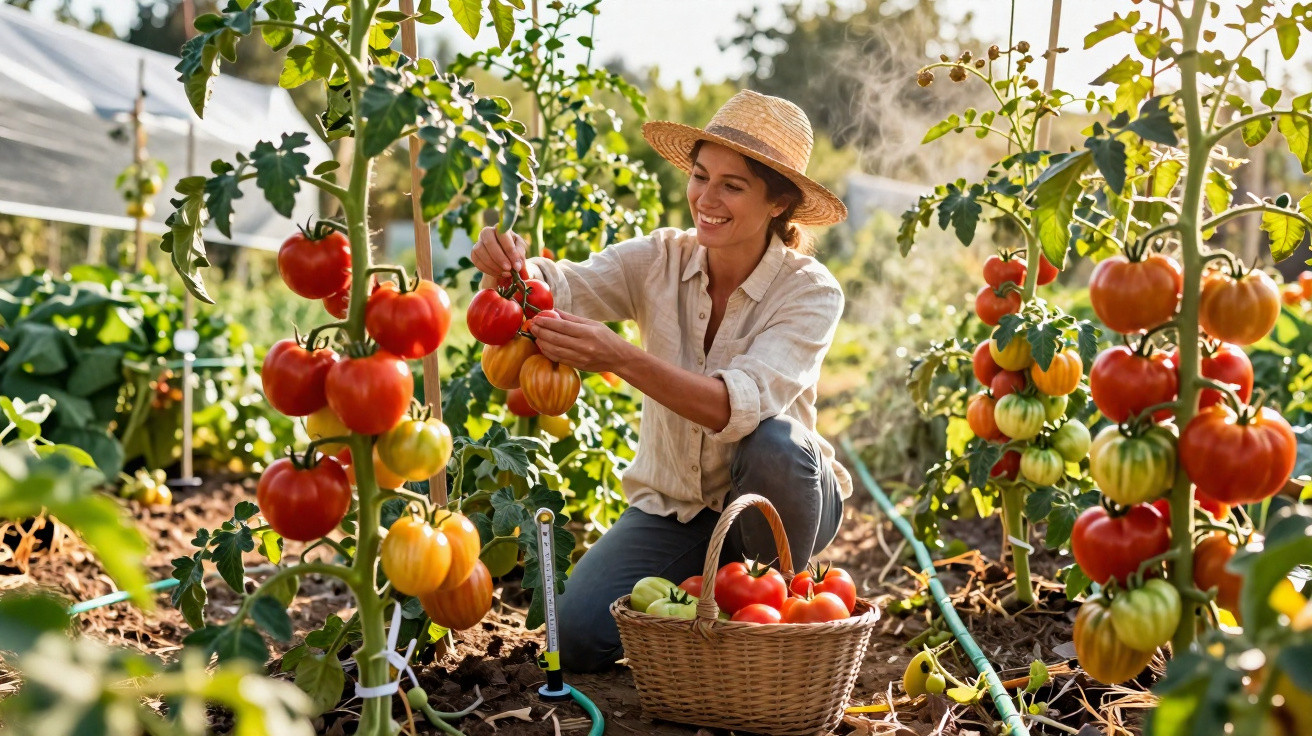
With the right choice of variety, your tomato bed can turn into a true yield machine-even during heatwaves.
Plenty of home gardeners know the scenario: plants covered in flowers, blazing sunshine overhead, yet the tomatoes stay tiny, split open, or scorch while still on the truss. Often, it isn’t down to your gardening skills at all-the deciding factor is the variety. Three standout tomato varieties, in particular, keep producing even when the thermometer sits above 30°C for weeks.
Why variety choice decides everything in a hot summer
Tomatoes enjoy warmth, but they can be surprisingly sensitive when conditions turn too dry, too hot, or swing wildly from one extreme to another. Many standard, widely grown varieties become stressed, set fewer flowers, or drop fruit altogether. Heat-tolerant varieties, by contrast, stay far steadier-even when water is in short supply.
"If you choose adapted varieties, you can harvest far more tomatoes from the same space-without battling with a watering can every day."
Over recent years, three varieties have proven particularly resilient: the long, intensely flavoured Cornue des Andes, the green-and-yellow striped Green Zebra, and the dark-coloured Noire de Crimée. Between them, they suit salads, sandwiches, oven dishes and more refined recipes-and they cope with strong sun remarkably well.
Cornue des Andes: high-yielding, heatproof and almost seedless
Cornue des Andes is easy to recognise: elongated fruits shaped a little like a red pepper, with a firm, very aromatic flesh and hardly any seeds. Many gardeners grow it once-and then refuse to be without it.
Strong in midsummer heat
This variety shines above all for its toughness in high temperatures. Its dense foliage helps shield the fruit from sunscald-those pale, dried-out patches on the skin. Even in dry summers, the 150–250 g fruits ripen reliably, provided the soil doesn’t dry out completely.
- Weight per fruit: usually 150–250 g
- Uses: salad, carpaccio, tart, stuffing
- Strengths: heat-tolerant, few seeds, aromatic, firm fruit
How to plant Cornue des Andes properly
The best position is sunny, sheltered from wind, and with deep, humus-rich soil. Before planting, loosen the ground thoroughly and work in some well-rotted compost. After planting, water the young plant generously and mulch straight away-using, for example, grass clippings, straw, or shredded twiggy material.
Key points for heavy cropping:
- Water regularly but not excessively-better a deep soak than constant "little sips".
- Thin out the lower leaves slightly so air can circulate.
- Keep enough foliage higher up so the fruits don’t burn.
Kitchen ideas: from tart to carpaccio
Because the flesh is firm and not overly watery, Cornue des Andes holds its shape in salads and looks superb on tarts or tartes flambées. Sliced thinly with olive oil, a little coarse salt and basil, it makes a quick summer carpaccio.
"People who love cooking value this variety especially because it doesn’t go ‘watery’-perfect for tarts, bruschetta and chilled soups."
Green Zebra: the striped surprise that forgives dry spells
Green Zebra is a guaranteed attention-grabber. Its skin stays green, but as it ripens it develops yellowish stripes. Many people think at first glance, "That can’t be ripe yet!"-and that’s exactly what makes it such an intriguing garden tomato.
Why it excels in hot summers
Green Zebra is considered impressively tolerant of heat and short periods of dryness. It grows quickly, carries plenty of medium-sized fruits, and usually takes sudden temperature swings in its stride. If you mulch consistently, you won’t need to water it every day.
Its main advantages at a glance:
- copes with full sun better than many standard varieties
- continues setting flowers and fruit even in heat
- ideal if you can’t be in the garden constantly
Avoid common mistakes with Green Zebra
The most important factor is harvesting at the right moment. Picked too early, it stays very sharp and doesn’t develop much aroma. It’s ready when the green stripes look slightly lighter and the yellow areas glow more strongly-while the fruit still feels a little firm.
Watering tip: water only at the roots, never over leaves and fruit. This helps reduce fungal diseases such as late blight. In very wet summers, an airy site-or a rain cover over the plants-can be worthwhile.
Flavour: bright acidity for creative recipes
Green Zebra brings a fresh, gently tangy lift to cooking. Pair it with sweet elements like peach or ripe mango for a striking contrast. In ceviche, on fish carpaccio, or in a colourful couscous salad, it really comes into its own.
"In mixed tomato salads, Green Zebra delivers the ‘wow factor’ in both looks and flavour-green, striped, lightly spicy."
Noire de Crimée: the dark variety for huge, juicy fruits
With its deep red to brownish-purple colouring, Noire de Crimée looks almost exotic. It produces large, slightly flattened fruits that can easily reach 300 grams. Gardeners who love generously topped open sandwiches, burgers and Caprese-style dishes soon won’t want to go without it.
Robust even in wind and heat
Despite the fruit size, this variety is notably resilient. It tolerates high temperatures and copes with the occasional missed watering-so long as the soil is mulched. A sturdy support is essential, as the heavy fruits can otherwise snap the shoots.
To get the best from it:
- tie in early, high and securely
- thin overcrowded shoots so air moves freely
- in very damp spells, remove affected leaves quickly
What is Noire de Crimée best for in the kitchen?
The texture is soft, almost melting, with a gentle sweetness. In a simple tomato salad with red onions, a little balsamic vinegar and olive oil, it performs brilliantly. Served on thick slices of bread with cheese, or in a more luxurious Caprese with mozzarella and basil, it shows why many people rate it as a top flavour favourite.
How the three varieties complement each other in the bed
Growing all three together brings several benefits. They share similar needs for sunshine and water, yet they ripen on slightly different schedules and add very different colours and shapes to the plot.
| Variety | Fruit size | Heat tolerance | Typical use |
|---|---|---|---|
| Cornue des Andes | Medium, elongated | very high | Tart, carpaccio, stuffing |
| Green Zebra | Medium, round | high | Salads, ceviche, decoration |
| Noire de Crimée | Large, flattened | high | Salad, sandwich, Caprese |
Their differing growth habits naturally create better airflow between plants, which lowers the risk of fungal diseases. At the same time, the quicker varieties-such as Green Zebra-tend to ripen first, while Noire de Crimée often follows a little later but then produces heavily.
Basic rules for record harvests in blazing sun
Even the best variety won’t deliver much if the soil is poor and parched. A few fundamentals in spring set you up for a basketful at the height of summer.
Prepare the soil, water well, mulch properly
Before planting, it pays to dig over and loosen the soil to at least a spade’s depth, then incorporate well-rotted compost. Waterlogging must be avoided, as tomatoes do not tolerate soggy roots.
"Three foundations for strong plants: loose soil, an even water supply, and a thick layer of mulch."
Watering rules for hot summers:
- water in the morning or late evening, not in midday sun
- apply water at the roots, not over foliage
- water less often but more deeply, so roots grow down
Spot typical summer problems early
In hot weather, aphids, whitefly or fungal issues can appear quickly. Companion planting can help: basil, pot marigold or marigolds (Tagetes) between tomatoes can make the bed look more varied and may slow pests.
If leaves suddenly develop brown patches or begin to curl, take a closer look-often it’s a watering issue or plants being too tightly spaced. A few targeted pruning cuts can restore airflow, letting wind and air move through the plants again.
More ideas for fans of heat-ready tomatoes
Once you’ve taken to robust varieties, you can expand your selection gradually. Heritage types such as Rose de Berne, or colourful beefsteak varieties like pineapple tomatoes, add even more shades to the bed. For balconies and small patios, compact cocktail and cherry tomatoes grown in pots can deliver surprisingly large quantities too-following the same basics: good soil, mulch, and purposeful watering.
Over time, you can build a personal set of varieties that suits both your taste and your garden’s climate. The three varieties introduced here form a strong core: they handle sun well, offer distinct flavours, and demonstrate how much potential even a small tomato bed can have when variety choice and care work together.


Comments
No comments yet. Be the first to comment!
Leave a Comment