
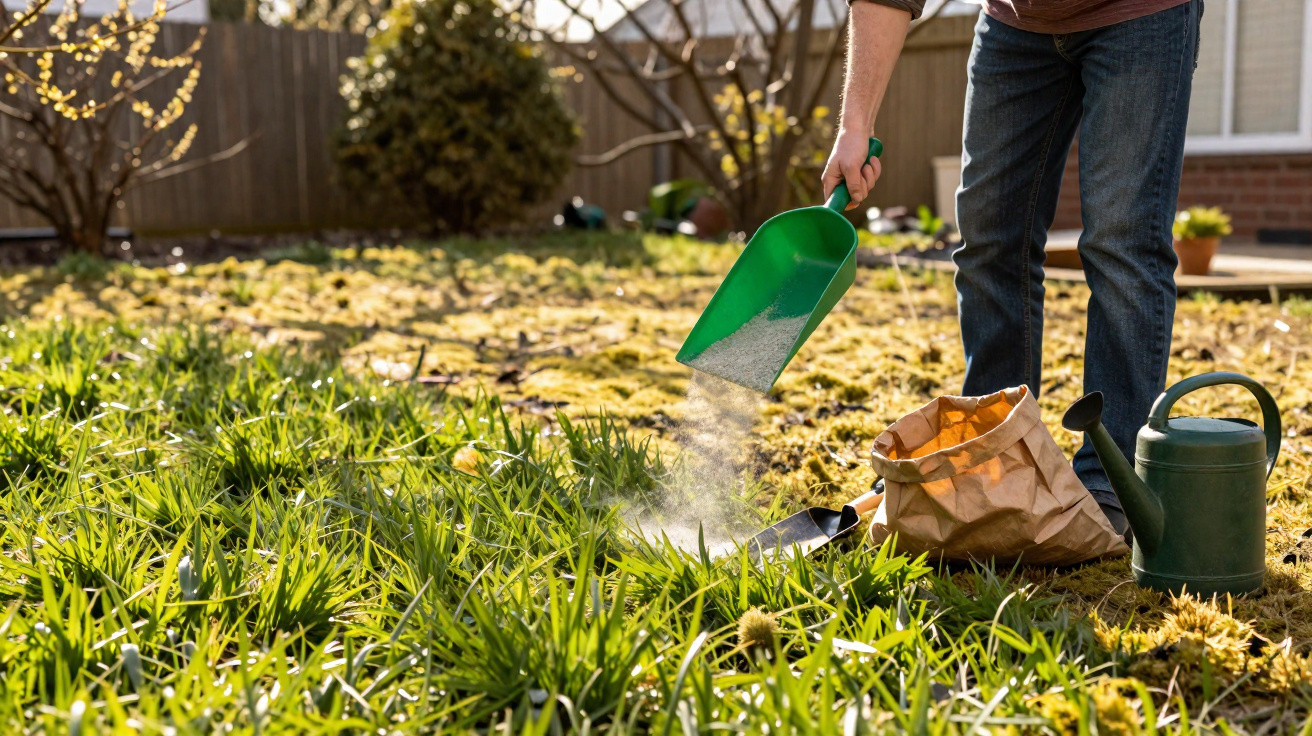
When winter leaves your lawn looking tired and patchy, one simple step in March can determine whether it becomes lush and green again.
In spring, many amateur gardeners reach first for the lawnmower or a bag of fertiliser. Professionals take a different approach: they apply an unassuming mineral powder that effectively burns off moss and visibly revives the lawn in a short time. Acting at the right moment gives your green carpet a head start for the entire season.
Why lawns look so battered after winter
Winter puts lawns under real pressure. Weeks of wet weather, limited daylight and recurring frosts weaken the grass. The soil becomes progressively compacted as water remains on the surface for extended periods and barely dries out. Air can no longer reach the roots as effectively, and the turf gradually suffers.
This creates precisely the conditions in which moss takes hold. It thrives in shade, dampness and compacted ground. Growing between the blades of grass, it deprives them of light and space while spreading further and further. The result in early spring is yellowish grass, bare patches and an overall tired, uneven appearance.
During March, conditions begin to change. Days grow longer, temperatures rise slightly and grass roots become active again. The lawn slowly enters its growing period, making this an especially worthwhile time for targeted action.
“Early March is the window in which a targeted application of powder stops moss and gives the lawn a head start.”
The professionals’ secret miracle powder: iron sulphate
The “magic powder” trusted by many specialists is actually a very straightforward product: iron sulphate. Usually supplied as a fine powder or in granular form, this mineral works on two fronts at once.
A moss killer with rapid results
Iron sulphate creates a strongly acidic reaction on the plant surface. Moss and lichens cope poorly with this. Within hours or a few days, the moss first turns dark green, then brown to black. It dies, detaches from the turf and leaves space for the grass again.
Grass itself is considerably less sensitive. When used at the correct dose, iron sulphate does not damage the blades; instead, it gives them more light and room. Particularly in shaded or permanently damp areas, this can make the difference between a moss-covered surface and a dense lawn.
More chlorophyll, visibly greener grass
Iron is an essential trace element for producing chlorophyll, the green pigment in leaves. Without enough iron, a lawn cannot develop a rich green colour and appears pale, sometimes almost yellowish, even when there is sufficient nitrogen in the soil.
Iron sulphate delivers iron directly into the topsoil. The grass absorbs it through its roots, increasing chlorophyll production. This is often noticeable after only a short time:
- pale areas become noticeably greener

Comments
No comments yet. Be the first to comment!
Leave a Comment