
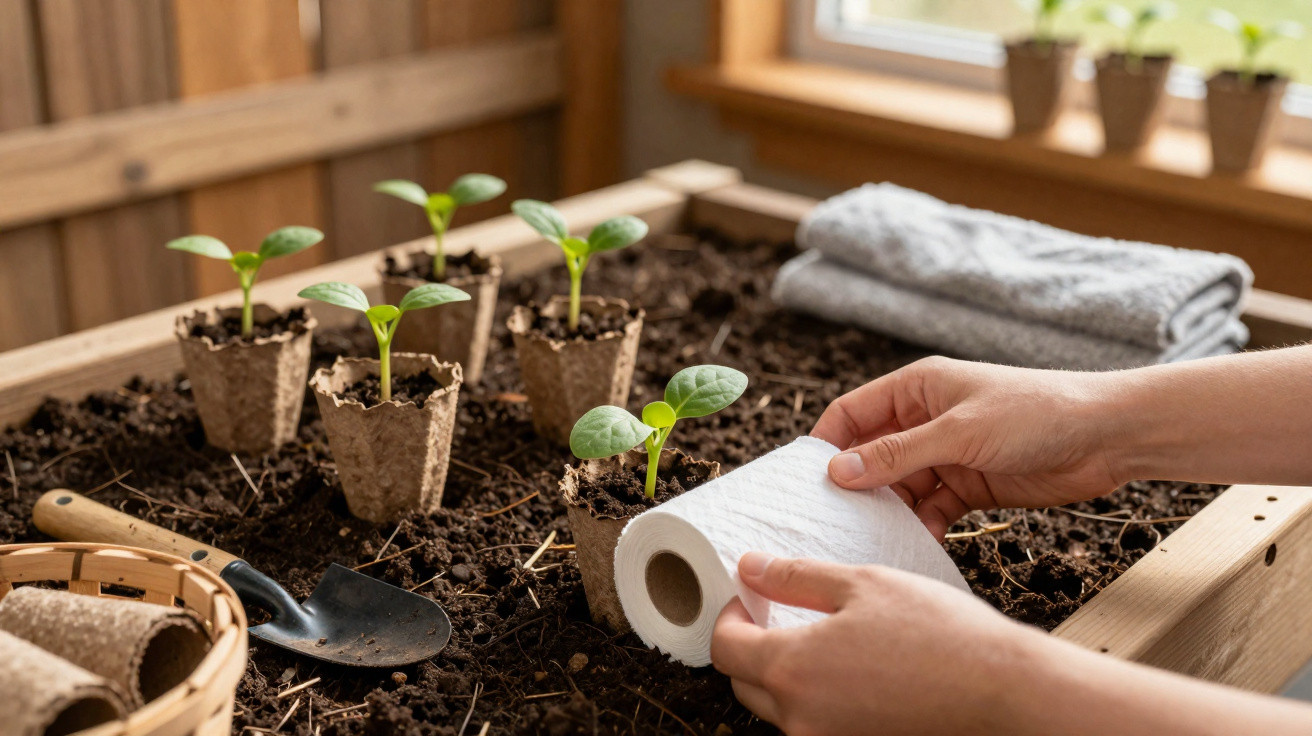
In spring, many gardeners pour their energy into young tomatoes, lettuces and flowers - only to lose them after a single bitter night or to ravenous slugs. A tip that has recently spread from the UK and across social media suggests a different fate for empty toilet roll tubes: instead of going into the paper recycling, they go straight into the vegetable bed. What looks like an internet joke at first turns out to be remarkably effective in the kitchen garden.
Why toilet roll tubes in the bed are suddenly worth their weight in gold
In March and April, seedlings and young plants are highly vulnerable. One dip to around freezing can be enough for soft, new leaves to scorch. At the same time, the first slugs appear and can wipe out an entire line of seedlings overnight. With a bit of bad luck, you step outside in the morning to find a bed stripped bare.
Rather than buying expensive cloches, tunnels or specialist protection systems, plenty of amateur gardeners are turning to something already to hand in the bathroom: empty toilet roll tubes. These plain cardboard cylinders create a protected zone around each plant.
“The cardboard surrounds the young plant, slows the wind, softens temperature swings and puts an obstacle between slugs and the delicate stems.”
The key benefit is that the tube is sturdy enough to last for several weeks, yet thin enough to rot down gradually in the soil. Water can pass through and air can still move, but the harshest stress factors reach the plant in a much reduced form.
How a simple toilet roll tube protects your young plants
Using them is refreshingly straightforward and needs neither tools nor crafting skills. A small stash of tubes and a few minutes in the bed are all it takes.
Step by step: a protective collar made from toilet roll tubes
- After planting out, slide an empty cardboard ring over the stem.
- Press the ring carefully 2–3 centimetres into the soil, taking care not to crush roots or leaves.
- Make sure the leaves remain free and do not rub on the cardboard edge.
- Firm the soil gently around it so the ring stands securely and doesn’t topple in the wind.
This creates a mini “chimney” around the root area. It blocks cold draughts at ground level and keeps the soil temperature a little more even. On clear nights with a frost risk, that can make a noticeable difference.
At the same time, the cardboard wall can be a deterrent for many slugs. It isn’t foolproof, but a lot of them will divert and look for easier pickings without a barrier.
Extra protection when frost is forecast
If your weather app is warning of frost overnight, you can boost the effect. Gardeners who use this approach often build protection in simple layers:
- Place a layer of straw or hay around the cardboard ring.
- If a harder frost is expected, drape horticultural fleece loosely over the row in the evening.
- Ventilate in the morning once the sun is stronger, so heat doesn’t build up.
“With a cardboard collar, a little straw and a light fleece, many young plants get through nights when unprotected seedlings would freeze.”
More than just frost protection: what else toilet roll tubes are good for in the garden
A tube around the stem is only the starting point. Once you begin saving toilet roll tubes, you quickly find other uses in both the bed and the propagation stage.
Biodegradable plant pots for the windowsill
The tubes work particularly well as small seed pots for tomatoes, beans, peas or pot marigolds. Here’s how:
- Cut a tube in half across the middle, or keep it whole for deeper-rooting plants.
- Make four snips in one end and fold the flaps over each other to form a base.
- Fill with seed compost, sow the seeds, and water.
- Stand the finished “pots” close together in a tray so they stay upright.
After three to four weeks, once the seedlings are strong enough, the entire cardboard pot can go into the bed. Roots push straight through the damp cardboard while the tube breaks down in the soil bit by bit. Because the roots aren’t disturbed, transplant shock is avoided and the young plants tend to be noticeably tougher.
Narrow barriers and mini-beds
You can also cut the tubes into short segments that serve several purposes:
- A ring around direct sowings - for example, around carrot or radish seed to stop it being washed away.
- A guard against weeds - short cardboard rings around individual plants slow down weeds emerging right at the stem.
- Marking rows - when you sow several varieties side by side, rings can act as quick labelling aids.
The tubes can even act as temporary support for climbers: young pea shoots or nasturtium stems can lean on the cardboard until a larger frame is in place.
From waste to soil improver: toilet roll tubes in the compost
After a few weeks in the bed, the cardboard gradually starts to disintegrate. Once the collar turns soft and scruffy, it can go into the compost heap. There, it takes on a second purpose: as a “brown” structural ingredient.
“Shredded toilet roll tubes add carbon, open up the compost and create ideal conditions for earthworms and micro-organisms.”
A healthy compost mix depends on the right balance of “green” and “brown” material. Kitchen scraps, grass clippings and fresh plant waste are rich in nitrogen. Cardboard and dry leaves provide the necessary carbon. Mixing in cardboard regularly helps prevent rot and sludge in the bin.
How the vegetable bed benefits twice from the tubes
- First, they act as frost and slug protection, or as seed pots.
- Later, they break down in the compost into humus-rich material.
- That humus returns to the bed the following year and strengthens new crops.
In this way, a small loop forms between bathroom, compost and vegetable bed - with no extra cost and no additional waste.
What gardeners should watch out for when using them
As handy as the idea is, a few details are worth bearing in mind. Not every cardboard tube is equally suitable for garden use.
- Choose unprinted tubes where possible: it’s best to avoid brightly printed tubes or glossy finishes, to keep unwanted substances out of the soil.
- Keep them only lightly damp: waterlogging makes the cardboard soften too fast and collapse. Moderate watering is enough.
- Remove or press down in time: as stems thicken, the cardboard shouldn’t constrict them. Either compost it earlier or push it further into the soil.
- Be realistic about slug control: if slug pressure is heavy, cardboard alone won’t be enough. In that case, also rely on beer traps, slug fences or hand-picking.
If you garden in very windy spots, weigh the collars down as needed with a little extra soil or a few small stones on the outside, so gusts don’t send them flying.
Why this trick is becoming more important with climate change
Springs are becoming more changeable, and late frosts increasingly arrive after longer warm spells. As a result, many hobby gardeners plant out earlier and risk greater losses. A simple, flexible measure like a cardboard ring provides at least one extra layer of security - without major spending.
In small urban gardens or on balconies, where every plant matters, this method can make the difference. Anyone buying tomatoes or peppers from costly breeding lines won’t want to lose them to the first cold snap. Here, an improvised ring from the bathroom shelf can bring a little more peace of mind.
There’s also the sustainability angle: a throwaway product becomes a versatile garden tool with multiple benefits. Once you get into the habit of saving the tubes, it’s hard not to wonder why they ever went into the recycling in the first place.
Comments
No comments yet. Be the first to comment!
Leave a Comment