
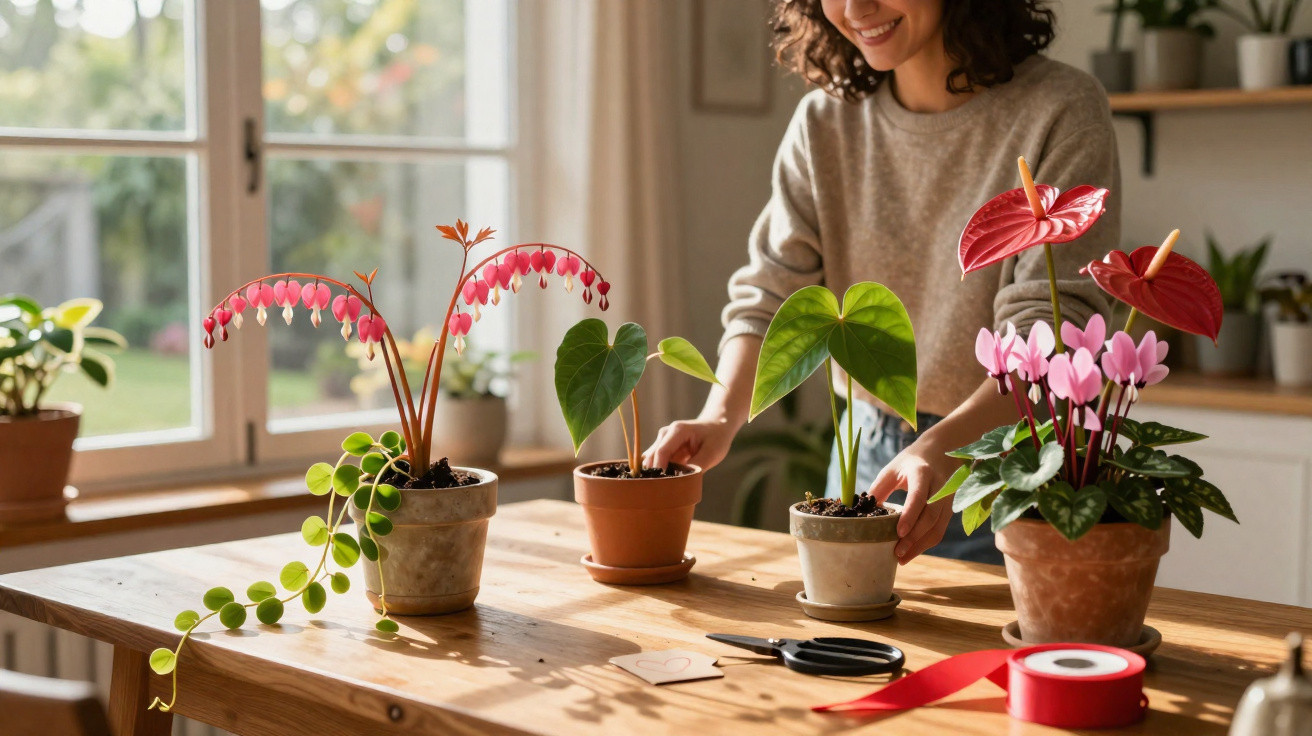
Bleeding heart
Also called Lamprocapnos spectabilis (previously classified as dicentra), this elegant, delicate-looking perennial bears strings of heart-shaped blooms along arching stems in late spring and early summer. Reaching about 90cm in height, it is particularly attractive in partial shade, where every stem is lined with these charming, romantic flowers. Gardeners who prefer not to grow pink or red can choose white forms, including ‘Alba’, which pair beautifully with low-growing plants such as saxifrages and hellebores.
Growing tips: Bleeding hearts favour cool, damp and sheltered positions, although they can also thrive in a sunny border. Protecting them from the day’s hottest sun and ensuring the soil remains moist may help to prolong flowering. They develop into clumps that can endure for many years, and they dislike being transplanted.
Sweetheart plant
Known as the sweetheart plant because of its fleshy, succulent heart-shaped foliage, this much-loved houseplant is widely available from garden centres. A single cutting in the shape of a heart is often sold as an eye-catching plant in its own right.
Native to Thailand and southern China, it can eventually fill a pot with thick, leathery, heart-shaped leaves if given suitable conditions. Be aware, however, that plants sold as one heart-shaped leaf in a pot will usually not develop into full plants, as they are not genuine stem cuttings. For a plant that will grow properly, choose one with a well-rooted stem and additional leaves already visible. Fully grown plants may also produce cream and red star-shaped flowers.
Growing tips: Do not overwater this succulent. Water only once the compost feels completely dry, applying water to the soil rather than the leaves. Position it somewhere bright but away from direct sunshine, radiators and draughts. Choosing a more mature specimen will give it a better chance of lasting.
String of hearts (Ceropegia woodii)
Originating from South Africa and Zimbabwe, this trailing succulent houseplant has slender, wiry stems adorned with grey heart-shaped leaves that have pink-tinged undersides. It is well suited to cascading from a shelf or hanging pot, perhaps alongside other trailing plants such as string of pearls and string of dolphins.
Growing tips: Let the compost dry out fully between watering, and never allow the roots to stand in water, as this will kill the plant. Should the leaves begin to turn yellow, remove the affected foliage and withhold water until the compost is genuinely dry. Apply houseplant fertiliser twice yearly, keep it in a bright, well-lit place away from direct sunshine, and rotate it occasionally so that every stem receives enough light.
Anthurium andraeanum
Native to South America and the Caribbean, this tropical-looking houseplant is also called the flamingo flower. Its heart-shaped, waxy red flowers, known as spathes, together with their central yellow or cream spikes, are immediately recognisable and bring a dramatic burst of colour to indoor spaces. Pink, orange and white varieties are also available.
Growing tips: As these plants originate in warm, humid regions, aim to recreate those conditions at home. Grow them in a warm, bright location without direct sunshine, using quick-draining, peat-free acidic compost. Water with rainwater, ideally at room temperature, and allow the upper third of the compost to dry between waterings. Avoid cold tap water, which can shock the plant. A bathroom may be an ideal place for maintaining humidity; otherwise, mist the leaves regularly.
Indoor cyclamen
A lovely alternative to a Valentine’s bouquet, its delicate red, pink or white flowers rise above attractive green and grey heart-shaped leaves. It should outlast many floral presents, potentially remaining in bloom for as long as six weeks.
Growing tips: A cool setting is essential if you want it to live well, so avoid placing it close to a radiator. When frost is not predicted, you could place the potted plant on a sheltered porch, or in an unheated conservatory or greenhouse. Do not overwater: wait until the pot has dried out partially, then water from beneath by standing it in a shallow bowl of water and allowing the compost to take up moisture. Drain the pot thoroughly afterwards.
This is an excellent replacement for a Valentine’s bouquet: its small flowers, available in red, pink and white, sit above striking green and grey leaves shaped like hearts. Compared with many floral gifts, it may last longer, possibly for up to six weeks.
Growing tips: Keep the plant somewhere cool if you wish it to survive, as it will not appreciate the warmth beside a radiator. Provided frost is not forecast, its pot can be put on a covered porch or moved to an unheated conservatory or greenhouse. Take care not to give it too much water. Allow the compost to dry partly before watering from below, by placing the pot in a shallow dish of water so the compost can absorb it, then ensure excess water drains away completely.
Comments
No comments yet. Be the first to comment!
Leave a Comment