
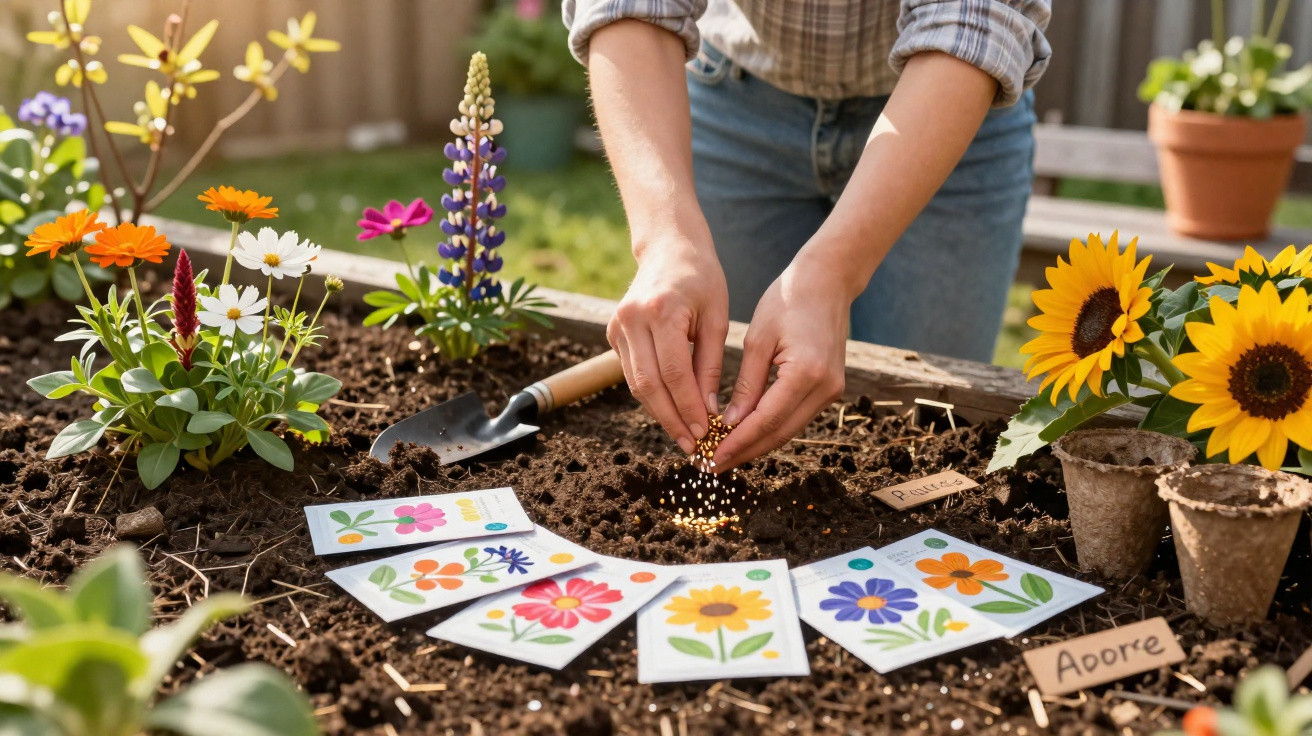
The seed packets are coming back out of the drawer, the sun is gaining strength and your fingers are itching to get started: now is the ideal time to raise many annual flowers for a long-lasting blaze of blooms. Sowing wisely in March gives you beds packed with colour, plenty of cut flowers and even a few edible blooms – including on a small balcony.
Why March is the key month for sowing flowers
The mood in the garden shifts during March: days become longer, light grows stronger and the soil gradually thaws, yet night frosts are still possible in many areas. This transition is precisely what makes the month suitable for several sowing methods:
- warm indoor sowing on a windowsill or in a propagator
- sowing in a sheltered cold frame or beneath fleece
- direct sowing in the bed, provided the soil is no longer freezing cold or waterlogged
Tender species prefer temperatures of roughly 18–24°C, while tougher flowers will also do well at 15–21°C. Steady, gentle warmth and plenty of light matter more at this stage than a perfectly styled miniature greenhouse.
Sowing in March brings flowering forward and significantly extends summer in the flower bed.
The essentials for successful sowing are straightforward: fine, clean seed compost, a light covering of seeds, consistent moisture without waterlogging – and patience. Watering is where many mistakes happen: compost must not dry out, but it should never be soaking wet either. A fine spray or watering from below via a saucer works best.
Seven flowers you should sow in March
Calendula: easy, tough and edible too
Calendula is among the most dependable annuals for the garden. It will grow almost anywhere with a reasonably sunny position.
- Sow directly in the bed from March, once severe frosts are no longer expected.
- Alternatively, start plants indoors in small pots three weeks before the last expected frost.
- Especially nutrient-rich soil is unnecessary; ordinary garden soil is sufficient.
You can scatter its flowers over salads or use them to decorate desserts. At the same time, they attract numerous insects and brighten any bed with their orange tones.
Cosmos: airy giants for beds and vases
Cosmos produces large, delicate summer flowers on tall, slender stems. It is ideal for informal romantic planting schemes and makes an excellent cut flower.
For successful March sowing:
- sow in shallow trays or seed trays
- cover the seeds only very lightly with compost and sow thinly
- keep at 18–22°C; germination usually takes 1–3 weeks
- prick out into individual pots once seedlings emerge
Once young plants have 2–3 pairs of leaves, you can pinch out the growing tip. It may feel brutal, but it makes plants bushier and helps them produce more flowers later on.
Sunflowers: a classic with real impact
Sunflowers are the essence of summer. In March, it is best to begin them in pots, especially if slugs are a problem in your garden.
- sow individually in deep pots or soil blocks, 2–3 cm deep
- allow around 7–14 days for germination at room temperature
- plant out once plants are about 30 cm tall and frost is no longer forecast
Tall varieties work well at the back of beds, while shorter types also suit large containers on the patio.
Lupins: magnificent flower spires for summer
Lupins form striking, tall flower spikes and suit naturalistic gardens beautifully. Their roots fix nitrogen in the soil, improving it over the long term.
A simple trick gives them a good start in March:
- soak the round, hard seeds in water for 24 hours
- then sow in pots filled with deep compost, at 15–21°C
- avoid moving them later wherever possible, as their roots are sensitive
Young plants can go into the bed once frost is no longer a risk. A sunny site with fairly poor, light soil is ideal.
Flowering tobacco: fragrant summer nights by the seating area
Flowering tobacco releases an intense scent in the evening and at night, reaching around 1.5 metres tall depending on the variety. It is perfect close to a patio, balcony or garden seating area.
Sowing has one particular feature: the seeds are tiny.
- scatter seeds only across the compost surface
- do not cover them with compost, as they need light to germinate
- press the substrate down lightly and moisten it
- place somewhere warm and bright, avoiding waterlogging
If you sow too densely, you will quickly end up with an impenetrable “seedling forest”. Use seeds very sparingly instead.
Celosia: an exotic focal point in a pot
Celosias produce eye-catching, flame-like or crested flower heads in bold colours. They work especially well in colourful container displays or at the front of flower beds.
In March, it is best to start them individually in biodegradable pots. Plants can then be moved into the bed or larger containers together with the pot, without damaging their roots.
- press seeds down only lightly, with almost no covering
- keep them warm and bright
- later plant them in their final position with the pot
South American vervain: a late-summer long-flowering favourite
South American vervain is regarded as a fashionable plant for modern, airy gardens. Its tall, slender stems topped with small clouds of flowers look particularly effective alongside grasses and perennials.
Its germination has one peculiarity: the seeds benefit from a cold period.
- sow in seed trays in March and press down lightly
- place the tray in the fridge for about two weeks
- then move it to a bright, warm spot
This method makes the seed much more reliable to germinate. Plants flower from late summer into autumn and attract plenty of butterflies.
Expert tips for strong young plants
Whichever species you sow, the move from a warm room into the garden can determine whether it succeeds or fails. Do not put young plants outdoors all at once.
Young plants need to become accustomed to sun, wind and changing temperatures step by step – like a small training programme.
In practice, proceed as follows:
- for the first few days, place them in a shady, sheltered spot for just one hour
- increase the time outside a little each day
- after several days, allow their first hours of sunshine, but avoid intense midday sun
If you garden on a balcony or grow solely in pots, choose containers that are as deep as possible. Many of the species listed develop long roots and reward generous volumes of compost with vigorous growth.
Common March sowing mistakes – and how to avoid them
A few simple rules will help you steer clear of the usual pitfalls:
- Sowing too densely: this creates weak, leggy seedlings. Better: sow sparingly and prick out early.
- Too little light: even a warm windowsill is of no use when plants are kept in semi-darkness. Choose bright positions.
- Incorrect watering: waterlogging encourages mould, while drought stops growth. Even, careful moisture is best.
- Moving outside too early: late frosts can wipe out entire batches of seedlings in one night. Keep an eye on the weather forecast.
How to combine the flowers effectively in summer
Planning in March means you can already consider the eventual appearance of your flower bed. Tall species such as sunflowers, lupins and South American vervain belong at the back; medium-height cosmos and flowering tobacco fit in the middle; and lower calendulas and celosias work at the front.
A combination of contrasting flower shapes creates a particularly appealing effect:
- the rounded flower heads of cosmos
- flame-like celosias
- candle-shaped lupins
- large sunflower faces
These contrasts bring movement to a bed – even without expensive perennial planting.
Why the effort in March pays off several times over
Spending a few evenings with compost, pots and seeds now will save you a great deal of money at the garden centre later. Many of these flowers provide masses of blooms for vases, attract pollinators and incidentally improve the microclimate in the garden or on the balcony.
There is another advantage: under favourable conditions, some species self-seed, including calendulas and South American vervain. The following year, young plants may suddenly appear in different places – almost like a small garden team doing the work for you.



Comments
No comments yet. Be the first to comment!
Leave a Comment