
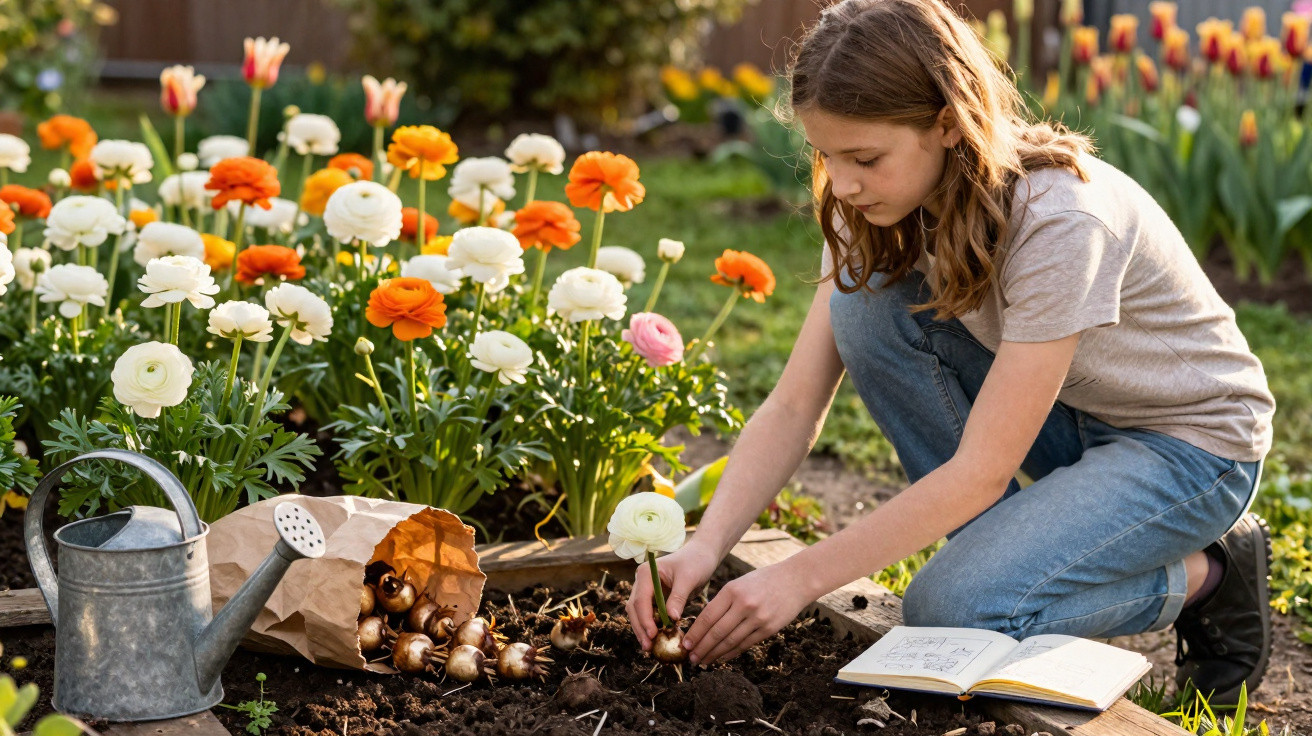
Many beds look much the same in April: a few rows of tulips, attractive for a brief spell, then suddenly bare. This spring, the mood is changing. Garden enthusiasts are increasingly choosing a once nearly forgotten bulb flower, whose densely petalled blooms resemble miniature peonies – and which lasts considerably longer than the traditional tulip.
The new favourite spring flower: ranunculus instead of tulips
For years, the rule was simple: anyone wanting spring colour planted tulips. The bulbs are inexpensive, the choice is vast and the images on the packets are enticing. In reality, however, they often disappoint. Their flowers generally last only one to two weeks; a heavy downpour or a hot day can be enough to make the colourful cup-shaped blooms collapse.
This is exactly where the Persian buttercup (Ranunculus asiaticus) comes in. Many gardeners say they are gradually removing tulips and filling their beds with these lavish “pom-pom flowers”. The appeal is obvious: a longer flowering period, more densely packed flower heads and an almost romantic charm strongly reminiscent of traditional cottage gardens.
The Persian buttercup brings peony flair to spring – weeks before real peonies flower.
Rather than producing classic cup-shaped flowers, each ranunculus develops countless closely layered petals. This creates a rounded flower head which, depending on the variety, can appear almost spherical. Planted in groups, they create a refined, almost florist-style display – as though freshly bought from a flower shop, but growing in your own bed.
How ranunculus outperforms tulips
Anyone who has grown this plant in the garden will quickly understand why it is increasingly replacing tulips. It offers several benefits at once:
- Longer flowering period: From late May into June, often continuing to produce new buds.
- More weather-resistant: The flowers are less likely to fall apart in rain or brief hot spells.
- Mass impact: Their densely layered flowers produce bold splashes of colour even from a distance.
- Refined appearance: The blooms resemble peonies or luxurious florist bouquets.
- Flexible planting options: They work in beds, containers and even window boxes.
At the same time, ranunculus suits a more considered style of gardening. Anyone wishing to avoid artificial fertiliser can care for it easily using homemade compost. In loose, humus-rich soil, it reaches its full potential without relying heavily on chemicals.
How to plant ranunculus properly – the ideal timing
The key to success with ranunculus is getting the timing right. You do not plant conventional bulbs, but so-called “claws” – small, dry structures that resemble a miniature octopus. In spring, they are sold alongside dahlia tubers and gladioli.
Spring planting time
The following planting window has proved effective in central European gardens:
| Region | Planting time | Note |
|---|---|---|
| Central / northern areas / uplands | March to mid-April | Plant only once the ground is no longer frozen. |
| Mild regions | March to mid-April or autumn | Autumn planting produces earlier flowers, but requires a frost-protected position. |
In spring, the soil should have warmed up but still retain freshness. This encourages root formation without allowing the claws to dry out.
Step-by-step planting guide
A few straightforward steps make planting manageable even for beginners who have previously planted only tulips:
- Soak the claws in lukewarm water for around 12 hours so that they absorb moisture.
- Prepare planting holes about 5 centimetres deep.
- Place the claws with their pointed ends facing downwards.
- Leave roughly 15 centimetres between plants.
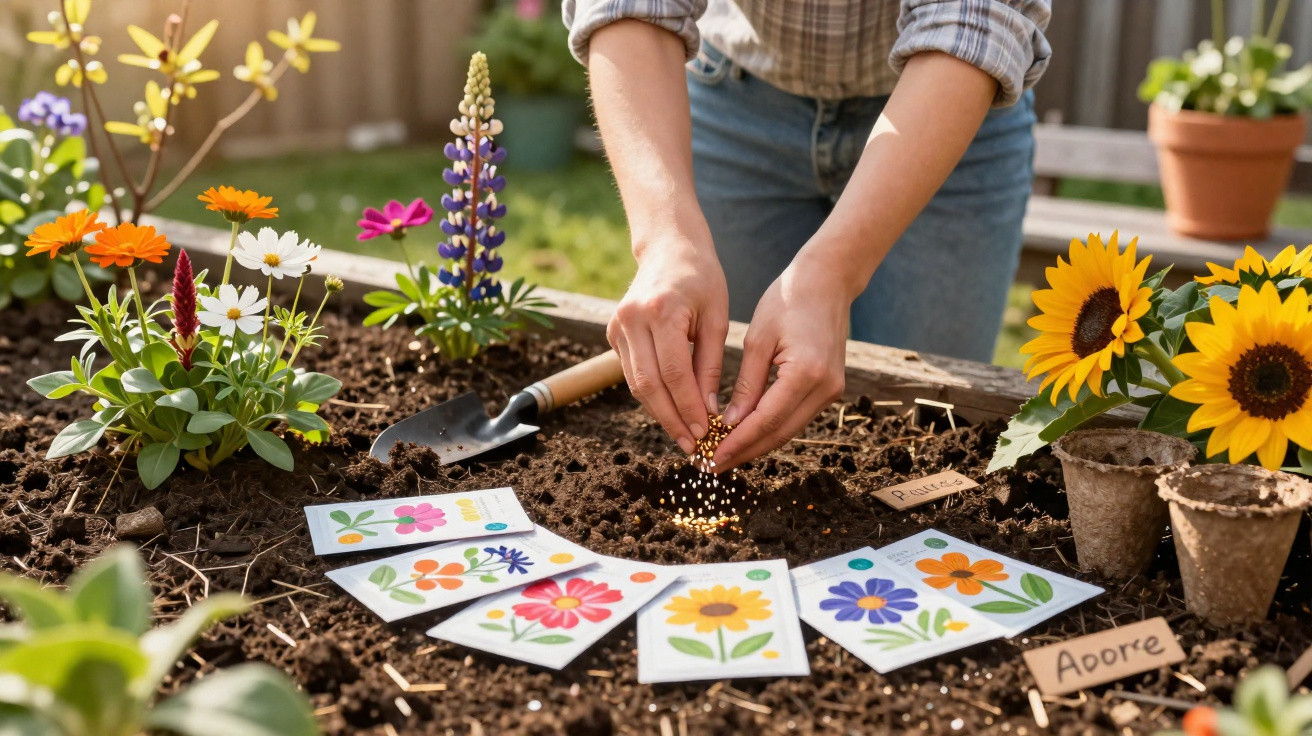
- Cover lightly with soil and water carefully.
Most importantly, the soil must drain extremely well. Waterlogging quickly causes the tubers to rot, particularly in pots. If you have heavy soil, incorporate plenty of sand and compost, or at least add a layer of coarse material such as gravel or expanded clay to the planting hole.
The ideal position for dense flower balls
Ranunculus enjoys light, but does not cope well with relentless midday sun in high summer. For spring flowering, a spot with morning sun and light afternoon shade is ideal. In containers, a partially shaded balcony is also sufficient if there is enough brightness.
The soil should be loose, humus-rich and moderately moist. Pure clay garden soil is often too compact. A blend of garden soil, compost and a little sand provides a strong starting point. For balconies and patios, use good-quality container compost, with a drainage layer of expanded clay or gravel at the base of the pot.
Anyone planting ranunculus in loose, well-drained soil will be rewarded with noticeably more flowers.
Spring care: how to keep ranunculus beautiful for longer
Compared with some other bulb flowers, ranunculus is regarded as relatively easy to care for. It needs neither constant feeding nor daily watering. A few basic principles are enough.
Water thoughtfully, not constantly
During the growing period, the roots should remain evenly moist but never permanently wet. The rule of thumb is to water only once the top layer of soil has dried slightly. Water less often but thoroughly, rather than sprinkling a little every day.
A thin mulch layer of organic material – such as shredded twigs or dried grass clippings – helps retain moisture and supports soil organisms. It not only prevents the soil from drying out too quickly, but also protects it from surface sealing after heavy rain.
Cut flowers and encourage more buds
One major advantage is that ranunculus makes an excellent cut flower. Cutting stems as soon as the buds begin to open gives you long-lasting, compact arrangements for a vase. In return, the plants produce fresh buds, much like many summer flowers.
It is therefore worth reaching for the secateurs in the bed. Any flowers that are not going indoors should at least be deadheaded. In other words, remove faded heads before they die back completely. This directs the plant’s energy into the next generation of flowers rather than seed production.
What happens after flowering – leave them in or lift them?
Once the main flowering period is over, the foliage gradually turns yellow. In mild areas with well-drained ground, the tubers can remain in the soil. They often survive for several years there and return the following spring. In colder places or where winters are very wet, a different approach is worthwhile: lift the claws after they have died back, allow them to dry and store them somewhere cool and airy.
For balcony and patio gardeners, it is practical to empty pots in autumn, clean the tubers and keep them in a box of dry material, such as sand or sawdust. The following spring, begin the new season with fresh compost and the familiar planting routine.
Combining ranunculus cleverly: ideas for beds and window boxes
Anyone redesigning their spring planting can make deliberate use of ranunculus’s strengths. Attractive combinations include, for example:
- low-growing pansies or violas as a colourful carpet in the foreground,
- forget-me-nots, which cast a light blue veil around the vivid flower balls,
- early-emerging ornamental grasses or hostas, which add structure to the bed,
- small box balls or clipped shrubs for an elegant contrast.
In window boxes, ranunculus works well with trailing ivy or climbing plants that spill over the edges. This creates layered arrangements in which the spherical flower heads really stand out.
What beginners should know: risks and minor pitfalls
As robust as ranunculus appears while flowering, its tubers are sensitive to two things: waterlogging and severe frost without protection. In heavy soils, it is worth taking the time to improve the planting hole beforehand. Planting claws too deeply, or into icy cold, sodden soil, risks rot before any shoots emerge.
Pet owners should also take note: like many members of the buttercup family, ranunculus is poisonous in every part of the plant. In a flower bed, this is usually not an issue as long as a rabbit enclosure is not positioned directly beside it. In a vase, as with tulips, keep bouquets out of reach of rodents or pets that like to nibble.
Why the ranunculus trend suits modern garden thinking
Today, many amateur gardeners want more than a short burst of colour. They plan beds so that flowering can be spread across several months, while placing value on sustainable care. The Persian buttercup fits this approach remarkably well: it extends the spring season after early bulb plants, thrives on compost rather than specialist fertiliser and also delivers that “Wow, what is that?” effect that tulips no longer create everywhere.
So, if you do not want to face half-empty beds again next spring, you can rethink your planting now. A few claws planted in March, a suitable place in a bed or container, and a little attention when watering – that is all it takes to turn a typical tulip bed into a stage for extravagant spring flower balls.
Comments
No comments yet. Be the first to comment!
Leave a Comment