
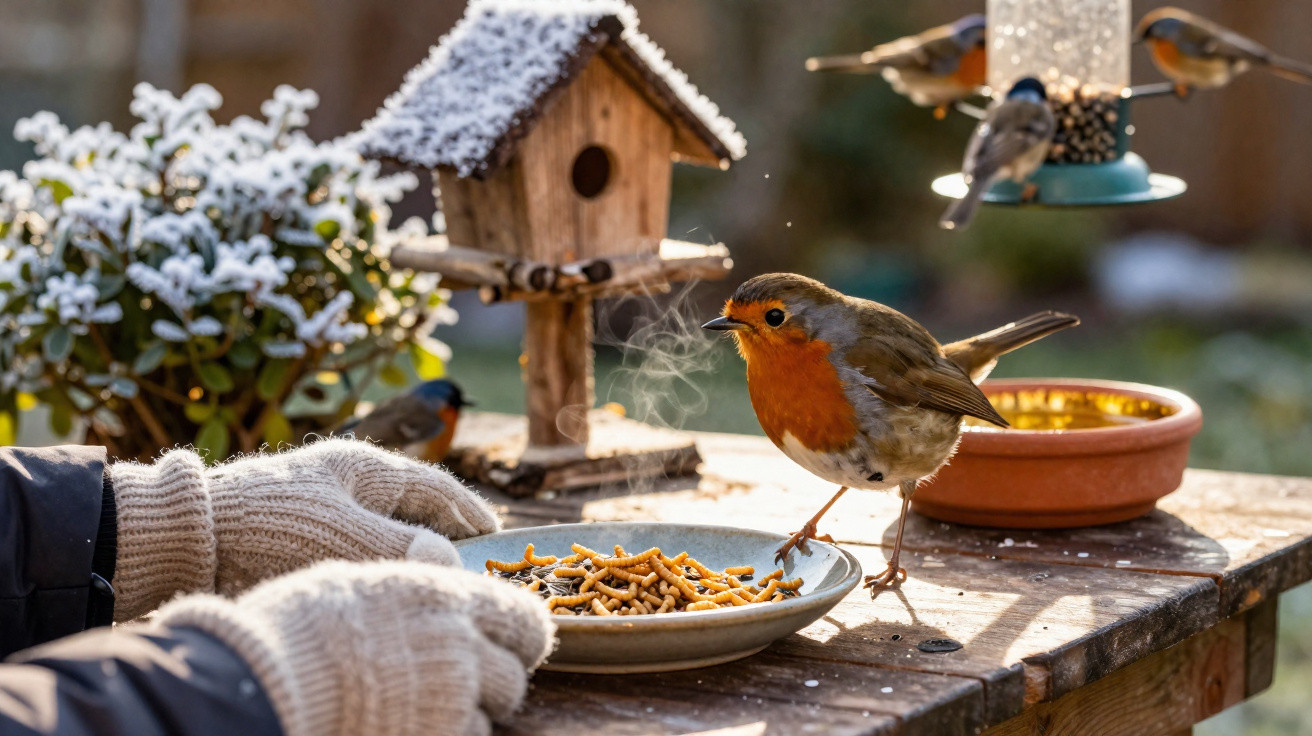
The first robin touches down with barely a whisper, a tidy bundle of feathers settling on the frozen grass.
You spot him because the rest of the garden appears to have shut down: the lawn is colourless, the shrubs are stiff, and the birdbath has become a sheet of cloudy ice. He cocks his head and gives the brisk, searching glance robins are known for, seemingly deciding whether your garden is worth the danger today. Then another bird alights on the fence, its feathers fluffed up and its breast glowing like a warning flare in the grey.
The weather forecast on your phone warns of an “arctic plunge” and “feels-like temperatures”, making you tighten your coat before you have even left the house. Between checking the app and putting the kettle on, it dawns on you that the garden is about to move from cold to punishing. This is weather that challenges more than plants; it tests tiny, beating hearts too. At this moment, many of those hearts are looking directly towards you.
Why your garden suddenly matters when the mercury falls
Once temperatures fall below freezing, a garden stops being merely decorative and becomes a place of survival. Frost sparkling across the lawn may look beautiful to us in the morning sun. For a robin that weighs scarcely more than two £1 coins, however, it means much of its food has been sealed beneath the ground. Earthworms burrow further down. Insects disappear into crevices and under bark. The friendly-looking bird on your fence is not simply being companionable; it is balancing the energy it takes in against the energy it spends.
Throughout Britain and much of Europe, robins enter survival mode on nights like those predicted this week. They puff out their feathers, tuck in their heads and use up fat reserves simply to remain warm until morning. Some research indicates that a small bird may lose up to 10% of its body weight during one freezing night. That is a terrifyingly slim margin when its entire body can sit in the palm of your hand. A severe cold snap arriving at the wrong moment can determine whether you see that same red breast in March… or do not.
At times like these, gardens become much more than private patches of green. They act as links in an unseen network of survival. It could be a lawn with several protected corners, a hedge that takes enough force out of the wind, or a tray of food put out before the freeze. These may not seem like major acts. But for a bird that must feed almost continuously to avoid running out of energy, they can literally give it another day. When the weather becomes hostile, another day is precisely what wildlife needs.
What to put out today before temperatures plunge
If you intend to support robins during this cold snap, when you act matters just as much as wanting to help. Treat today as the final quiet pause before the storm. Put food outside now, while the soil is still partly workable and birds are still ranging around. Robins are confident and inquisitive, yet they also recall places where food is dependable. Before the frost truly takes hold, you want your garden marked on their small mental map.
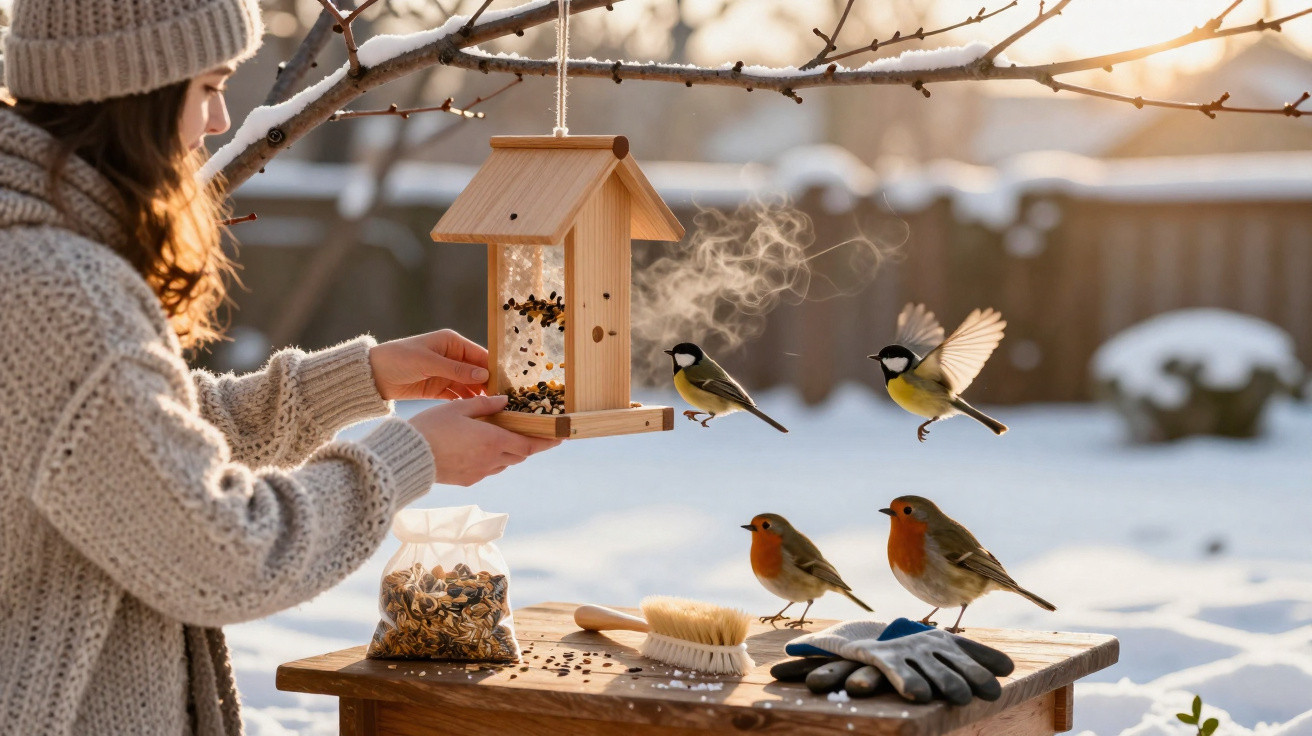
Begin with energy-rich choices: mixed suet pellets, crumbled fat balls, grated mild cheese and sunflower hearts. Since robins feed on the ground, scatter some on a level, open surface where they can move about easily, rather than relying entirely on hanging feeders. A shallow dish placed on a patio step can work remarkably well. If possible, include a small “jackpot” of mealworms, whether live or dried. That protein-rich, wriggling treat is like an energy bar for a bird preparing for a night below zero. From your side of the window it may seem insignificant, but it is probably the nearest thing to a hot meal they will have.
Food is what most people consider, while the second essential is often overlooked: water. In freezing conditions, liquid water may be more difficult to find than calories. Putting out a basic birdbath today, or even a plant saucer, will establish it as a dependable supply. Once the frost arrives, float a small ball or cork in it to prevent the surface from freezing completely. There is no need for specialist equipment. Check it each day, add a splash of warm - never boiling - water from the kettle in the morning, and that is one less struggle for a cold, thirsty robin.
What to do over the next 48 hours
When the temperature starts dropping, adopt a “little, often and consistent” approach. One enormous heap of food each week will not assist a robin that needs to replenish its energy several times daily to keep its internal heating system going. Try to offer small refills: one scattering before work, another at lunchtime if you are at home, then a further handful near dusk. Birds soon learn this dependable routine. You become part of their winter circuit: the secure stop where something is always available.
Let us be honest: hardly anyone manages that every single day. Life intervenes, the kettle boils over and emails start arriving. Make it easier for yourself instead. Store a small tub of seed, suet and mealworms by the back door, with a scoop inside. It is one quick action: open the lid, scatter the food, close it again. It takes 20 seconds. If you have children, they may happily take ownership of this task. “Robin duty” sounds like a game rather than a chore, while wildlife care quietly becomes part of the household routine.
What is less widely understood is the energy a bird loses through disturbance in weather like this. A cat waiting below the feeder, repeated slamming doors or you going outside every 30 minutes to take photographs can all force birds into needless flight and drain precious reserves. Once you have put food down, give them space. Allow the garden to remain quiet. Let the robin approach with a clear, safe route.
Common mistakes… and kinder alternatives
When the first hard frost arrives, it is tempting to raid the cupboard and scatter anything that seems vaguely suitable over the lawn: bread, leftover pastry or salty scraps. The intention is kind, but the outcome often is not. Foods with little nutritional value, including white bread, fill a robin’s small stomach without providing much benefit. It is rather like equipping someone for a snowstorm with a bag of marshmallows instead of a proper coat. It may be harmless as a one-off, but it becomes risky if it forms the main diet.
Another frequent mistake is putting food where we most enjoy watching birds, rather than where birds feel protected. A bare area in the centre of a lawn may offer a perfect view from the kitchen window. To a robin, it may feel like standing under a spotlight, exposed to predators approaching from every direction. Instead, create a feeding “runway”: lay out a strip or small cluster of food close to low shrubs, pots or a hedge, so cover is instantly within reach. This minor adjustment helps birds feel calmer and encourages them to return.
Most of us have enthusiastically bought an elaborate bird feeder, filled it right to the top, then forgotten it for weeks as the seed turned clumpy and mouldy. On an ordinary day, that is merely wasteful. During a freeze, it may actively damage the birds you hoped to support. If time is limited, choose a smaller amount rather than a larger one. A modest, fresh scattering is far better than a huge, stale feast.
The emotional side of feeding one small bird
The first time a robin eats food you have set out on a genuinely bitter morning can feel quiet and almost personal. The world is harsh, your breath hangs white in the air, and this tiny bird comes closer, hesitates, then decides to trust. It resembles a wordless conversation. You throw out a few more sunflower hearts, and the garden somehow seems half a degree warmer. One bird, one garden, one small act of kindness. On an exceptionally cold day, that matters.
In strictly rational terms, your piece of lawn will not save the entire robin population. You understand that. But as you stand at the window and watch a puffed-up bird peck through frost, rationality takes a different turn. In that place and at that time, you represent the difference between an empty beak and a full crop; between a long freezing night and a chance of reaching dawn. In a week when the news feels relentlessly bleak, that exchange of care - you provide warmth and the robin provides its presence - can feel unexpectedly grounding.
“One robin in one garden isn’t a grand conservation plan,” as one urban ecologist told me. “But thousands of people each helping the bird in front of them? That shifts the whole winter story.”
This is how straightforward practical measures turn into a modest but determined act of hope:
- Put out high-energy food today, before the freeze seals the ground.
- Keep water liquid and within easy reach, even if you only have a plant saucer.
- Offer small amounts frequently, in sheltered places that feel safe.
- Reduce disturbance and deter lurking predators where possible.
- Mention it to children, neighbours and friends, so your robin is not the only one receiving help.
A winter pact between you and the red breast on the fence
When forecasts become severe, it is natural to reduce life to radiators, hot drinks and additional layers. The garden turns into somewhere you look towards rather than venture into. Yet in that pale, brittle air outside, life is still bargaining and adapting. Robins cannot put on another jumper. Their winter plan is brutally simple: locate food, conserve energy, repeat. Your garden can shift that balance, even if only a little, towards survival.
Reading this on a phone may make it seem like just another list of “things to do before the cold arrives”. Yet remember the last time you watched snow fall in total silence, with every sound flattened. On such a day, a small, brightly coloured bird hopping through the white landscape does not seem like background decoration. It seems to show that something is still continuing, still enduring, still singing inside its own ribs. That has human value too.
On a street where curtains largely remain shut and gardens go unused throughout winter, one garden busy with birds can inspire others. Neighbours take notice. Children peer over the fence. Somebody else buys a feeder. A small chain reaction of care begins because you scattered several handfuls of food before the ground froze hard. There are no medals and no headlines. There is simply a quiet winter pact between you and the red breast on the fence: you provide the seed and water, and it provides the music when spring finally remembers your postcode.
| Key point | Detail | Benefit for the reader |
|---|---|---|
| Feed before the frost | Put out seed, suet and water today so robins can identify your garden | Improves the chances that birds will return during intense cold |
| Small, regular amounts | Offer several modest portions during the day instead of large feeds | Matches birds’ metabolic rhythm and reduces waste |
| Safety and quiet | Position food near shelter and limit disturbance and predators | Allows birds to feed without wasting unnecessary energy |
FAQ:
- What should I feed robins when it suddenly turns very cold? Choose high-energy foods: suet pellets, sunflower hearts, mealworms (live or dried), finely chopped mild cheese and good-quality mixed seed. Do not offer salty or heavily processed human leftovers.
- Is it okay to give robins bread in an emergency? A very small amount on one occasion will not kill them, but bread fills them up without supplying proper nutrition. Where possible, quickly move to fat- and protein-rich food that can genuinely help them through sub-zero nights.
- How often should I put food out during a cold snap? Ideally, offer small portions two or three times each day: early morning, midday and late afternoon. Feeding little and often reflects their ongoing need to refuel while keeping food fresher.
- What can I do to stop water freezing for birds? Use a shallow dish, place a floating ball or cork in it, and add a splash of warm - not boiling - water in the morning. Refresh it whenever you can rather than attempting to keep it ice-free around the clock.
- Will feeding robins make them dependent on me? No. Wild robins are opportunistic and retain several food sources on their mental map. Your garden is one useful stop on their route, not their sole option, though help during extreme weather can be vital.
Comments
No comments yet. Be the first to comment!
Leave a Comment