
At first, the bed seemed flawless: an upbeat blend of dahlias, salvias, basil, tomatoes and a young Japanese maple sharing one patch of ground. Leaves caught the sun, flowers drew bees, and it had that optimistic early-summer stillness when every planting seems full of promise.
By the end of July, though, things looked very different. Tomato growth had slowed, basil leaves were turning yellow around the margins, and the maple appeared miserable, producing scarcely any fresh growth. The bed still looked full from above, yet development had simply... stopped.
There was no clear problem visible above the soil.
The real struggle was taking place out of sight.
The hidden fight beneath your mixed beds
From the surface, a mixed garden bed can appear wonderfully harmonious. Cosmos spill towards cornflowers, beans climb sunflowers, and herbs nestle around the base of roses. Looking down on it, you see variety and plenty.
Below the surface, however, it may resemble a quiet territorial dispute. Roots interlace, compete, force their way through and claim space. The most vigorous plants establish their root systems first, then monopolise the available resources like greedy landlords. Less forceful plants do not necessarily die immediately; instead, they retreat into survival mode and their growth gradually reaches a limit.
Last summer, a gardener I met believed her raised bed had “nutrient issues.” She had planted lettuce, kale, tomatoes and a line of sunflowers at the back. Everything started reasonably well, but halfway through the season the lettuce bolted quickly, the kale became tough, and the tomatoes produced abundant foliage with very little fruit. The sunflowers alone looked delighted.
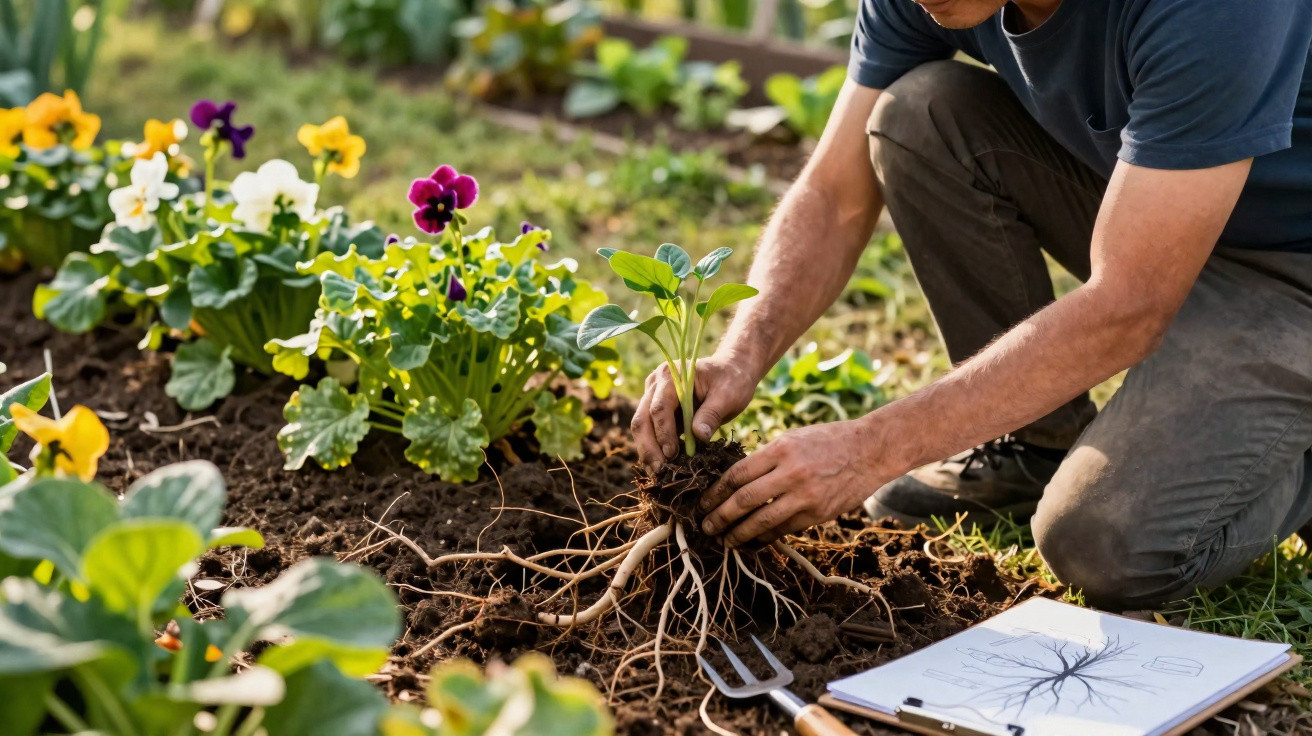
When she cleared the bed in September, the cause was stark. Sunflower roots had created a dense mat across the entire rear half of the bed. The tomato roots were shallow and congested, while the lettuce and kale had fine, thread-like roots clinging to the few remaining scraps of space and resources. The soil was not the failure; root competition was.
This is the overlooked error in countless mixed gardens: gardeners tend to focus on how plants appear above ground and rarely on their behaviour below it. We pair tall plants with low ones, flowers with vegetables, and supposed “good companions” from bright planting charts. But some plants send down deep taproots, others spread fiercely sideways, and some create thick fibrous networks that monopolise moisture.
Plants do not courteously divide the soil into equal portions. The quickest, strongest root systems occupy it first, secure the water and nutrients, and leave other plants to manage as best they can. This is why growth can plateau even in beds that look perfectly planned on paper.
How to stop root bullies taking over your garden
The first step is straightforward: design around roots rather than colours and plant heights alone. Before combining plants in one bed, ask yourself: who will root deeply, who will spread broadly, and who will remain well behaved? Keep heavy feeders such as tomatoes, dahlias and large annuals together in one area instead of distributing them throughout the garden.
Then make use of underground vertical layers. Combine a deep-rooted plant, such as parsnip or lupin, with one that mainly occupies the upper 15 cm of soil, including lettuce or many annual flowers. They can share the ground rather than compete for exactly the same zone. The soil starts to function like a three-dimensional block of flats instead of a cramped studio flat.
Many gardeners make the same mistake: each year, we squeeze more plants between established ones “just for this year.” A shrub that was neat and charming three seasons ago may now have roots extending far beyond its drip line, yet we still plant a pepper or two beneath it and then wonder why they struggle. We have all had that moment of realising that a flourishing hydrangea has effectively made your peppers tenants without a kitchen.
Another common problem is positioning young perennials beside fast-growing, resource-hungry annuals. Sunflowers, squash and vigorous cosmos can drain moisture from the topsoil during hot weather. Young perennials cannot yet send their roots deep enough to follow the water, so their growth stalls early. Gardeners often blame the weather or lack of fertiliser rather than the bully growing next door.
A landscape designer I spoke to explained it in a way that stayed with me.
“Above ground is your painting. Below ground is your wiring. You don’t see the wiring, but if it’s a mess, the picture never really works.”
To make that advice useful in practice, many professionals use three simple checks when planning mixed beds:
- Root behaviour – whether roots are taproots, fibrous or creeping, and the speed at which they spread.
- Water appetite – thirsty, moderate or dry-loving, so that one plant does not dominate the watering.
- Feeding style – heavy feeder versus light feeder, preventing nutrient-hungry plants from starving the others.
Realistically, nobody assesses this perfectly every day. Even so, having a basic idea of which plants are assertive and which are modest underground can completely change the way your beds perform.
Rethinking mixed planting so everything can grow
Once you begin to spot root competition, you see the garden differently. A tightly packed border no longer automatically signals success; instead, you ask, “Who’s paying the price for this density?” That single question can reshape your next planting session.
You may choose to plant fewer specimens while giving them deeper, more open soil. You may give a shrub a corner of its own rather than insisting it belongs in a crowded mixture. You may conclude that companion planting only works when the companions aren’t secretly strangling each other underground. Gardening becomes less about filling every available gap and more about allowing roots enough room to breathe.
| Key point | Detail | Value for the reader |
|---|---|---|
| Think in 3-D | When pairing plants, account for deep versus shallow roots | Reduces hidden competition and improves overall growth |
| Watch the bullies | Restrict aggressive rooters, including large shrubs, sunflowers and squash, in mixed beds | Stops weaker plants from stalling in the middle of the season |
| Group by appetite | Keep heavy feeders together, group light feeders together, and tailor soil and watering accordingly | Makes more efficient use of resources and reduces frustration |
FAQ:
- Question 1 How can I tell whether root competition is why my plants are not growing?
Answer 1 Watch for plants that remain small, wilt sooner than neighbouring plants, or turn yellow despite having no pests or diseases. Carefully dig near the struggling plant: if you discover dense roots from a nearby shrub or large annual invading the area, root competition is a likely cause.
Question 2 Can mulch reduce root competition?
Answer 2 Mulch will not prevent aggressive roots from spreading, but it evens out moisture and temperature, giving weaker plants a better opportunity to cope. Organic mulches also gradually enhance soil structure, allowing roots to grow deeper and work around competition more easily.
Question 3 Are raised beds less vulnerable to root competition?
Answer 3 Raised beds can actually make the issue worse when they are small and overcrowded. Inside a confined bed, aggressive roots reach the sides, turn back and entangle with everything else. Their advantage is that you control the soil and can plan root layers more deliberately.
Question 4 Which plants tend to be the “root bullies” in mixed gardens?
Answer 4 Frequent offenders include large sunflowers, squash and pumpkins, established shrubs, vigorous ornamental grasses, and certain trees with shallow, spreading roots, such as maples or willows. They are excellent plants, but they need dedicated territory or plenty of spacing.
Question 5 Is it wrong to grow vegetables and perennials together in one bed?
Answer 5 Not at all, provided you understand how they share resources. Give long-lived perennials or shrubs a defined root zone, and place annual vegetables a sensible distance away. Use deep compost, loosened soil and, where a perennial is especially assertive, root barriers.
Comments
No comments yet. Be the first to comment!
Leave a Comment