

A mild summer breeze drifts by, glasses mist over, and quiet music spills from an open window somewhere nearby. Then comes that familiar annual moment: the first sharp buzz right beside your ear, followed by the instinct to scratch before the bite has even appeared. Conversation at the table briefly stops as everyone swats at nothing. A friend reaches into their bag for mosquito spray, and its pungent smell settles across the balcony like a second layer of air. One person pulls a face, another coughs. “Is that really necessary?” someone mutters. In that instant, the absurdity becomes clear: we are sitting outside, surrounded by greenery – yet smelling as though we are in a chemistry lab.
Why mosquitoes avoid some plants – and love others
Anyone who watches their balcony closely in summer soon notices that mosquitoes have preferred spots. They gather in small dancing clouds above a bucket of water, yet are scarcely seen around the tomatoes. Around a dense pot of lemon balm, they appear to veer away as though they have reached an invisible boundary. The secret lies in scent. Lavender smells of holidays to us, basil suggests cooking and mint brings tea to mind. To mosquitoes, however, many of these essential oils are more like a flashing warning sign. They disrupt the insects’ navigation and mask the scent signals they use to locate us. Once you understand that, you will never choose plants in quite the same way again.
A gardener I spoke to described a summer when, purely out of curiosity, he created an “anti-mosquito strip” in his flowerbed. Tomatoes went on the left, followed by basil, lavender, lemongrass and more basil. On the right, he kept an ordinary mixed bed of the sort found in any allotment. In the evening, he sat beside it with a beer and watched. He still insists that a clearly visible haze of mosquitoes hovered above the bed on the right, while the air over the left-hand side was calmer. It was not a scientific study, of course. Yet everyday observations like this shape our instincts – and sometimes they are remarkably accurate.
Scientifically, the effect can be explained quite simply: mosquitoes primarily navigate using carbon dioxide, body heat and particular skin scents. Highly aromatic plants release volatile compounds that mask these signals nearby. You could say that they fill the air with scents mosquitoes struggle to read. That does not mean one mint plant will protect an entire garden party. It works more like a veil than a wall. Anyone using plants as mosquito protection is creating a scented landscape, not a high-security compound. That is precisely what makes the approach so appealing.
The 6 plants that really send mosquitoes packing
Let us start with the classic plant found on window sills throughout southern Europe: lavender. Its essential oils are about as inviting to mosquitoes as airport security during the holiday season. Lavender performs best in a sunny position with fairly poor soil, as this encourages it to produce more aromatic compounds. If you do not have a garden, place two or three pots right beside your balcony seating. One small trick is to gently rub the flowers between your fingers in the evening, briefly intensifying their fragrance. There is also a side benefit nobody regrets: the whole seating area suddenly smells a little like Provence.
The second option is more understated but surprisingly effective: lemon balm. Many people know it only as a garnish in a cocktail glass, but its citrusy scent repels mosquitoes. A couple I know planted it around their allotment terrace as a loose border. They say that, in summer, their children now play barefoot in the very spot where nobody previously wanted to sit because “it itches so much there”. Lemon balm grows quickly, tolerates a great deal and can even be planted closely together in narrow balcony planters. Rub a few leaves between your hands in the evening and apply the scent to your arms and legs, and you suddenly understand why synthetic sprays often try to imitate it.
Slightly more exotic, but particularly disliked by mosquitoes, is lemongrass or the familiar “citronella” plant. Botanically, these are different species, but for this purpose they belong to the same fragrance family. The grass grows in dense clumps, releasing its aroma with even the lightest breeze. During warm summers, two or three larger pots positioned strategically around a seating area can noticeably alter the air. If you prefer something for the garden kitchen, add basil to the anti-mosquito zone. Its sharp, savoury aroma not only confuses mosquitoes but also makes every slice of tomato taste better. Let us be honest: nobody grows an army of basil solely to drive mosquitoes away. But if you are going to harvest it anyway, why not get both benefits?
How to position mosquito-repelling plants so they really work
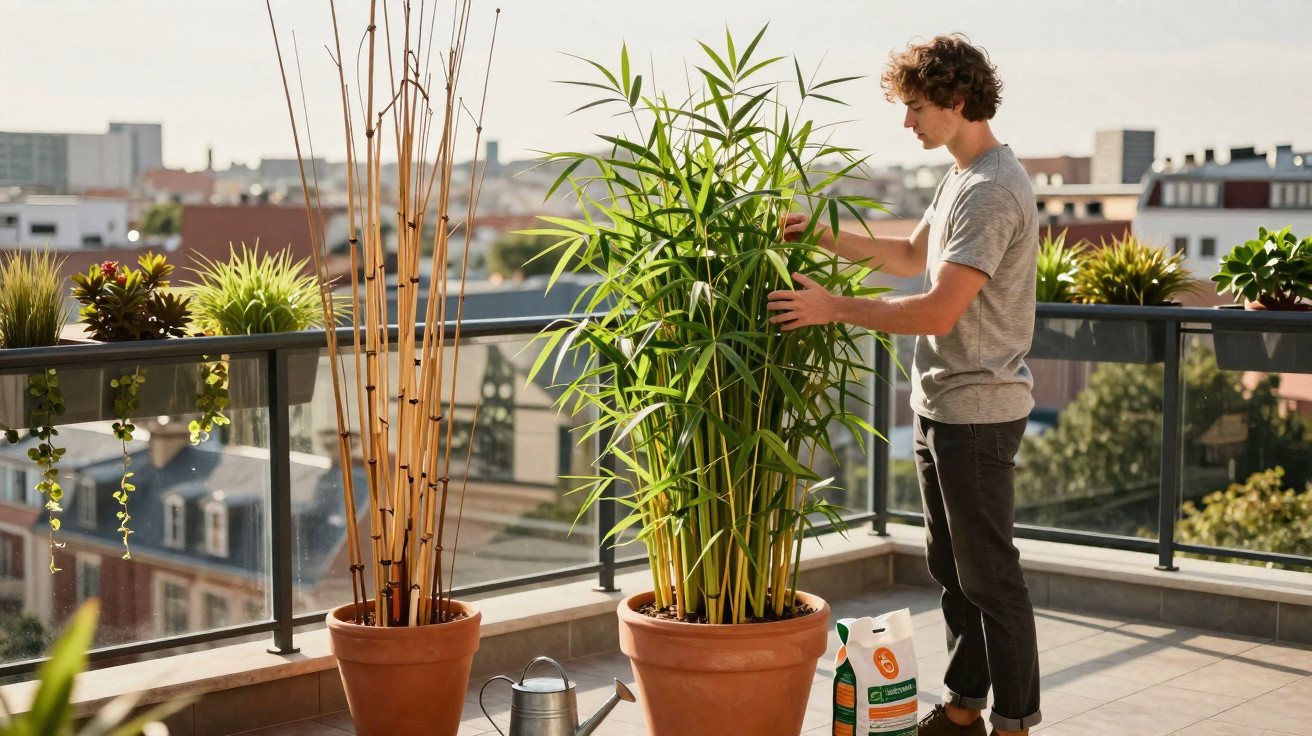
The biggest mistake is placing these plants decoratively in some distant corner, then wondering why mosquitoes continue to bite. The scented barrier needs to be where air actually passes around you. Think in terms of a ring. Put pots of lavender and lemongrass along the edge of the table, place lemon balm in planters around the balcony railing, and position mint – preferably in pots so that it does not spread uncontrollably – close to chairs and sofas. The nearer they are to your skin and breathing space, the stronger the effect. Anyone with enough room can even line the path to the patio door with a small avenue of plants. You are effectively walking through an invisible scented cloud.
What many people overlook is that these are living plants. They need water, light and sometimes a trim to keep them bushy. And, honestly, nobody really does that every day. The good news is that they forgive quite a lot. What they do not tolerate is bone-dry containers or waterlogging. Water them regularly but without becoming obsessive, and occasionally cut back spent lavender flower spikes; in return, you will have a dependable backdrop of fragrance. Another trap is using too few plants. A single pot of lavender on a 50-square-metre terrace is decoration rather than protection. It is better to grow a few varieties in quantity than a little of everything.
A garden designer from Cologne summed it up perfectly recently:
“Plants against mosquitoes work when you treat them like housemates – close to you, not out on the margins.”
Planning with that image in mind naturally makes things more practical. Think of the six key plants as a team:
- Lavender: a strongly scented foundation; it likes sunshine and dry soil
- Lemon balm: a citrusy cloud, ideal for border planting
- Lemongrass/citronella: tropical scented protection, perfect in containers
- Basil: a kitchen favourite with an added mosquito-repelling effect
- Mint: an intense scent, best kept in a pot
- Rosemary or thyme: a robust note that rounds out the scent blend
Combine them deliberately and, after only a few evenings, you will notice how calm the air can feel – even at the height of summer.
What changes when summer suddenly smells “lighter”
It becomes interesting when you experience one summer protected by plants and remember the previous summer with spray. Many people say the space feels different. The air seems clearer, conversations focus less on bites and more on what actually matters: the evening, the people and the feeling of being outdoors. You scratch less, and you are not constantly searching for a bottle with a chemical smell you do not even like. At some point, you sit there, look at the pots on the ground and think: such a simple thing can make a difference. Not perfectly, but noticeably.
Naturally, lavender and lemongrass will not make every mosquito in the world surrender. On especially damp days or close to standing water, a combination of methods may be needed: plants, long clothing and perhaps spray after all, if the evening’s wasp happens to find exactly the wrong corner. But the overall mood changes. Rather than simply defending yourself, you feel that you have actively created an atmosphere. At a time when many of us have had enough of things described as “aggressive” and “maximum strength”, a living solution can feel like a small alternative.
Perhaps that is the real appeal of these 6 plants: they do something not only for our skin but also for our minds. They remind us that some problems are not solved in the toiletries aisle, but in a pot outside the door. A few small jobs in spring can mean staying outdoors longer in July. And a balcony that smells alive is more than a backdrop for an Instagram photo. Once you have felt that, you start taking friends cuttings of your lemon balm rather than merely sending them a link to mosquito spray. Almost without noticing, an idea spreads: summer evenings can be gentler without smelling of chemicals.
| Key point | Detail | Benefit for the reader |
|---|---|---|
| Plant selection | Lavender, lemon balm, lemongrass/citronella, basil, mint, rosemary/thyme | A practical shopping list for effective anti-mosquito planting |
| Positioning | Arrange plants in a ring and close to seating areas, paths and doors | Better fragrance impact exactly where mosquitoes would be disruptive |
| Care & practice | Water regularly, prune plants and use several pots rather than individual plants | A lasting effect without chemical sprays and more pleasant time outdoors |
FAQ:
- Which plant works most strongly against mosquitoes? Many people most consistently report good results with lavender and lemongrass/citronella, particularly when several pots are placed closely around seating areas and the plants are strongly scented.
- Are plants alone enough for mosquito protection? In many urban balcony situations, yes; in a damp garden beside a pond, less so. Plants significantly reduce bites, but in extreme conditions they do not replace every other measure.
- How close do the plants need to be to me? The closer, the better: directly on the table, beside the chair or along the balcony railing. A decorative lavender plant in the corner has little effect at the dining table.
- Can children and pets come into contact with them? The plants listed are generally considered unproblematic as long as nobody eats large quantities. Mint and basil are even often nibbled – if in doubt, ask your vet.
- When should I plant them so that they work in summer? Spring, after the last frosts, is ideal. In an emergency, though, you can buy vigorous pots from a garden centre even in high summer and plant them straight away – the fragrance works immediately.





Comments
No comments yet. Be the first to comment!
Leave a Comment