
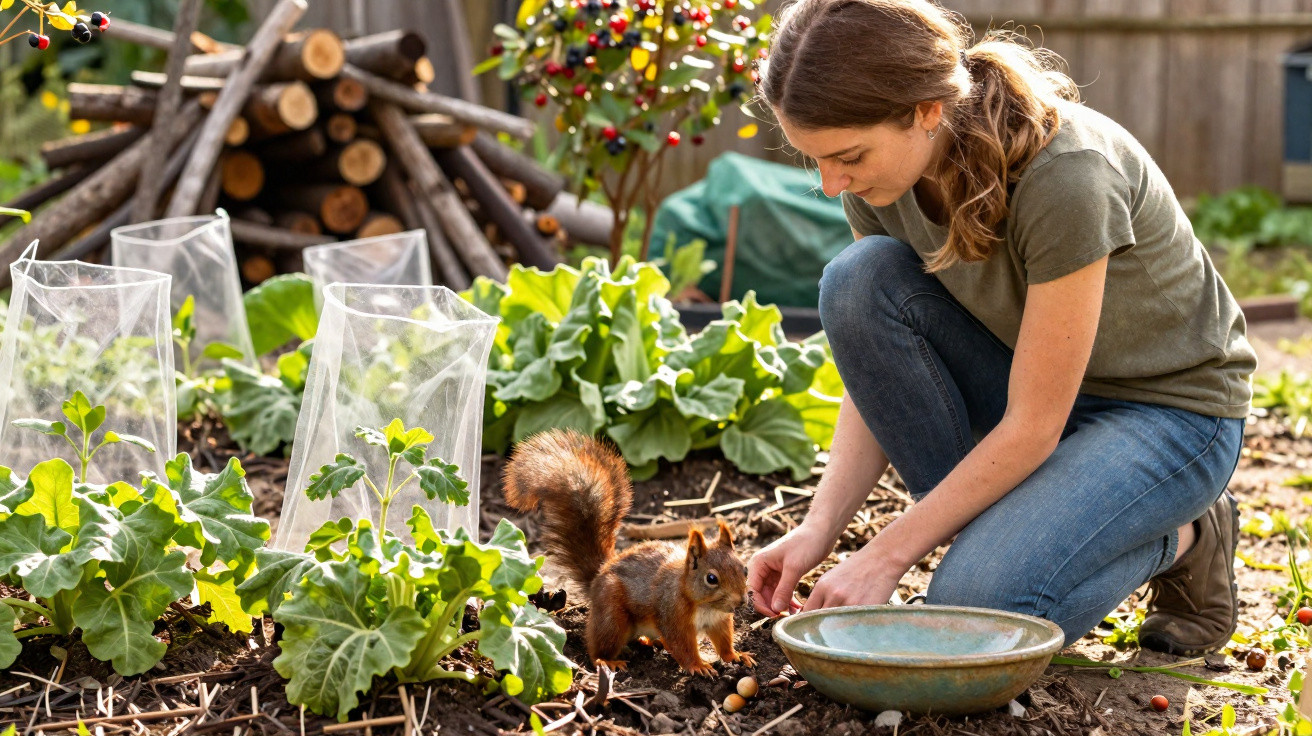
Smart planning for your beds can give you a powerful ally.
Many amateur gardeners blame squirrels whenever soil has been disturbed or a young plant has been knocked over. The instinctive response is to get rid of these cheeky climbing experts. A closer look soon shows how unfair that judgement is. These small rodents can actually make a vegetable garden more resilient, healthier and more vibrant - provided you understand their role and guide them towards the right parts of the garden.
From suspected pest to quiet soil improver
How their digging benefits garden soil
Squirrels bury nuts, seeds and other supplies in countless locations around the garden. They never recover some of these caches. New trees and shrubs may later grow from precisely these “forgotten stores”. It happens naturally, acting rather like free planting.
Their constant scraping and digging also loosens the soil. This improves aeration, lets water drain away more easily and helps roots spread faster. Earthworms, micro-organisms and fungi thrive in this friable soil, releasing nutrients in turn. Many vegetables grow more robustly in such living soil and need far fewer chemical aids.
“Squirrels carry out soil care unconsciously - free of charge and all year round.”
If you have previously smoothed over every last crumb of soil, try being more relaxed about one corner of the garden. After only one season, you may find that loosened, turned-over soil supports more life and therefore produces higher yields.
Why spring is the ideal time to form an alliance
From around mid-March, activity in the garden increases noticeably. Temperatures rise, the first buds emerge, and birds and small mammals begin looking for food and somewhere to live. This is the period when territories are established again - and when you can arrange your plot so squirrels will be happy to use it permanently.
Setting up water sources, planting suitable trees or creating cover now can influence the animals’ behaviour for the entire season. They become accustomed to using particular places to feed and rest, leaving vulnerable beds alone more often when attractive alternatives are available.
How to support squirrels without turning your vegetables into food
Offer fresh water: a small bowl with a big effect
Many gardens provide food but hardly any water. This is an often-overlooked way of directing wildlife. A shallow bowl or a small, equally shallow mini-pond filled with clean water can act like a magnet.
- Keep the container shallow so animals cannot drown.
- Place it as high up as possible, or in an open location, to make attacks by cats more difficult.
- Replace the water regularly, especially during spring and summer.
- Put a stone or branch in the water to provide insects with a refuge.
Especially on hot days, plenty of life gathers around a water source - and squirrels will reliably visit it too. Locating it in a safe part of the garden can direct their routes away from your most delicate beds.
Secure nut supplies with the right trees
To stop squirrels regularly helping themselves to vegetables, fruit or ornamental plants, they need a lasting, natural food source. Nut- and seed-bearing trees are ideal for this purpose. Particularly suitable choices include:
- hazel shrub (hazelnuts)
- oak (acorns)
- walnut tree
- horse chestnut or sweet chestnut
- beech (beech mast)
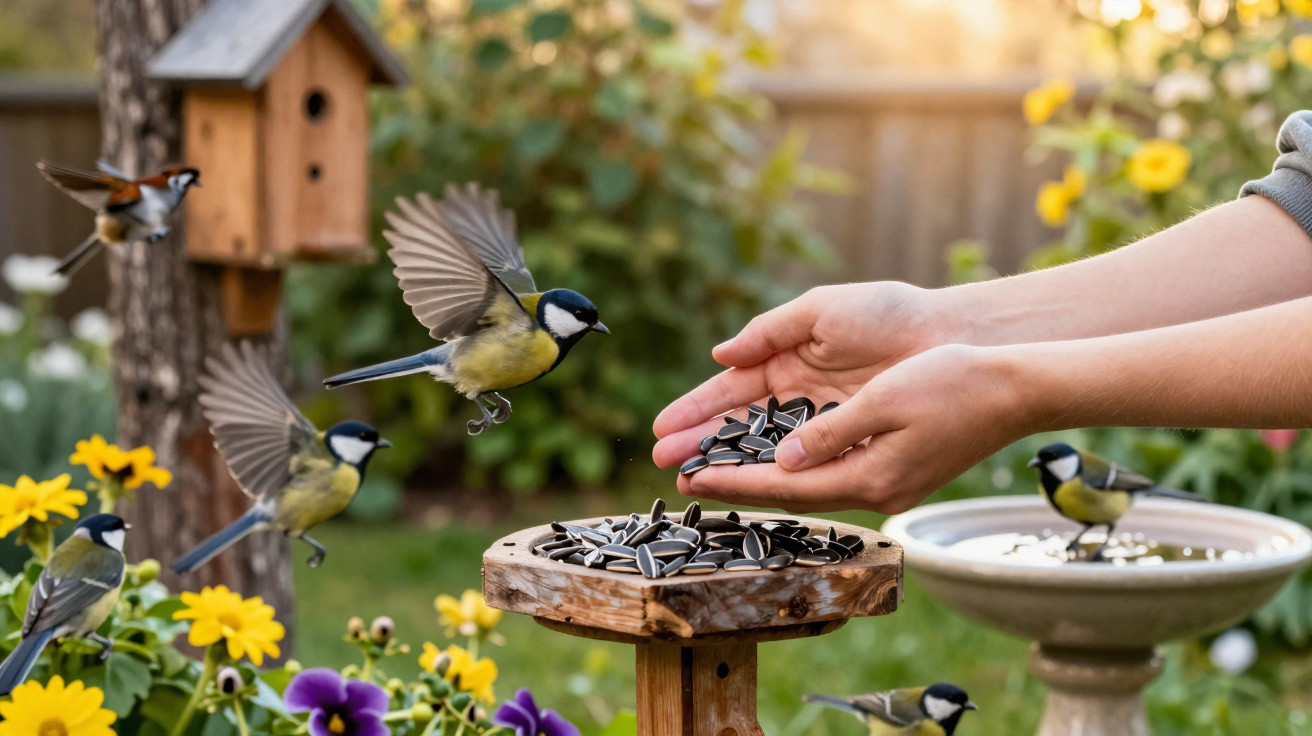
In larger gardens, a small group of trees is worthwhile. In urban gardens or on balconies, a hazel shrub in a container and a feeding station are often enough. Suitable foods for appropriate feeders include:
- unsalted sunflower seeds
- nuts in their shells
- acorns or chestnuts collected in autumn
If you replenish this “store cupboard” regularly, you will soon notice that the animals tend to concentrate there rather than nibbling radishes or lettuce leaves.
A touch of wilderness in the garden: shelter instead of ruler-straight lawn edges
Why a loose hedge is better than immaculate topiary
Many gardens are too tidy to support much life. A strictly clipped line of thuja offers very little protection. A dense, partly wild hedge of native shrubs is different: it provides cover, nesting sites and quick escape routes.
Hornbeam, hawthorn, privet, elder and blackthorn are all suitable. By not constantly correcting its shape with hedge trimmers, you create a green corridor that squirrels can use to move around safely.
A nest box positioned four to six metres above ground, well sheltered from rain and wind, is also useful. This type of refuge increases the likelihood that an animal will choose the plot as a long-term territory - and therefore as a place for its soil-care work.
Log piles and dead wood as natural strongholds
In spring, many gardeners clear up ruthlessly: every branch is removed and everything is made neat. For nature, that is a loss. A pile of branches, old prunings and some dead wood becomes a gathering place for insects, small mammals and sometimes even hedgehogs. Squirrels also use these structures for cover.
“A deliberately retained pile of wood is not a sign of laziness, but a simple, effective conservation measure in your own garden.”
If you are concerned about pests, place this area at the edge of the plot. The important thing is not to keep rearranging it, but to leave it in place for several years. This allows a stable mini-ecosystem to develop, diverting predators and reducing pressure on the vegetable bed.
Protect vegetables without driving wildlife away
Young plants under cloches: protection during the vulnerable stage
Fresh sowings and tender young plants are the most vulnerable part of the vegetable-growing year. One paw or jump can be enough to ruin a row of carrots. Transparent plant cloches or small plastic or glass tunnels offer a solution.
- They allow light and warmth to reach the soil.
- They stop animals from reaching the soil or seedlings directly.
- They also provide protection from heavy rain and hail.
These covers are available in many sizes from retailers, but cut-down plastic bottles with their caps removed also work as an improvised option. Regular ventilation is essential to prevent trapped heat and mould.
Netting over berries when summer becomes tempting
Once berry bushes ripen in summer, they appeal to many animals, not just squirrels. Simply stretching fine-mesh netting over blueberries, strawberries or raspberries helps limit the temptation.
The netting should be fitted so animals cannot become tangled in it: keep it taut, avoid loose loops and, where possible, use a frame to hold it away from the plants. This protects the harvest without harming wildlife.
When everything works together: water, trees, shelter - and intact beds
Balance is the key. Providing a water source, food trees, wooden shelters and a partly wild hedge meets squirrels’ basic requirements: food, protection and routes through the garden. At the same time, cloches and netting safeguard the most sensitive cultivated plants.
In many gardens, this reduces the need to use poisons or harsh deterrents. Pesticides harm the very helpers you need: insects, earthworms, birds and the small nut collectors themselves.
Practical tips for everyday life with animal garden partners
How to spot conflicts quickly and respond
Anyone deliberately sharing their garden with wildlife for the first time should take short inspection walks more often. Signs that something is not working include:
- heavily dug holes directly in vegetable beds
- young plants repeatedly nibbled despite cloches
- a feeding station emptied within just a few hours, day after day
In these situations, a small adjustment is often worthwhile: move the feeding station farther from the bed, add a second water source, create extra cover or transfer the most delicate crops into raised beds. Many problems can be eased through small changes without resorting to confrontation.
Why a little “chaos” is the best insurance for your harvest
A perfectly tidy garden may look neat, but it is vulnerable. A single pest can then cause major damage. In a diverse, slightly wild garden, the risk is spread: more species mean more natural predators, more pollinators and more helpers in the soil.
Squirrels are only one element of this system. Alongside insects, birds, soil organisms and robust plants suited to the site, they gradually create a system that largely stabilises itself - one in which the vegetable bed is no longer the weakest point, but part of a living network.
Comments
No comments yet. Be the first to comment!
Leave a Comment