
Many amateur gardeners carry heavy bags home each spring – yet there is a simpler, cheaper and far greener option.
Anyone standing in front of metres of stacked potting compost at the garden centre will almost instinctively pick up a bag. Neatly packaged and convenient, “multi-purpose compost” promises quick results in beds and on balconies. However, this easy choice comes at a cost that extends well beyond the price at the till – affecting the climate, the environment and even the quality of your own soil. This is why more and more experienced gardeners are switching entirely to homemade compost mixes.
Why shop-bought potting compost is so problematic
Most commercially available composts still contain a high proportion of peat. Peat is extracted from bogs: highly sensitive ecosystems that have developed over thousands of years. These bogs are enormous carbon stores. When peat is harvested, the land dries out and the carbon it holds is released into the atmosphere.
“With every bag of peat compost, you contribute a little more to the greenhouse effect – often without realising it.”
Transport adds another issue: compost is often moved over hundreds of kilometres, sometimes across Europe. Lorry journeys, storage and processing all produce emissions. Finally, it is sold in a thick plastic bag which, in many cases, is not recycled and remains waste for a long time.
Avoiding these products reduces your personal carbon footprint and protects habitats that recover only very slowly. Once peatland has been destroyed, it is virtually impossible to “repair”.
Mixing your own potting compost: easier than many people think
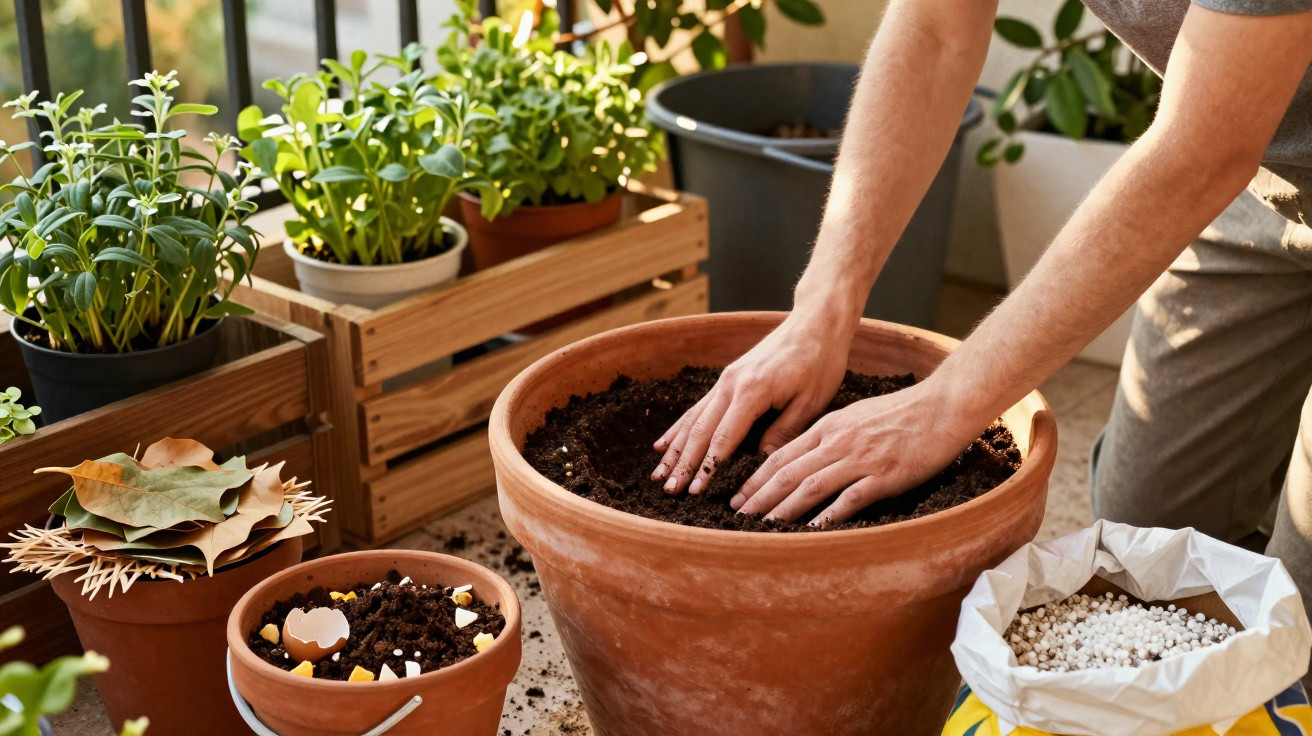
The alternative is to make your own potting compost. It may sound more labour-intensive than it really is. Essentially, the approach relies on two components: compost and structural material. Both are produced in everyday life anyway – in the garden and in the kitchen.
Compost as the nutrient powerhouse
Valuable material is thrown away every day with organic waste: vegetable and fruit peelings, coffee grounds, eggshells, wilted leaves and tea bags. They are wasted in the food-waste bin, but in your own compost heap they become nutrient-rich gold for the soil.
Mature compost supplies plants with nitrogen, phosphorus, potassium and many trace elements. It improves soil structure, encourages soil life and helps retain water. It forms the “base ingredient” of good potting compost.
Structure for air and loose root space
Compost on its own is usually too heavy and compact. A homemade compost mix needs airy ingredients so roots can breathe and water does not sit in the soil. This is where dry materials are useful:
- dried, shredded leaves
Comments
No comments yet. Be the first to comment!
Leave a Comment