
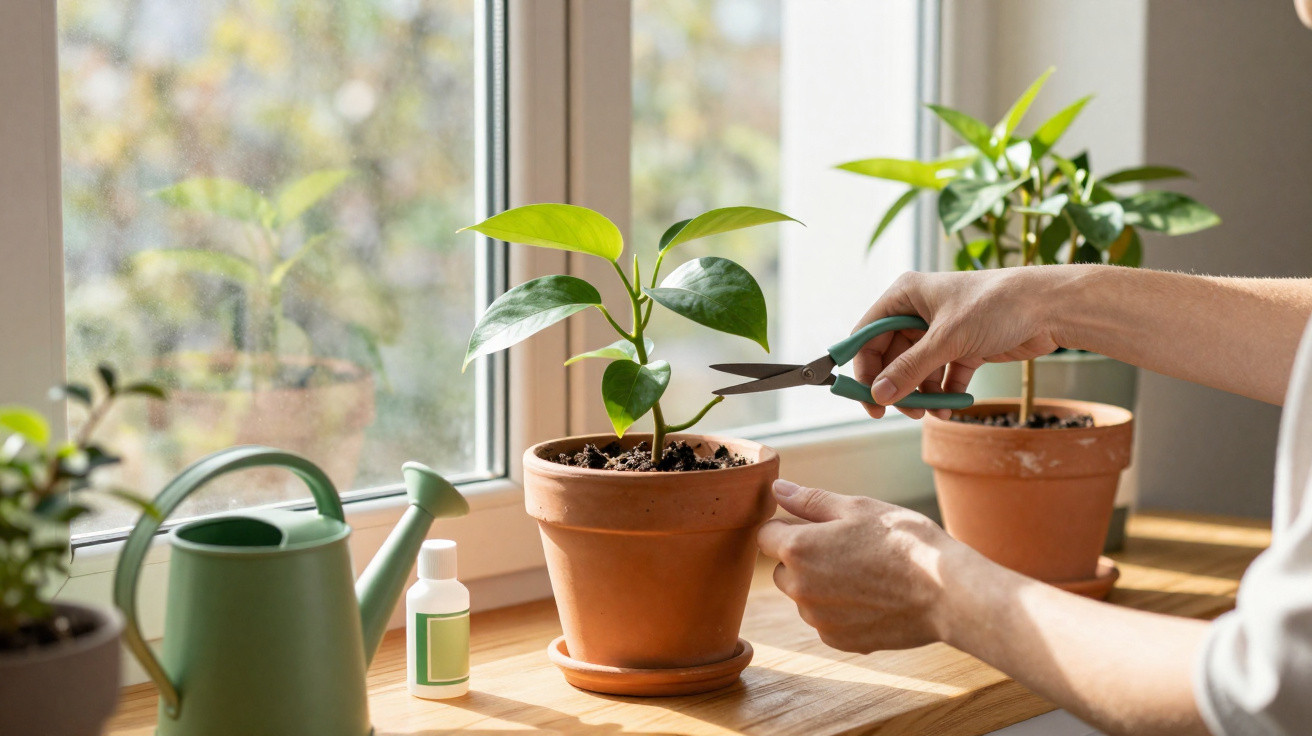
In March, one specific adjustment determines whether your money tree thrives or merely limps along.
Many owners underestimate just how sensitive the transition from winter to spring is for a money tree. This popular succulent now begins to increase its metabolism again - but only when its position, watering, nutrients and pot are adapted in good time. Otherwise, the plant remains stuck in “winter dormancy mode” and makes very little growth during spring.
Why March becomes a turning point for the money tree
Throughout autumn and winter, the money tree enters a kind of resting phase. It barely grows, requires little water and needs no fertiliser at all. Many people water it only once a month, which is perfectly suitable while days remain short and temperatures are moderate.
During March, the situation gradually changes: daylight hours lengthen, light becomes more intense and the root ball dries out faster. At the same time, tiny buds and fresh leaves start to appear at the tips of the shoots. This is the unmistakable sign that the plant is becoming active again - and is no longer content with minimal winter care.
“Anyone who changes nothing about their care routine in March holds the money tree back at exactly the point when it is ready to get going.”
The answer is not a drastic change of routine, but careful adjustment: slightly more light, a modified watering schedule, a cautious return to fertiliser and, depending on its condition, a new pot or a light shaping prune.
The ideal spring position: plenty of light without a magnifying-glass effect
Light remains the most important factor in March. The money tree is a light-loving succulent, but after winter it cannot immediately cope with relentless full sun through glass.
Suitable positions include:
- an east-facing window with morning light;
- a west-facing window with gentle evening sun;
- a south-facing window with a sheer curtain or some distance from the glass.
If the money tree receives too little light, its shoots will stretch strongly in one direction. The branches become long, soft and prone to toppling over. This “leggy” growth habit is difficult to correct later.
Too much direct sunlight behind glass creates the opposite problem. Leaves may initially appear paler, then develop brown edges or patches. These are sun-scorch marks, and they will not disappear.
A practical tip: turn the pot a little every week. This distributes the light more evenly, helping the crown grow compact and rounded rather than lopsided.
Watering a money tree in March: leaving winter mode without rushing into summer
After location, watering deserves the closest attention. Although succulents such as the money tree tolerate drought better than waterlogging, they need slightly more water in spring than they did in December.
A sensible routine can be found as follows:
- Push a finger 2–3 cm into the compost.
- Water only when this layer feels completely dry.
- Then water thoroughly until water runs out of the bottom of the pot.
- Empty the saucer or cachepot after a few minutes.
In a bright room, this often means watering every 10 to 15 days during spring. Small pots dry out more quickly, so the interval may need to be a little shorter.
The leaves reveal a great deal:
- Too much water: leaves become soft and yellowish, drop off easily, and the base of the stem looks dark and mushy.
- Too little water: leaves shrivel, appear wrinkled and slightly curled, but do not become soft.
It is better to adjust the intervals by only a few days in either direction than to move from “almost never” to “constantly wet”. This allows the money tree to adapt to its new routine with far less stress.
Fertilising: a gentle restart for strong new growth
After a long winter rest, a money tree is usually sitting in relatively nutrient-poor compost. In March, the plant starts growing again and benefits from feeding - but not in excessive amounts.
A liquid fertiliser for cacti and succulents is a proven choice. It contains less nitrogen than standard houseplant fertiliser and supports compact, sturdy growth with firm leaves.
In practice:
- fertilise from March to autumn;
- every 4 to 6 weeks is entirely sufficient;
- use only half the manufacturer’s recommended dose;
- never apply fertiliser to bone-dry or soaking-wet compost.
It is best to fertilise a few days after watering, when the root ball is slightly moist. The roots can then absorb nutrients effectively without being “burned”.
“Moderate feeding in spring makes shoots thicker, leaves fleshier and the crown more stable overall.”
In winter, however, leave the fertiliser in the cupboard. A dormant or weakened plant can barely process additional salts, which causes more harm than benefit in the long term.
Pruning in spring: turning a lanky plant into a compact tree
Early spring is a good time to restore an overgrown money tree to an attractive shape. As soon as new leaves emerge, excessively long or one-sided shoots can be shortened.
The following applies:
- Always cut just above a leaf node.
- Remove no more than 20 to 30 percent of the plant at one time.
- Use only clean, sharp secateurs or a sharp knife.
Clean tools with a little alcohol between different plants. This helps to reduce the spread of pathogens.
Every cut encourages branching. Over time, two or three new side shoots can develop from one long, bare shoot. In this way, a “stick with leaves” gradually becomes a small, tree-like shrub with a dense crown.
Repotting a money tree in March: when the old pot becomes restrictive
Many money trees remain in the same compost for years. This does not have to cause an immediate problem, but the substrate gradually compacts and loses its ability to drain properly. Once water no longer drains well or roots begin growing out of the pot, it is time to repot.
The best period runs from March to early summer. At this stage, the plant has the best chance of rooting in well and returning to growth.
Use this short checklist before repotting:
| Sign | What it means |
|---|---|
| Roots are growing out of the drainage hole | The pot is too small and the available root space is exhausted |
| Water remains on the surface or in the saucer for a long time | The substrate is compacted and drainage is inadequate |
| A very heavy, clay-like root ball | The compost is unsuitable for succulents |
For the new container, a pot only slightly larger than the old one is usually enough. The key is a highly free-draining mix - for example, cactus compost, possibly blended with a little pumice, perlite or coarse sand. Do not water for a few days after repotting so that any root damage can dry out. Wait several weeks before applying fertiliser after changing pots.
Common March mistakes - and how to avoid them
The same issues repeatedly arise in spring. Once you know them, you can prevent a great deal of stress:
- Shock from a change of position: moving from a dark winter spot straight into full sun causes scorched leaves. Move the plant gradually closer to the window instead.
- Too much “spring affection”: after months of sparse watering, the plant is suddenly watered constantly. Increase watering only gradually.
- Fertiliser as a miracle cure: a weak, overwatered plant is “boosted” with fertiliser. This often makes the problem worse.
- Severe pruning: impatience leads to the plant being heavily cut back. Several small corrections over a number of months are preferable.
What a healthy money tree feels like in spring
Anyone who adjusts their plant correctly in March will notice clear changes within a few weeks. New leaves appear, the crown looks denser, and shoots feel sturdy and slightly flexible. Leaves are rich green, faintly glossy and give very slightly when gently pressed without feeling limp.
With more light, some specimens also develop subtly reddish edges - a sign of more compact growth, provided the leaves do not look blotchy or scorched.
If you are unsure, use this rule of thumb: it is better to keep the plant a little too dry, slightly underfed and move it into brighter conditions step by step than to keep it too wet, overfeed it and put it abruptly into full sun.
Why correct money tree care in March saves money in the long run
Money trees are considered robust gift plants, yet many end up in the bin after one or two years - usually because of gradual care mistakes involving light, water and compost. Making deliberate adjustments to these factors in March can extend the life of your specimen by many years.
A well-managed money tree can easily become a “family heirloom” that is repotted, divided and passed on. Shoot sections from spring pruning can be used as cuttings: allow them to dry for a few days, then place them in free-draining compost and water sparingly. One plant can gradually become several, turning a simple houseplant into a small, living project that brings enjoyment well beyond spring.


Comments
No comments yet. Be the first to comment!
Leave a Comment