
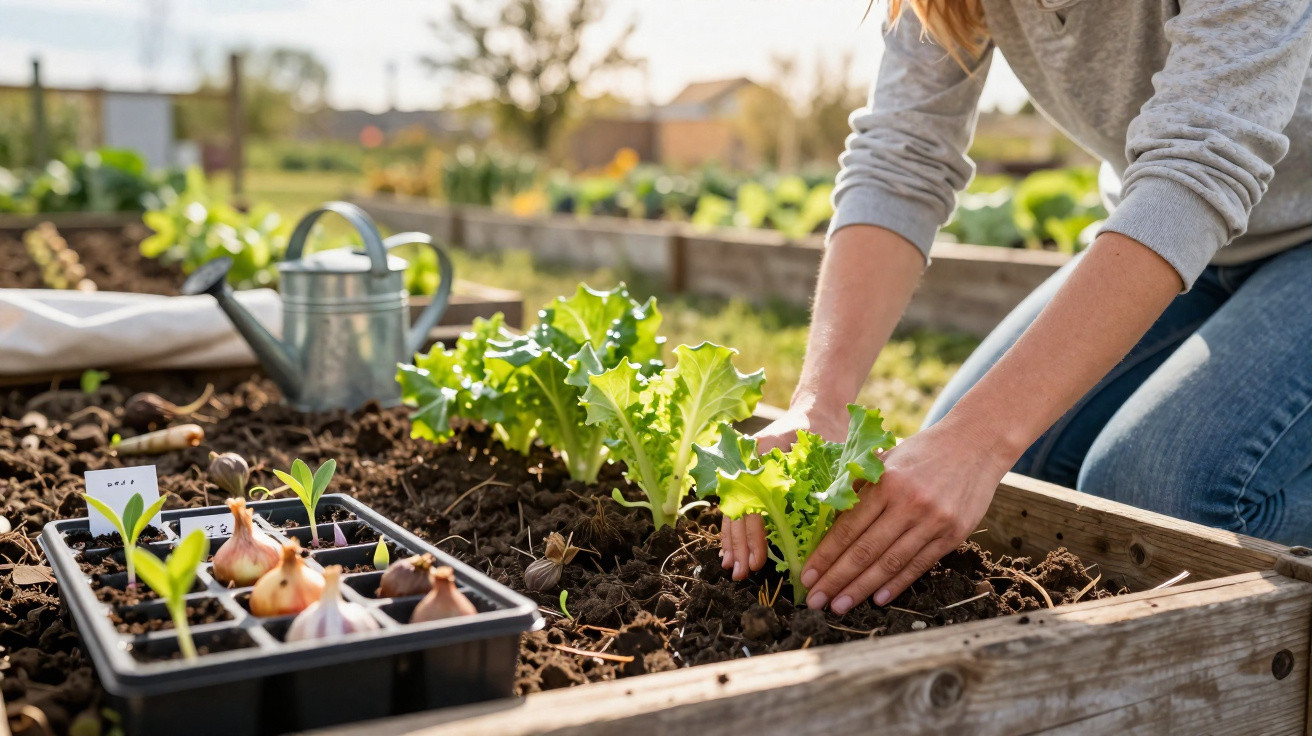
In March and April, gardeners start itching to get going again: sowing, weeding, watering. But for some vegetables, the traditional approach of sowing isn’t actually the best option. If you plant instead of sowing, you often save time and frustration - and you usually end up with a noticeably heavier crop. And it’s exactly with these crops that many people (often without realising) choose the more laborious route.
Why planting instead of sowing is often the better choice
The big advantage is simple: by using tubers, young plants, sets, cloves or root pieces, you skip the tricky germination stage. No fretting about seeds rotting, gaps in the drill, or bare patches in the bed.
"If you plant ready-to-grow stock, you typically gain a head start of two to four weeks and improve the chances of a strong, healthy crop."
While seeds need time to “wake up” in the soil, pre-sprouted tubers and well-rooted young plants get moving straight away as soon as the ground warms a little. That pays off twice over: you harvest sooner, and the plants are generally sturdier and less prone to disease.
The most important basic rule: the soil must not be waterlogged
As tempting as early spring can be, you shouldn’t plant into mud. If the soil still feels like a soaked sponge, you risk rot, waterlogging and compacted ground.
- Hand test: if soil sticks to the spade or your shoes in heavy clods, it’s still too soon.
- If you can rub the soil into crumbs without it smearing, the planting window is opening.
- Don’t walk on beds if the surface is visibly shiny or water is sitting in puddles.
Slightly dried on top but still moist underneath is ideal: the soil warms up faster, and roots can access both air and water without suffocating.
These vegetables do better planted than sown
Early potatoes: tubers rather than seed
Sowing potatoes is virtually never a thing in the home garden - and for good reason. Planting pre-sprouted seed potatoes gives you a huge head start.
If you set out your rows early in the year and plant the tubers, you gain several benefits at once:
- a much earlier harvest of new, tender potatoes
- robust plants that cope better with late frosts and wet spring weather
- a lower risk of fungal disease because the crop gets established more quickly
Plant the tubers into loose soil, about a hand’s breadth deep, with 30–35 cm between plants in the row. If you’re starting early, keep horticultural fleece to hand in case a cold snap arrives.
Garlic, onions and shallots: sets and cloves instead of seed tape
With these kitchen staples, planting directly is especially worthwhile. Small onion sets, garlic cloves and shallot sets produce strong roots far faster than plants grown from fresh seed.
"Correct orientation: pointy end up, flat end down - that way onions and cloves anchor themselves immediately in the soil."
Plant them only deep enough so they are just covered. If they’re pushed too far down, they sit in a cold, wet pocket and can rot. Loose, crumbly soil gives them the best possible start.
Long-term performers in the bed: when only planting really makes sense
Perennial asparagus beds: gain years by planting root crowns
Raising asparagus from seed is possible in theory, but in practice it demands a lot of patience and know-how. Far more practical are asparagus crowns (often sold as one- to two-year-old crowns).
Here’s how to get them established:
- Dig a long, deep trench and loosen it well, ideally improving it with sand or fine compost.
- Make sure water can drain freely - asparagus hates waterlogging.
- Spread the roots out like a fan and cover them carefully with soil.
Planting this way sets you up for a bed that can produce for ten years or longer. Crowns take off far sooner than seed-grown plants, and the bed becomes fully productive earlier.
Artichokes: majestic perennials best bought as young plants
Artichokes love warmth and dislike unpredictable weather. In our climate, spring-sown seeds often germinate irregularly; some plants stay weak, while others are knocked back by late frosts.
A far less stressful route is to buy established young plants or offsets (shoots). They arrive with a developed root system and can put their energy into growth rather than germination.
| Step | Note |
|---|---|
| Choose the site | Sunny, sheltered from wind, nutrient-rich |
| Prepare the planting hole | Dig generously and work in well-rotted compost |
| Plant | Set the root ball only as deep as it stood in the pot |
| Water in | Soak in well so the soil settles closely around the roots |
If you protect the plants from severe frost in their first year, you can enjoy them for a long time - with impressive flower heads for the plate or for a vase.
How to prepare the soil gently for the planting season
Loosen - don’t dig
Many people automatically reach for a spade and turn beds over deeply. For soil life, that’s like slamming on the brakes: earthworms, fungi and micro-organisms are thrown out of balance, and nutrients get disrupted.
A gentler approach - and usually entirely sufficient - is shallow loosening:
- use a digging fork or cultivator to pierce only a few centimetres deep
- lift the soil slightly without turning it over
- crumble large clods by hand
This lets air into the ground, helps rainwater soak in, and allows the surface to warm more quickly - while largely keeping the natural soil structure intact.
Protect young plants from late frosts
Spring is notorious: T-shirt weather by day, then suddenly below zero at night. For fresh shoots, a single frosty night can undo weeks of effort.
"Simple horticultural fleece or a small polythene tunnel can raise the temperature at ground level significantly and help plants through cold snaps safely."
The key is to ventilate in the morning so heat doesn’t build up underneath. With potatoes or artichokes in particular, that quick daily check is well worth it.
More harvest, less stress: the clever spring planting plan
These crops should go into the ground now as plants
If you use the calendar wisely, you can shift some jobs into the calmer early spring and take pressure off the hectic sowing weeks in April.
- Potatoes: pre-sprouted tubers for an extra-early harvest
- Garlic, onions, shallots: small sets and cloves instead of seed
- Asparagus: root crowns for a bed that produces long-term
- Artichokes: strong young plants or offsets
By planting these crops now, you set up a garden that largely runs itself in summer. Many later tasks feel easier because the “heavyweight” vegetables are already in place and growing.
Practical tips for beginners and small gardens
The plant-before-sow approach also works on balconies and in tiny beds. Potatoes thrive in large containers, onions and garlic do well in troughs, and artichokes suit deep pots with good drainage.
A few pointers make getting started easier:
- Always add a drainage layer in containers (for example, expanded clay).
- Use only high-quality, free-draining compost - not heavy garden soil.
- Water regularly but not excessively: a quick finger test in the compost prevents a lot of trouble.
Planning and planting this way means less frustration in spring and more produce in summer. Especially for people who work full time or are new to gardening, young plants, tubers and sets are a realistic route to a fuller harvest basket - without constant watering cans and seed trays.

Comments
No comments yet. Be the first to comment!
Leave a Comment