
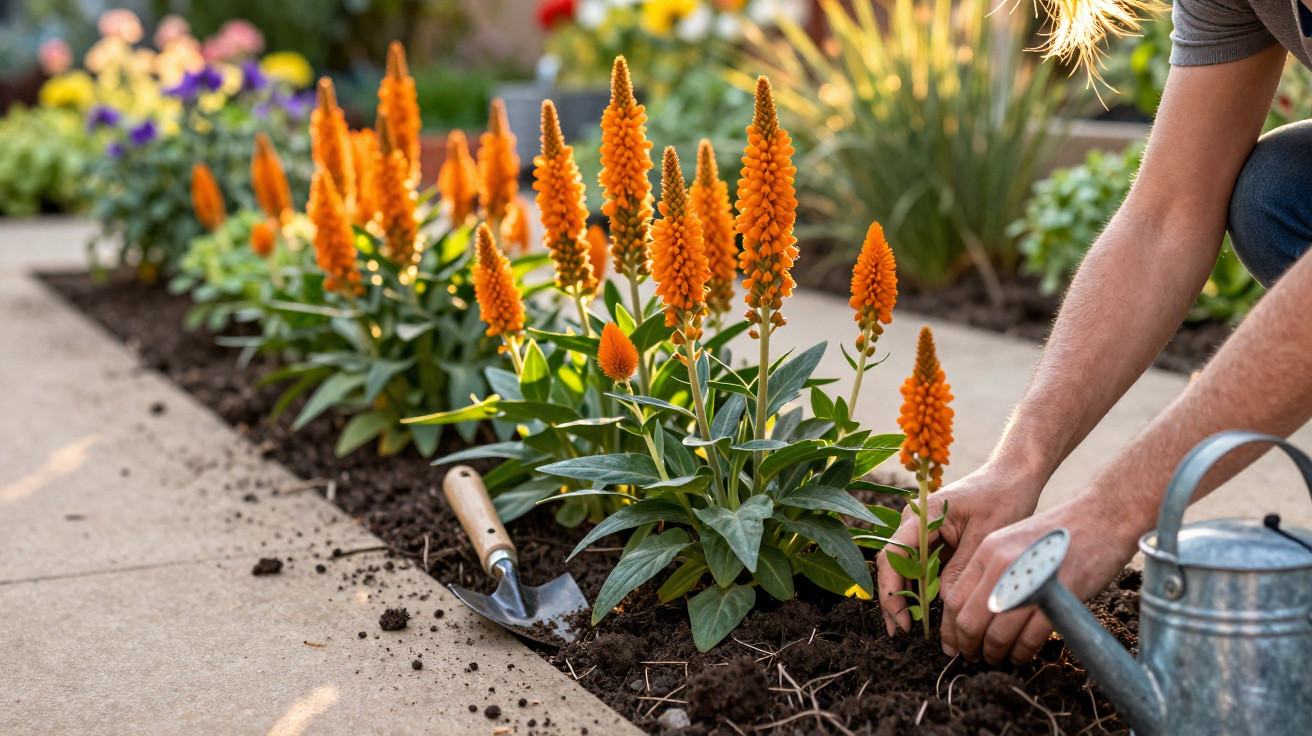
Many amateur gardeners coast from one season to the next: a new perennial here, a quick trim of the hedge there - yet the border still rarely looks truly striking. That is exactly where a largely under-the-radar plant comes into its own, looking more like a firework than a traditional perennial: Leonotis leonurus, often known in German as Löwenohr and in English as lion’s ear. Plant it in spring and, by summer, you can have what feels like a living sculpture standing in the bed.
A perennial like a firework: what makes Leonotis so special
Leonotis comes from South Africa and, botanically, sits within the mint family. In the garden, though, it can look as if it has stepped straight out of a desert film set. It grows upright and rigid, and in favourable conditions can reach up to 1.80 m - noticeably taller than many classic summer perennials.
What really catches the eye is its structure. Along the firm stems, you get tiered, spherical flower heads spaced at intervals. Each of these “rings” is made up of numerous tubular, lightly hairy individual blooms in a vivid orange. From a distance, the effect is reminiscent of stylised flames - which is exactly why it has earned a reputation as a “fire” perennial.
“In a border, Leonotis looks like a natural chandelier: flowers arranged in tiers, held bolt upright, glowing orange - and it keeps going for weeks.”
Overall, the look is crisp, graphic and contemporary: narrow, elongated leaves, a vertical habit, and clean lines. If your planting is currently dominated by softer, rounded shapes, this perennial instantly adds a dramatic counterpoint.
Positioning: where Leonotis shows its full impact
To turn a young plant into a glowing, candelabra-like display, one requirement matters above all: sun. A semi-shaded spot rarely produces generous flowering. At least six hours of direct sun per day is ideal.
When it comes to soil, Leonotis is fairly undemanding - provided two conditions are met: no waterlogging, and a decent supply of nutrients. A loose, free-draining soil with sand or gravel content suits it perfectly. If your garden soil is heavy clay, work in plenty of coarse sand or horticultural grit before planting.
- Plenty of light: full sun, ideally with shelter from strong winds
- Free-draining soil: avoid persistent wetness, especially over winter
- Nutrient-rich: improve with compost or well-rotted manure
- Border or container: grows well in the ground or in a large pot
One more advantage in hot summers: Leonotis is considered notably drought tolerant. Once it has rooted in properly, it needs far less water than many standard perennials. Short spells of heat and dryness are usually shrugged off - good news if you do not want to be out with a watering can every day.
How hardy is Leonotis really?
Unlike many exotic-looking perennials, Leonotis copes surprisingly well with light frost. In a sheltered position, it can tolerate temperatures down to around –8 °C. In more exposed, colder areas, it will need help.
If you are growing it in the border, cover the root zone generously from late autumn with mulch, leaves or straw. In very cold regions, it can be wiser to treat it as a container perennial and overwinter it frost-free but bright - for example in an unheated conservatory or a cool stairwell.
The five most important steps for successful planting
1. Choose the right sunny spot
Without enough sun, Leonotis responds with sparse flowering and long, weak growth. The best location is one that receives sun all day, or at least from late morning through to evening. In many terraced-house gardens, a spot near a warm house wall works brilliantly, as the masonry stores and releases heat.
2. Prepare the soil properly
It pays to do thorough groundwork before planting. Loosen compacted areas and remove large stones. If the soil is heavy, mix in sand, fine gravel or expanded clay granules. After rain, water needs to drain away quickly; otherwise roots and the plant base can rot over winter.
3. Work in organic matter
Leonotis grows faster and flowers for longer when nutrients are readily available. At planting time, adding a layer of mature compost in the planting hole gives it a far better start. In pots, a high-quality, structure-stable compost mix supports strong growth.
4. Water correctly
After planting, keep the root area evenly and lightly moist for a few weeks - never permanently wet. Once the plant has clearly established and is producing new shoots, reduce watering gradually. In the ground, Leonotis will then cope with longer dry periods. In containers, water a little more regularly during hot spells.
5. Do not forget winter protection
Where winters are severe, a thick mulch layer helps protect the root zone. For container plants, stand pots on wood or polystyrene in autumn, and during prolonged frost wrap them with fleece or hessian. This keeps the sensitive root area frost-free for longer.
Which plants Leonotis pairs with particularly well
In design terms, Leonotis is all about contrast. Its upright, almost architectural form provides the framework, while the intense orange injects energy into the border. It looks especially strong alongside cool-toned or dark-leaved companions.
- Ornamental grasses: airy choices such as switchgrass (Panicum virgatum) or fountain grass (Pennisetum) amplify the graphic effect.
- Blue or purple perennials: sage, catmint or delphiniums create a powerful colour counterpoint to orange.
- Dark-leaved cannas and dahlias: bronze to near-black foliage makes the orange blooms appear even brighter.
- Silver-leaved plants: lamb’s ear (Stachys byzantina) or cotton lavender (Santolina) add a Mediterranean feel.
“If your perennial border feels ‘too well-behaved’, a handful of Leonotis plants can create a completely new, modern look - without replanting the entire area.”
Ideas for different garden styles
In a naturalistic garden, Leonotis placed among grasses, wildflower-style perennials and loosely planted bulbs can read like an unexpected burst of colour. In more formally designed urban gardens, it makes a crisp contemporary statement as a specimen in a gravel bed or in large containers against a house wall.
| Garden type | Recommended use |
|---|---|
| Cottage garden | Between loosely planted summer perennials as a vertical accent |
| City garden / terrace | In large containers, combined with grasses and dark-leaved cannas |
| Minimalist garden | In small groups within gravel areas, with a few clean-lined partners |
| Prairie-style border | With ornamental grasses, black-eyed Susans, heleniums and purple coneflowers |
Care through the year: from planting to the flowering explosion
If you plant in spring, you may see the first flower tiers by high summer, depending on the weather. The main display usually runs well into autumn. Lightly cutting back spent tiers often encourages fresh buds and stops the stems looking tired too early.
Feeding is best done in spring using an organic slow-release fertiliser or compost. Excess nitrogen produces lots of leafy growth at the expense of flowers, so keep it measured. In very windy gardens, the tallest plants may appreciate a discreet support cane to prevent them toppling in a storm.
How to use Leonotis deliberately in the garden
Leonotis is particularly appealing if you are bored of flat, unexciting planting. It is ideal for visually “waking up” a bed without ripping everything out and starting again. Often, just two or three plants positioned carefully among existing perennials are enough to change the whole picture.
It also appeals to keen photographers: the strong structure and intense colour make for striking images - especially in backlight, when the blooms glow like small flames. And the many nectar visitors bring the border to life. Bees, butterflies and other insects use the long, tubular flowers as a feeding station.
Practical tips for beginners
Leonotis is not yet a standard offering everywhere. Nurseries with a specialist perennial range, or online suppliers of more unusual plants, tend to stock it more reliably. If you do get hold of one, take care during transport not to bend the shoots - they are sturdy, but not indestructible.
For beginners, it is sensible to prune only lightly in the first year. That way, you can observe how the plant naturally grows and branches. In year two, you will have a better feel for where targeted trimming improves its overall effect in the border.
Everyday verdict from many gardeners: Leonotis is not a diva, but an easy-going star. Give it sun, pay some attention to soil preparation, and provide a minimum of winter protection, and it can turn an ordinary bed into a boldly staged feature - with the kind of presence that looks professionally planned.




Comments
No comments yet. Be the first to comment!
Leave a Comment