
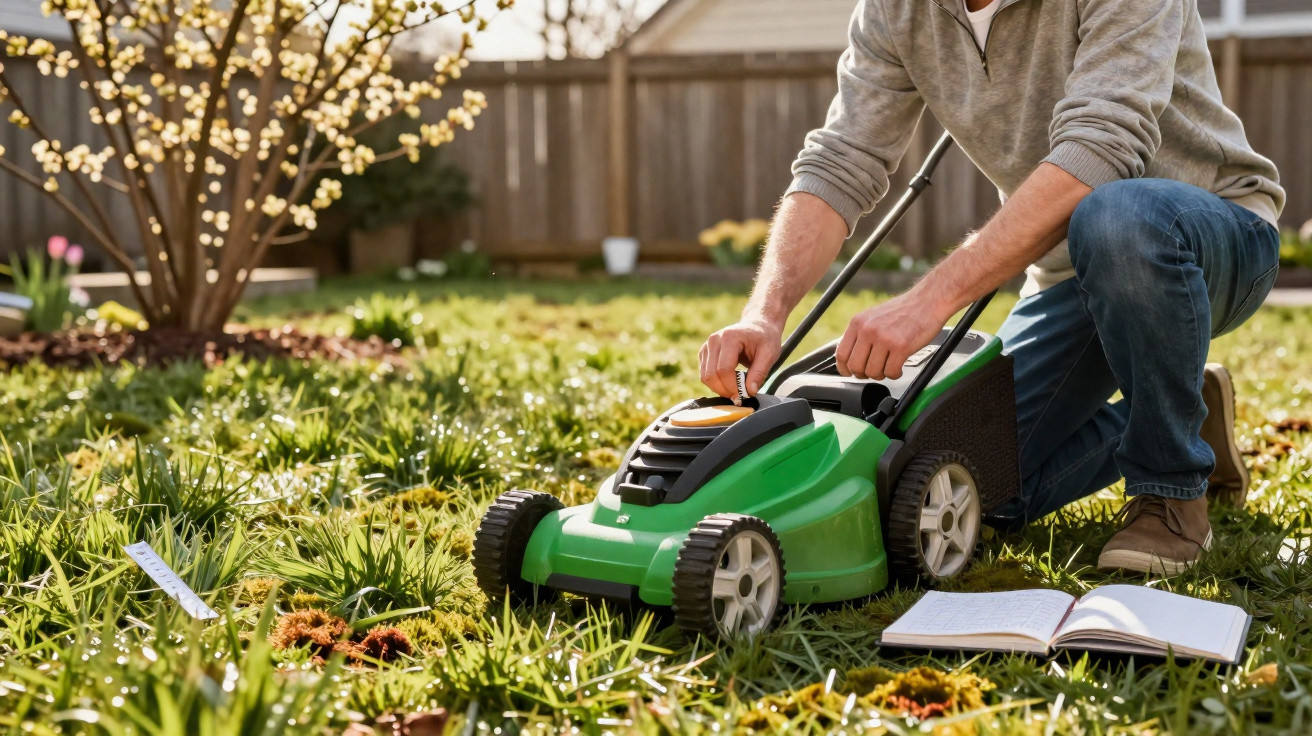
Right now is when it’s decided whether your lawn will look lush, green and dense over the coming months-or whether holes, moss and yellow patches will spoil the surface. Lawn specialists stress that in March, one straightforward rule is enough to help the turf recover strongly and stay resilient for the rest of the year.
Why March becomes a make-or-break period for the lawn
After winter, a lawn is under real strain. Frost, waterlogging and low light levels all take their toll and leave the plants weakened. The blades still standing now are not “weeds”-they are the plant’s solar panels. Each blade captures light and helps build energy reserves down in the roots.
If you cut those blades too short in the first burst of spring enthusiasm, you remove exactly that energy source. The result often shows within a few weeks: the turf thins out, moss moves in, and the soil starts to show through as grey patches where the grass has gone bare. Instead of a thick, even lawn, you’re left with a patchy quilt.
That’s why lawn experts suggest planning the first cut of the year based on conditions rather than a date on the calendar. Key points include:
- No frozen ground and no completely waterlogged surface
- Soil temperature consistently at around at least 7°C
- Grass height roughly 8–10 cm
- No more heavy morning frosts
Depending on where you live, the right moment can fall anywhere from late March into April. If you garden in a cooler location-such as the Alpine foothills or upland areas-you’ll usually need to wait longer than people in towns or lowland regions.
“The first cut determines whether the lawn recovers-or spends the rest of the year playing catch-up.”
The most important March rule: never remove more than a third
The core advice from professionals may sound almost too simple, but it makes a huge difference: the so-called one-third rule. Rather than cutting the lawn back hard to make it look “neat”, you deliberately keep the first cut higher and gentler.
The basic formula is:
- Never remove more than one third of the blade length in a single mow.
- Keep the first cutting height at about 5–6 cm.
- It’s better to mow slightly too high than too low.
For example: if your grass is at 9 cm, aim for a cutting height of around 6 cm. The lawn will look tidy afterwards, while still leaving enough leaf to capture light and keep feeding the roots.
That’s exactly why this approach produces denser turf: the plant isn’t shocked, and instead responds by growing more strongly and producing more side shoots. The lawn becomes wider, not just taller. Small gaps close up, and weeds find it much harder to establish.
“If you mow right down in March, you might save time in the short term-but you’ll pay later with moss, holes and expensive repair work.”
How to set your lawn mower correctly
To make sure the one-third rule is practical, not just theory, it’s worth checking the mower itself. Many hobby gardeners underestimate how much the machine’s set-up matters.
Choose the right cutting height
Most modern mowers have a central height adjustment. For the first mow of the year, the higher settings are usually best. If you’re unsure, begin higher and adjust gradually once you can see the result. A quick check helps: you shouldn’t be able to see the soil, and the blades should still cover the ground evenly.
Also crucial: sharp blades. Dull knives tear the grass rather than cutting it cleanly. That adds unnecessary stress, leaves ragged tips and makes yellowing more likely. A freshly sharpened blade gives a neat, smooth cut-like a barber’s trim, not like hacking with craft scissors.
Use the weather window wisely
The weather plays a bigger role in the first cut than many people expect. Ideal conditions are:
- A dry day, with the ground not muddy
- Grass that isn’t still dripping with dew-late morning or afternoon is best
- No night frost forecast
If you mow on softened ground, every step and every mower wheel compacts the soil. Roots suffer, water drains less effectively, and moss gets an easy advantage.
Before the first March mow: wake the lawn gently
Before you start the machine, a quick inspection of the area pays off. Professionals tend to follow a simple yearly routine.
- Remove leaves and twigs: Use a leaf rake or garden rake to clear loose leaves, small branches and dead plant material. This lets more light reach the blades.
- Loosen compacted areas: Where water tends to sit or the surface feels hard, gently spike the ground with a garden fork. This improves aeration and drainage.
- Avoid wet hollows: Don’t walk on puddled areas until they’ve dried out-footprints can leave lasting damage.
On heavy soil, a brief aeration pass in late winter or early spring can make a remarkable difference. Simply push a garden fork into the ground every few steps and wiggle it slightly to create air spaces around the roots and help rainwater soak away.
After the first cut: how the lawn really becomes denser
The job doesn’t end with the first mow. If you establish a calm, steady routine now, you’ll build a dense, hard-wearing lawn over time.
Key rules for the coming weeks:
- Mow regularly but gently-never more than one third of the blade length.
- Don’t mow in scorching midday heat or strong sun.
- Only leave clippings on the lawn if they’re short and dry; otherwise they form a thatch layer.
Many garden owners also consider biodiversity. Increasingly popular are areas that are mown less often-or not at all. An idea from the United Kingdom, often called “No Mow March”, encourages people to let at least some sections grow during spring. These areas provide shelter for insects, wild bees and small animals, while the main part of the lawn remains comfortable and usable.
“This balancing act works best when you define clear zones: a play lawn here, wild corners there.”
What moss, weeds and brown patches reveal about your lawn
If you look closely at your lawn in spring, it reads like a health report for the soil. Moss rarely indicates a “moss problem” on its own; it usually points to site conditions-too little light, too much moisture, or soil that’s overly compacted. Areas full of weeds more commonly suggest a lack of nutrients and gaps in the turf.
The gentle March strategy-higher cutting, a more open soil structure and careful maintenance-removes the foundation for many of these issues. Where the turf stays closed, weeds lose their opportunity to spread. Where the soil can breathe, moss struggles.
Practical examples: how a lawn changes over a year
A common scenario: a garden owner cuts the lawn straight down to 3 cm in March because “then it takes longer before it grows again”. By May, they’re complaining about bare patches, moss and uneven growth. In midsummer the surface scorches more quickly and needs watering more often.
The alternative approach follows the one-third rule. The first cut stays at 5–6 cm, and ongoing mowing remains consistent but not aggressive. Over time, side shoots develop and the lawn starts to look like a dense carpet. Even dry spells are usually easier for this lawn to handle, because the roots sit deeper and have larger reserves.
The difference doesn’t appear in a single week-it shows across the whole season. Anyone who mows consistently for one season using the one-third rule often notices the before-and-after effect clearly in photos.
Why patience in March genuinely pays off
When the first warm spell arrives, many gardeners get impatient. The urge to “get everything tidied up” is strong. But nature behaves more like a long-distance run than a sprint. Taking it easy in March reduces the need for later repairs, overseeding and the frustration of brown patches during hot weather.
The simple rule of thumb: accept a few extra days without a “perfect” lawn appearance-and enjoy a stable, rich-green surface for the rest of the year. If you stick to the one-third rule, avoid rushing the first cut, and pay attention to soil and weather, you set the foundation in March for a lawn that truly looks the part.


Comments
No comments yet. Be the first to comment!
Leave a Comment