
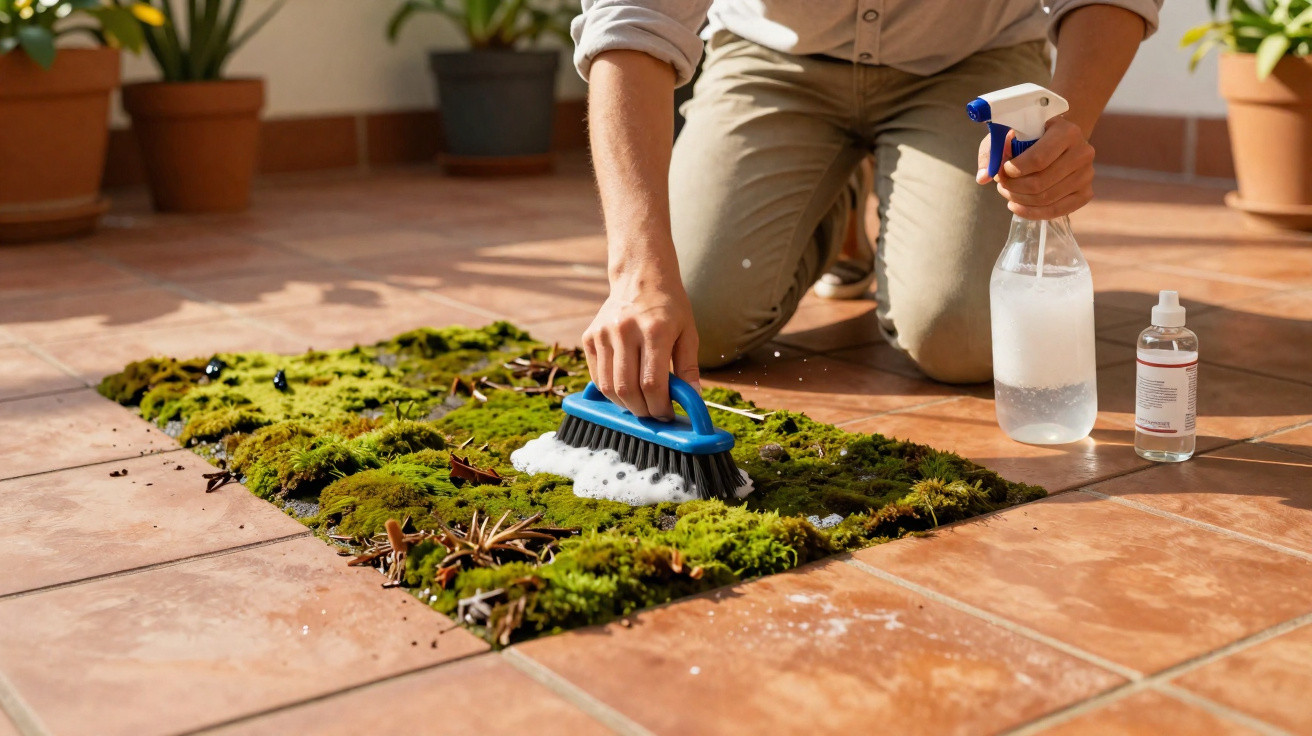
Every spring it’s the same sight: paving stones, driveways and garden paths develop a thick green film. Moss makes surfaces slippery, looks unattractive and is a nuisance - and it stubbornly returns after every scrub. Instead of reaching for expensive chemicals, it’s often enough to look in your own kitchen: two simple household staples can shift moss surprisingly thoroughly and keep it away for longer.
Why moss takes over patios so quickly
Moss thrives in damp, shaded and cool conditions. After a wet winter, that’s exactly what many patios, paths and paved areas provide. Water sits in the joints, sunshine barely reaches the surface, and the stones take ages to dry out.
Typical trouble spots include:
- Concrete and block-paved patios with lots of joints
- Shaded garden paths running alongside hedges or walls
- North-facing sides of houses and garden walls
- Garage driveways with poor drainage
- Stone or tiled steps
Many people instinctively grab a stiff brush, scrub away, mutter a few choice words - and then notice a few days later that the moss is back. The reason is straightforward: while the visible layer comes off, spores and the fine anchoring structures down in the cracks remain. As soon as there’s moisture again, the cycle starts over.
"If you only scrub mechanically, you often remove moss only from the surface - the ‘roots’ remain deep in the joints."
Strong moss killers from DIY shops do the job chemically, but they often contain harsh substances. These can affect nearby borders, lawns or even groundwater. Anyone who cares about a healthy garden will therefore look for simpler, more garden-friendly options.
The powerful kitchen combination: vinegar and bicarbonate of soda
Many households already have what they need to tackle moss effectively: ordinary household vinegar and bicarbonate of soda (or baking soda). Dissolved in warm water and combined with a little washing-up liquid, they form a surprisingly potent mixture.
What’s going on here:
- Vinegar contains acid, which penetrates the moss’s cells and attacks the tissue.
- Bicarbonate of soda is mildly alkaline and helps dry the moss out at its base.
- Washing-up liquid acts as a wetting agent: it helps the solution cling to the surface instead of simply running off.
This pairing hits moss from two angles: the vinegar breaks down the visible growth, while the bicarbonate of soda makes rapid regrowth more difficult. Used sensibly, it’s noticeably gentler on surrounding planting than many specialist products.
What you’ll need for the moss offensive
- Household vinegar (ideally clear)
- Bicarbonate of soda or baking soda
- A small squirt of washing-up liquid
- Hot water
- A bucket or bowl
- A stiff scrubbing brush or a yard broom
Timing matters too: pick a dry day that’s preferably overcast. Rain would dilute the solution immediately and wash it into borders. Strong sunshine can make the mix evaporate too quickly, before it has time to work deep enough.
Step-by-step: how to get rid of moss properly
1. Prepare the surface thoroughly
Before you use the mixture, the patio needs to be free of loose debris. Sweep away leaves, soil, sand and any loose plant matter. That way the solution reaches the moss directly rather than being soaked up by dirt.
2. Mix the solution in a bucket
Pour hot water into the bucket, then add:
- a good splash of vinegar,
- 2–3 tablespoons of bicarbonate of soda,
- a small squirt of washing-up liquid.
The liquid will foam briefly - that’s normal. Once the foam settles, the mixture is ready to use.
3. Apply the solution to the moss
Pour or spread the mixture generously over all affected areas. Make sure the joints and cracks are thoroughly wetted. If the surface is very uneven, a watering can with a rose head can help you apply it evenly.
Then leave it to work undisturbed: allow at least 15 to 30 minutes. During this time, the acid and bicarbonate of soda soak into the plant material and visibly weaken it.
4. Scrub and rinse
Next, bring in the brush. Use circular motions to lift the loosened moss from the surface. On block paving, the layer often comes away almost in sheets.
Afterwards, rinse with clean water - using either a garden hose or a bucket. As you rinse, direct the water away from borders, vegetable patches and delicate perennials.
"If you apply the solution in a controlled way and rinse deliberately, you protect beds and lawns from unnecessary exposure."
Keeping moss away: how to keep the patio cleaner for longer
Once the surface is finally clean, the second part begins: prevention. Moss only stays away long-term if you change the conditions that help it spread. Otherwise, you’ll be back with bucket and brush every few weeks.
Reduce shade, channel moisture away
A few simple actions can make a big difference:
- Trim overhanging branches and shrubs so more light reaches the surface.
- Avoid puddles: where water regularly sits, you can re-point joints or create a slight fall.
- Sweep regularly so leaves don’t form damp “moss islands”.
- Check the joints: wide, open joints hold moisture for longer.
Especially on older patios, it’s worth taking a critical look: where does rainwater actually go? If it sits in certain places for days or even weeks, a green coating is almost inevitable.
Preventative treatment on a schedule
If you’d rather not wait until the surface turns visibly green again, you can use a more weakly mixed vinegar and bicarbonate of soda solution at longer intervals. A light treatment every two to three months is usually enough to stop the first small patches of moss from taking hold.
It’s inexpensive, quick to do and, over time, saves a lot of scrubbing. The key point: don’t be tempted to overdo the dosage for convenience, particularly near vegetable beds or ornamental plants.
What homeowners should also watch out for
As effective as household methods can be, vinegar is still acidic. On delicate natural stone, polished tiles or limestone-based slabs, the surface can be affected. It’s sensible to test compatibility in an inconspicuous spot first.
A quick guide:
| Surface | Suitability of the vinegar and bicarbonate of soda method |
|---|---|
| Concrete paving blocks | Generally well suited |
| Outdoor ceramic tiles | Usually fine, test first |
| Granite, basalt, hard natural stones | Use a cautious dose, test a small area |
| Marble, limestone | Better not to use; seek professional advice |
If you have pets, keep them off the treated area while the solution is working, and after rinsing make sure there are no puddles left behind with a strong vinegar smell.
One more point: the moss may be gone, but algae or lichen can still leave the surface slippery. On steps or very smooth tiles in particular, an additional pass with a neutral cleaner or a pressure washer can be worthwhile to remove the remaining film.
Why it’s worth using a household method
The combination of vinegar, bicarbonate of soda and a little washing-up liquid isn’t magic, but it is a remarkably effective everyday helper. It costs only a few pounds, mixes up in minutes and avoids harsh specialist chemicals.
If you pair the method with a practical eye for shade, moisture and regular upkeep, you can keep patios, paths and driveways largely moss-free in the long run - and avoid the same green surprise every spring.

Comments
No comments yet. Be the first to comment!
Leave a Comment