
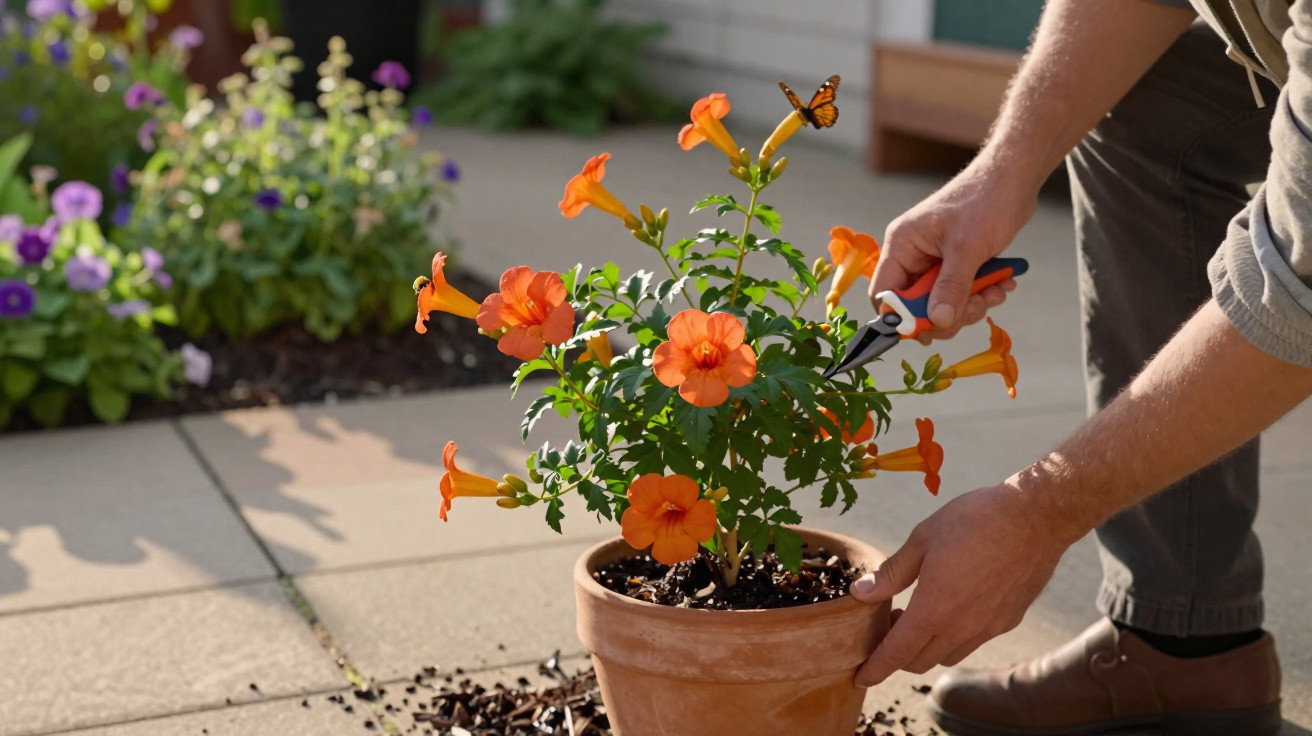
A surprisingly low-fuss shrub is exactly what helps here.
Too many hobby gardeners abandon small plots far too quickly and stick to a few pots of summer bedding. It looks brilliant in May, yet by high summer it often feels tired. The compact, repeat-flowering shrub Tecomaria ‘Cape Town Orange’ proves there’s another way: minimal space, modest watering, and bold orange flowers for a long stretch of the year.
Why this compact flowering shrub completely changes small gardens
Anyone short on space is often wary of monster shrubs that sprawl and smother everything. Tecomaria ‘Cape Town Orange’ stays far more manageable-around 1.5 metres tall and roughly 1.8 metres wide-than the species Tecomaria capensis, which can easily exceed 2 metres. That makes it a neat fit against house walls, beside seating areas, or along the edge of narrow paths.
Its habit is dense and bushy. From a distance, the plant reads like a soft, gently domed cushion that gives a bed clear structure. In modern gardens with clean, straight lines, that rounded form creates a pleasing counterbalance.
The shrub brings the look of a “Southern States garden” in miniature – but without swallowing the space.
The real showpiece is the flowering. From around May-often a little earlier-clusters of trumpet-shaped blooms appear in vivid orange. They return in waves right through to autumn, and in very mild locations even into winter.
A magnet for butterflies and bees – without deer tagging along
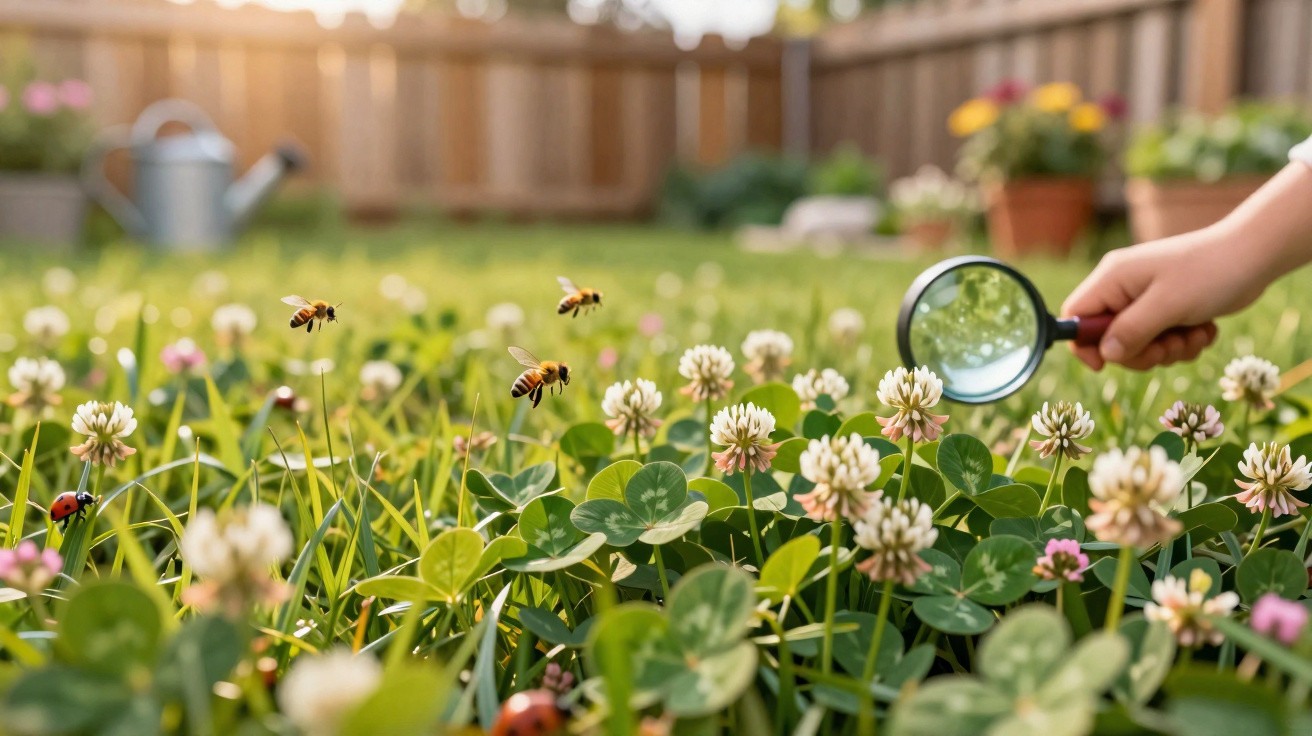
If you want a garden that feels alive, this plant scores on two fronts. The flowers are rich in nectar, so butterflies, solitary bees and honeybees reliably home in on the shoots as soon as the first blooms open.
At the same time, the shrub is considered comparatively unappealing to deer and other grazing wildlife. In suburban areas or on village edges where deer often strip young buds, that’s a tangible advantage. While roses or tulips can be reduced overnight, Tecomaria is much less frequently the target of those raids.
- long flowering period from May into autumn
- excellent nectar source for insects
- compact growth that’s easy to manage
- relatively uninteresting to deer
- ideal for small gardens, terraces and courtyards
Position, climate and soil: where Tecomaria truly thrives
From a botanical point of view, this is a warmth-loving, perennial shrub. In very mild regions-such as sheltered riverside spots, near large bodies of water, or in warm wine-growing microclimates-the plant can stay in leaf over winter and may continue flowering when temperatures only rarely drop well below 0 °C.
In areas with harsher winters, the above-ground stems often die back. That doesn’t mean the plant is finished. With a thick layer of mulch around the base and, during extreme cold snaps, a light horticultural fleece, the rootstock will shoot again as temperatures rise.
If you protect the root area, you can grow the shrub in much colder regions than you might expect at first.
Keep an eye on light and soil
Tecomaria loves sunshine. A fully sunny position with at least five hours of direct sun each day delivers the most generous display. In very hot regions, a few hours of afternoon partial shade can help by reducing heat stress.
Soil-wise, the shrub is impressively tolerant-provided a few basics are right:
- light to medium soil, never waterlogged
- good drainage, for example improved with sand or grit
- evenly moist during the first few years
- a slightly humus-rich top layer supports stronger growth and flowering
Once established, a deep soak about once a week in summer is usually enough-less often, but thoroughly. That encourages the roots to search for moisture in deeper layers. After that, the shrub is regarded as relatively drought-tolerant.
Planting guide: how to show the shrub off at its best
Spring is the ideal planting window, once hard frosts are no longer likely. This gives the plant time to build a strong root system before the following winter.
- Dig a planting hole about twice the width of the pot’s root ball.
- Loosen any compacted soil around the edges with a fork.
- Remove the plant from its pot and gently tease apart any circling roots.
- Set it so the root collar sits exactly at soil level.
- Backfill with the excavated soil (add a little compost if needed) and firm in well.
- Water in thoroughly to settle the soil and remove air pockets.
- Apply 5–8 centimetres of mulch, avoiding direct contact with the base of the stems.
Mulch helps the soil stay moist for longer and suppresses weeds. In small urban gardens-where you don’t want to be forever watering and weeding-that’s a clear win.
Care through the year: minimal effort, lots of flowers
For the first year or two, don’t let the soil around the shrub dry out completely, especially in high summer. After that, watering is mainly needed during prolonged dry spells. Work in a little all-purpose organic fertiliser or well-rotted compost once in spring, and the plant has enough fuel for abundant flowering.
Another major plus: the shrub is considered tough when it comes to fungal problems and pests. In practice, you’ll rarely see leaf spot or aphids in any meaningful quantity. In smaller gardens where children play or pets roam, it’s a relief to have plants that generally manage without sprays.
Pruning correctly for a compact, flower-packed bush
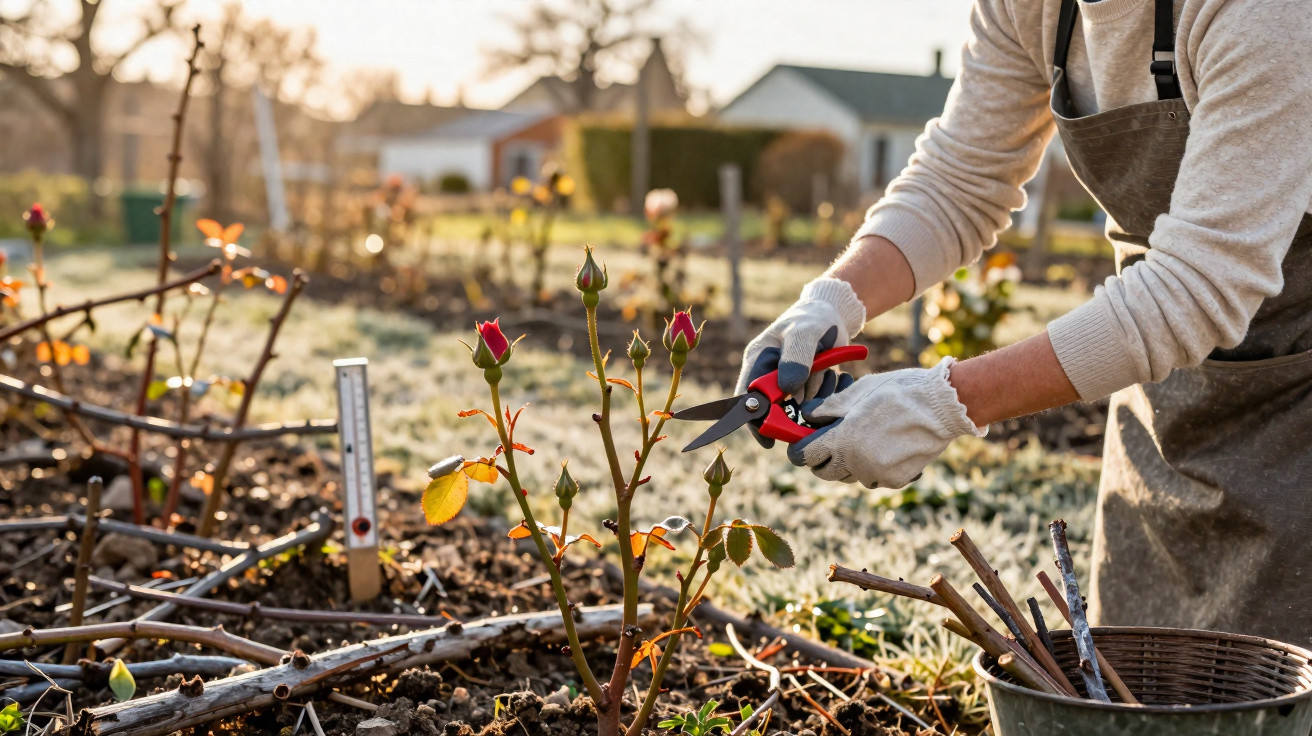
To stop the shrub from becoming straggly and to keep it dense and shapely, it pays to prune after the main flush of flowers. Be decisive, but not extreme:
- remove old, dead wood right down at the base
- shorten overly long shoots by about a third
- always cut just above an outward-facing leaf
A useful tip from general shrub care applies here too: if the plant gets too tall, you can cut it back more firmly after flowering, just above a lower leaf junction. That encourages fresh, well-branched new growth that flowers freely again. This is how the plant stays compact and attractive for years.
Design and pairing ideas for a mini garden
Tecomaria ‘Cape Town Orange’ is especially effective in small areas that are highly visible. Here are a few practical ways to use it:
| Situation | Using Tecomaria |
|---|---|
| Narrow terrace | A single specimen in a large, frost-resistant container as a focal point beside the seating area. |
| Typical small back garden | A group of two to three plants at the far end of the garden as a colourful finish. |
| Shaded courtyard corner | Find the brightest available spot and place the shrub so the orange visually lifts the whole courtyard. |
| Small perennial border | Use Tecomaria as the structural centre, surrounded by grasses and ground-covering perennials. |
It looks particularly balanced alongside ornamental grasses, silvery foliage (for example cotton lavender), or blue-flowering perennials such as catmint. The complementary colours-orange and blue-make each other appear more vivid.
What else to know: container growing, risks and extras
In regions with severe winters, growing it in a large pot can be the safest approach. Use a free-draining compost, make sure there’s a drainage hole, and choose a saucer that won’t allow water to collect and sit. Before hard frosts, move the container up against a sheltered house wall, stand it on wooden blocks, and wrap the pot with fleece or bubble wrap.
If your soil is very sandy, you’ll need to water a little more at the start and improve it with compost. However, standing water is the biggest enemy: in consistently wet soil, the roots suffer, the plant weakens and flowering is reduced. In that situation, a drainage layer of grit or coarse sand in the planting hole makes a real difference.
Another advantage: because the flowering season is so long, the garden feels much more “finished” even if you’ve only used one carefully placed shrub. In small spaces, that kind of deliberate “anchor point” can be the difference between “nicely planted” and “properly designed”.
And if you’re already thinking about bee-friendly planting, this orange cloud of flowers is a genuine all-rounder: attractive to insects, easy to keep to size, and visually far more interesting than the usual geranium window boxes. A corner that seemed insignificant can suddenly become a little stage-fronted by a shrub that returns year after year.
Comments
No comments yet. Be the first to comment!
Leave a Comment