
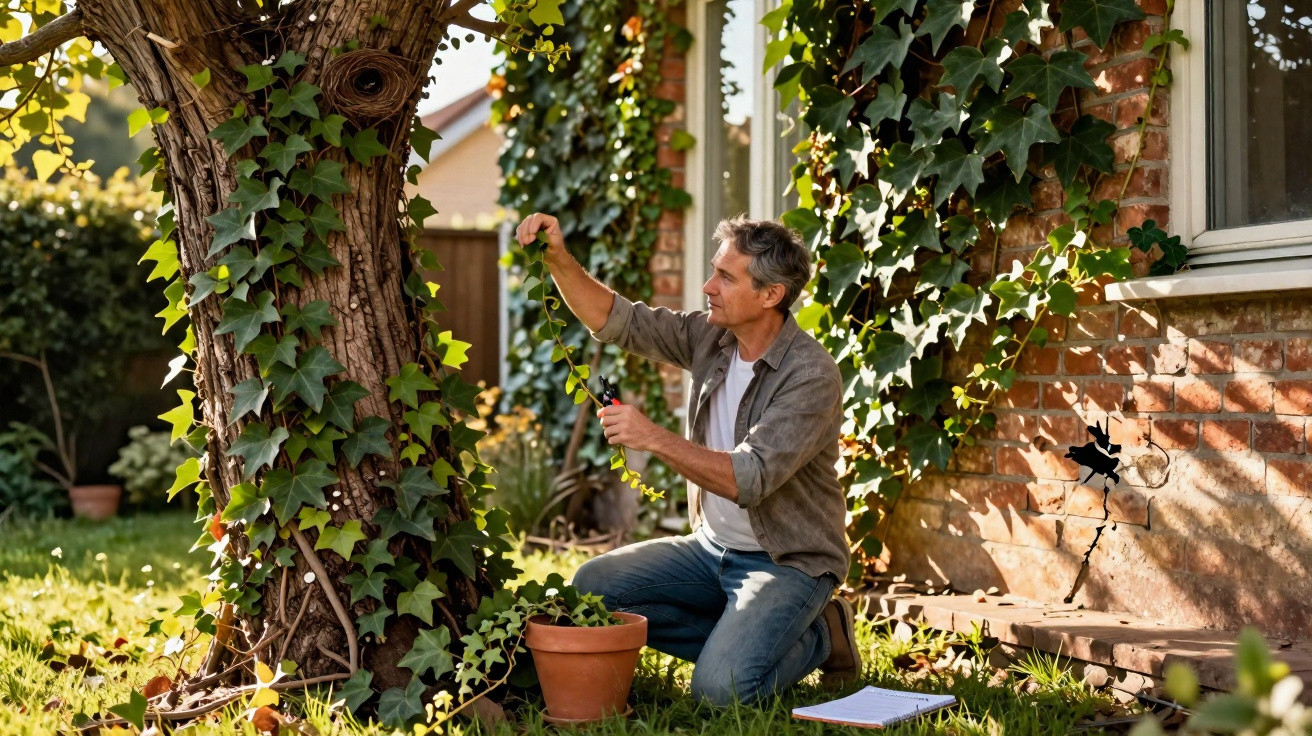
In day-to-day gardening, ivy has a poor reputation: it is said to strangle trees, crack walls and do nothing but cause trouble. Specialists see things far more selectively. If you reach for the secateurs aggressively everywhere, you often destroy an important protective layer and valuable habitat - and in some situations you can even make the underlying problems worse.
Misunderstood in the garden: what ivy really does
Ivy, botanically Hedera helix, is one of the classic climbing plants in Central European gardens. It makes its way up trees and walls using tiny clinging rootlets. These fine attachment structures are there to anchor the plant, not to feed it.
Unlike true parasites such as mistletoe, ivy does not tap into its host. Its roots are in the soil, where it takes up water and nutrients. The trunk or wall it climbs is essentially just a frame to grow on.
"Ivy does not usually weaken a healthy tree - it mainly uses it as a climbing aid and a protective screen."
Even so, ivy can look as though it is “strangling” a tree when it wraps the trunk completely. What matters is the tree’s condition and how the climber is managed.
Ivy on trees: a living coat rather than a silent killer
On a sturdy, healthy tree, ivy can act like a natural coat. Its dense foliage helps shield the trunk from harsh weather conditions:
- strong summer sunlight
- frost and cold winds in winter
- physical impacts from hail or heavy rain
The layer of air between bark and leaves softens temperature extremes a little and retains a degree of residual moisture. Many types of bark tolerate these buffering conditions surprisingly well.
At the same time, ivy is a windfall for wildlife: birds nest behind the leaves, mice find cover, and countless insects use it too. Studies sometimes cite up to 200 insect species that rely on ivy - as a food source, hiding place or winter shelter.
When ivy really becomes a risk for trees
Issues arise mainly when a tree is already weakened. In that case, ivy can intensify several risks:
- Competition for light: in the crown, foliage can deprive younger branches of light.
- Hidden damage: rot, fungal attack or cracks can stay unnoticed for longer beneath dense greenery.
- Extra load: the weight of stems and leaves puts additional strain on decayed limbs.
- Storm risk: the large leaf area acts like a sail, significantly increasing wind load.
Young trees and fruit trees are particularly sensitive. They need plenty of light in the crown, and their branches snap more easily. Here, ivy should never be allowed to grow unchecked right up into the top.
How to tell whether ivy can stay on your tree
Whether you remove ivy, control it, or simply let it grow depends on the tree itself. A simple rule of thumb helps:
| Tree condition | Recommendation for ivy |
|---|---|
| strong trunk, stable crown, no major damage | leave ivy largely in place; cut back every 2–3 years before it takes over the crown |
| leaning growth, dead branches, visible rot | reduce ivy substantially; clear the trunk and main branch junctions; have stability checked |
| young tree or fruit tree | tolerate ivy lower down, but remove it consistently from the crown |
If you want to reduce ivy, the best approach is to cut the main stems at about hand height first, then remove the growth gradually. Do not rip large, old plants off the bark in one go - that can tear the outer bark and create entry points for fungi.
Ivy on house façades: threat or natural shield?
Ivy also divides opinion on buildings. Many homeowners worry about cracks, damp walls and falling masonry. Experts point out that, on a sound façade, ivy can even offer protection.
On stable render or stone, the clinging rootlets do not penetrate deep. They adhere largely to the surface and form a green outer skin. This can reduce several kinds of exposure:
- driving rain hits the leaves rather than the wall.
- surface temperature swings are less extreme.
- in summer the façade heats up less, and in winter it cools down a little more slowly.
"A sound, crack-free façade can become more resilient to weather extremes with ivy - and benefits from natural shade."
There is also an environmental angle: the dense leaf area captures fine dust and other airborne particles. Particularly on roadsides, ivy can work like a small, living filter curtain.
When ivy really damages a wall
When ivy becomes a problem, it is almost always because defects were there first. Crumbling render, open joints and damp patches provide ideal anchoring points for clinging roots. In gaps, they gain purchase, then widen the spaces over time through growth and movement in the wind.
This can gradually lead to several issues:
- water penetrates deeper into cracks and remains in the wall for longer.
- stones or bricks loosen and joints break down.
- dead stems and leaves block gutters and downpipes.
Especially with older houses that have never been renovated, it is unwise to simply watch as ivy takes over the entire façade. The fabric should be assessed first and damaged areas repaired. After that, ivy can be reintroduced in a controlled way - for instance on designated sections of wall or on purpose-built supports.
Checklist: how to deal with ivy sensibly
- Inspect the tree or wall carefully
Are there cracks, rot, crumbling joints or loose bricks? If so, address those problems first. - Limit how high it grows
On trees, do not allow ivy to spread through the entire crown. On façades, stop it below gutters and windows. - Cut back regularly
Shape it with secateurs or hedge shears every one to three years, rather than removing everything radically after ten years. - Keep key areas clear on purpose
Keep the base of the trunk, branch forks, window reveals, and transitions to roof or foundations as free as possible.
Why ivy is so valuable for climate and garden ecology
Ivy stays green through winter, providing structure and shelter when the rest of the garden can look bare. Its late flowers in autumn feed bees and other pollinators when many other food sources have already dwindled. The berries feed birds in winter, even though they are inedible for people.
At ground level, ivy forms dense carpets. While these can suppress some weeds, they also help the soil retain moisture and make it less likely to be washed away during heavy rain. On slopes in particular, that can make a noticeable difference.
When a drastic cut really makes sense
Despite its benefits, there are situations where decisive action is unavoidable. These include, for example:
- severely damaged trees with a risk of breakage along heavily used paths
- historic walls where the mortar is already breaking down
- façades with serious damp problems
In those cases, act consistently - ideally in the season with less foliage, while also considering birds’ nesting periods. If you are unsure, seek help from professional tree surgeons or a qualified building specialist.
In the end, it pays to treat ivy not as an enemy but as a robust partner: one that sometimes needs taming, but should not be banned outright. If you know your trees and walls and keep an eye on them regularly, you can benefit from this resilient climber without taking unnecessary risks.



Comments
No comments yet. Be the first to comment!
Leave a Comment