
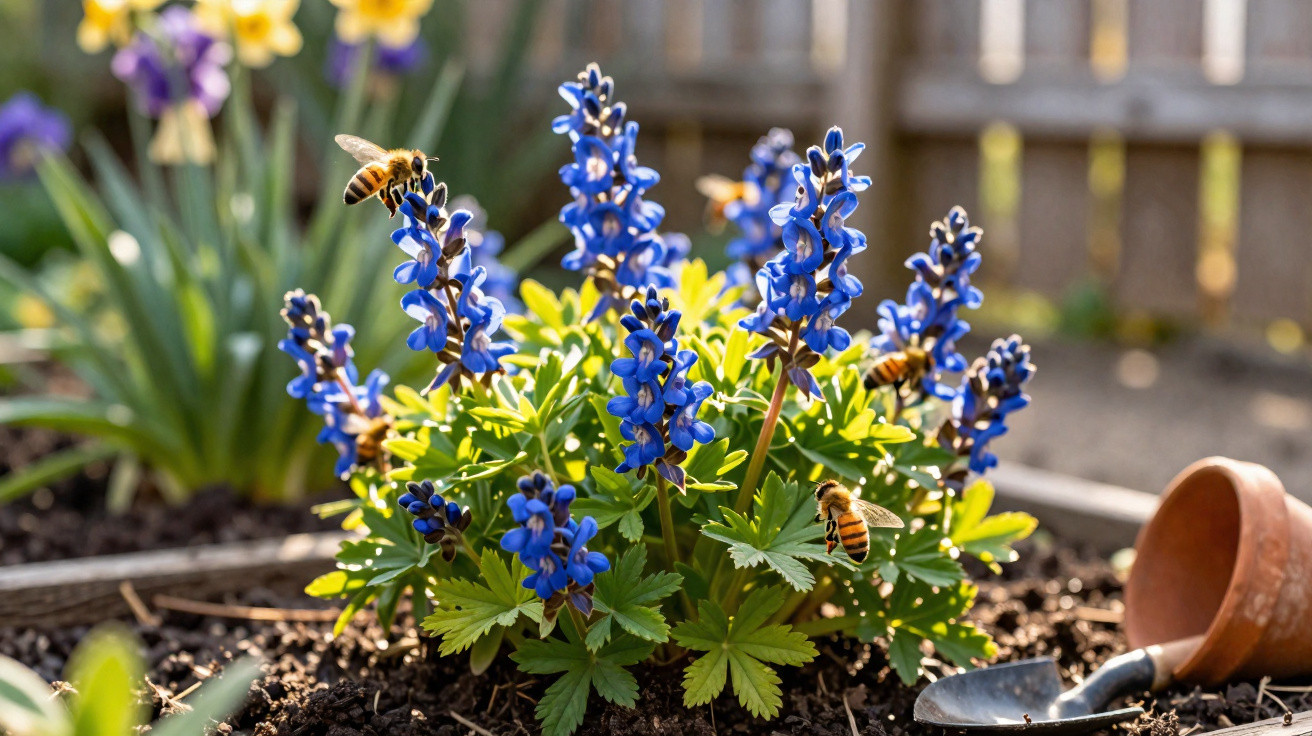
Plenty of amateur gardeners are currently on the lookout for plants that offer more than good looks alone. One distinctive perennial combines a spectacular flower colour, a heady scent and genuine value for bees and butterflies - yet it still feels like an insider tip in many gardens.
An almost unknown treasure with electric-blue flowers
We’re talking about Corydalis ‘Spinners’, a hardy perennial that produces striking blue blooms. The shade looks almost electric, particularly on dull spring days. Its flowers sit in loose sprays and seem to flutter above the border with the slightest breeze.
"If you grow ‘Spinners’ in your border, you soon notice: this plant isn’t just pretty - it actively supports biodiversity in the garden."
What really sets it apart is the fragrance: the flowers release a clearly noticeable honey-like aroma. For people it feels warm and sweet; for bees and butterflies it’s an unmistakable beacon. At a time when wild bees and honeybees often struggle to find enough food, this perennial provides generous nectar and pollen early in the year.
A bee-friendly perennial with real benefits for the whole garden
Planting Corydalis ‘Spinners’ is, in effect, like laying out an insect buffet. It comes into its own in early spring, when many other plants are still slow to get going. That timing matters, because bees need energy urgently after winter and this plant helps bridge a key gap.
The wider garden benefits too. More pollinating insects typically means better fruit set on fruit trees and vegetables. So if you grow an apple tree, soft-fruit bushes or squash, this perennial can also support your harvest indirectly.
"Corydalis ‘Spinners’ acts like a magnet for pollinators - bringing more life and yield to the garden."
Compared with many classic spring-flowering plants, it offers not only colour but also useful structure in perennial borders. It weaves neatly among bulbs, ferns and shade-loving shrubs, working as a link between ornamental planting and more naturalistic areas.
Delicate foliage, a bold presence
Light, finely cut green growth
The plant’s form is especially appealing. The foliage is finely divided, almost fern-like in character. The leaves glow in a fresh apple green, making planting schemes feel lighter and more airy. Among sturdier, large-leaved perennials, this texture creates a pleasing contrast.
On top of that, the stems are dark in colour, creating an almost dramatic mix: soft green at the base, deeper-toned stalks above, crowned with intensely blue flowers. This combination looks surprisingly vivid in part-shaded corners, where colour is often quickly lost.
Long-lived, but not invasive
Over time, the plant forms loose clumps that gradually widen. The foliage stays attractive for a long period, then slowly dies back after flowering, leaving space for later perennials such as Japanese anemones, asters or hostas.
Unlike some more delicate Corydalis species, ‘Spinners’ is considered relatively robust and adaptable - provided the basic conditions are right. It doesn’t rampage through the garden, but it will spread gradually so that patches of glowing blue appear almost of their own accord.
How to plant it successfully in your own garden
Corydalis ‘Spinners’ is refreshingly straightforward as long as the site and soil are broadly suitable. The key points at a glance:
- Soil: loose, humus-rich, lightly moist, but never waterlogged
- Moisture: fresh to moderately moist; avoid prolonged drought
- Position: part shade; ideal beneath deciduous trees or along the edge of shrubs
- Planting time: spring or autumn, when the soil is easy to work
- Care: mulch occasionally; water during extended dry spells
Good drainage is essential: in heavy, wet soils, the underground parts can rot. If your garden has clay soil, work in plenty of compost and a little sand, or plant the perennial slightly raised - for instance on a small bank or in a well-structured, free-draining border.
Dividing and propagating - with a gentle touch
After a few years, the plant can be carefully divided. The best time is shortly after flowering, while growth is still active, or in early autumn. The underground rhizomes snap easily, so use a spade or garden fork with real care.
If you manage to separate a piece successfully, replant it in a similar spot or pass it on to fellow gardeners. In this way, this still-uncommon perennial can gradually find its way into more gardens - a genuine boost for insects and biodiversity.
Why this blue perennial makes so much sense
The case for Corydalis ‘Spinners’ is impressively strong. It combines ornamental impact with ecological value, without demanding intensive care. Common reasons to choose it include:
- Spring highlight: an intense blue that shines even in shady corners
- Food source for bees and butterflies: generous nectar and a clear honey scent
- Structural value: fine, light foliage among sturdier perennials
- Long-lived: perennial, slowly forming larger clumps
- Natural feel: ideal for wild corners, woodland-style gardens and nature-friendly plots
"Corydalis ‘Spinners’ feels like a tiny nature reserve in the border - visually striking and ecologically valuable."
Especially in built-up neighbourhoods where large meadow areas are missing, plantings like this can replace part of the lost habitat. Every additional nectar plant makes it easier for pollinators to move through the landscape and find enough food.
Perfect border partners and practical tips
In perennial borders, this blue Corydalis pairs beautifully with white or soft pink spring-flowering plants. Good examples include epimediums, white anemones, lungwort or smaller hosta varieties. Together they create a look reminiscent of a natural woodland edge, while still feeling intentionally designed.
It becomes even more interesting when the fresh apple-green foliage is placed near dark-leaved plants such as heucheras or dark-foliaged astilbes. That setting heightens the contrast between leaf colour and flower colour.
If you prefer container gardening on a balcony or patio, Corydalis ‘Spinners’ also works in larger pots. Choose a container with enough depth, use loose, humus-rich compost, and add a good drainage layer at the bottom. In summer, regular watering is important; in winter, protect the pot from prolonged hard frost by placing it close to the house wall, for example.
What beginner gardeners should know about perennials and bee plants
Many newcomers confuse perennials with annual summer bedding. Perennials regrow each year from the same rootstock or rhizomes and often develop well-shaped clumps over time. That makes them far more sustainable in the long run than short-lived displays that have to be bought anew every year.
When choosing plants for bees and butterflies, the flowering period matters just as much as the flower shape. Early bloomers such as Corydalis ‘Spinners’ provide the first food after winter; summer plants such as sage, catmint or coneflower fill the gap later in the season. Offering nectar sources across the whole year is the most effective way to support pollinators.
Corydalis ‘Spinners’ plays a distinctive part in that plan: it delivers an intense blue visual high point while also providing plenty of insect food at the same time. If you want a garden plant that isn’t merely attractive but genuinely makes a difference, this rare perennial is an unexpectedly strong choice.

Comments
No comments yet. Be the first to comment!
Leave a Comment