
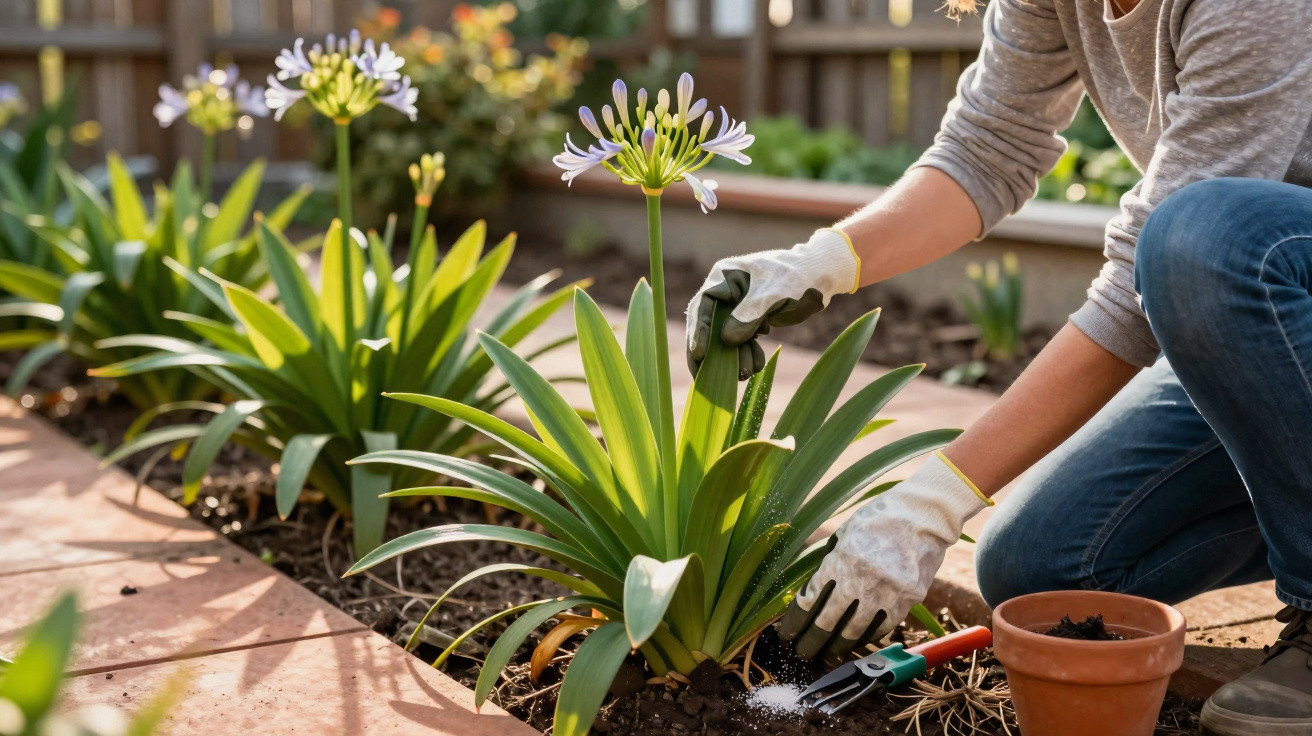
Lovers of agapanthus often end up spending a small fortune: pots are pricey and garden centres can sell out of plants in no time. Yet a single strong plant can be turned into enough new perennials to fill a good stretch of border - without buying anything, and for next to nothing. What matters is getting the timing right in spring and using a straightforward method that even casual gardeners can manage.
Why the window up to 15 April decides how well it flowers
Agapanthus - often called the ornamental lily in English - is a rhizomatous perennial. In spring it moves into a clearly defined growth phase, and working with the plant at this moment supports it rather than setting it back.
"Done by mid-April, dividing the clump puts fresh energy into the root system - and lays the foundations for abundant flowers in the coming years."
In many gardens the pattern is familiar: a few flower stems still appear around the outside, while the centre becomes hard and woody and contributes very little. That is the sign the plant needs rejuvenating. If you leave it as it is, the clump ages, flowering tails off, and eventually you are left with little more than leaves.
Up to roughly mid-April - depending on where you live and the weather - the roots are just restarting. Division takes advantage of that momentum: cuts heal quickly, new roots form fast, and the plant generally shrugs off the disturbance.
Division instead of buying new: how you can quickly save several hundred euros
A well-established agapanthus in a pot often costs between €15 and €30 in shops. Along a 5-metre border edge you can easily end up putting ten plants in the trolley - and the total soon stings.
Division changes the sums completely. A vigorous clump that is about four to five years old can be split into several fully viable young plants. Depending on size, you can expect:
- at least 4 new plants with careful division,
- up to 10 young plants if you split the clump more firmly.
Split just two large clumps into five pieces each and you already have ten agapanthus plants ready to go - without spending a penny more. In a garden centre that can quickly represent a value of around €200.
Ready for the spade: when an agapanthus should be divided
Not every young plant is suitable. Ideally, wait until a clump is around three to five years old. Typical signs include:
- a dense ring of leaves around the outside,
- a very solid, partly woody centre,
- fewer flowers despite good care,
- roots already pushing out of the drainage hole.
In pots, this is often described as being root-bound: the roots occupy almost the entire space, water rushes through instead of soaking in properly. At that stage you either need a bigger pot - or, better still, division.
Step-by-step: dividing agapanthus like a professional
1. Lift from the ground or remove from the pot
In a border, loosen the agapanthus all the way around with a garden fork or spade. Key point: keep a little distance from the root ball so you preserve as many roots as possible, then gently lever the plant out.
In a pot, first free the edge with a knife or a narrow spade. After that, the root ball can usually be pulled out in one piece.
2. Expose the roots and remove old material
Shake the root ball firmly or rinse it with water until the rhizomes are clearly visible. Trim off any old, blackened or mushy roots with clean cuts. This lowers the risk of rot and creates room for healthy new root growth.
3. Cut the clump into sections
This is the crucial part. Using a sharp spade or a sturdy knife, split the rootstock vertically. Don’t nibble away at it - make decisive, clean cuts.
"Each section should have at least one visible leaf shoot, a well-developed bundle of roots, and a piece of rhizome with several buds."
A practical guide is three visible buds per section. If you only want two large divisions, cut the plant straight through the middle. If you want the maximum number of new plants, slice the clump into more, smaller pieces - but keep each one robust and viable.
4. Protect the cut surfaces
Fresh cuts can be an entry point for fungal problems, so a small extra step is worthwhile:
- dust the cuts with fine wood ash, or
- apply crushed charcoal dust, or
- use a thin layer of ground cinnamon - mildly fungicidal.
If you like, leave the pieces for 24 hours in a shaded, airy spot. The surfaces dry slightly and become more resilient.
5. Replant correctly and water properly
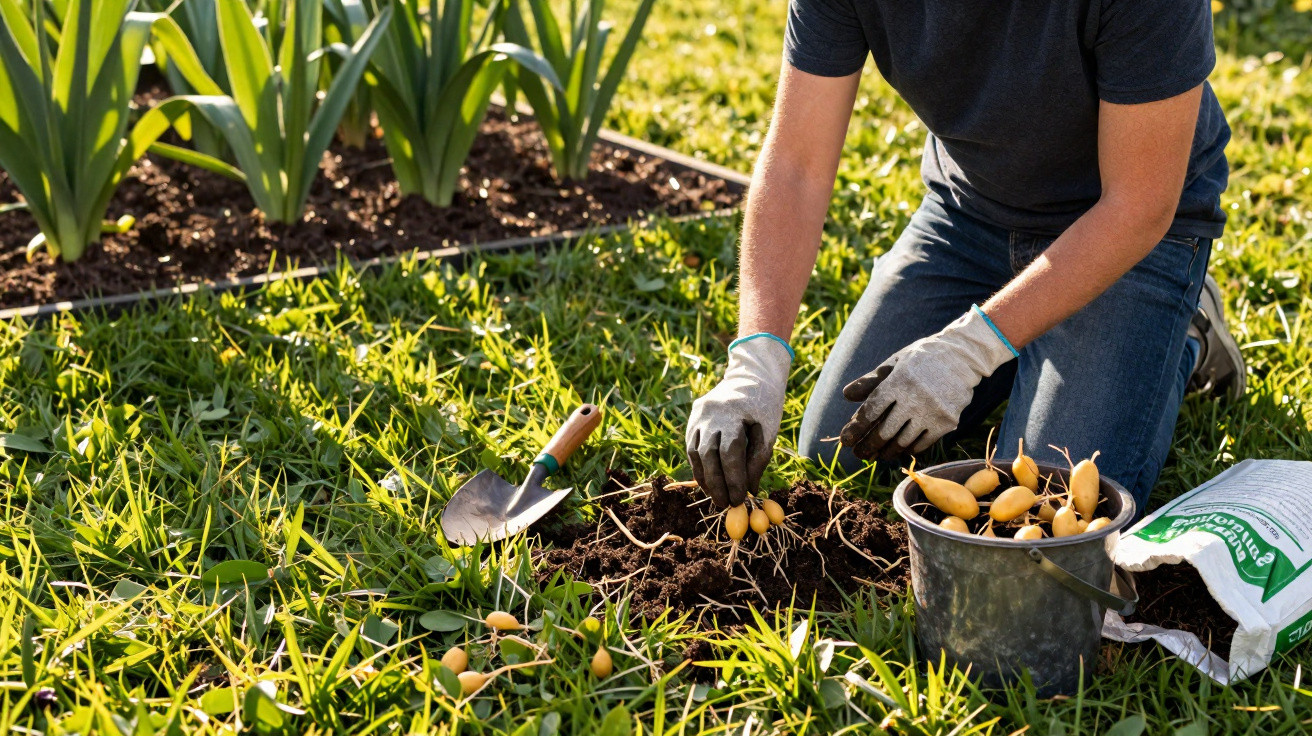
Large divisions with a strong root mass can go straight into their final position. Dig a generous planting hole and use loose, well-drained soil. Agapanthus does not cope well with waterlogging.
Smaller divisions are best started in pots with a light, sandy compost. After one to two months - once new roots have formed - they can be moved into the border or into larger containers.
After planting, cut the foliage back by about half. This reduces water loss and helps the plant focus on root recovery. Keep the soil evenly moist for the first few weeks - damp, not wet.
What if 15 April has already passed?
If you miss the spring window, you do not need to give up on your agapanthus. Division can also work after flowering, particularly from mid-August to the end of September. In milder areas, the opportunity sometimes extends into October.
In colder, more exposed locations, it is usually better to wait for the following spring. Establishment rates are noticeably higher then, and the plants start the season without the stress of frost.
Until that point, focus on care: moderate watering, keeping the soil open and free-draining, and, if needed, a thin layer of organic fertiliser in spring. In pots, stay alert: if water sits on the surface or runs straight out of the base without the root ball properly absorbing it, the root zone is overcrowded.
Typical problem: lots of leaves, no flowers
A common situation goes like this: a potted plant produces full, impressive flower heads for the first few years, then later only thin, weak foliage. Watering and position seem right - yet the flowers stop.
Very often the cause is that same root-bound condition. It is easy to check: if the root ball barely moves in the pot or is completely wrapped in roots, it is time to divide. Splitting one large plant into two or three pots is often enough to noticeably increase flowering the following season.
How often should you divide agapanthus - and what are the risks?
To keep agapanthus healthy, it is sensible to take a critical look roughly every three to four years. If the centre of the clump produces hardly any new shoots or flowering is weaker than in previous years, division is worth considering.
Dividing too frequently, however, slows development. Leave young or newly planted specimens to grow undisturbed for several years first. It is also best to avoid dividing immediately before a prolonged dry spell or during very hot periods. The ideal time is clearly in a frost-free spring or a mild late summer.
If you work carefully, use sharp tools and take steps to prevent rot, losses are unlikely. Most failures come from waterlogging after division or from making pieces that are too small and lack sufficient roots.
Practical extras: position, planting partners and care tips
For newly divided agapanthus to perform at its best, the site makes a real difference. Full sun produces the strongest flowering; in partial shade the display is noticeably reduced. The soil should be free-draining, reasonably fertile, and not excessively wet in winter.
In a perennial border, agapanthus combines particularly well with:
- ornamental grasses, which soften and frame the tight flower heads,
- nepeta (catmint) or lavender as low companions,
- white or pink perennials that create bold colour contrast.
In containers, a single strong agapanthus can look almost sculptural on a terrace or balcony. After successful division, you can plant up several pots, which strengthens the overall effect.
Building division into your routine every few years not only saves money - it gradually creates an impressive group of identical plants. These genetically identical “copies” give a cohesive look, along with those distinctive blue or white flower balls many gardeners look forward to each year.
Comments
No comments yet. Be the first to comment!
Leave a Comment