
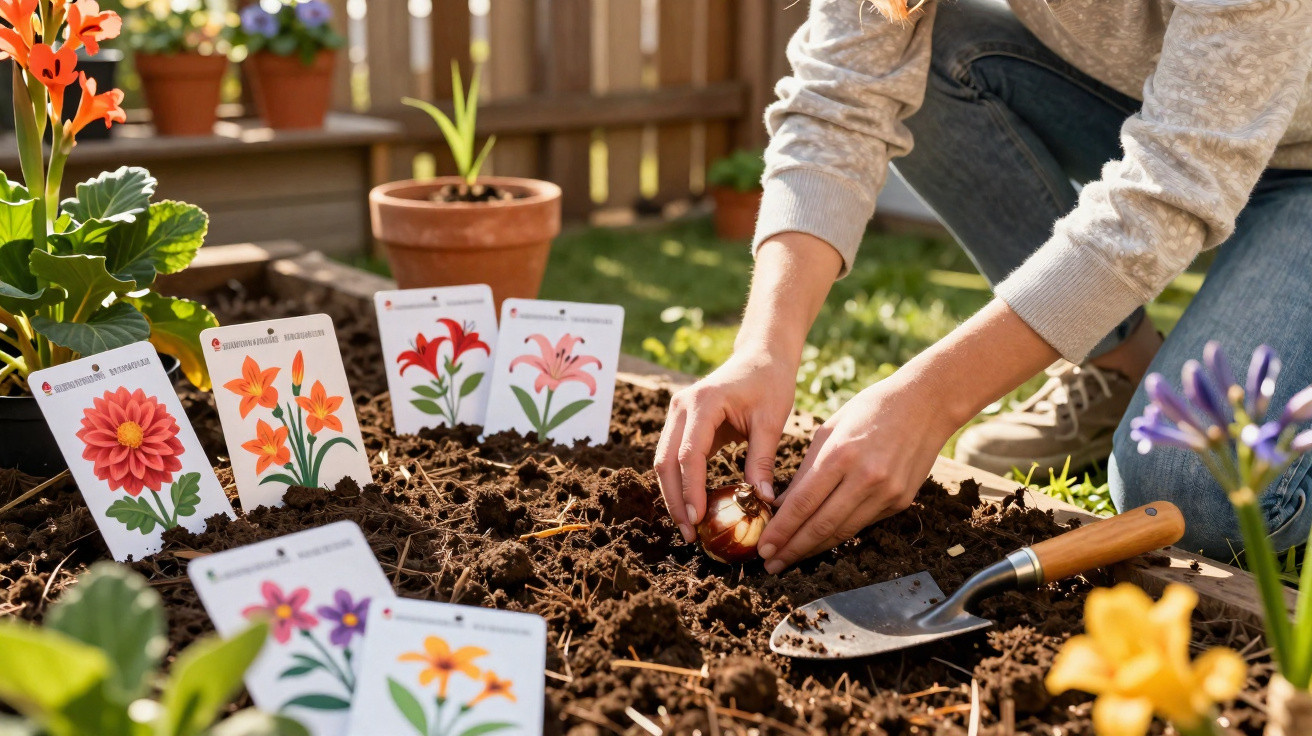
While plenty of amateur gardeners are still waiting for spring to properly arrive, the real groundwork for July and August is already happening below the surface. If you plant summer-flowering bulbs and tubers deliberately in March, your borders, containers and front garden can keep flowering for months, rather than offering only a brief splash of colour. The simple idea is that bulbs take advantage of the still-cool, moist soil, put down strong roots, and cope far more calmly when the first real heat arrives.
Why March is the hidden starting signal for summer flowers
In March, the soil is usually well supplied with moisture after winter and begins to warm up gradually. That in-between phase is exactly what many summer-flowering bulbs prefer. It gives them enough time to establish a solid root system before the first hot spell rolls in during June.
"If you plant summer bulbs in March, you’ll do less watering later and you’ll get noticeably more flowers."
Depending on your location, the best planting window shifts slightly:
- Mild areas and wine-growing climates: planting can often start from early March
- Central regions and northern lowlands: typically mid to late March
- Higher altitudes and more exposed regions: it’s better to wait until early April or start them off in pots
Where late frosts are still a risk, a straightforward workaround helps: plant the bulbs in large pots, stand them in a sheltered spot against a house wall, and cover them with horticultural fleece on frosty nights. That small temperature boost helps the plants establish more reliably.
Basic rules: how to plant flower bulbs in March properly
Before you choose varieties, the fundamentals matter most. Many summer disappointments come down to poor-quality bulbs or soil that stays too wet.
Choosing good quality bulbs and tubers
- Bulbs and tubers should feel firm, not soft, shrivelled or hollow
- Avoid dark marks, rotten patches or any visible mould
- Store them cool and dry until planting, and don’t leave them “suffocating” in plastic bags
The best spot in the border
Most summer bloomers handle sun far better than shade. At the same time, many of them hate waterlogging. If you’re unsure, choose a slightly drier position rather than a low-lying patch where puddles linger after rain.
"Flower bulbs like it bright, loose and free-draining - heavy, wet soil is their biggest enemy."
Ideally, the soil should be:
- loose and well aerated
- quick to dry after rainfall
- improved with mature compost so plants have nutrients in reserve
How deep should bulbs go?
You can plant accurately without getting obsessive with a ruler. This simple rule of thumb is enough:
| Bulb height | Planting depth (to the top) |
|---|---|
| 2–3 cm | 5–8 cm |
| 4–5 cm | 10–15 cm |
| 6–8 cm | 15–20 cm |
Place the point upwards. Spacing depends on bulb size; if in doubt, leave a few extra centimetres. After planting, firm the soil down and water thoroughly once. After that, lightly moist soil is sufficient-there’s no need for a heavy watering routine at this stage.
The 7 strongest summer bloomers you can plant in March
If you combine wisely, you can keep colour running from June right into October. These seven dependable favourites perform in borders, raised beds and large pots on balconies and patios.
1. Dahlias – repeat flowering well into autumn
Dahlias are among the most rewarding summer bloomers of all. Planted in March or April, they usually get going from July and continue until the first hard frost.
- Position: full sun, nutrient-rich soil
- Planting depth: cover the tuber only lightly with soil
- Special note: protect from slugs-young shoots attract them immediately
From compact pot-friendly dahlias to huge dinner-plate types, you can build entire schemes around them. If you regularly remove spent flowers, you’ll encourage even more buds.
2. Lilies – elegant standouts with fragrance
Lilies add height to a border and fill warm summer evenings with a strong scent. Depending on the variety, they can flower from June to August.
- Position: sunny to partially shaded
- Planting depth: about three times the bulb’s height
- Tip: support heavy flower stems if needed so they don’t snap in strong winds
In containers, lilies look almost Mediterranean on balconies. A proper drainage layer of expanded clay or gravel at the base of the pot is particularly worthwhile.
3. Tuberous begonias – colour for shady corners
Where roses and lavender struggle, tuberous begonias often thrive. They prefer partial shade to shade and bring bold colour to darker spots from July well into autumn.
- Position: shaded borders, north-facing balconies, sheltered entrances
- Special note: sensitive to direct midday sun
- Watering: regularly, but avoid waterlogging
They’re ideal for small city gardens or balconies where sun-loving perennials have little chance.
4. Gladioli – the late-summer showstoppers
With their tall flower spikes, gladioli instantly give borders a country or cottage feel. They flower in high summer and also make excellent cut flowers for vases.
- Position: sunny and sheltered from wind
- Planting depth: around 10 cm
- Tip: stake taller varieties early, before a summer storm flattens them
If you add a few more corms every two weeks, you can extend flowering considerably and keep fresh spikes coming into late summer.
5. Canna – exotic impact from containers
Canna, often called Indian shot, brings instant holiday energy to a garden. Large leaves-often marked in red or yellow-combined with vivid flowers create an almost tropical look.
- Position: warm, full-sun locations
- Needs: rich soil kept evenly moist
- Best use: large containers on patios or balconies
In harsher regions, the rhizomes are often happier in pots because you can lift and overwinter them frost-free much more easily.
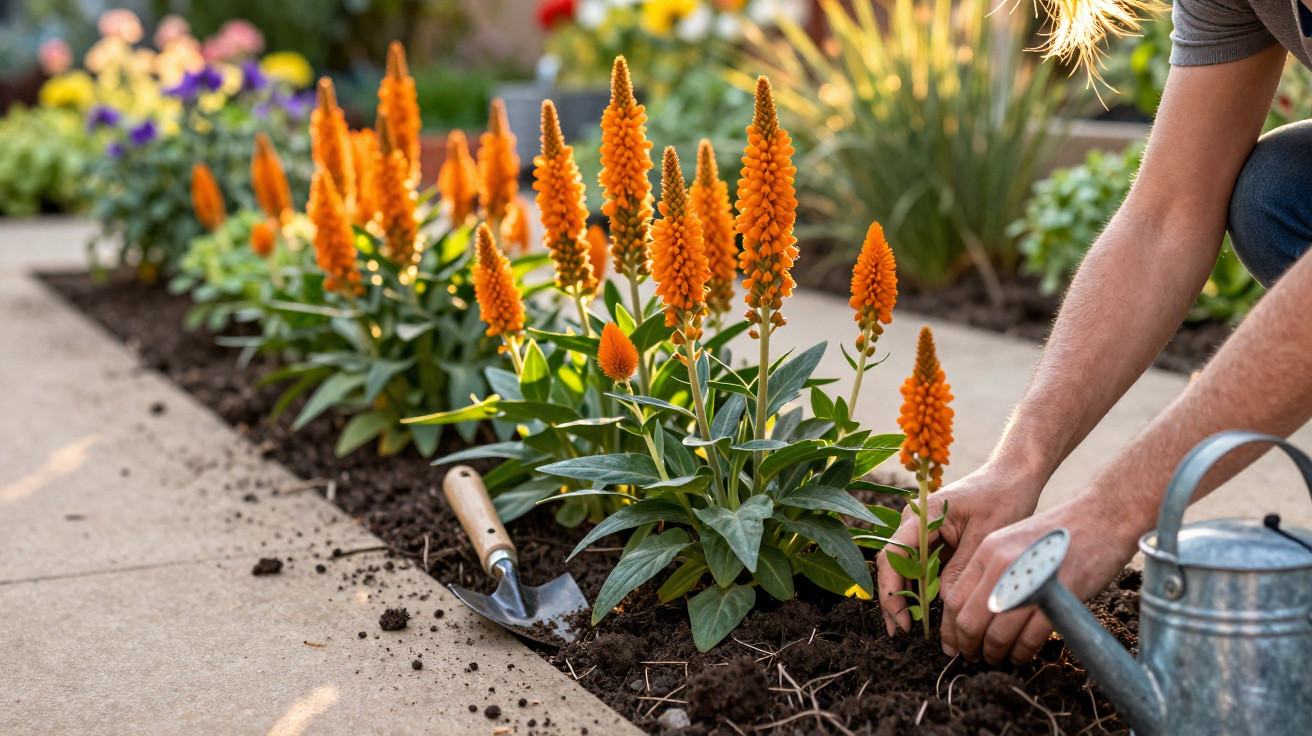
6. Montbretia (Crocosmia) – fiery bursts of colour
Montbretia produces slender, slightly arching stems of orange, yellow or red flowers. It adds structure without looking bulky and usually blooms from July to September.
- Position: sunny, ideally in front of a warm wall
- Planting depth: 8–10 cm
- Aim: as free-draining a soil as possible, not too heavy
They look especially striking alongside ornamental grasses or in front of dark hedges, where the bright colours really stand out.
7. Agapanthus – seaside blue for patios and balconies
Agapanthus is a true container star. Its round flower heads in white or blue look like small fountains in high summer and visually echo Mediterranean holidays.
- Position: full sun, sheltered spot
- Pot choice: slightly snug-light root restriction encourages better flowering
- Overwintering: frost-free but bright, for example in a conservatory or stairwell
If you begin in March with young plants or divisions, you can look forward to an impressive display in high summer.
How to combine the 7 summer bloomers smartly in the garden
The real effect comes when the seven options aren’t dotted around individually, but planted with intention. A simple rule works well: put taller plants such as gladioli, lilies and canna at the back, and lower ones such as begonias and smaller dahlias towards the front.
One possible layout:
- Back layer: canna and tall dahlias as a “back wall”
- Middle layer: lilies and montbretia for structure and colour
- Front layer: tuberous begonias and low dahlias as a flowering carpet
- Containers at the edge: agapanthus as a focal point near seating
You can create an even bigger impact by planting in waves. Put one batch of gladioli corms in early, then a second batch four weeks later. That produces a kind of relay of flowers that carries on into late summer.
Tips for watering, frost protection and nutrients
After planting, care determines how many flowers you’ll ultimately get. The key rule is to water sparingly in spring and keep the soil only lightly moist. Once plants are clearly growing and warmer days arrive, their water needs increase.
"Too much water in spring is more likely to cause rot; too little water in high summer slows flowering."
A light, organic mulch-such as dried grass clippings or fine woodchip-helps keep moisture in the soil and stops the sun overheating the root zone. At the same time, it suppresses some weeds, which makes ongoing care noticeably easier.
For most summer bloomers, a modest starter feed in spring is enough. Too many nutrients mainly push leafy growth rather than buds. A better approach is a restrained dose of organic fertiliser or a little compost in the planting hole and, if necessary, a light top-up shortly before flowering.
Extra value for balcony growers and small gardens
Many people assume summer bulbs are only suitable for large borders, but that’s rarely true. Dahlias, begonias, gladioli and agapanthus, in particular, perform extremely well in containers. What matters is a sufficiently large pot with drainage holes and a drainage layer so excess water can escape.
If you only have a balcony, 2–3 large pots can still create an impressive mini firework of flowers: a tall canna as the centrepiece, surrounded by tuberous begonias and an agapanthus. Even in a few square metres, summer can feel as though it lasts much longer.
Comments
No comments yet. Be the first to comment!
Leave a Comment