
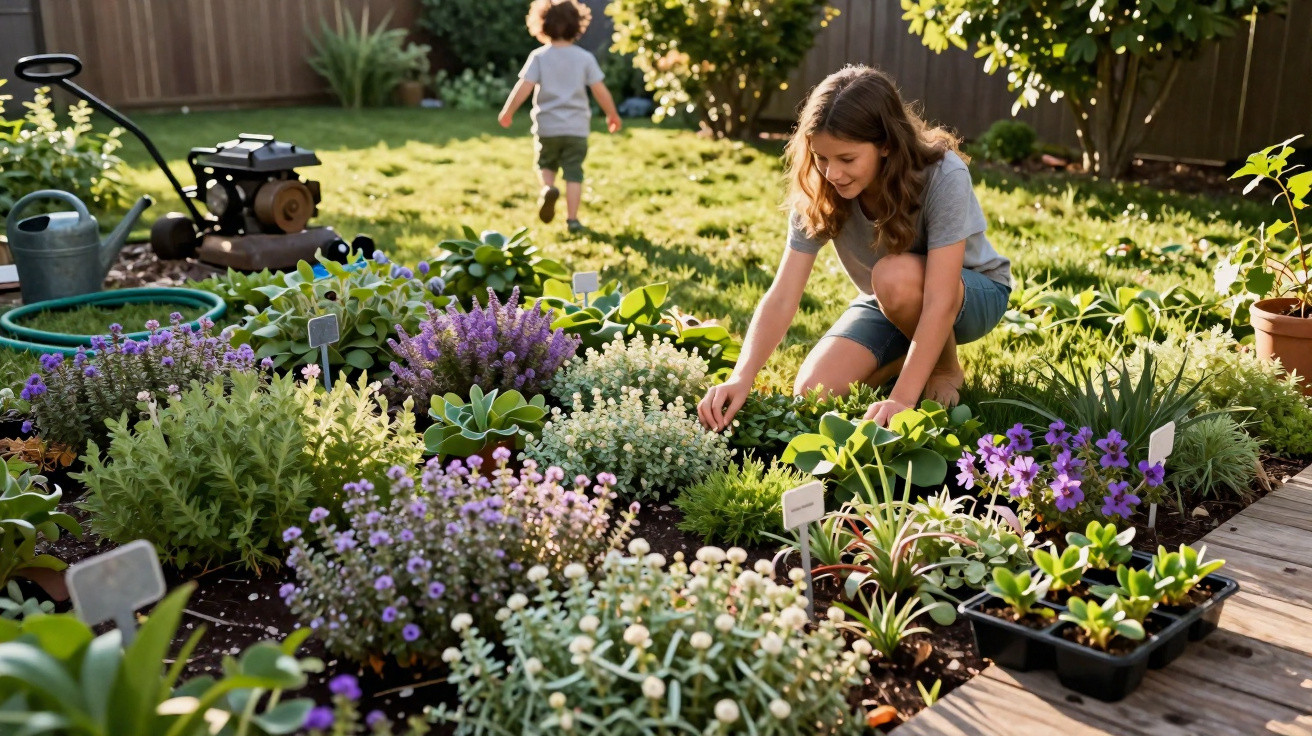
Every front garden along the road had the same thin, yellowing lawn. Every one, bar a single exception. There, it seemed as though a living rug had been unrolled: thyme tumbled across the paving, bees worked over low cushions of clover, and there was not one bare brown area to be seen.
When I asked the owner, a retired teacher wearing mud-stained sandals, how much time she spent mowing, she laughed. “None,” she said. “The mower went on Facebook Marketplace two years ago.” Her water butt remained half full as her neighbours’ sprinklers clicked away at dusk.
As hosepipe bans become an increasingly normal part of life and energy prices rise, the traditional lawn is steadily losing its appeal. More people are looking for plants that resemble grass in their coverage but behave more like a self-reliant woodland floor. The savviest gardeners are already lifting turf and replacing it with living carpets that require remarkably little in return.
And the deadline is closer than it may seem.
Why boring lawns are running out of time
Stroll through any British suburb in late summer and the evidence appears as straw-coloured rectangles. Lawns retreat, weeds take over, and the supposedly quick weekend mow turns into a hot, miserable chore. The tidy green square many of us grew up with no longer suits the weather patterns Britain is now experiencing.
Met Office climate data points to longer dry periods across almost all of the UK. Grass, developed for cool conditions and reliable moisture, has to struggle simply to remain reasonably green. That struggle comes at your expense: time, water, petrol or electricity, fertiliser and moss treatment. And it provides no food for a single bee.
Groundcovers reverse that equation. They remain low, interlock into a carpet and cope well with being left alone. Establish them properly and they return colour, texture and coverage, even when the hosepipe has been put away. A lawn is visually flat; a tapestry of groundcovers feels alive.
One London landscaping company gave me a quietly striking figure: in 2021, just 1 out of 10 small gardens it designed used groundcovers in place of substantial lawns. By summer 2024, the number had risen to 4 out of 10. It was not a novelty choice; clients said they “couldn’t keep grass alive” during the summer holidays.
Consider Sam, 42, from Surrey. After two summers of burnt turf, he had had enough. He removed the dead grass from his 60 m² front lawn, spread compost and planted creeping thyme, woolly thyme and low-growing sedums in an informal patchwork. It looked untidy in year one. By the following summer, neighbours were knocking at his door to ask about “that purple cloud”.
Because he monitors water meters for work, he did the same at home out of habit. His outdoor water use in summer fell by more than half, simply because he stopped trying to preserve the lawn. There was no fertiliser and no moss treatment, only a few hours spent kneeling in spring to pull out the occasional dandelion before it could establish itself.
The reasoning behind this move away from lawns is harshly straightforward. Conventional turf is a shallow-rooted monoculture, much like a thirsty green sponge. During heat and dry spells, it needs continual replenishment. Groundcovers including creeping thyme, Corsican mint and low-growing clover spread outwards while developing deeper, broader roots. They retain moisture for longer, shade the earth and leave weeds less room to force their way in.
Lawns also rely on uniformity. A single brown patch can make the whole area look worn out. Groundcovers, by contrast, are meant to be mixed. When one species struggles in a dry corner, another can take over and close the gap. This inbuilt resilience makes them especially suited to the weather rollercoaster expected before December 2025 and beyond.
A cultural change is under way as well. A closely clipped sward was once a mark of status. Today, a mosaic of green, purple and white that hums with insects conveys a different message: the people living here have better uses for their time than mowing twice a week.
12 living carpets that nearly care for themselves
If you want to put your mower into retirement, do not begin by buying a random packet of “no-mow” seed and hoping for a miracle. Start by selecting groundcovers that genuinely suit your light levels, soil and amount of foot traffic. Treat them as a cast of distinct characters, rather than identical background extras.
For sunny sites with reasonably free-draining soil, gardeners tired of lawn problems repeatedly turn to three choices: creeping thyme (Thymus serpyllum), woolly thyme (Thymus pseudolanuginosus) and sedum ‘Angelina’. All stay low, tolerate heat and cope with the occasional tread when you are outside with an evening drink.
For heavier or somewhat shadier ground, many gardeners choose micro-clover, low-growing white clover and hardy mazus (Mazus reptans). There is also a wildcard: chamomile ‘Treneague’, the classic plant for a “chamomile lawn”, which is fragrant underfoot but has no flowers to attract wasps. Combining two or three species in each section creates a much more forgiving carpet than a universal seed mix ever could.
Naturally, the beautiful catalogue photograph leaves out the uncomfortable first year. That first season demands patience, along with doing the right jobs at the right moments. In April 2023, a couple in Manchester exchanged their back lawn for Cotoneaster dammeri (bearberry cotoneaster) and creeping Jenny (Lysimachia nummularia ‘Aurea’). For months, it resembled a bad haircut: plugs set 30–40 cm apart with glaring bare soil between them.
By early August, the plants had started extending sideways and knitting together. They applied a light mulch of shredded bark to retain moisture and suppress weeds. Instead of watering every day, they gave the new planting one deep soak weekly during dry spells. By summer 2024, the bark had nearly vanished beneath a thick, ankle-deep mass of small leaves that remained green throughout a hosepipe ban.
Their mowing commitment fell from 40 minutes every weekend to a 10-minute walk around the garden twice a month with a hand tool, removing the occasional bramble seedling. They used less water. Their cats also stopped bringing mud indoors after rain, since the soil was shaded and secured by roots rather than left exposed among dying grass blades.
There is a clear reason these dozen or so groundcovers succeed where lawns increasingly fail. Creeping thyme, sedum and cotoneaster are among the species that evolved in hard, exposed environments: dry banks, rocky slopes and poor soils. Compared with those habitats, your garden is more spa break than battlefield.
Low-growing clover and micro-clover contribute an additional benefit. They take nitrogen from the air and distribute it through their roots, discreetly nourishing themselves and neighbouring plants. This means less fertiliser, fewer heavy bags to carry and reduced chemical run-off after intense rain.
Low-growing stepables, as nurseries call plants such as mazus, Corsican mint (Mentha requienii) and Irish moss (Sagina subulata), naturally reach only a few centimetres in height. They do not aim to become an unruly mass, so you are not condemned to chase endless regrowth with a mower. If you prefer a more ordered look near a seating area, you can still trim narrow “paths” with shears.
Every plant has a preferred setting. Corsican mint flourishes in a slightly moist, part-shaded courtyard and releases fragrance when trodden on. Sedum ‘Angelina’ copes effortlessly with the fiercely sun-baked strip beside a driveway. Placing each variety where it naturally wants to grow is the quiet, uncomplicated secret that makes the entire arrangement seem almost self-managing.
How to replace a thirsty lawn with a low-care living carpet by 2025
The best lawn-to-groundcover transformations rarely begin with a hired rotavator and one dramatic weekend of labour. More often, they begin with a single patch of grass that refuses to survive. Remove a 2 m x 2 m square where the lawn clearly dislikes the conditions and use it as a test area.
Lift the turf with a spade, shake away as much soil as possible, and spread a 3–5 cm layer of compost or fine topsoil. That modest layer gives groundcovers enough support to establish without creating overly rich, cosseted conditions. Set small plugs of your selected species roughly 25–40 cm apart, water deeply once, then leave them alone.
If the trial succeeds, increase the area gradually rather than stripping out the entire lawn in one go. You will discover how every plant responds to your own microclimate before committing the whole garden. This apparently slow method discreetly prevents expensive errors and panicked reseeding.
This is also where the reality becomes slightly less romantic. It is easy to read “no-mow, no-water” and picture a garden that can be ignored for years. That expectation usually ends in frustration. During the first year, these plants still need occasional attention, rather like teenagers testing their independence but calling for a lift when it rains.
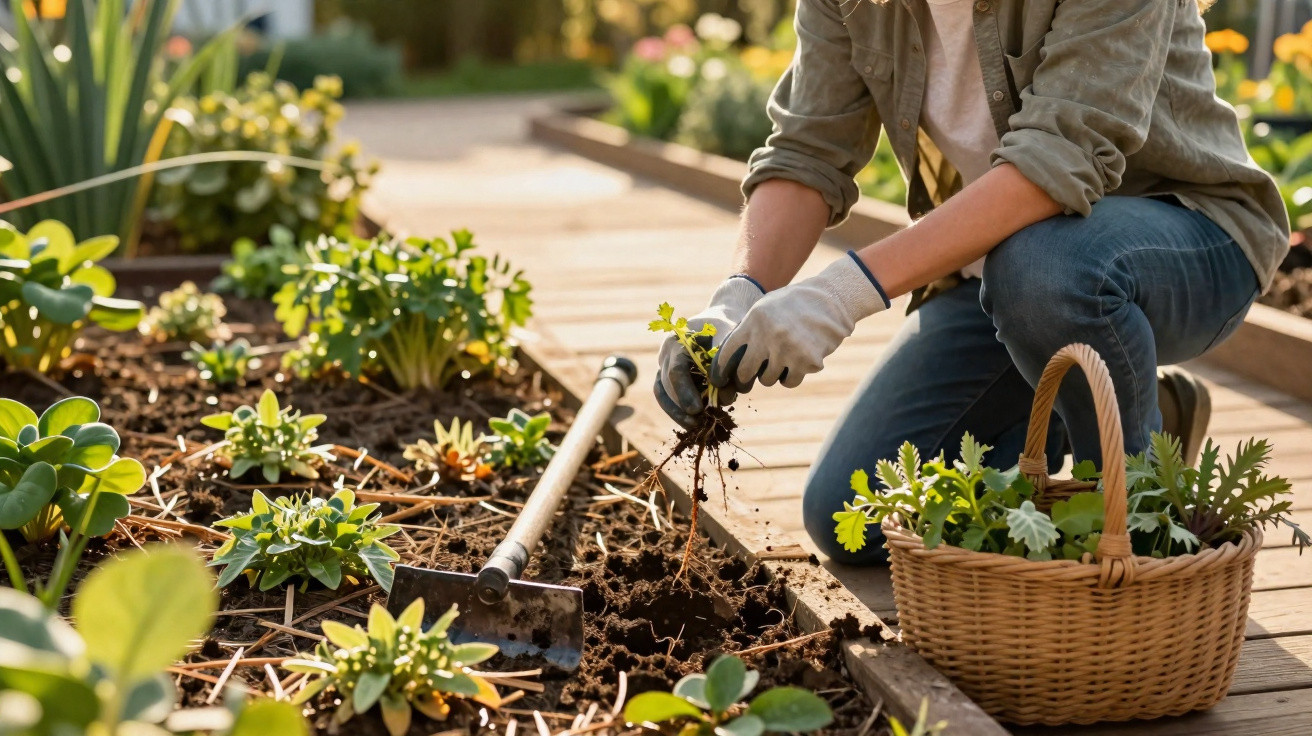
Let’s be honest: nobody really does this every day. You are unlikely to kneel outside each evening checking the soil or whispering affirmations to your sedum. The useful approach is to regard the first growing season as an investment period. Weed early while opportunistic plants are still tiny. In heatwaves, water with a deep soak rather than a light sprinkle that disappears through evaporation.
Common errors include putting moisture-loving groundcovers such as Corsican mint somewhere that bakes dry by lunchtime. Another is expecting chamomile to withstand regular five-a-side football. Or buying just one species because it looked attractive on Instagram, then watching it sulk in heavy clay. Mixing textures and tolerances from the outset is kinder to both your budget and your peace of mind.
One designer who has managed dozens of these conversions told me:
“People think they’re replacing grass with a house plant. They’re not. They’re building a low, lazy woodland edge. Once they get that picture in their heads, everything clicks.”
That change in perspective matters just as much as the plants you select.
When shopping, it is useful to keep a small crib sheet on your phone or in your pocket:
- Full sun, dry soil: creeping thyme, woolly thyme, sedum ‘Angelina’, low-growing artemisia
- Sun to part shade, average soil: micro-clover, low white clover, mazus, creeping Jenny (gold form)
- Part shade, moist soil: Corsican mint, Irish moss, bugle (Ajuga reptans), pachysandra
- Light foot traffic: thyme, mazus, Irish moss, chamomile ‘Treneague’
- Almost no foot traffic: small sedums, creeping phlox, bearberry cotoneaster
Once you can match each corner of the garden to the appropriate line on this list, choosing plants stops feeling like roulette. The objective is not perfection; it is a carpet that tolerates your idle days and still looks appealing when you finally glance up from your emails in late July.
What living carpets quietly alter in everyday life
Something unusual occurs in gardens where the mower is partly retired. The first change is in the soundscape. The Saturday 9am roar is replaced by bees, distant traffic and a soft kind of silence. Losing that noise does more for your nervous system than any scented candle.
Then your calendar changes. Weekends no longer depend on whether the grass is dry enough to cut. You may still step outside with hand shears to neaten an edge before friends arrive, but it takes ten minutes and does not leave grass clinging to your shins. The task becomes small enough to feel unexpectedly enjoyable, rather than another job on a list you never chose to write.
There is a guilt-relieving aspect, too, in knowing that your front garden is not quietly consuming water during drought. One reader in Kent said she stopped avoiding neighbours on bin day because “my lawn” - now mostly thyme and clover - stayed green during the 2022 restrictions without a covert evening session with the hose. The social expectation of a “perfect lawn” begins to weaken when the most attractive area on the street is no longer grass.
You may spot different visitors as well: hoverflies moving across the clover, ladybirds hiding around bugle flowers, or, if you are lucky and live somewhere a little rural, the occasional slow worm slipping between sedum mats. They are not merely decorative. They provide pest control and pollination, while offering a small nightly reminder that your patch of ground belongs to a larger system trying to restore itself.
Sharing these modest successes - the first summer without scorch marks, or the first occasion you go away for two weeks without returning to a crisp disaster - is how this understated revolution spreads more quickly than any council campaign. Before December 2025, as hosepipe bans intensify and the weather becomes even more erratic, households that exchanged turf for living carpets will seem less eccentric and more like those that understood the situation early.
Once you have seen a tide of thyme cover bare earth while your old mower gathers dust, it becomes difficult to return to shaving a thirsty rectangle simply because that was what everyone did in the 90s.
| Key point | Detail | Benefit for the reader |
|---|---|---|
| Choose the right species | Match each groundcover to the light, soil and level of foot traffic | Avoids costly failures and bare patches |
| Look after the first year | Carry out some weeding and deep watering during establishment | Delivers years of an almost self-sufficient carpet afterwards |
| Think in mosaics, not monocultures | Mix 2–3 species in each area to make a living “tapestry” | Improves resistance to drought and disease |
FAQ:
- Will groundcovers really replace my whole lawn, or just parts of it? You can choose either approach. Many people begin with one or two areas, then gradually extend the living carpet as they learn what works and discover how little they miss mowing.
- Are these groundcovers safe for kids and pets? Most frequently used species, including thyme, clover and chamomile, are suitable for children and pets. Avoid toxic choices such as some euphorbias; it is worth checking a trusted plant list or asking a reputable nursery.
- Can I still walk and sit on a groundcover area? Yes, provided you choose “stepable” species and direct heavier use towards paths or stepping stones. Thyme, mazus, Irish moss and micro-clover handle light everyday wandering well.
- Do these living carpets attract more insects than a lawn? They generally draw a broader range of insects, including bees, hoverflies and butterflies. It may look busier, but it also shows that your garden supports local biodiversity rather than serving only as a green doormat.
- How long before I can stop watering and forget about it? In most UK gardens, one full growing season is the care period. Once established, groundcovers need only occasional support during severe droughts and a quick tidy once or twice annually.




Comments
No comments yet. Be the first to comment!
Leave a Comment