
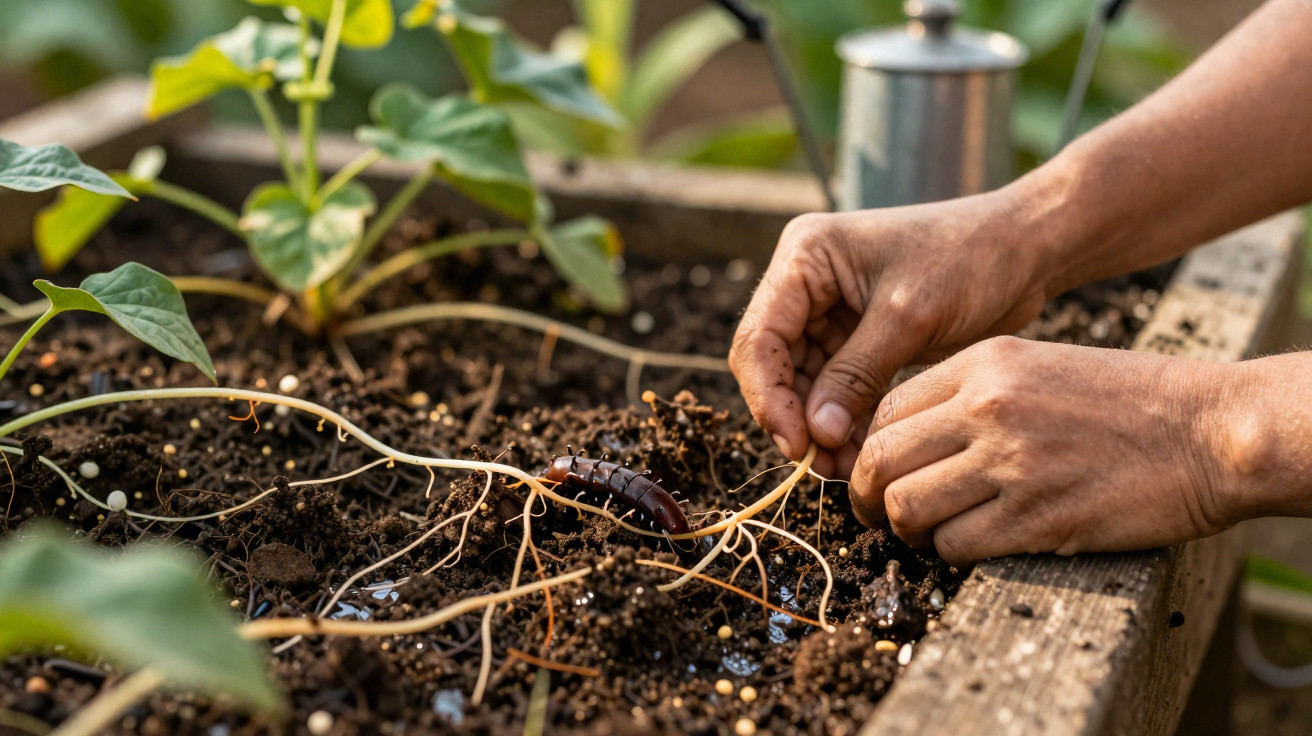
On a wet April morning, I saw my neighbour Lena looking over her vegetable beds as though she were awaiting exam results. Her tomato seedlings had turned pale, the spinach seemed weary, and the bag of fertiliser in her hands offered miracles she could scarcely afford. The earth appeared drab and nearly devoid of life, as though the entire garden had breathed out and had nothing left.
But only a few metres away, in a neglected corner no one ever thought to dig, nettles and clover were flourishing wildly. They were deep green, tall and full of life. There were no added nutrients and no special attention: simply soil carrying on with its unseen work.
Lena looked puzzled and asked the question that can transform the way you view the ground beneath you.
“What’s happening in that soil that mine doesn’t have?”
The invisible workers beneath your feet
Look down while standing in a garden. You may see brown or grey earth, perhaps dry and cracked. To the unaided eye, most soil looks broadly alike. We tend to label it fertile or poor according to the plants above it, rather than considering the activity taking place within it.
Below the surface, however, an unseen network is alive with movement. Fungi and roots form a quiet exchange system, swapping sugars for minerals and directing nutrients from where they sit to where plants need them most. This is not an unusual wonder: it is taking place wherever a plant manages to survive in difficult ground.
Several weeks after that cold morning, Lena stopped adding bag after bag of fertiliser to her beds and took another approach. She incorporated a small amount of compost, but the greater change was sowing clover between the rows and leaving the roots of cropped plants in the ground.
By midsummer, the difference was clear. Her formerly ghostly tomatoes had developed dense, dark foliage, while the basil had a stronger scent. It was not merely that yields had risen; the entire plot appeared more settled and in balance. Most striking of all was that Lena had not become a flawless gardener overnight. She had simply stopped working against the soil and allowed the hidden process beneath it to function.
That unobtrusive process is called the mycorrhizal network. Fungi connect to plant roots, then send delicate threads through the ground to create what amounts to a second root system. Those threads access nutrients held within minute soil pores and pass them to plants, including where soil tests indicate few available nutrients.
In exchange, plants provide the fungi with sugars produced from sunlight. This partnership enables plants to grow in places that might appear “poor” on paper. The ground does not somehow acquire extra nutrients; rather, the living network makes much better use of what is already present, reaching every fragment of phosphorus, every drop of nitrogen and every trace mineral that might otherwise remain inaccessible.
Supporting the mycorrhizal network in your garden soil
The first action is almost surprisingly straightforward: disturb the soil less. This does not mean you must never touch it, but it does mean reducing deep cultivation and forceful digging. Whenever soil is turned, sections of the fungal network are torn apart, much like ripping out a home’s wiring and expecting its lights to continue working.
For routine jobs, consider using a small hand fork rather than a spade. Once or twice each year, spread a light layer of compost over the surface instead of digging it in. Plant roots will extend down into the compost, fungi will grow upwards into it, and the living boundary where existing soil meets new organic material becomes an active point of exchange. This is where the quiet magic grows.
The next step is to avoid leaving soil bare for extended periods. Uncovered ground dries out, bakes under the sun and quickly loses its living community. A thin mulch of straw, shredded leaves or even grass cuttings offers roots and fungi a more stable environment, while protecting the microscopic pathways through which water and nutrients move.
We have all experienced it: you clear a bed “just for a week”, then it remains empty for the entire season. The surface forms a crust, weeds take over, and the following year feels more difficult. Honestly, no one manages this perfectly every day. Even so, a basic covering applied in ten minutes can preserve the underground network between crops.
When I asked a soil ecologist which single habit best helps plants grow in lean soil, she answered immediately.
“Feed the soil life, not the plant. The fungi know how to share better than we do.”
You can reinforce this by building a few simple practices into garden life:
- Grow at least one perennial or deep-rooted plant in every bed, giving fungi a host throughout the year.
- Choose varied crops and cover plants instead of repeatedly growing one species alone.
- Maintain a living root in the soil for as many months of the year as possible.
- Apply modest, frequent additions of organic matter rather than one enormous nutrient shock.
- Steer clear of harsh chemical inputs that destroy soil microbes and fungal threads.
None of these actions seems dramatic. Nevertheless, they enable the hidden network to continue nourishing plants when nutrient readings on a laboratory report appear disappointing.
Rethinking what “poor soil” means
After seeing vigorous wildflowers growing from thin, chalky ground, it is difficult to think about “good” and “bad” soil in quite the same terms. Certainly, some soils are truly exhausted, compacted or contaminated. But much of the ground gardeners describe as “poor soil” is merely under-connected: its fungal network has been disrupted too frequently to carry out its quiet role.
The question becomes not “How do I add more?” but “How do I help what is already there move more effectively?” This change in perspective affects more than your garden’s appearance. It reshapes your relationship with time, as seasons become partners in an extended conversation rather than fights to be won before autumn. You may still purchase fertiliser, use compost and worry over your plants. Yet real trust starts to rest not in the bag you are carrying, but in the living soil beneath your feet.
| Key point | Detail | Value for the reader |
|---|---|---|
| Mycorrhizal networks boost growth | Fungi increase the reach of roots and release locked-up nutrients, even in low-fertility soil | Shows why plants may flourish without heavy fertilising and supports more thoughtful care |
| Gentle soil handling protects life | Reduced tilling, increased mulching and shallow disturbance preserve fungal threads | Provides practical actions that build yields and soil health over time |
| Living roots keep systems active | Cover crops and perennials support fungi year-round and steady nutrient movement | Helps readers create gardens that remain productive in challenging conditions |
FAQ:
- Question 1 Can plants genuinely grow well in low-nutrient soil by depending on fungi alone?
- Question 2 Must I purchase commercial mycorrhizal products for my garden?
- Question 3 Once I stop tilling, how long will the soil network take to recover?
- Question 4 Could mulch and cover crops bring in pests or create extra work?
- Question 5 Can this method work on a balcony or in containers, rather than only in the ground?
Comments
No comments yet. Be the first to comment!
Leave a Comment