
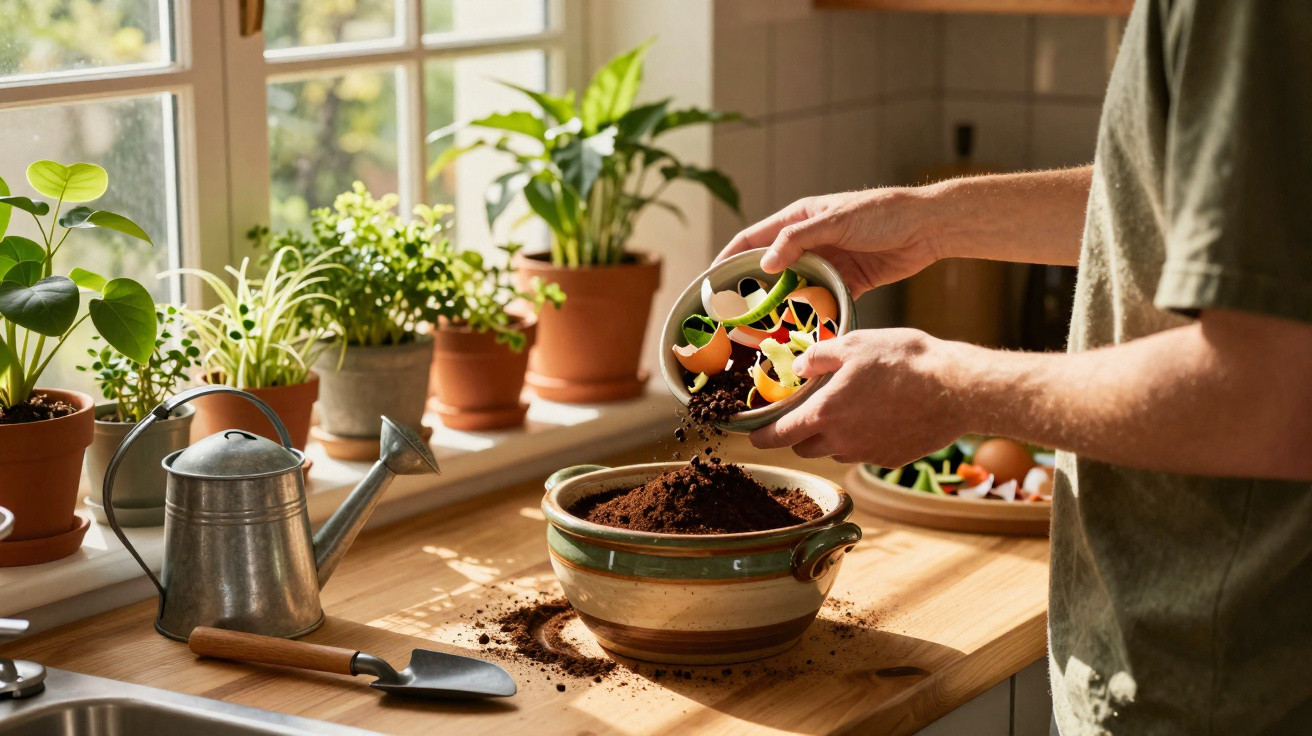
Every Tuesday evening, the same ritual unfolds in millions of kitchens. The bin lid bangs open, and in go potato peelings, banana fibres, limp lettuce and coffee grounds. There is a split second of doubt, then splash - it all vanishes. A final glance, a faint grimace - “ugh, trash” - and the lid closes.
Outside, the refuse lorry rumbles along the road, taking away what most people consider rubbish. Indoors, a forlorn basil plant sags in its plastic pot on the balcony, craving something more nourishing than exhausted shop-bought compost.
There is a hidden connection between the two that hardly anyone mentions.
What you casually throw away is precisely what your plants are hungry for.
The everyday waste your plants dream about
Take a closer look at your rubbish bag and it is practically a feast for the garden. Eggshells, coffee grounds, tea bags, vegetable peelings, cardboard and stale bread could all belong on a plant-nutrition shopping list.
Most people see items that smell, make a mess and need to be disposed of quickly. A gardener sees the future of the soil: rich, crumbly and full of life.
So-called “waste” is simply material that has not yet reached its proper destination. The bin may be convenient, but the soil will be thankful.
One figure is particularly striking: up to 40% of household rubbish consists of organic matter that could nourish plants rather than end up in landfill. That is nearly half a bin of possible fertility being discarded week after week.
In certain towns and cities, community gardens are quite literally created from what others throw out. Coffee shops pass their grounds on to local residents. Restaurants give away vegetable scraps. People living in flats share compost bins in communal courtyards.
While one person hauls a heavy bag of rotting matter to the kerb, another is quietly growing tomatoes from that same “rot”, turning it into something green, crisp and living.
From a plant’s perspective, “rubbish” does not exist. There are only molecules waiting to be reused. Peelings become humus, coffee becomes nitrogen, and eggshells become calcium. Bacteria, worms and fungi process it all, eventually producing dark, soft material that smells like a forest after rain.
In landfill, by contrast, plastic and a lack of oxygen smother that potential. The very same peeling that could nourish a rose bush releases methane instead, a gas that warms the planet.
The outcome comes down to one small choice: bin or soil.
How to turn kitchen waste into plant gold
Let us be practical. Homemade compost, made from kitchen scraps, is the purest form of “gold” for your plants. You do not need a large garden: a balcony, a corner of a garden or even an unobtrusive container beneath the sink can work.
Begin with a container: a compost bin, a bucket with holes drilled into it, a wooden box or anything else that allows some airflow. Put in a base layer of dry material, such as shredded cardboard, unprinted paper towels or a few dry leaves.
Then add your organic waste each day: vegetable peelings, fruit leftovers, coffee grounds and their filter, plus crushed eggshells. Lightly cover it with more cardboard or dry leaves. That is all you need to do; nature handles the rest.
Here is what nobody tends to say: there is no such thing as a “perfect compost routine”. Let us be honest: nobody really does it every day.
You will forget some weeks. On other days, the bin will be more full. At times it may smell a little unpleasant because there is too much wet material or too little brown material. That is perfectly normal. Compost is not a laboratory experiment; it is a living heap.
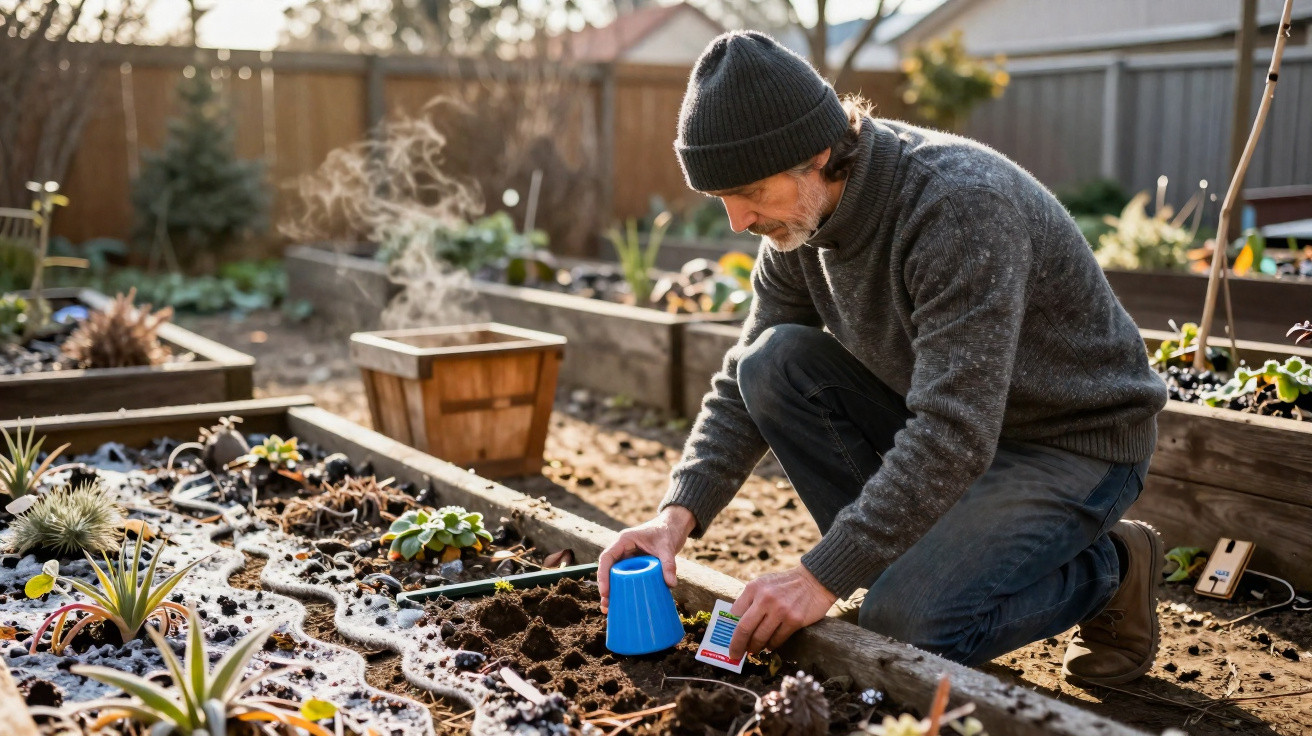
To give it a hand, turn it every fortnight with a small shovel or stick to introduce air. Add extra cardboard if it is overly wet. If it is too dry, sprinkle in a little water. You are not operating a machine; you are having a conversation with a microscopic world.
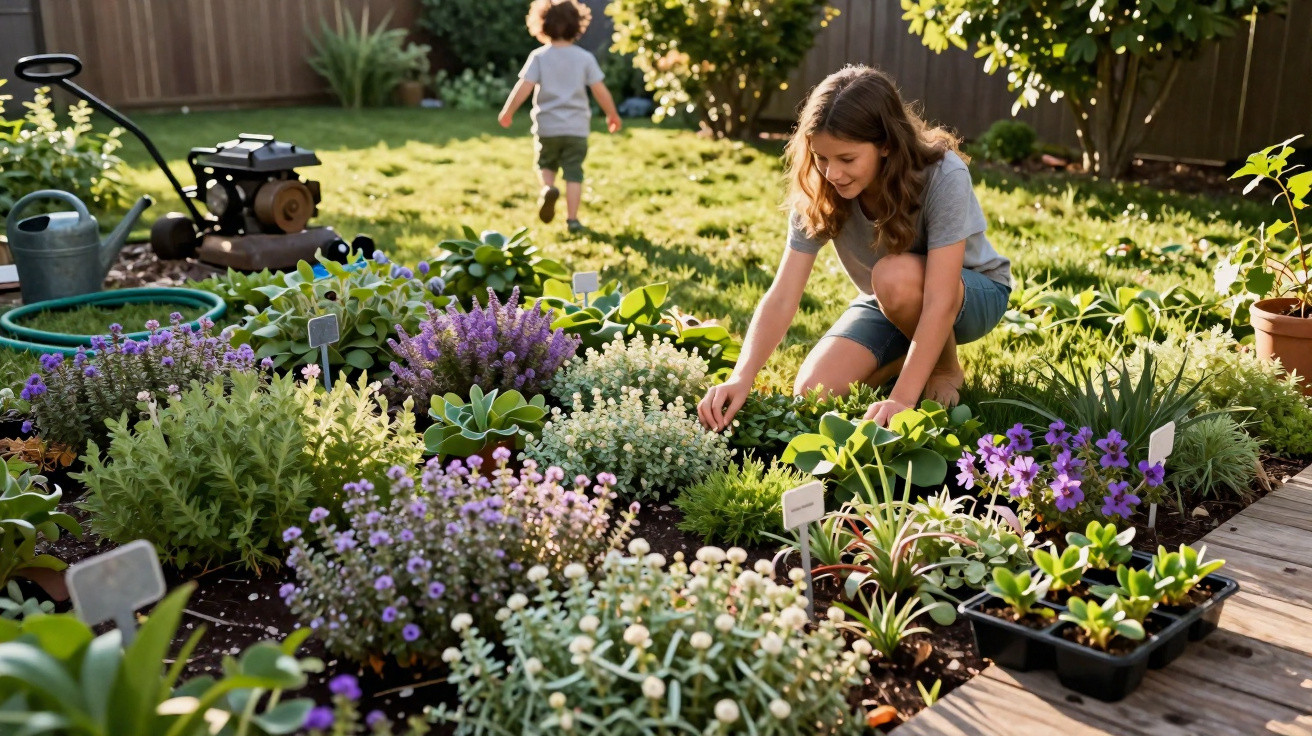
After anything from a few weeks to several months, according to the temperature and volume, the scraps will become a dark, friable material. This is your plant gold. Spread a thin layer over the surface of pots, work it into garden soil before planting, or add a small handful when repotting.
“The first time I used my own compost on a sad, pale plant, I thought I’d made a mistake,” laughs Emma, who composts in her tiny studio. “Two weeks later it was greener than anything I’d ever bought in a store.”
- Use only plant-based scraps: avoid meat, fish and cheese to prevent odours and pests.
- Crush eggshells so that they decompose more quickly.
- Avoid glossy paper and heavily printed cardboard.
- Use citrus and onion peelings sparingly if your bin is small.
- Keep in mind: if it once grew, your soil can probably make use of it.
Changing the way we look at the bin
A subtle change takes place on the day you pause over the bin with a peeling in your hand. What was once “dirty stuff to hide” becomes a resource to look after. This is when you stop viewing plants as decorative items and begin to see them as living systems with needs and cycles.
A small caddy for scraps on a shelf beside the sink can replace the automatic habit of using the bin. Your rubbish bag becomes lighter, while the soil on the balcony becomes heavier. Something shifts in your mind.
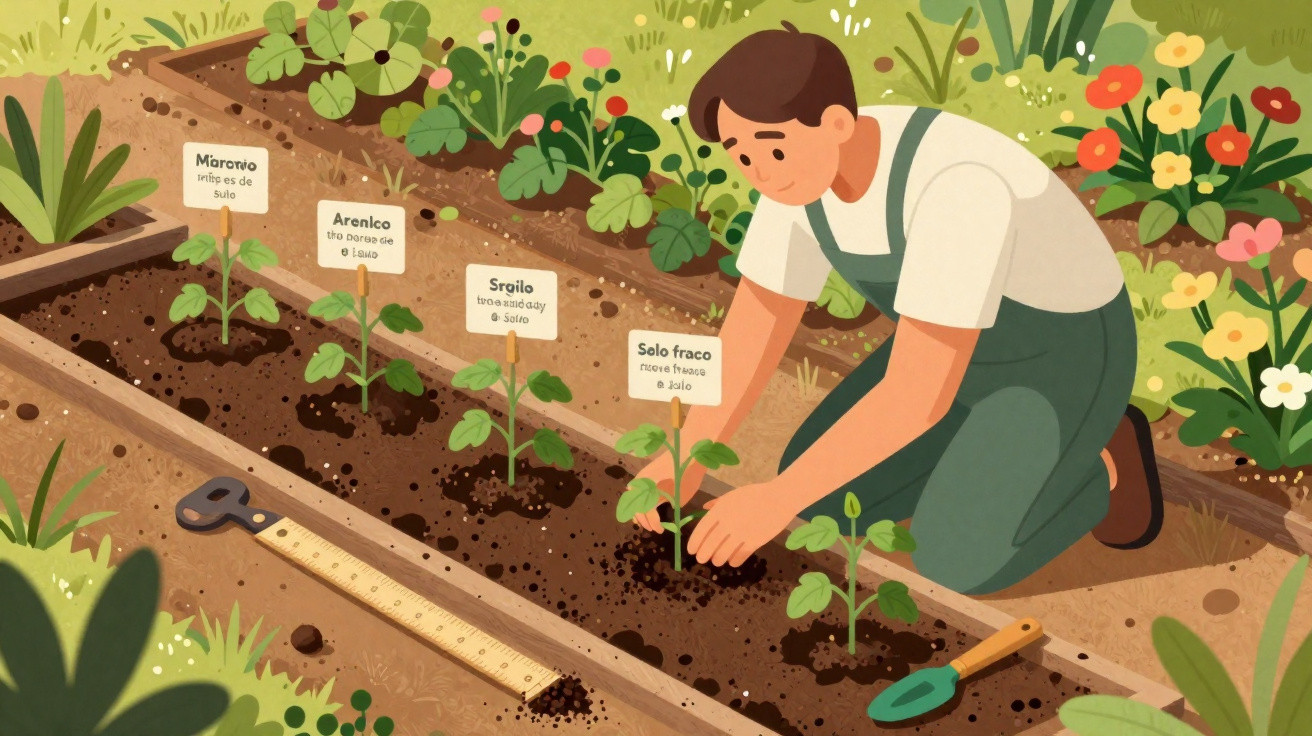
We have all watched a plant die and blamed our supposed “black thumb”. Was it too much water, too little light or the wrong pot? Sometimes, certainly. But very often the unseen cause is poor soil: depleted, lifeless and too compacted to retain water or nutrients.
Giving plants organic waste is a little like offering them a varied diet after months of instant noodles. Leaves suddenly regain their colour. Fresh shoots emerge at the base. A plant that had merely been surviving begins to flourish. Then you realise that the solution had been in your rubbish all along.
This goes beyond gardening. It is a small act of resistance against the belief that everything must be purchased new: bagged compost, chemical fertiliser and decorative plants that are discarded and replaced. It is an endless cycle of buying and waste.
Once you start converting leftovers into fertility, a particular, quiet pride appears. A banana peel is no longer just something that goes into the bin; it is half of a future rose. A handful of coffee grounds becomes breakfast for a tomato plant.
Perhaps the real luxury today is having soil that is alive - and knowing it came from everyday life rather than a plastic bag.
| Key point | Detail | Benefit for the reader |
|---|---|---|
| Kitchen scraps as “gold” | Eggshells, coffee grounds and peelings become natural fertiliser | Spend less on products and grow stronger, greener plants |
| Simple home compost | A small bin with alternating wet scraps and dry cardboard | Can be done in a flat, not only in large gardens |
| Healthier soil, happier plants | Homemade compost improves soil structure and life | Reduces plant deaths, boosts growth and flowering |
FAQ:
- Can I really compost in a small flat? Yes. A small ventilated bin or bokashi system can work on a balcony, beneath the sink or in a cupboard, provided you control odours with dry material.
- Will kitchen waste attract insects and smell unpleasant? Balanced compost - scraps plus cardboard - and a lid greatly reduce odours and flies. Issues mainly arise when the bin is too wet or is never turned.
- Which everyday scraps are best for my plants? Coffee grounds, tea bags without staples, vegetable peelings, crushed eggshells and fruit scraps are ideal for most home composts.
- How long will it take before I can use compost on my plants? Between 2 and 6 months, depending on temperature, volume and how often it is mixed. Finished compost is dark, smells like woodland and contains no recognisable pieces of food.
- Can I avoid composting and put scraps directly into pots? You can bury small quantities of chopped scraps around the edge of larger pots, but complete composting is safer and kinder to roots, especially in small containers.
Comments
No comments yet. Be the first to comment!
Leave a Comment