
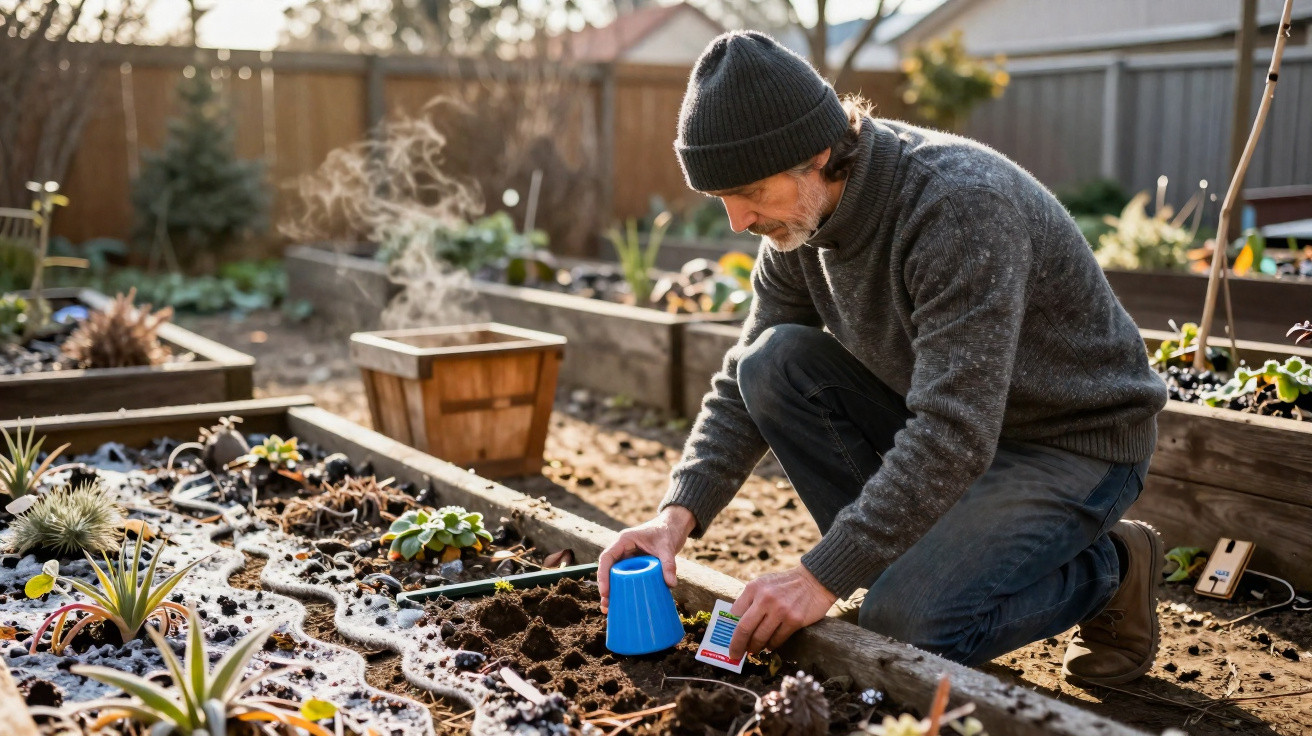
The odour arrived before anything else: harsh, minty and oddly misplaced among wet leaves and decaying apples beneath the old tree. In the dim light of a January afternoon, Emma knelt at the boundary of her suburban garden, pushing small blue toilet-cleaner cubes into cracks in a deteriorating stone wall.
She looked back uneasily towards the misted kitchen windows, as though somebody might be observing her. A week before, she had spotted rat droppings beside the compost bin. Then a neighbour had told her about “the trick” – an inexpensive bathroom product said to stop rats spending the winter in sheds and flowerbeds.
That trick is now widespread on social media, appearing in gardening forums and neighbourhood Facebook groups. To some, it is ingenious; to others, it is heartless.
The boundary between pest management and slow, unseen cruelty has become alarmingly unclear.
From bathroom shelf to garden fence: the rise of a strange “rat hack”
Spend enough time on TikTok or in home-gardening groups and it will eventually appear. A hand comes into view, opens a plastic tub and reveals the recognisable blue toilet rim blocks or powerful bleach tablets.
Rather than putting them in a toilet, users push them into fence corners, beneath decking or around garden sheds. The caption reads: “Rats gone in 48 hours. You’re welcome.” Comments quickly pile up: some celebrate it, some recoil, and others quietly wonder whether it is legal at all.
A product made for porcelain toilet bowls is now being used as a garden repellent. It is the sort of idea that invites a collective intake of breath.
One account repeatedly resurfaces online. A retired couple, tired of rats eating their chicken feed, placed citrus-scented toilet blocks around the edge of their chicken coop. Within days, they said, the nighttime scratching had stopped and there were no more droppings in the straw.
They posted photographs with pride. Their contribution took off in a local group, followed by dozens of imitations: identical blocks in identical corners, all offering the same promise of a “rat-free winter” for only a few euros.
But the apparent success stories are accompanied by more troubling pictures: a fox foaming at the mouth, a neighbour’s cat becoming suddenly unwell, and a hedgehog found dead beside a vivid blue piece of disinfectant. No one can confirm a direct connection. Even so, uncertainty begins to take hold, along with an unpleasant knot in the stomach.
On the surface, the reasoning appears simple. Rats dislike powerful odours, particularly chemical ones. Toilet blocks contain disinfectants, fragrances, surfactants and sometimes bleach, so people assume that the smell will force rodents from their warm winter refuges.
In practice, it is not so neat. Certain rats may avoid the blocks, while others simply navigate around them or, worse, gnaw at them out of curiosity. Other animals can react in the same way. Dogs, cats, hedgehogs and even toddlers may come across the colourful cubes and investigate them.
A low-cost “hack” can therefore become something far more serious: household chemicals being spread without control into soil, drainage and food chains. The ethical equation is much more complicated than a gleaming bathroom advert suggests.
Where does pest control end and cruelty begin?
The supposed technique is starkly straightforward. People buy toilet rim blocks or solid bleach tablets, remove their plastic fittings and conceal pieces wherever they have noticed rat activity: behind water butts, beneath pallets, beside compost heaps or in holes along fences.
Some go further, crushing the blocks and scattering the powder near burrows in the hope that the odour will filter through tunnels and make nests impossible to inhabit. Their aim is to persuade rats to leave before wintering in the garden, avoiding months of gnawing, nesting and night-time raids.
What these online demonstrations tend to overlook is the setting for which the product was designed: a water-filled toilet bowl, not exposed living soil.
As the trend grew, animal welfare organisations began receiving reports. A wildlife rehabilitation centre in northern England noted an increase in calls about “strange blue stuff” found near injured hedgehogs. In France, a vet reported treating a dog that had chewed a disinfectant block left close to a garden shed.
At the same time, some councils started advising residents not to “repurpose” cleaning products for rodent control. This was not because they had abruptly begun seeing rats as individuals, but because such products have not been assessed for environmental effects beyond plumbing systems. Wastewater treatment plants can dilute and process them; garden soil cannot.
In truth, hardly anyone studies the small print on a toilet-cleaner label before pressing one into a stone wall.
The fierce Facebook debates conceal a basic conflict of values. For some people, rats are simply intruders – disease carriers that damage insulation and chew through cables. For others, they are animals seeking food and shelter, no more or less deserving than the birds at a feeder.
The bathroom-block method lands directly on this divide. Its supporters say they are protecting their homes with items already at hand. Its critics point to cruelty, secondary poisoning and the silent contamination of gardens where children play and vegetables are grown.
The plain truth is that both sides are reacting to fear – one side fears rats, the other fears what our fear will push us to do.
Safer ways to say “no” to overwintering rats
Once the viral shortcuts are set aside, an older approach comes into focus: the unglamorous, systematic task of making a garden less attractive to rats from the outset. Food comes first. Keep chicken feed in metal containers, use rodent-proof feeders and clear up dropped birdseed rather than leaving it on the ground throughout winter.
Shelter is equally important. Raise wood piles from the ground using bricks, cut back deep undisturbed clutter and close obvious shed gaps with fine mesh. Water also plays a role: repair slow leaks and do not leave open bowls of standing water close to walls.
None of this feels as immediately gratifying as hiding a supposedly magical blue cube in a shadowy gap. However, these are the foundations of a solution that does not turn flowerbeds into a small-scale chemical experiment.
People often want one forceful measure that will “solve” a rat problem overnight: poison, a trap or an odour strong enough to drive them away permanently. The reality is slower and less dramatic. It depends on layers of protection, modest routine changes and recognising that complete eradication from a living garden is unlikely.
Most people recognise the moment: one worrying clue, such as droppings in a shed or scratching inside walls, triggers panic. That is precisely when shortcuts such as toilet blocks seem especially appealing. They can make you feel resourceful, decisive and even slightly heroic as you protect your family.
But it is also the point at which errors can do the greatest harm: toxins may be left within reach of pets, legal requirements for rodent control may be ignored, or a method may cause prolonged suffering rather than a quick death.
An increasing number of pest-control professionals speak frankly about the trend.
“Household cleaners are not rodent control tools,” says Marc, a certified pest technician in Bristol. “They’re not tested for this use, they’re not dosed for wildlife, and they create unpredictable knock-on damage. If people want a deterrent, I’d rather see them use physical barriers and proper traps than sprinkle disinfectant around where everything else lives too.”
He and other professionals advise the following straightforward sequence, which avoids the toilet-block trap:
- Begin with hygiene: secure food, shut bins and sweep up fallen seed.
- Next, improve the structure: seal holes, fit fine mesh and raise wood stores.
- If the infestation continues, use targeted traps or seek professional assistance.
- Use poisons only where legally required and with expert guidance.
- Do not improvise with bathroom or kitchen chemicals outdoors.
This may not be as attention-grabbing as a viral “hack”, but it takes account of both the law and the interconnected life of a garden.
A winter garden caught between fear and responsibility
The tale of toilet blocks in flowerbeds reveals much about the way people respond to discomfort. A minor sign of wild nature at the edge of an orderly life, and suddenly every item in the cleaning cupboard becomes a potential weapon. The bathroom, a symbol of cleanliness and control, is extended into soil – a place where things should decay, crawl and shift out of sight.
For some, the argument remains theoretical until a rat crosses the patio in full daylight. For others, it becomes immediate when a child picks up a blue cube or a beloved cat returns home drooling and unsteady. Between those two shocks is room for a calmer discussion about living alongside pest species without making gardens into chemical minefields.
The issue is not whether people may defend their homes. It is how far they are prepared to distort the intended use of ordinary products, and what collateral harm they are willing to accept. When toilet cleaner is marketed as a cheap answer to a complex ecological issue, it feels fundamentally wrong.
Perhaps the genuine “hack” for future winters will be less spectacular: tighter bin lids, fewer exposed compost heaps and a call to a professional before a late-night panic purchase. It may also mean accepting that some things should remain in their proper place – toilet blocks in toilets, rather than concealed like landmines in ivy.
| Key point | Detail | Value for the reader |
|---|---|---|
| Bathroom products are not outdoor tools | Toilet blocks and bleach tablets are tested for use in plumbing, rather than soil or open air | Helps prevent chemical misuse that could damage pets, wildlife and garden ecosystems |
| Prevention is better than improvisation | Securing food, reducing shelter and sealing gaps makes gardens less appealing to rats | Gives readers a realistic, low-risk way to reduce overwintering without cruel methods |
| Ethics and law both matter | Unapproved rodent-control methods can breach local rules and lead to hidden suffering | Promotes informed choices that protect families and the wider environment |
FAQ:
Question 1: Does using toilet blocks against rats actually work, or is it just an online myth? Some people say they have seen fewer rats after using them, probably because of the intense smell or disruption. However, outcomes vary, and there is no solid research showing that they are a reliable or safe outdoor rodent deterrent.
Question 2: Is it legal to use bathroom cleaners as rat repellents in my garden? Rules differ between countries, but many regulations require pest-control products to be approved for their particular application. Using a cleaner as a rodenticide or repellent may fall into a legal grey area, or may be prohibited outright.
Question 3: Can toilet blocks harm pets, hedgehogs or birds? Yes. Their concentrated chemicals can irritate mouths and stomachs and, at larger doses, cause poisoning. Inquisitive animals may lick, chew or carry the blocks, particularly when they are concealed at ground level.
Question 4: What’s a more ethical way to deal with rats in winter? Begin with prevention: secure every food source, remove sheltered areas and seal access points. Where rats are already established, use well-designed traps or contact a qualified pest controller who follows welfare and environmental guidance.
Question 5: Are there any natural smells that help keep rats away? Powerful scents including peppermint oil, clove and eucalyptus might temporarily deter some rats from small spaces, but they fade rapidly and do not address the underlying food and shelter problems. They are useful only as a minor element of a wider approach.




Comments
No comments yet. Be the first to comment!
Leave a Comment