
Across Britain, a subtle change is taking place behind garden fences and alongside downpipes. Lawns turn crisp beneath July sun, water bills creep higher and tabloids headline hosepipe bans-yet the best-prepared householders are quietly unconcerned. They have made reservoirs of their roofs. There is nothing showy about the approach: it is practical, local and unexpectedly rewarding.
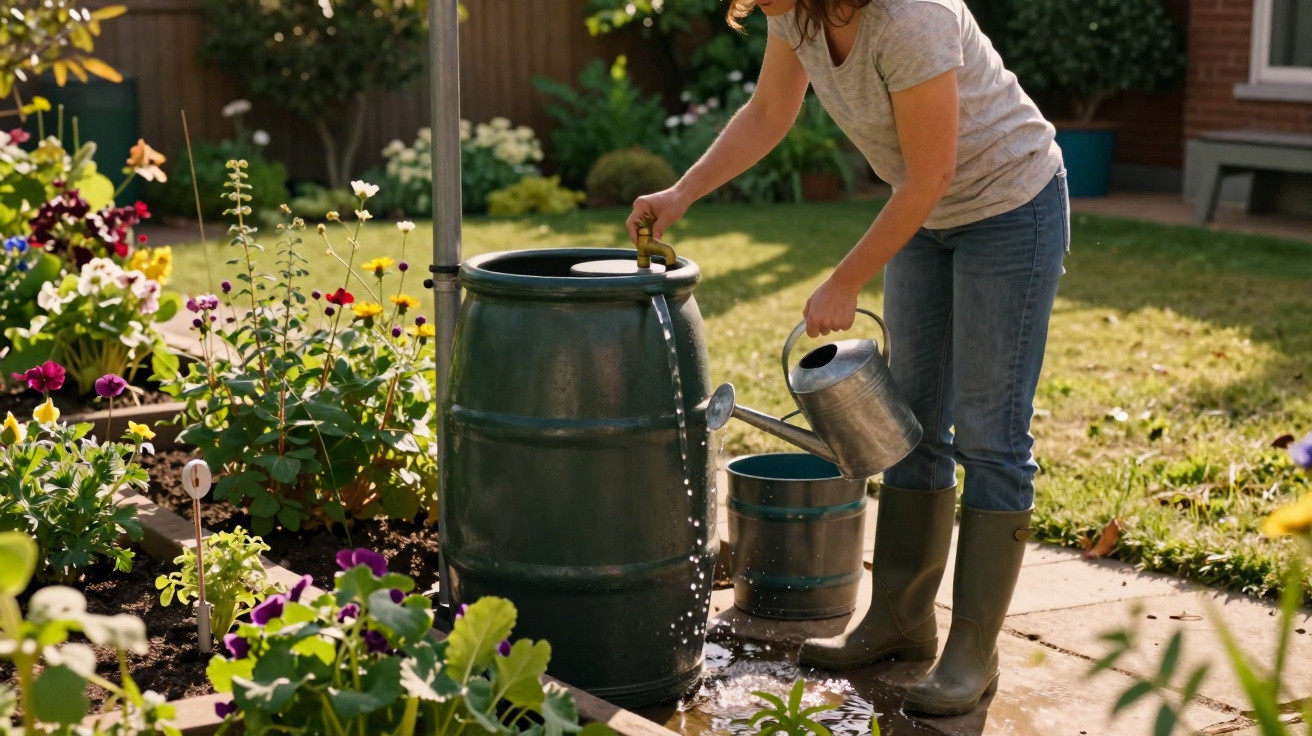
In Bristol, a neighbour eases open the door of a creaking shed, raises the lid of a green water butt and lowers a watering can into water the shade of weak tea. She rubs her forearm on her jeans, looks towards a bank of cloud coming in from the Channel, then inspects the gutter diverter as carefully as a pilot checking a control.
We all know the point when earth becomes dust and the weather forecast offers no certainty. She no longer worries. Each shower runs from her roof into the barrel, and the barrel keeps her garden alive. It operates unobtrusively through a British summer. The answer is in the gutter.
The quiet rise of backyard rain banks
Stroll along a suburban road in Kent or the Midlands and, once you notice them, they are easy to spot. Compact water butts hidden beside wheelie bins. Slim tanks placed close against a fence. An unobtrusive diverter projecting from a downpipe like a little metal elbow. It does not look like eco-warrior behaviour. It feels more like British practicality: kettle on, sleeves up.
A fresh mindset is taking hold: collect rain when it is abundant, then draw on it when the mains supply feels restricted. Call it rainwater harvesting or simply common sense. Whatever the label, it is spreading through the small, useful steps that make good habits stick. One neighbour follows another. A builder suggests a kit. A dry spell at the end of summer persuades the previously hesitant.
The calculation is what draws many people in. One millimetre of rainfall over one square metre of roof provides one litre for your tank. Even with unpredictable conditions, a fairly modest 50 m² roof in the South East can collect tens of thousands of litres in a year. Ofwat puts the average combined bill at around £470 for 2024/25, meaning every litre not taken from the mains helps bring that figure down. This is not about getting everything perfect. It is a small change that continues to deliver.
Stories, not slogans: why it’s catching on
When a run of dry summer days arrived, Janet in Maidstone installed a 200-litre butt. She then saw it overflow during a single thunderstorm. So she fitted another one, joined the two with a short hose and began watering by gravity. She did not share it online. She simply stopped worrying whenever council emails about restrictions arrived.
Janet is far from the only one. A groundworker in Leeds uses a buried 1,500-litre tank to supply a tap beside his vegetable beds. In Cardiff, a young couple put a slim 100-litre unit behind their terraced home because paving gave them no space for anything larger. Their tomatoes came through that hot spell while everyone else’s developed crisp edges. The equipment is neither prized nor decorative. It is simply present, working while you sleep.
Beyond the garden, the reasoning is straightforward. Use rainfall for tasks that do not require drinking-quality water: plants, cars, patios and even toilet flushing with suitable pipework. Each watering can filled from a barrel is water you do not pay to have treated, pumped and metered. It also reduces run-off during intense storms, helping to keep basements dry and drains under less pressure. Frugality and resilience come together in a dry August.
How to start rainwater harvesting without ripping up your life
Start at the downpipe. Choose a barrel or slimline tank that suits the available space-200 to 500 litres works for most small gardens-along with a diverter kit compatible with your pipe diameter. Drill into the downpipe at the level specified by the kit, snap the diverter into place and put the tank on a stand high enough for a watering can beneath its tap. Keep the lid securely closed. If August leaves you short, connect a second butt. The first rainfall after fitting it is oddly exciting.
Set the tank on level paving slabs so it cannot move when full. Add a basic leaf guard to the gutter to keep debris out. If your roof has moss, install a first-flush diverter so the first, dirtier flow of rain avoids the tank. Plan for overflow too: send it to a drain, soakaway or another butt. Water in the early morning to reduce evaporation. Realistically, no one does that daily. Two or three times a week is enough.
If you cannot give up using a hose, fit a small pump designed for garden use and attach the hose to it. You can then leave the mains tap off without changing your routine too much. For households with a water meter, the reduction may appear on the next billing cycle, often alongside less concern when notifications arrive about a hosepipe ban. The best systems are deliberately unremarkable-they become part of everyday life.
“We fitted ours in an afternoon. Now the veg patch chews through dry weeks like nothing’s happened,” says Asha, a teacher in Oxford. “It paid for itself in the first summer we didn’t lose the beans.”
- Choose a shaded position to limit algae growth.
- Put the tank on a robust stand to make filling watering cans easier.
- Connect several butts with short hose tails to increase capacity quickly.
- Use a child-safe lid and a fine insect screen.
- Empty and rinse it annually; it takes 20 minutes.
Drought season, bills, and the bigger picture
This highly practical adjustment also reflects a cultural shift. British summers are becoming more erratic, with wet periods followed by extended warm, dry weather. Tanks help bridge those fluctuations. Gardeners preserve their flowers, renters keep pots on their patios alive and metered households hold their water bills steadier. Water companies urge restraint, while communities quietly create some breathing room for themselves.
Cost matters as well. A straightforward 200-litre butt costs £30 to £80, while diverter kits add another tenner or two. A buried 1,500-litre tank with a pump can cost £1,500 to £4,000 installed, which is a more substantial commitment. For most households, linking two or three barrels in series is the ideal balance: little hassle and meaningful results. The first summer when a weak trickle from the tap does not cause panic, it makes sense. You have bought yourself breathing space.
There is a modest pleasure in it too: the sound of a watering can filling at dusk, or hydrangeas recovering overnight after a difficult day. There is also the quiet satisfaction of not pouring mains water on to a lawn that will brown regardless. It is not a manifesto. It is simply your roof carrying out a useful job every day while the weather does as it pleases.
What it changes-and what it doesn’t
Rainwater harvesting will not end droughts or alter policy. What it can do is reduce your exposure to changing weather and gently lower bills. It provides a backup during restrictions, as stored rain is usually permitted for garden use when mains-fed hoses are paused. Smaller systems can be installed in an evening, while larger arrangements need planning. The habit is what matters: save a little, use a little, worry less.
| Key point | Detail | Why it matters to the reader |
|---|---|---|
| Roof-to-litres calculation | 1 mm of rain on 1 m² of roof = 1 litre in your tank | Straightforward sizing and realistic expectations |
| The right kit in the right place | Diverter + 200–500 L butt in shade, sturdy stand, secure lid | A quick installation that genuinely lasts |
| Scaling up intelligently | Link butts, add a first-flush diverter, consider a pump for hoses | Garden-friendly pressure and cleaner water |
FAQ:
- Can I use harvested rainwater during restrictions? Yes. Restrictions target mains-supplied water use. Stored rain is generally acceptable for gardens-check your local notice to make sure.
- How much can I save on my bill? If you have a meter, garden watering can account for a substantial share of summer use. Reducing mains water for watering and rinsing cars can save tens of pounds each year.
- Is the water safe for vegetables? Yes, for watering the soil. Avoid letting it touch leaves that you eat raw if your roof is very new, treated or heavily soiled.
- Do I need filters? A leaf guard and first-flush diverter remove most debris. Dedicated filtration and professional plumbing are needed for toilet supplies or washing machines.
- Will a tank attract mosquitoes or algae? Not if it has a properly fitting lid, a screened inlet and a shaded position. A quick annual rinse will keep it fresh.

Comments
No comments yet. Be the first to comment!
Leave a Comment