
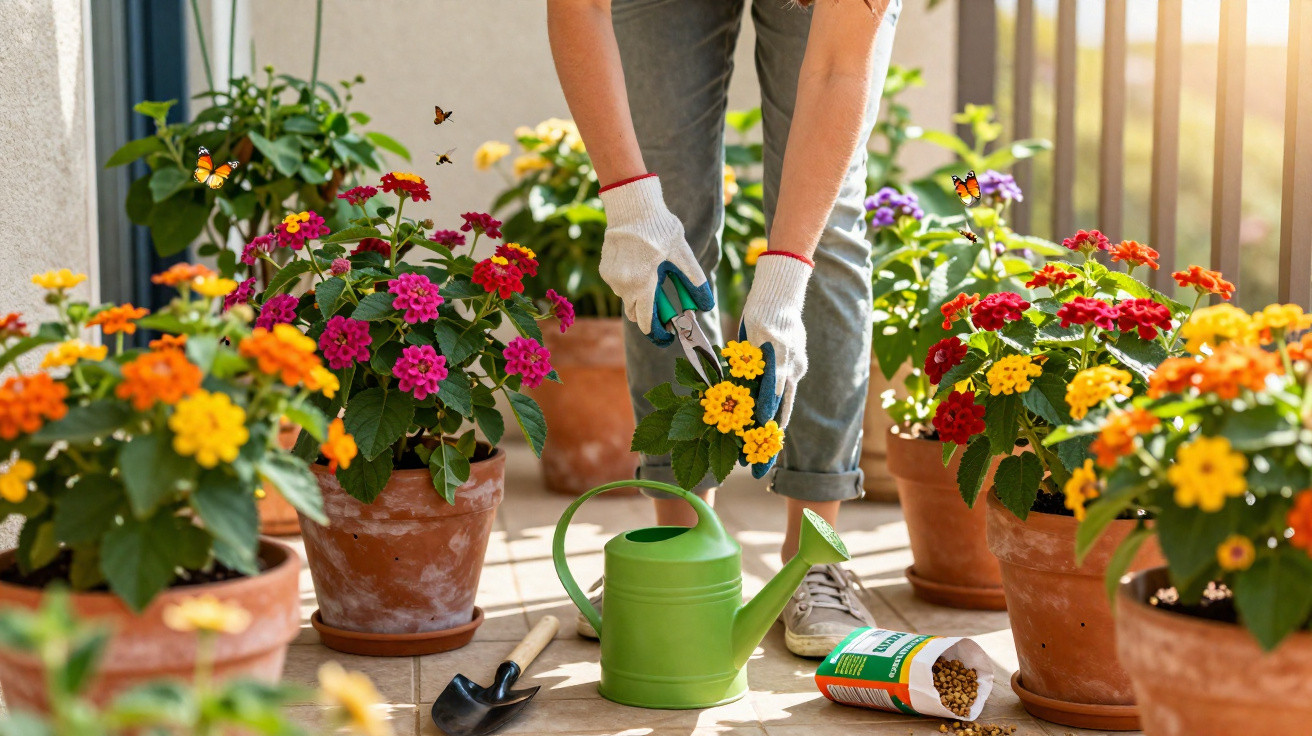
Colour-changing lantana, botanically Lantana camara, is one of the quiet superstars for balconies, patios and gardens. From spring right through to autumn, the shrub produces flowers for months, shifts through multiple colours as it blooms, and is also known for being pleasantly tough. If you follow a few basic rules, lantana becomes an almost “immortal” long-flowering plant at home.
Why lantana is considered an “immortal” shrub
In its native Central and South America, lantana grows as a perennial shrub. In warm climates it can stay green for much of the year and keeps forming fresh flower clusters. Although it is not frost-hardy in the UK, it can survive for years if it is kept somewhere frost-free over winter.
“If overwintered properly, the same lantana plant will often stay with its owners for many years - with more and more flowers from season to season.”
What makes it so distinctive is the way each flower head carries several shades at once. The blooms start out bright yellow, then gradually turn orange, pink or a strong red. Because the shrub looks as though it is constantly changing, it’s often described as a colour-changing lantana.
The perfect spot: full sun, yet not a diva
Lantana performs best in a warm, sunny position. The more direct sun it gets, the more compact the growth and the more abundant the flowering tends to be.
- Position: full sun to very bright, sheltered from strong wind
- Ideal: south-facing balcony, patio, sunny courtyard
- Popular as: a standard (lollipop) in a pot or a bushy shrub in a balcony planter
It will still grow in partial shade, but it often becomes looser in shape and produces fewer flowers. Anyone who has watched a lantana explode into bloom on a south-facing balcony in midsummer rarely consigns it to a dim corner again.
How to plant lantana correctly
In garden centres, colour-changing lantana is usually sold either as a small standard or as a bushy plant. Both forms are well suited to container growing. The key is how you set up the pot, so excess water can drain away and the compost never becomes waterlogged.
Drainage is essential
The roots do not cope well with continually wet compost. A simple layer of coarse material at the bottom of the pot helps prevent problems.
- Choose a pot with a drainage hole
- Add a bottom layer of expanded clay or broken terracotta
- Fill above this with loose, nutrient-rich compost
- Plant at the same depth as it was in the original pot
The same approach works in a balcony planter. Lantana also pairs well with other sun lovers such as petunias, verbenas or moss rose (Portulaca), but avoid planting too closely - the shrub can put on noticeable bulk in a single season.
Summer care: lots of flowers, a clear routine
From May to September - often even into October - lantana produces new blooms almost continuously. To keep that going, it depends on three things: water, nutrients and light.
Water properly - don’t let it dry out completely
Although lantana is considered relatively tolerant of short dry spells, it reacts poorly if the compost dries out entirely. Buds may drop and open flowers can wilt quickly.
- Keep the compost evenly moist; do not let it dry out fully
- Prevent waterlogging - tip away excess water from saucers
- In high summer on a balcony or patio, watering may be needed daily
If you’re unsure, check with a finger: when the surface feels dry, it’s time to water. In strong sunshine, water in the morning or evening so the roots can take up as much as possible.
Feeding for a long flowering season
Lantana is a heavy feeder. Constant flowering takes a lot of energy, so regular feeding is what keeps performance steady.
Two approaches work well:
- Liquid feed: add to the watering can once a week
- Slow-release feed: mix into the compost at the start of the season, then top up only occasionally
Many gardeners combine the two: slow-release feed in spring, then a little liquid feed from midsummer if flowering begins to ease.
Pruning: when the secateurs are worth it
In balcony planters, lantanas are often treated as seasonal plants, so detailed shaping isn’t usually necessary. However, one simple habit can increase flowering: pinch off spent flower heads regularly. This helps the plant put energy into new buds rather than seed.
With standards that are kept from year to year, pruning matters more. As they age, they become woody - and they tolerate a firm cut back.
“A radical cut back in spring encourages dense crowns and masses of fresh flowering shoots.”
March and April are ideal:
- Cut all shoots on an overwintered plant back to around 10 to 15 centimetres
- Shape the crown with sharp secateurs
- Remove weak shoots or those growing inwards completely
Once temperatures rise and light levels increase, new growth appears soon after pruning.
How lantana gets through winter
The shrub cannot tolerate frost at all. If you want to keep your lantana for longer than one season, bring it indoors in good time before the first night frosts.
The right winter quarters
Bright, cool locations work best:
- A bright, airy spot at around 10 °C is ideal
- Alternatively, a dark, cool place at about 5 °C can work
- Water sparingly - let the compost dry slightly between waterings
From February, growth gradually starts again. At that point:
- Increase watering step by step
- Move the plant gradually into brighter, warmer positions
- Avoid late spring frosts - only put it back outside once the risk has passed
Toxic, but a haven for insects
As cheerful as lantana looks, it does have a downside: all parts of the plant are considered toxic, especially the berries. In homes with small children or pets, it’s best used only if it can be kept out of reach - for example on a high table or by a balcony railing.
“Butterflies, bees and many wild insects actively flock to lantana - for them, it’s a richly laid nectar table.”
Particularly in densely built-up urban areas, a pot of colour-changing lantana on a balcony or patio can provide valuable forage for pollinators. By combining several varieties in different colours, you can keep flowers coming almost continuously - effectively creating a small insect buffet.
Which lantana form suits which space?
For quick guidance, it helps to compare the common growth forms:
| Form | Where to use it | Advantage |
|---|---|---|
| Standard (lollipop) | Large pot on a patio or by an entrance | Looks like a small flowering tree, saves space by growing upwards |
| Bushy plant | Balcony planter, containers | Dense ball of flowers, easy to mix with other summer bloomers |
| Compact varieties | Small balconies, windowsills | Stay neat, less likely to topple in wind |
Practical, everyday tips
If you’re out during the day and tend to forget watering, a few simple measures help. Water-retaining granules mixed into the compost can bridge short dry spells. On very hot days, a saucer with a thin layer of water in the morning can stop the plant looking limp by evening - the important point is that the water should be gone again by night.
On windy balconies, it’s worth choosing a heavier pot or a ceramic cachepot for stability. Lantana can make strong growth in summer and may otherwise tip in gusts. A light trim during the season is also possible if it starts to take up too much space - it usually shoots again quickly.
Why lantana is ideal for easy-going garden fans
Many people want plenty of colour without spending hours a day on maintenance. This is where the shrub excels: once it’s potted up correctly, watered regularly and fed, it delivers reliable colour for months. Unlike some delicate summer bedding, it usually copes better with heatwaves - as long as the roots are not allowed to dry out.
If you can spare a spot to overwinter it, you can even build up a small collection of different colour forms over the years. That’s how this seemingly simple colour-changing lantana can become the quiet queen of balconies and patios: low-effort, long-lived and eye-catching for most of the year.

Comments
No comments yet. Be the first to comment!
Leave a Comment