

Act now and you can avoid costly replanting schemes and years of waiting. Perennials return from the ground year after year, building into fuller clumps over time and bringing colour, structure and life back to any border. The key is simple: plant at the right moment, choose the site wisely, and know a few reliable species.
Why now is the best time for perennials
In early spring, the soil is usually moist, crumbly and not yet warmed through. That combination suits most perennials perfectly. They can establish their roots without pressure before the first hot spell arrives. Planting now often means you’ll see a noticeable difference in the very first year.
“Perennials are the one-off investment that pays interest every year in the form of flowers, foliage and stability in the border.”
The only real condition is that the ground must not be frozen or waterlogged. In cooler areas, the planting window tends to shift into April or May; in milder parts it can start as early as March. If you keep an eye on your beds, you’ll usually catch a few frost-free, mild days - that’s when the spade and watering can should be ready.
Good preparation: turning a dull bed into an eye-catcher
Before you add new plants, a quick assessment pays off: where do you get full sun, where does shade move during the day, and where does the soil stay damp for longest? Perennials will forgive a lot, but they’re brutally honest about light levels.
- Sun: at least 6 hours of direct sun per day
- Partial shade: bright conditions with only short spells of direct sun, typically in the morning or evening
- Shade: north-facing spots, beneath tall trees, or behind walls
Next, focus on the soil: remove weeds thoroughly, loosen the ground, and pick out larger stones. A layer of well-rotted compost improves almost any garden soil - helping sandy ground hold moisture and opening up heavy soils. After planting, a mulch layer of bark chippings, leaves or straw helps retain moisture and keeps weeds in check.
The 15 most important perennials for a quick garden transformation
The selection below combines flowers, shape and foliage impact. With these, you can turn both sunny prairie-style beds and shady corners into lively garden spaces.
Stars for shade and partial shade
- Christmas rose (Hellebore): Often flowers from late winter, when very little else is showing colour. Excellent for dappled sites beneath shrubs.
- Hosta: Large, decorative leaves in green, blue-green or variegated forms. Ideal for shady, relatively moist areas.
- Coral bells (Heuchera): A burst of leaf colour - from lime green and copper through to deep purple. Works well along bed edges and in containers.
- Bergenia: Thick, glossy leaves and pink to red blooms early in the year. Covers ground well and copes comfortably with partial shade.
- Astilbe: Airy flower plumes in white, pink or red. Prefers humus-rich, fresh to moist soil, for example near a garden pond.
- Bleeding heart: Delicate, heart-shaped flowers on arching stems. Adds a romantic note to shaded parts of the garden.
“With just a few shade perennials, even the ‘problem area’ under old trees can be turned into a green haven of calm.”
Colour power for sunny borders
- Peony: Large, fragrant flowers in late spring - a classic for a sunny perennial border. Likes to stay in the same place for many years.
- Lupin: Upright flower spikes in bold colours that instantly add height and structure. Suits wildlife-friendly and cottage-style gardens.
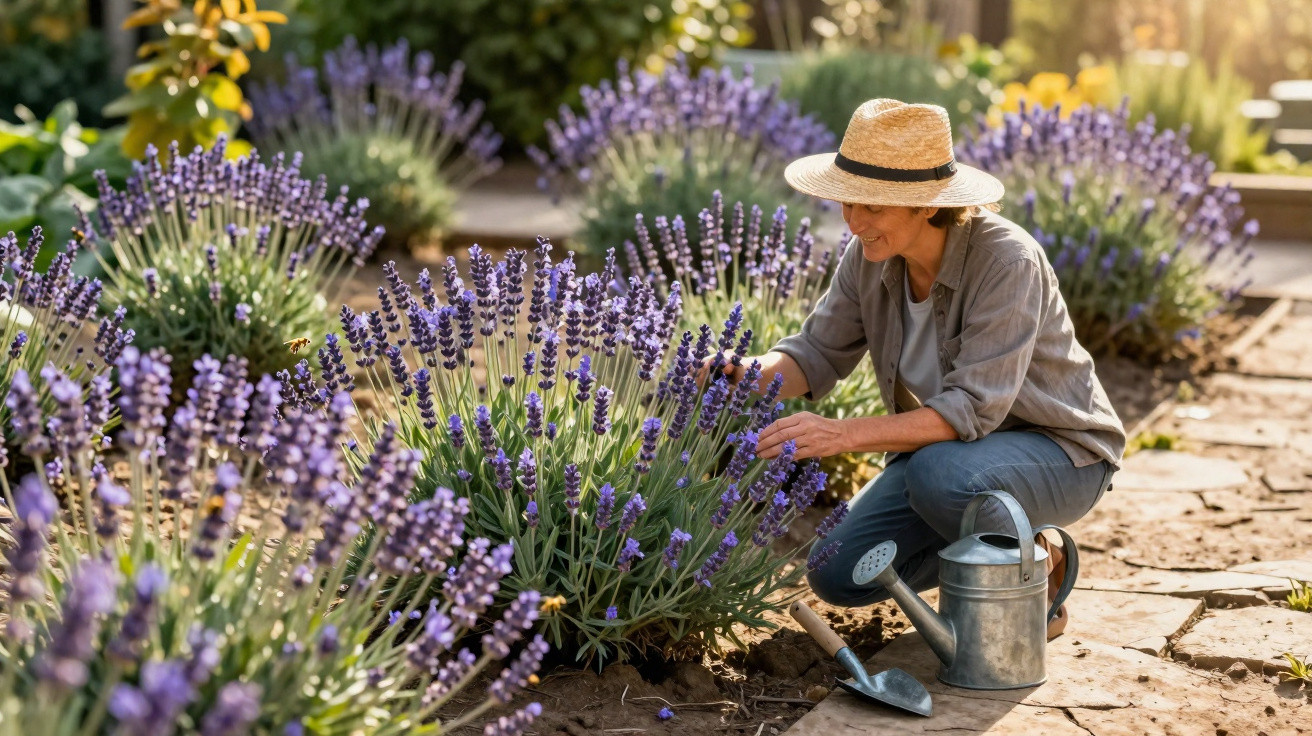
- Lavender: Silvery foliage, intense scent, and a magnet for bees. Perfect along paths, in front of walls or in a Mediterranean-style bed.
- Yarrow: Flat, colourful flower heads; tough, heat-tolerant and drought-resistant - ideal for low-maintenance sunny beds.
- Aster: Flowers when many plants are winding down - often from late summer well into autumn. Keeps colour going at the end of the season.
- Crocosmia: Striking arches of orange to red flowers, highly visible in high summer. Pairs well with grasses and dark-leaved perennials.
- Delphinium: Tall, elegant spires in blue, violet or white. Best towards the back of a border and may need staking in windy spots.
Flexible gap-fillers for almost any garden
- Hardy geranium: Depending on the variety, it can flower from spring through to autumn. Forms carpets and knits gaps between taller perennials.
- Penstemon: Slim flower stems with bell-shaped blooms, usually over several weeks in summer. Fits neatly into mixed perennial planting.
How to combine the 15 perennials into strong planting “pictures”
If you plant only single specimens, you’ll end up with scattered splashes of colour. If you plant in groups, you create scenes that stick in the mind. As a rule, three to five plants of the same kind in one spot looks more harmonious than a chaotic mix of one-offs.
| Site | Suitable perennials | Effect |
|---|---|---|
| Sunny prairie-style bed | Lavender, yarrow, lupin, crocosmia, aster | Bold colour, drought-tolerant, insect-friendly |
| Romantic cottage garden | Peony, delphinium, hardy geranium, bleeding heart | Playful flower shapes, soft transitions, lots of nostalgia |
| Shady quiet zone | Hosta, bergenia, astilbe, coral bells, Christmas rose | Dense foliage structure, calmer colours, year-round impact |
Low-maintenance doesn’t mean no maintenance: what to watch for
Perennials are considered straightforward, but in the first few weeks after planting they do need regular watering. Once established, many species manage with far less water - particularly in humus-rich soil with a mulch layer.
Cutting back after flowering helps prevent uncontrolled self-seeding and pushes energy back into the roots. Some perennials, such as aster or yarrow, respond well to a partial cut-back in early summer by becoming sturdier and more compact.
Common mistakes - and how to avoid them
- The wrong site: Sun lovers planted in permanent shade will struggle. Check light and soil requirements before buying.
- Too little spacing: Perennials look small at first, but they expand over the coming years. Plant a little more openly; hardy geranium can fill gaps.
- Constantly wet roots: Waterlogging is a problem for many species. On heavy soils, improve structure with sand and compost.
- No mulch: Bare soil dries out quickly. A mulch layer saves water and reduces weed pressure significantly.
What “perennial” really means in a border
The term perennial often causes confusion. The plant itself survives for several years, but the above-ground parts die back in winter for many species. That’s normal: the energy is stored in the rootstock, from which the plant resprouts in spring.
Some of the perennials listed here, such as lavender or bergenia, stay partly evergreen and give the garden structure even in the colder months. Others die back completely and only mark their position with small shoots or old stems - in those cases, a planting plan or summer photos are useful so that nothing ends up in the compost by mistake during weeding.
How perennials change the garden over the long term
Over the years, many perennial clumps become larger and denser. When that happens, you can divide them: lift with a spade in spring or autumn, split into several pieces, and replant elsewhere or give them away. In this way, a single planting gradually develops into a cohesive garden scheme.
Starting now with the 15 species above sets the base for a garden that renews itself again and again: fewer bare patches after winter, more structure in summer, dependable flowers through to autumn - all with plants you don’t have to buy again every year.


Comments
No comments yet. Be the first to comment!
Leave a Comment