
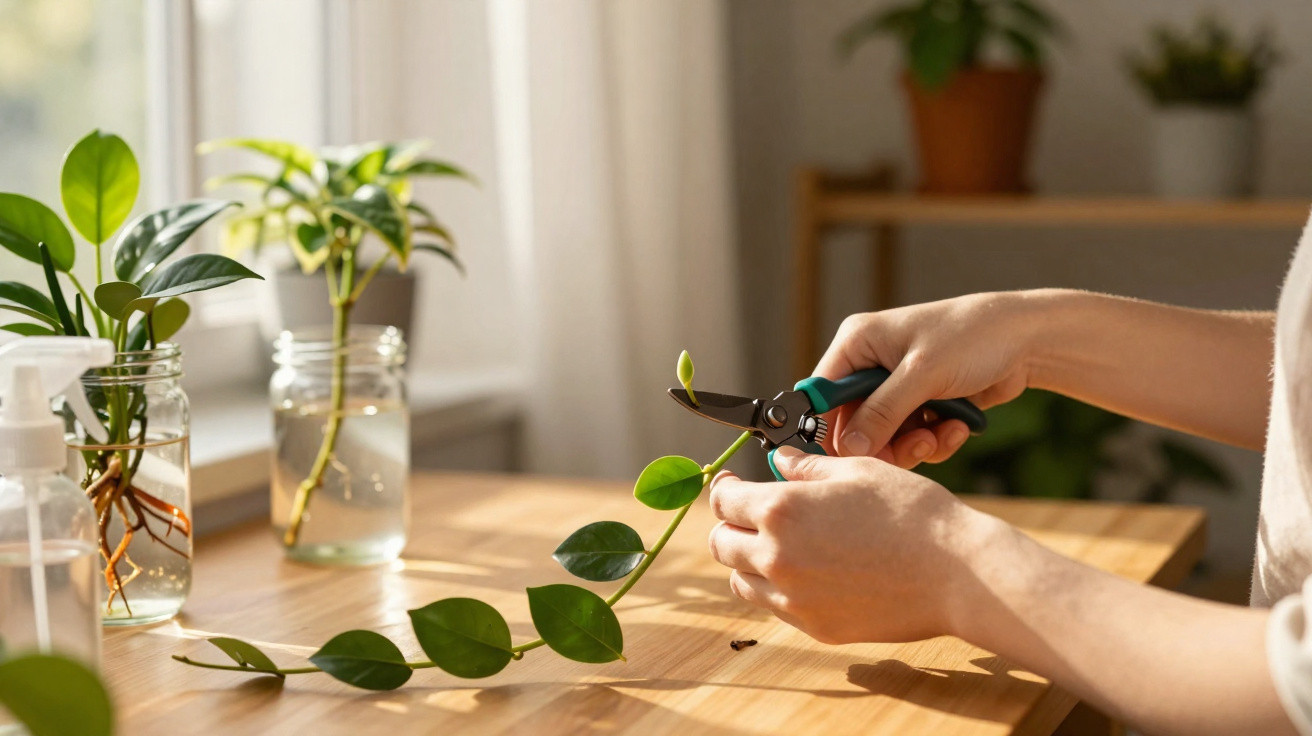
One wrong snip and that trailing pothos you’ve tended for months can end up looking… butchered. Perhaps you’ve been eyeing yellowing leaves, stringy stems and miserable bare sections, wondering, “If I cut it, will it die? Or finally thrive?” Houseplants don’t come with a reset button, yet our living rooms quietly fill with pots that look tired, stretched and oddly awkward.
I remember an evening when a friend pointed to her monstera-once scruffy, now dense and glossy-and said, “Oh, I just started pruning it properly.” No miracle fertiliser. No grow lights. Just a pair of secateurs and a bit of confidence. That offhand comment lodged a bigger idea in my head: maybe healthier plants aren’t always about what we add, but about what we remove.
Why your houseplants secretly want you to prune them
Many beginners treat pruning like surgery: infrequent, intimidating, and reserved for emergencies. A plant looks slightly off, so we poke the compost, adjust the watering routine, and spiral into late-night searches about light levels. Meanwhile the brown leaves keep appearing, the stems keep reaching, and the plant sits there half-bare and half-bushy-like it can’t quite settle on who it wants to be.
What we don’t always say out loud is that lots of indoor plants live in a slow-motion compromise. Light is often weaker than they’d choose, air can be stale, and watering is rarely perfectly even. In response, they spend energy on coping rather than on a balanced shape. Pruning helps tip that equation back the other way. It’s not only about making a windowsill look neat; it’s a way of telling the plant, “Put your growth here. Not there.”
Seasoned plant owners nearly all have a pruning turnaround story. A rubber plant chopped back from the ceiling that responded by throwing out three new branches. Basil kept compact for months through regular trims instead of shooting up, flowering and collapsing. One London flat-dweller I met turned a straggly IKEA ficus into a dense, shiny centrepiece by pruning once each spring and pinching tips through summer.
Those anecdotes line up with what horticulture research shows: when you remove damaged, weak or dominant growth, the plant redirects resources into side shoots and fresh leaves. Indoors, you’re effectively editing the plant’s architecture so it suits the space you actually have. Take a leggy stem and cut it just above a node, and the plant often answers with two new shoots. Over a year, that single habit can shift a lanky vine into a thicker curtain of green. It feels like a trick, but it’s simply plant biology.
To see why it works, it helps to think like the plant. The tip of a stem produces hormones that basically declare, “I’m in charge-grow this way.” Gardeners call this apical dominance. When you remove that tip, you break the signal, and buds lower down can “wake up” and start growing. That’s why one well-placed cut can transform the overall shape.
Pruning also has a quieter maintenance role. Dead or diseased leaves aren’t just unattractive; they can shelter pests and fungal problems. Removing them improves airflow, lowers stress, and allows healthy growth to take over. One clean cut can spare you weeks of hassle. Pruning isn’t a punishment-it’s closer to editing a draft: you take something out so the whole thing works better.
The gentle art of making the first cut
Begin with what’s unambiguous: anything dead, brown, mushy or clearly diseased should go first. Use decent scissors or pruners, clean the blades with alcohol or warm soapy water, then cut back to healthy tissue. For a leaf, that often means removing the entire leaf rather than just trimming a crisp edge. For a stem, make the cut just above a node-the small bump where a leaf or side shoot emerges.
Move slowly and look from all angles. Rotate the pot as though you’re checking how it appears from every chair in the room. With trailing plants such as pothos or ivy, run your fingers along each strand. When you find a long bare section, cut just above a node that still has a leaf; that’s where new growth is most likely to break. With upright plants, prioritise stems that cross awkwardly, lean hard towards the window, or pull the overall silhouette out of balance.
A beginner-friendly approach for vining plants is the “three leaf rule”. On each vine, count three to five healthy leaves from the base, then cut about a centimetre above the next node. The plant will often send out growth from lower down, thickening the whole pot instead of allowing one heroic strand to sprint for the curtain rail.
For naturally bushy plants like peperomia or fittonia, gentle pinching does a lot. Using finger and thumb, nip out the soft growing tip-the tiny cluster of new leaves. The first time can feel oddly harsh, like cutting in a new fringe. But within a couple of weeks you may spot two shoots where there was one. Across a season, those small pinches can turn a shy clump into a tidy, compact cushion.
When pruning goes wrong, it’s usually not because of a technically “bad” cut-it’s fear and timing. People either never prune at all and end up with plants that look like they’re wearing last year’s clothes, or they panic and cut back far too much in one session. Both extremes are exhausting, for you and for the plant.
Give yourself permission to learn as you go. If a plant is looking worn out, remove no more than 20–30% of the foliage at first. Then watch for a few weeks. If it sulks, that’s information. If it bursts into fresh growth, you’ve found its comfort zone. And yes, sometimes a cut will look wrong for a month before it looks right. That’s normal. Plants don’t recover on our timetable.
A horticulturist I once interviewed said something that stayed with me:
“If you’re afraid to prune, your plant will grow anyway – just not in a way you actually enjoy living with.”
That line is often the nudge beginners need. You’re not “hurting” the plant-you’re shaping the little ecosystem it lives in.
- Start small: choose one plant, make a few cuts, then observe for two weeks.
- Keep blades clean: wipe before moving on to the next plant.
- Prune during active growth (spring/summer) so recovery is quicker.
- Avoid heavy pruning on stressed plants, newly bought plants, or anything recently repotted.
- Save offcuts: healthy tips of pothos, tradescantia or philodendron usually root easily in water.
Let pruning change how you see your plants
After those first snips, your relationship with the plant tends to shift. It stops being a fragile ornament you might “ruin” by touching and becomes something you can respond to. You cut; it replies with new leaves, new directions, a different shape. You’re no longer watering on autopilot-you start noticing where the afternoon light lands, which stems are leaning, and which leaves are crowding out the centre.
There’s a quiet sense of ownership in that. You’re not forcing nature into a rigid outline; you’re guiding it, in the same way you might shift furniture to make a room feel better. On a difficult day, spending five minutes removing yellow leaves from a peace lily can feel surprisingly grounding. The plant looks cleaner. Your thoughts do too. And somewhere in that small ritual, you realise you’re trusting your own judgement a bit more.
| Key point | Detail | Why it matters to you |
|---|---|---|
| Cut at the nodes | Make cuts just above nodes on stems | Encourages new shoots and a denser growth habit |
| Start with a clean-up | Remove dead, diseased or yellowing leaves before anything else | Helps limit disease and gives an immediate neater look |
| Do it in stages | Don’t remove more than 20–30% of foliage in one go | Reduces stress for both the plant and the gardener |
FAQ:
- How often should I prune my houseplants? You don’t need a strict timetable. Light pruning every few weeks in spring and summer is usually enough, with a bigger tidy once or twice a year. Let’s be honest: hardly anyone does it every day.
- Will pruning kill my plant if I cut too much? Most houseplants cope well if you remove under one-third of their foliage at a time. Heavier cuts are riskier for weak plants or those in low light, so take it slowly and spread major changes over several months.
- Can I prune houseplants in winter? Yes, but keep it gentle. Many plants grow slowly in winter, so bigger cuts take longer to recover. Focus on removing dead or clearly damaged growth and leave major reshaping for brighter months.
- Do I need special tools to prune? Clean, sharp scissors are fine for most soft-stemmed houseplants. Thicker, woody stems are easier with proper secateurs. Whatever you use, clean the blades between plants to avoid spreading pests and disease.
- What should I do with the cuttings? Healthy tips from pothos, philodendron, tradescantia, coleus and many others can be propagated. Put stems with a few nodes into water or moist compost and wait for roots. What looks like “waste” can become your next plant.




Comments
No comments yet. Be the first to comment!
Leave a Comment