
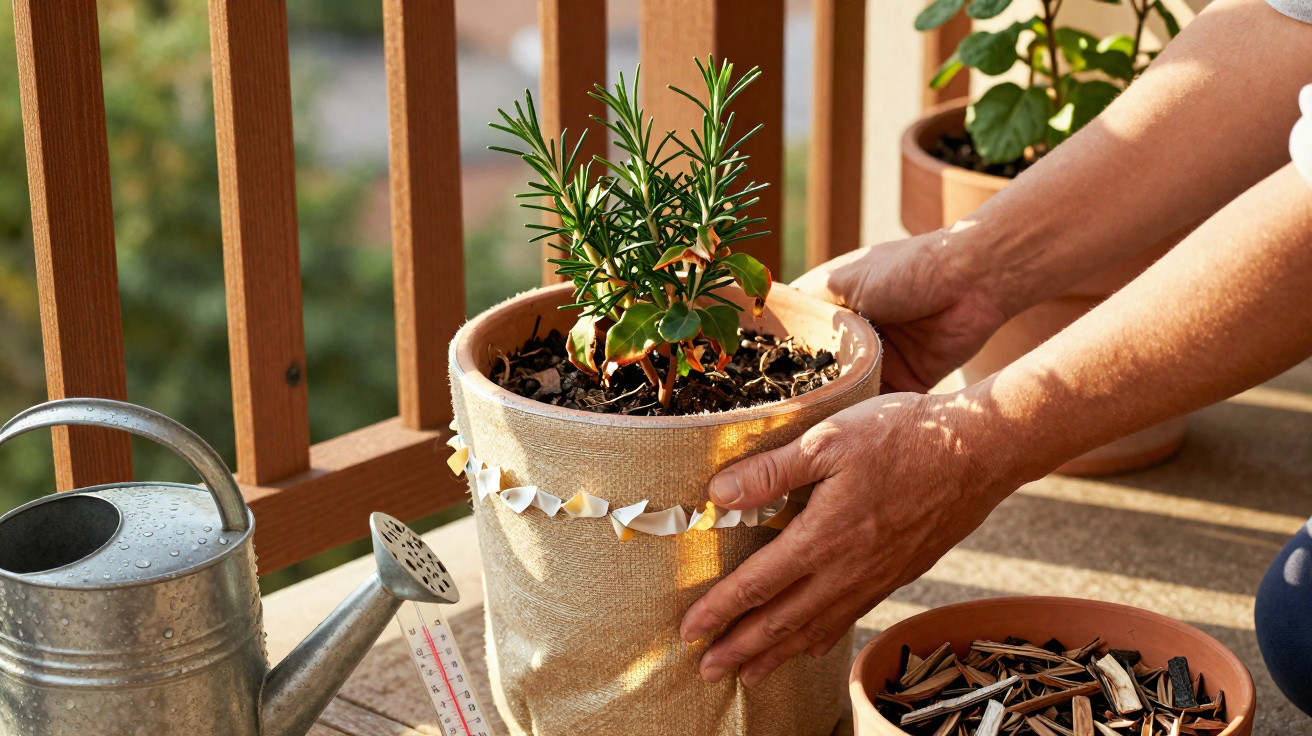
On patios, balconies and front door steps, containers can trigger a quiet heatwave underground - scorching roots well before you spot limp leaves or singed petals.
When the pot becomes an oven
Most of us keep an eye on the leaves and flowers, not the pot. In strong midday sunshine, though, the container is often where the trouble starts.
Dark plastic, metal and terracotta can behave like small heaters, particularly when they sit on concrete or decking. As the day warms, the pot’s sides soak up heat and pass it into the compost, raising temperatures far faster than garden soil in open ground.
Roots begin to struggle once temperatures creep above 30–32°C (86–90°F) inside the pot, even when the air feels merely “quite warm”.
Roots perform best within a fairly tight temperature band. When the compost overheats beyond that, multiple problems can occur together:
- Fine feeder roots dry out, then die back.
- As water warms, oxygen levels in the compost fall.
- Helpful microbes slow down or perish, so nutrients become less available.
- Water races through the root zone, leaving dry pockets behind.
Above the surface, it can look like a plant wilts at noon and then “bounces back” after sunset. Below the surface, the root mass is being chipped away day by day, pushing the plant into a gradual, unnoticed decline.
Why containers suffer more than garden beds
In the ground, heat can spread sideways and down into cooler layers. A pot has rigid edges, so warmth is trapped and concentrated.
| Growing situation | What happens at midday | Impact on roots |
|---|---|---|
| Open ground bed | Top few centimetres warm; deeper soil stays stable. | Roots retreat deeper; plant copes better. |
| Small dark plastic pot | Sidewalls and top layer heat quickly. | Entire root ball can reach stressful temperatures. |
| Large light-coloured container | Outer edge warms; inner core remains cooler. | Roots can sit in safer, cooler zones. |
| Metal trough on balcony | Full sun plus reflection from railings and glass. | Rapid moisture loss and repeated root shock. |
Raised containers can warm from the sides and, often, from underneath too. On a balcony that’s been baking in the sun, the surface temperature can run 5–10°C higher than the air. Place a dark pot directly on that heat and the roots can be damaged before you’ve even got back from work.
Early warning signs above the soil
Roots under heat stress rarely give obvious signals, so the canopy becomes your most reliable indicator. It’s easy to blame lack of water or a “temperamental” variety when the real culprit is root temperature.
Clues that midday heat is hitting your pots
- Leaves collapse dramatically at noon, then revive in the evening, even after thorough watering.
- Fresh growth stays small, compact and slightly pale.
- Flower buds drop, or blooms open undersized and fall quickly.
- The compost surface feels hot to the touch, not simply dry.
- The sunny side of plastic or metal pots is too hot to hold.
Long-term root stress can also leave plants more exposed to pests such as spider mites and aphids, which often pick on hosts already struggling to balance water and nutrients.
If your midday watering seems to do “nothing”, the issue may be boiled roots, not lazy plants.
Building shade and insulation where roots live
You cannot change the sun’s position, but you can greatly alter what roots experience between 11 a.m. and 4 p.m. In high temperatures, practical physical adjustments often achieve more than any “miracle” feed.
Smart positioning: move the battlefield
Before buying anything, assess where your pots are placed.
- Swap harsh midday sun for gentler light. South- and west-facing positions tend to overheat pots; east-facing morning sun is usually kinder.
- Raise pots above hot ground. Pot feet, bricks or timber battens create an insulating air gap beneath the container.
- Group containers together. Clustering reduces direct heat on outer walls and forms a slightly cooler pocket of air.
- Use living shade as shelter. During peak heat, tuck smaller pots behind taller shrubs or climbers.
Shade the pot, not just the leaves
It’s common to shade the plant and forget the container. Yet blocking sun from the pot’s outer wall can noticeably lower root-zone temperatures.
Simple approaches include:
- Propping a plank or a piece of cardboard so it throws shade across the pot’s sides.
- Wrapping pots with hessian, old towels or bubble wrap during heatwaves.
- Nesting smaller pots inside larger cachepots, leaving an air gap between them.
- Draping seasonal shade cloth so it reaches close to compost level.
In heat spikes, think like a root: if sunlight hits your ankles when you stand beside the pot, the container needs more shade.
Choosing containers that keep roots cooler
Some container types almost set plants up to fail in extreme heat, while others help buffer conditions before stress reaches the roots.
Materials that help, and those that hinder
- Plastic: Light and inexpensive, but darker colours absorb a great deal of heat. Pick pale shades or use double-potting.
- Terracotta: Allows airflow yet dries quickly. In strong sun, pair it with a deeper mulch and a larger pot size.
- Glazed ceramic: Takes longer to heat up and usually holds moisture for longer, making it gentler on hot patios.
- Metal: Hard-wearing but a rapid heat conductor. Lining with cardboard or coir can reduce temperature spikes.
- Fabric grow bags: Offer excellent drainage and air pruning, but can dry out fast on exposed balconies.
Volume matters just as much as what the pot is made from. A bigger mass of compost heats and cools more slowly, giving roots protection during the hottest part of the day. Narrow, shallow containers are the most vulnerable - especially with thirsty crops such as tomatoes and peppers.
Soil, water and mulch: the cooling trio
Within the pot, the compost’s structure influences how both heat and moisture move. A loose, peat-free compost rich in organic matter typically holds water while still allowing air through, helping roots cope with midday strain.
Smarter watering for midday survival
In a heatwave, watering strategy can determine whether a container plant thrives or fades.
- Water early, before the sun is intense, so the compost is fully moist by late morning.
- If the pot feels light, water again in the evening rather than applying small top-ups all day.
- Apply water slowly so it reaches the root zone instead of skimming across the surface.
- Use saucers with care: they can support thirsty plants, but they can harm species that dislike “wet feet”.
A deep morning soak cools the potting mix and fills every pore, giving roots a fighting chance when the sun climbs.
Mulch: a tiny layer, a big effect
A mulch layer only a few centimetres thick can shift the temperature inside a container. It shades the surface, reduces evaporation and softens the impact when the midday sun hits the compost.
Good pot mulches include:
- Shredded bark or wood chips.
- Straw or dried grass clippings (applied in thin layers).
- Coco coir chunks or husk chips.
- Decorative gravel or pebbles, particularly pale-coloured ones.
Even a short-term mulch, added just for a forecast heatwave, can stop the surface from baking and cracking - and that helps protect the fine roots close to the top.
Plant choices that handle the midday test
Container heat does not affect every plant in the same way. Some species are adapted to hot, shallow soils; others depend on deep, cool root runs. Choosing the right plants for sunny pots reduces the chance of daily heat-related stress.
Traits that cope better in hot pots
- Silvery foliage or smaller leaves, which lose less water.
- Deep or fibrous roots that make efficient use of limited space.
- Origins in Mediterranean or semi-arid regions.
- Slightly woody stems, which handle fluctuations more reliably.
Herbs such as rosemary, thyme and oregano generally manage midday heat well if drainage is good. Many succulents also cope, although they still need sensible positioning to avoid literally cooking in metal troughs.
Crops that demand lots of water - tomatoes, cucumbers and hydrangeas, for example - can do very well in containers, but only when the pot is generously sized and root protection is built in from the outset.
Planning for the next heatwave
Forecasts increasingly refer to recurring “hot spells”, not rare events. For container gardeners, the best response is a series of small improvements rather than last-minute panic when the first 30°C day arrives.
Try a straightforward home test: on the next bright day, put your hand on different pots at noon and again at 3 p.m. Compare a dark plastic pot on concrete with a pale ceramic pot on soil. That quick check shows where intervention is most urgent - well before plants begin to swoon.
Many gardeners also adjust how they use containers over summer. Instead of filling every pot with thirsty annuals, they keep the hottest positions for drought-tolerant perennials and rely on movable planters so vulnerable crops can be shifted into safer shade in July and August.
Root protection connects with other choices, too: when you water, the colour of paving, and even whether you add a small pergola or bamboo screen on a balcony. Each tweak nudges the microclimate towards something roots can handle at midday, helping to steady the flowers, fruit and foliage above the compost line.
Comments
No comments yet. Be the first to comment!
Leave a Comment