
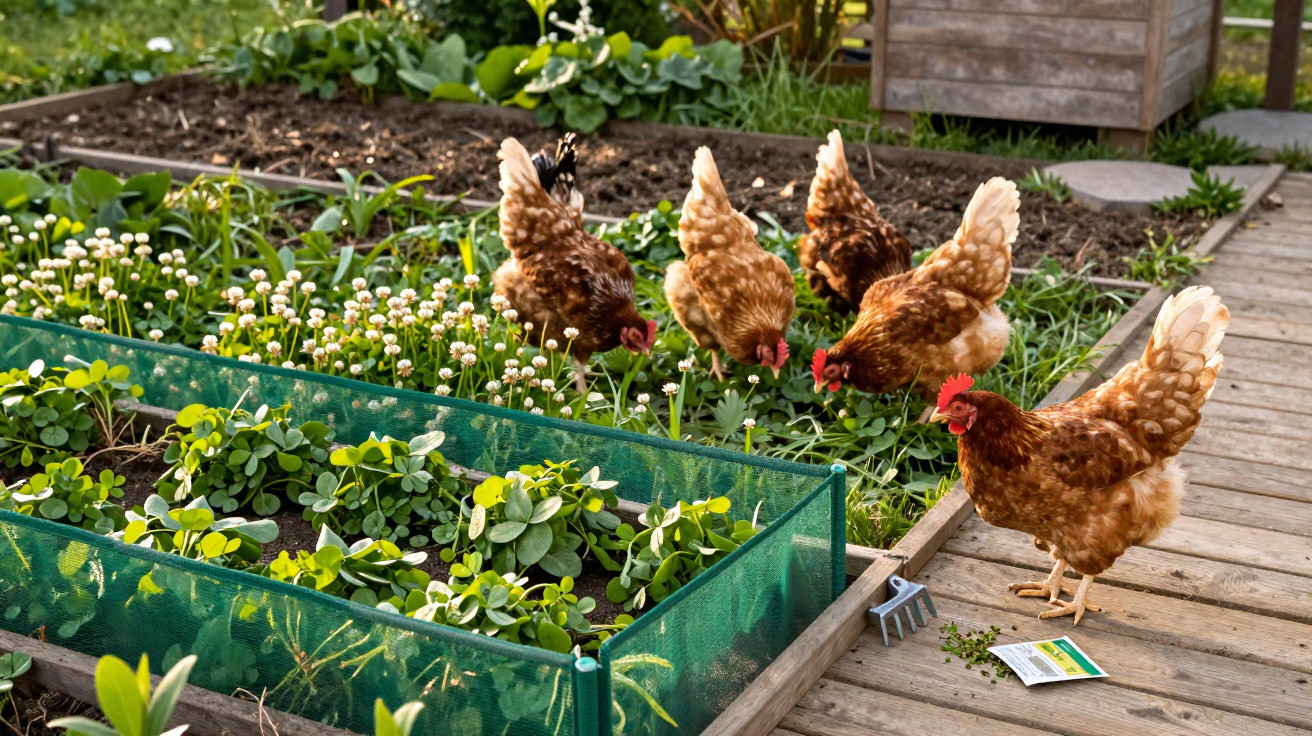
By the time winter is over, plenty of chicken runs resemble a churned-up muddy car park rather than anything you’d call rural.
As the evenings draw out and the ground starts to loosen, there’s a short opportunity for backyard keepers to reset their runs using living plants-plants that nourish the soil, support the hens and, over time, can ease feed costs.
A winter-wrecked run that can still be saved
Months of rain plus constant scratching leave most small runs hard-packed, bare and unpleasantly whiffy. The turf disappears, soil clings to wellies, and each downpour creates new puddles. Many people hold off until it’s properly warm, then spend the rest of the year battling weeds and dry spells.
A better approach is to move at the end of winter instead. The soil is still damp, temperatures are creeping upwards, and weeds haven’t fully got going. Seed put down now sits in cool, moist ground and gets time to establish roots before the next hot spell-and before the full daily battering of beaks and busy feet.
"Using late-winter moisture to establish deep roots turns a worn-out run into a living “pantry” just as laying picks up."
In tight outdoor runs, manure builds fast. When there’s nothing growing to take up nutrients, the ground can become acidic and depleted. A deliberate layer of tough, long-lived plants improves structure, mops up surplus nitrogen and gives hens reliable vitamin-rich pickings after the sparse winter period.
The trio hens crave: white clover, plantain and wild chicory
Don’t bother trying to restore the run with ordinary lawn grass. With chickens on it, most lawn mixes collapse within weeks. What works better is a blend of low-growing, resilient, nutrient-rich plants that bounce back even when repeatedly pecked.
White clover: protein on tap
White clover is a creeping, low legume that earns its keep in several ways. Its roots house bacteria that capture nitrogen from the air, slowly improving fertility. The foliage also provides plenty of plant protein, which can help support egg production as hens step up laying at the start of the season.
Because clover stays close to the ground and forms a dense carpet, it protects exposed soil from heavy rain and harsh sunshine. That helps soil organisms and keeps worms nearer the surface-ideal for any enthusiastic forager.
Ribwort plantain: the quiet medicinal ally
Ribwort plantain is often written off as a nuisance weed, but it has real value in a hen run. Its long, narrow leaves have a history in herbal use for digestion and mild respiratory issues. For poultry, having it available frequently offers a subtle, ongoing lift rather than a last-minute fix.
"A stand of plantain acts like a low-key pharmacy under the hens’ feet, supporting gut health and resilience without a packet in sight."
Plantain is hardy, with deep roots and a tolerance for being walked over. It stands up to trampling better than many tender greens, and its tougher leaves tend to slow grazing-so hens nibble at it instead of stripping it in one go.
Wild chicory: minerally rich and soil-loosening
Wild chicory drives a strong taproot down through the soil. That root helps break up compaction and brings minerals and trace elements back up towards the surface. The leaves then deliver those nutrients to the flock.
Many keepers find chicory encourages appetite and appears to support the liver, which plays an important role in handling fats and the pigments involved in egg formation. It’s robust enough to outlast softer salad-style plants that disappear after a few pecks.
- White clover: protein, nitrogen, ground cover
- Ribwort plantain: digestive and respiratory support
- Wild chicory: minerals, soil loosening, liver support
"Together, these three plants build a self-service salad bar that quietly replaces part of your supplement bill."
How to sow when hens eat everything
The problem is straightforward: chickens love seed. Scatter it on the surface and they’ll vacuum it up before the first shower arrives. The solution isn’t a special seed-it’s protecting what you sow.
The “permanent salad bar” with wire frames
A practical option is to make simple wooden frames and cover them with wire mesh (hardware cloth works well). Place the frames flat over newly seeded areas. The seed and soil remain underneath, while the mesh blocks beaks and claws from digging everything out.
When clover, plantain and chicory sprout, the shoots push up through the openings. Hens can pinch off the tips, but they can’t yank the plants out by the roots. This keeps the patch productive and encourages slower, steadier grazing.
| Step | Action | Why it matters |
|---|---|---|
| 1 | Rake and level a bare strip in the run | Improves soil contact for seeds |
| 2 | Broadcast the seed mix evenly | Ensures dense, even cover later |
| 3 | Lay mesh-covered frames on top | Shields seeds and seedlings from hens |
| 4 | Keep soil lightly moist for two weeks | Supports reliable germination |
| 5 | Leave frames in place long term | Creates a long-lived, peck-safe “salad bar” |
If you’ve got more space, splitting the run into two sections can help-one open while the other recovers and regrows. Even in a small town garden, a couple of frames rotated between spots can preserve enough greenery to noticeably improve conditions.
Less mud, fewer problems
Once roots are in the ground, the surface behaves differently. Clover and chicory, in particular, stitch the top layer together into a sponge-like mat. Water from sudden showers soaks in rather than collecting as puddles. The run stays drier underfoot, and there are fewer wet corners where bacteria thrive.
"Dryer, rooted soil cuts the risk of leg issues such as scaly leg mite and lowers parasite pressure linked to filthy, compacted ground."
You may also see behaviour change. When hens have fresh growth to work on, they spend more time roaming, pecking and foraging-and less time bickering in a muddy cluster. That extra movement supports weight management in heavier breeds and can reduce feather pecking, a stress-related behaviour often fuelled by boredom.
Seed costs versus feed costs
Packets of clover, plantain and chicory seed are generally inexpensive, especially if you buy in bulk from agricultural suppliers rather than pet shops. For roughly the price of a few bags of layers’ pellets, you can plant a suburban run with perennials that come back year after year-provided they’re protected.
With steady access to greens, hens often eat a little less grain. Their diet tends to even out: more fibre and micronutrients, and slightly less energy-dense feed. Many owners report firmer shells, deeper-coloured yolks and an overall improvement in flock condition by April.
"Turning part of your feed budget into seed is a quiet, long-term hedge against rising prices."
What keepers should watch for
As with any dietary shift, balance and variety are important. This planting mix is best used alongside-not as a substitute for-a complete layer ration. Commercial feed still provides controlled amounts of calcium, protein and essential vitamins, while the plants add what dry pellets struggle to supply.
Rotating patches helps too. If an area looks worn or heavily manured, shift the frames or shut off that corner for a few weeks. Let rainfall and worms do their clearing-up, then sow again. In compact gardens, regularly moving drinkers and feeders also helps prevent persistent wet spots from becoming sour.
Extra ideas for an enriched chicken garden
After you’ve established the main green cover, some keepers introduce seasonal extras around the core trio. Narrow strips of annuals like calendula, buckwheat or mustard can be sown beyond the main scratching zones. When they’re leafy, cut armfuls and throw them into the run as fresh fodder.
Others make shallow “grazing boxes”: raised frames filled with the same seed blend and capped with sturdy mesh. These boxes can be shifted, rested, or even moved under shelter during very wet weather. For children, they can be a hands-on project and an easy way to see how gardens and eggs connect.
The principle is straightforward: change the run from a lifeless, smelly rectangle into a small, functioning ecosystem. Strong plants feed soil life; healthy soil supports insects and worms; hens benefit from all of it. If you sow as winter starts to release its grip, the system has time to establish before summer pressures arrive.




Comments
No comments yet. Be the first to comment!
Leave a Comment