
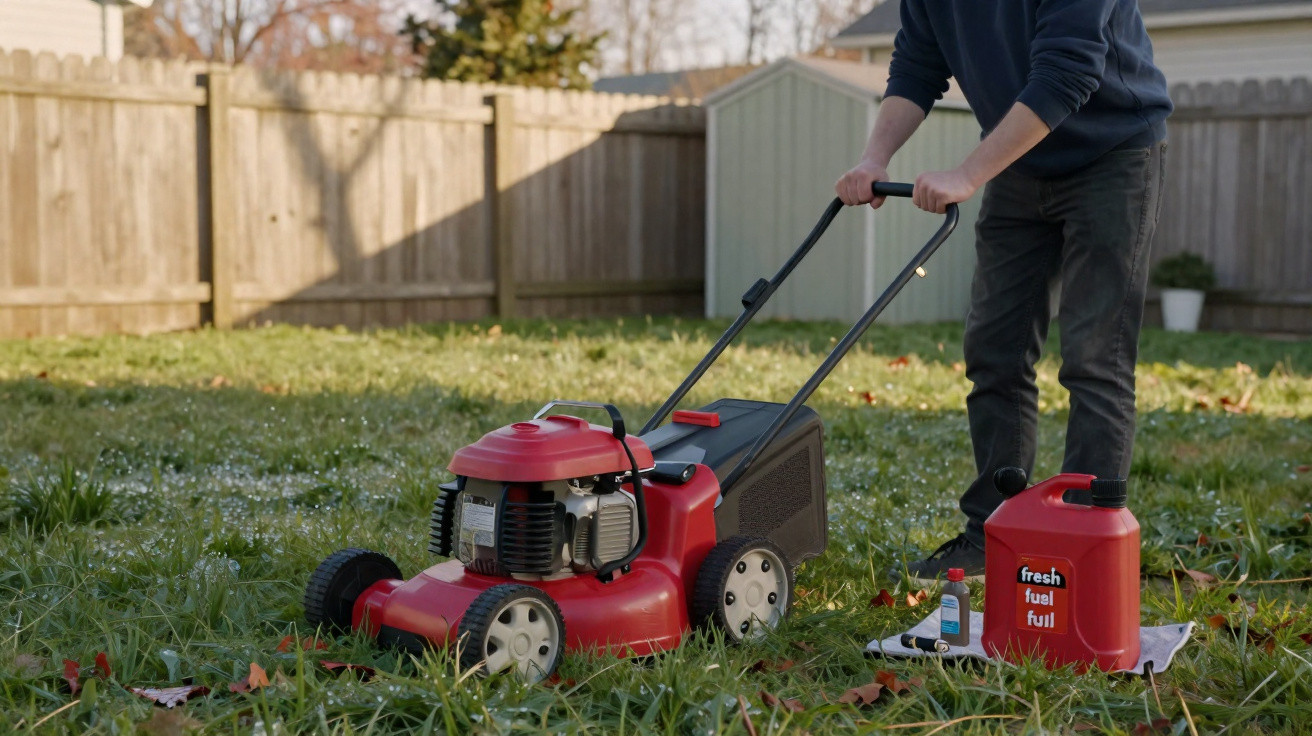
The first mild Saturday of a British spring acts rather like a communal alarm call.
Across the neighbourhood, gardens begin to stir before the familiar soundtrack takes over: mowers coughing and whirring as they are hauled out of sheds like drowsy bears. Mine was once the troublesome one, stubbornly refusing to fire while I tugged at the cord with an increasingly embarrassing blend of anger and defeat. Old petrol, cobwebs, a spanner rattling loose on the patio, and a neighbour already mowing half his lawn made me want to lob the whole machine over the fence. Then I found a more sympathetic method, one that turned the mower from an adversary into something more like a pet waking after a sleep. I did not become stronger; I simply became gentler. Want to give it a go?
Wake it as though it is alive, not a defiant appliance
An elderly neighbour of mine never seemed to raise his voice at an engine. From the look of it, he practically whispered to them, and they obediently started. His first lesson was simple: before reaching for the starter, feel beneath the deck for matted grass from last season or small stones lodged there over winter. That wet green build-up works like a brake, so no amount of cord-pulling will overcome it. Wearing gloves and using a wooden spoon lets you release the blade without scraping your knuckles.
Next comes the gentle turn-over. Put the mower securely on level ground, hold in the safety bar, leave the spark plug lead attached, and give the cord a few very light pulls. You are not attempting to start it yet; you are allowing oil to coat the cylinder walls again after months of inactivity. Rather than a locked door, the engine starts to feel like one that only needs a considerate nudge. Give it two or three unhurried pulls, then stop for a moment.
Fuel has a temperament: fresh petrol makes all the difference
I was reluctant to accept that petrol could become temperamental, but it can. E10 left from the previous September becomes rather disagreeable by spring, and a small carburettor does not tolerate it well. Old petrol is the number-one springtime mower killer. If it smells stale and looks closer to tea than straw when poured into a jam jar, drain it and begin afresh. A low-cost siphon hose, a clean fuel container and a quick wipe inside the tank with a lint-free cloth will achieve more than any heroic effort with the pull cord.
Fresh E5 or a tin of alkylate fuel is effectively a peace offering to the engine. Where the mower has a drain screw on the carburettor bowl, empty the old fuel from there as well until it runs clear. Check the air-filter housing too, as stale odours can linger in it. Giving the mower a fresh first drink makes it seem civilised rather than wild.
What if you forgot to drain it in autumn?
Most people did, so there is no need to blame yourself. The remedy is straightforward: empty the tank, open the bowl and add a small amount of fresh petrol with a tiny dose of stabiliser. Pull the cord gently several times to draw the new fuel through, then leave it alone for five minutes, allowing the carburettor to take in something better than last year’s remnants.
Should the mower continue to cough before dying, drain the bowl again until the liquid coming out appears clean and smells as it should. A spoonful of sour petrol may still be hiding inside, much like the stubborn dregs of an unpleasant coffee. Prime it properly, give it one smooth pull, and listen to the engine’s reply.
Air and spark: spring’s essential yes-or-no test
An engine agrees to start when it has air to breathe and a spark to ignite it. Remove the air-filter cover, usually held by one clip or screw, and inspect the effect of winter. Foam filters benefit from a wash in warm, soapy water, a careful squeeze until dry and the slightest amount of clean oil worked into them. Paper filters should not be washed; tap them softly to dislodge dust or, if they look grey and forlorn, put them in the bin and fit a replacement.
Then turn your attention to the spark plug. Use a deep socket and a measured hand to remove it. Replace it if its end is black and furry or the porcelain has cracked; plugs cost less than a takeaway coffee yet bring considerably more satisfaction. Set the gap if the handbook requires it, tighten it securely rather than with gorilla force, then refit the lead until it clicks reassuringly. A clean filter and a lively spark are the quickest yes your engine can give.
The three-pull ritual that works
This is the routine that began to work for me. With a primer bulb, press it three times rather than fifteen, keeping your thumbs light. If there is a choke control, use full choke on the first pull, half choke on the second and no choke on the third. Many newer mowers conceal the choke in a plastic concept called auto-choke, meaning that you set the throttle high and place your faith in its clever mechanism.
Grip the safety bar, stand firmly, make one slow practice pull, then pull once with confidence from the shoulder rather than the elbow. Pay attention. If it starts briefly then cuts out, move to half choke or no choke, pause for a heartbeat and try once more. Engines tend to wake more readily when they are not hurried. We have all felt that instant when it seems about to catch, and our hands behave as though we are helping a toddler stand for the first time.
Oil, tipping and the calm trick that prevents plenty of swearing
Before the season’s first start, inspect the oil as you would check your shoes ahead of a run. Remove the dipstick, wipe it, insert it again and take it out for a truthful reading. If the oil is thin and black, replace it while the engine remains cold; once it starts, you will mow the lawn and forget all about it. New oil lightens the feel of the pull and makes the engine sound less irritable when idling.
When you need to tip the mower to clean underneath or replace the blade, keep the carburettor side uppermost so oil cannot travel where it does not belong. Never tip the mower with the carburettor facing down. That one error fills the air filter with oil and changes a straightforward Saturday task into a damp, smoky ordeal. If you accidentally tilt it incorrectly, stay calm: take out the filter, leave the mower to stand, pull the cord slowly a few times and expect some temporary smoke when it eventually starts.
The carburettor: minute components, enormous moods
If the mower still refuses after receiving fresh fuel and a good spark, the carburettor may be the problem. Its tiny jets are about the width of a hair, while ethanol attracts water as readily as a gossip collects stories. Removing the bowl, spraying carburettor cleaner and clearing the main jet with the finest wire from a bread tie can make an obstinate engine cooperative again. Work over a tray to avoid losing the float pin, and photograph everything before you begin so you know where each screw belongs.
After months unused, the float can occasionally stick closed. Tapping the bowl lightly with a screwdriver handle may release it, rather like a polite knock at a bedroom door. If a tap has no effect, clean the carburettor thoroughly or replace it altogether; replacements for common Briggs & Stratton or Honda GCV engines are less expensive than you might expect. Let’s be honest: no one really does this every day.
Flooded or thirsty? Follow your nose
Your sense of smell is useful here. A strong petrol odour around the muffler and a wet spark plug mean the engine is flooded. Open the throttle, turn off the choke, hold the safety bar and pull decisively to clear the chamber, or wait fifteen minutes before trying again with the calm of someone who has nowhere else to be. If there is no petrol smell and the plug is completely dry, the engine is starved: prime it again, inspect the fuel line for splits, or open the bowl to confirm that fresh petrol has reached it.
Also listen carefully to its cough. One deep cough without another attempt normally suggests you are nearly there and need less choke. A thin, repeated popping sound points more towards an air or spark issue. Those first few seconds reveal the story if you pause long enough to hear them.
Foolish switches, safety levers and the sneaky cable
The most humiliating mower failure in my shed proved to be a safety-bar cable that had stretched during winter. The lever seemed engaged, yet the brake remained pressed against the flywheel like a hand across a mouth. Trace the cable from the handle to the engine and watch the brake arm as you squeeze the lever; if it scarcely moves, adjust the small nut close to the engine until the arm draws back properly. That minor adjustment can change a dead pull into a triumphant lap of the garden.
Ensure the spark lead is fully seated on the plug, as that cap can work loose during storage. For an electric-start mower, charge the battery the previous day; a weak battery can make a pull-start difficult by persuading the ignition to sulk. On cordless mowers, refit the large safety key beneath the cover, because hands do foolish things in October that are forgotten by April. Sometimes the only broken part is your patience.
When it catches, help it stay running
Once it starts, do not immediately force the throttle to maximum. Allow it to settle into a brisk, steady idle while the metal remembers what warmth feels like. If it falters, move the choke back briefly, as if handing someone a scarf in a chilly corridor. Let the engine run for a minute before engaging the blade, so it can find its rhythm before also having to cut grass.
At that point there is a distinctive scent: fresh petrol, the faintest trace of hot oil and a memory of summer grass. That is how you know you have won the morning. Put away the tools and jam jar, store the siphon, then make one pass over the lawn simply to hear the note change as the blade begins cutting. If the engine surges or hunts, it might need a slight carburettor adjustment or a cleaned air filter, but it is alive and communicating at least.
Make next spring’s lawn mower start easy while this one is still smiling
The ideal time to make April easier is when you put the mower away in October. On the final cut, run the tank nearly empty, add a small amount of stabilised petrol and keep it running for five minutes so the treated fuel reaches the carburettor. Replace the oil while the engine is warm and willing. Clean the deck, scrape away the grass clumps, and either sharpen the blade quickly or label it for a trip to the repair shop.
Keep the mower on level ground, with the carburettor side up if it must be tilted. Leave the plug cap clicked into place and cover the top against dust, preventing spiders from creating a duplex inside the shroud. A modest label on the handle saying “Fresh fuel, oil changed, blade sharp” is a small April miracle. Your future self will read it, smile and face the first sunny weekend without apprehension. The neighbourhood chorus of mowers then sounds less like a contest and more like a greeting.
One final reassurance for anyone nervous about the pull cord
There is a way to make that first pull feel like an invitation instead of an examination. Prepare the mower, take a breath and recall what you have already done: supplied fresh fuel, cleaned the air path, fitted a willing spark plug and checked that the cable really moves something. Pull smoothly rather than frantically. Do more listening than yanking.
You can smell when the engine is ready and hear when it is nearly there. The mower is not attempting to humiliate you; after a long sleep, it simply wants a little ceremony. Give it that, and it rewards you with the tidy, optimistic sound of a blade cutting the year’s first green growth. Once you know that sound, you will not return to shouting at the pull cord.






Comments
No comments yet. Be the first to comment!
Leave a Comment