
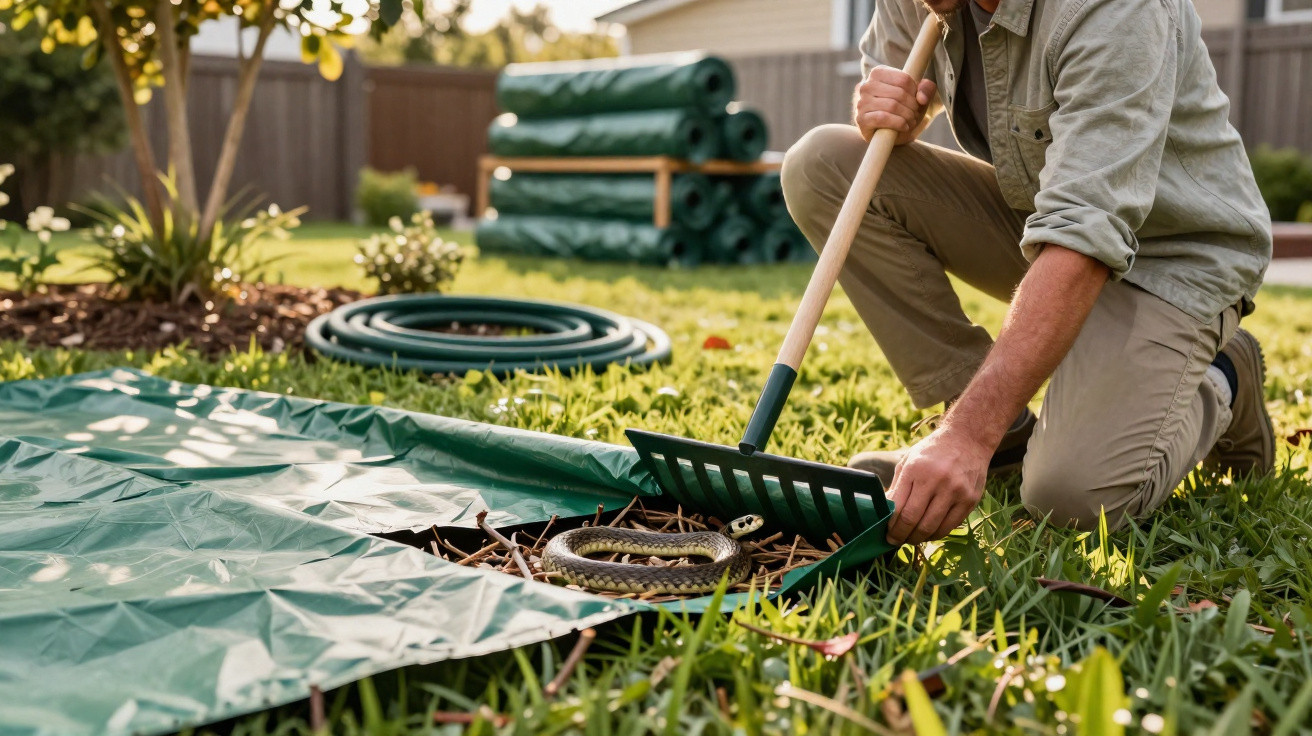
When the sun returns in spring, an often-overlooked hazard can be hiding in the garden - and many people don’t realise it can be a magnet for snakes.
Between log piles, compost heaps and the lawn where children play, it sits in plain sight: a tarpaulin or an old sheet of board lying flat on the ground. Handy for DIY jobs, annoying when it’s time to tidy up - and precisely the sort of place snakes particularly like to use in spring. If you grab it without thinking, you could get a serious fright.
Why snakes love certain objects in the garden
Snakes are cold-blooded (ectothermic). They can’t regulate their body temperature internally, so they rely on their surroundings to warm up enough to function. In spring, that’s tricky: the sun can be strong during the day, but the ground often stays chilly - especially at night.
That’s where the typical garden tarpaulin comes in. Dark plastic sheeting, metal or fibre-cement boards can act like a small heater:
- the surface absorbs sunlight effectively,
- the ground underneath holds on to that heat,
- a sheltered, draught-free air gap forms between the soil and the cover.
Under tarpaulins and boards lying flat, a hidden warm refuge of around 25 to 30 °C can develop - ideal for snakes in spring.
The result is much like a mini greenhouse: dark on top, damp and warm beneath. For a snake just emerging from winter dormancy, it’s like a spa - only it’s right there in the lawn or behind the shed.
These common garden mistakes turn your garden into a snake haven
Without meaning to, many homeowners set up their garden in a way that suits snakes perfectly. The most frequent situations include:
- an old garden tarpaulin left lying flat on the lawn after building work,
- a compost heap covered with black plastic,
- logs stored directly on the ground, sometimes with sheeting underneath,
- discarded metal sheets or fibre-cement panels left at the back fence,
- long grass around the shed, play equipment or water butt that’s rarely mown.
This exact mix of warmth, cover and quiet is what attracts snakes. They can stay hidden, avoid birds of prey and remain undisturbed - until someone lifts the tarpaulin.
How to tidy up properly: spring clear-out to deter snake visitors
If you remove these “luxury hiding places”, you take away a major reason for snakes to settle close to the house. These steps are especially useful:
- Remove unused tarpaulins: Clear away anything lying flat on the ground that you don’t actually need.
- Tension necessary covers: Stretch tarpaulins tight and secure them over wood, tools or materials rather than leaving them loose.
- Stack firewood properly: Store logs at least 20 centimetres off the ground on pallets or a rack.
- Dispose of old sheets: Don’t leave metal, corrugated panels or broken pieces “for now” - remove them promptly.
- Keep the grass short: Mow regularly, particularly near the patio, front door, sandpit and pond.
The fewer dark materials lying flat on the ground, the less appealing your garden becomes as a sunbathing spot for snakes.
The best way to handle garden tarpaulins and similar coverings
In reality, doing without covers altogether is often impractical. With a few simple adjustments, you can use them far more safely.
How to store tarpaulins so they’re less attractive to snakes
- Clean the tarpaulin after use and let it dry,
- roll it up neatly rather than leaving it crumpled,
- hang it up - for example on a hook in the tool shed or garage,
- avoid storing it outdoors long-term where possible.
The same applies to old metal sheets, plastic boards or leftover building materials: anything you no longer need should be disposed of quickly, or at least stood upright. The real risk arises when something sits untouched on the ground for weeks or months.
What to do if there’s already a snake in the garden
Even with the greatest care, it can still happen: you lift a tarpaulin and a reptile is suddenly coiled underneath. At that moment, your reaction largely determines how risky things become.
The most important rules of behaviour in a real-life situation
- Keep your distance: Don’t go closer; call children and pets back.
- Stay calm: Avoid sudden movements and don’t try to hit the snake.
- Back away slowly: Take a few steps backwards while keeping the animal in view.
- Don’t touch it: Never attempt to catch, chase off or kill the snake.
Most snakes in Central Europe avoid people and retreat as soon as they can see an escape route.
In many areas, the species involved are completely harmless, such as the grass snake. Even where venomous species exist, bites are usually defensive - when the animal feels threatened or can’t get away.
When you should call in professionals
If the snake is in a building, in a confined courtyard, or very close to play areas, it’s worth contacting:
- the local council or community safety/enforcement office,
- a regional nature conservation centre,
- a wildlife rescue or rehabilitation centre.
They can point you to people who can identify the snake properly and, if needed, relocate it. In many countries, snakes are strictly protected. Deliberately killing one can lead to a fine - and can also put you at unnecessary risk.
Why snakes are still useful
However unpleasant a surprise in the garden may be, snakes play an important role in the ecosystem. They mainly feed on mice, young rats and other small mammals. Around homes and outbuildings, that helps keep damage and disease carriers under control.
A sensible compromise is to arrange the garden so snakes are more likely to keep to the edges of the plot or wilder corners:
- tidy, closely mown areas near the home,
- brush piles, stones and natural structures around the boundary,
- no tarpaulins or metal sheets lying flat near paths and patios.
Practical everyday examples
A typical scenario: after winter, a black sheet is still covering the compost. In April or May, someone goes to turn the heap, grabs the cover on impulse and lifts it - with their hand suddenly just a few centimetres from a snake. If you instead raise it with a rake or spade and check from a safe distance, the shock is smaller and the risk drops significantly.
Another common one: firewood is stored directly on the ground, creating a damp, dark gap underneath. That’s where not only snakes but also mice and insects take shelter. A simple pallet base and a well-ventilated stack solves several problems at once.
Risks, misconceptions and sensible prevention
Many people underestimate how effectively snakes can be discouraged by noise and vibration. If you work in the garden regularly, mow the lawn and move about often, the plot becomes less appealing by default. The biggest issues are quiet, rarely used corners where no-one checks for months.
At the same time, myths still circulate - for example, that snakes deliberately “attack” people. In reality, they almost always try to escape. The risky moments tend to happen when people startle them at close range - for instance under a long-forgotten tarpaulin.
If you place garden items thoughtfully, avoid leaving tarpaulins lying flat, and take care during clear-outs, you can reduce the risk considerably. That way, snakes remain what they prefer to be: discreet neighbours you seldom see - rather than unwelcome guests beneath the next cover.




Comments
No comments yet. Be the first to comment!
Leave a Comment