
Many people reach for boiling water - and then wonder why the problem returns so quickly.
If you want to smarten up your patio or front entrance after winter, it’s easy to end up at the saucepan: boil the kettle or a pan, pour it over the paving, and the moss disappears - apparently. A few weeks later it often looks much the same again, sometimes even worse. A gardener recommends a far gentler approach using bicarbonate of soda that takes very little effort, is kinder to the slabs, and causes moss to lose its grip within 48 hours.
Why boiling water only works on moss for a short time
At first glance, the idea seems straightforward: pour boiling water over moss, the green patches turn brown, and the area looks cleaner. The issue is what’s happening underneath.
Moss thrives on three things: consistently damp spots, shade, and poor air movement. That’s exactly why it settles under shrubs, along walls, and in narrow joints. Boiling water scorches what you can see, but it doesn’t change the conditions - and it barely reaches the deeper structures.
"If you only hit the surface, you’re treating the symptom - not the cause."
There’s also a second drawback: hot water isn’t gentle on the surface. On older slabs or more delicate stone, joints can crack, finishes may bleach, and surfaces can become patchy. Some areas can even lose grip if they’re treated too harshly.
One more point that’s often overlooked: leftover moss and a damp film can make paving slippery. If you think you’ve “quickly” cleaned it, you may end up walking across an unsafe surface day to day.
The simple gardener’s trick: bicarbonate of soda on damp slabs
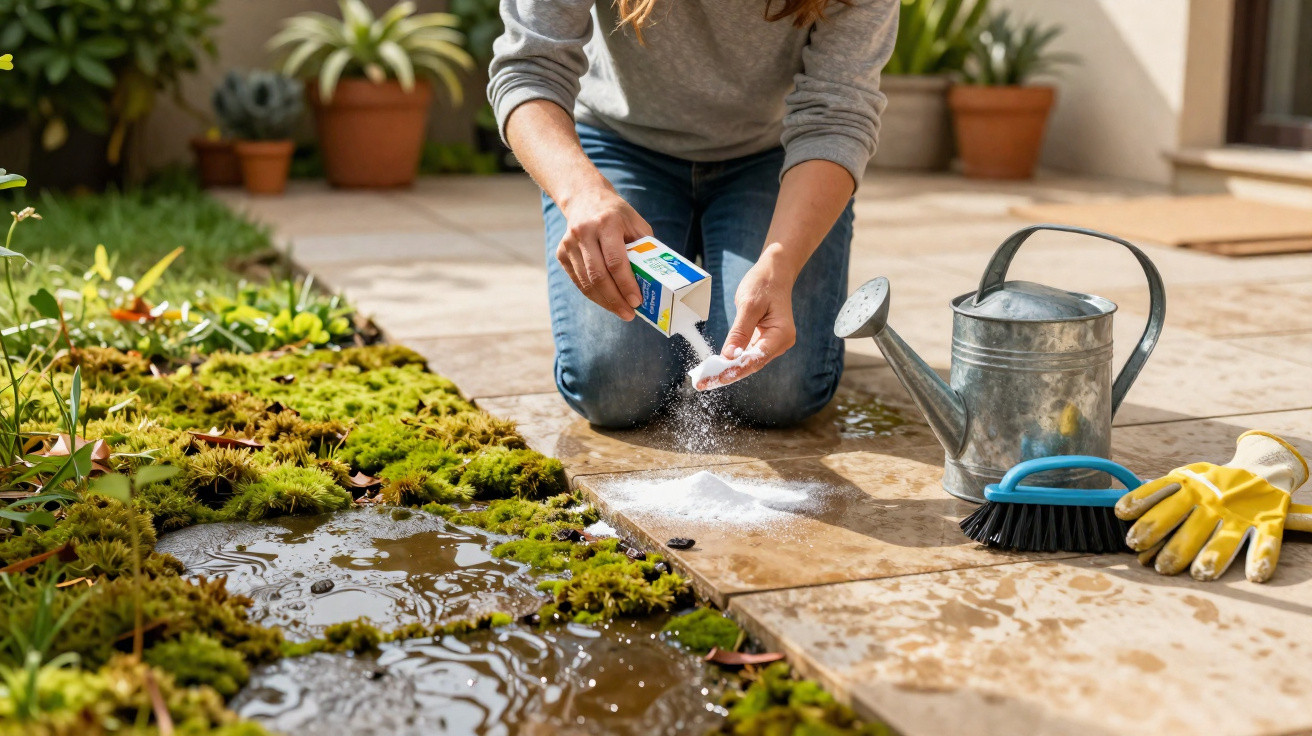
Rather than dealing with boiling water, the gardener uses a household staple most people already have: bicarbonate of soda (often sold for baking).
"The trick isn’t the product, it’s the timing: bicarbonate of soda works better on damp slabs than on completely dry ones."
The reasoning is simple: on a lightly damp surface, the powder sticks, stays where it’s needed, and works directly where the moss is rooted. Nothing runs off, nothing splashes - it just needs time.
Step-by-step guide to the bicarbonate of soda method
- Dampen the slabs: Ideally after rainfall, or lightly mist with a garden hose. A thin damp film is enough.
- Sprinkle on bicarbonate of soda: Apply the powder specifically to mossy patches and into the joints, rather than dusting the entire area.
- Wait 48 hours: During this period the moss dries out, loosens, and changes colour.
- Brush away loose debris: Use a stiff brush or scrubbing brush to sweep off the released moss.
- Rinse gently: Rinse with a small amount of water to remove residue without washing out the joints.
That’s all that’s required - no brute force, no heat stress for the surface, and no hours of intensive scrubbing.
How much bicarbonate of soda you actually need
What matters isn’t a thick, heavy layer, but using the right amount in the right places. Many people overdo it and coat the whole area white - which costs more and rarely improves the result.
As a rough guide per square metre of heavily affected paving:
| Moss severity | Recommended amount of bicarbonate of soda |
|---|---|
| Light film, first green haze | 1–2 tablespoons |
| Clearly visible moss in joints | 3–4 tablespoons |
| Thick moss cushions, dark joints | up to about 5 tablespoons, applied precisely |
Pay particularly close attention to:
- slab edges along walls
- shaded corners under shrubs or steps
- porous natural stone that absorbs water quickly
In these areas, it’s better to work in two light passes rather than one heavy-handed application. Although bicarbonate of soda is considered relatively gentle, high concentrations can still leave marks on sensitive stone.
How to protect patio slabs and paths while cleaning
Even a mild method needs the right conditions. If you start the bicarbonate of soda treatment in the middle of heavy rain, the powder will be washed off the stone straight away.
"The best time is between two dry days - mild, dry, with no heavy rain forecast."
A practical option is a day when the slabs are still slightly damp from the day before (or you briefly pre-wet them), then you scatter the powder and leave it to work. In strong sunshine everything dries too fast; light cloud cover is often ideal.
A discreet test before treating the whole area
If you have pale sandstone slabs, delicate natural stone, or very old paving, test a small, hidden corner first. That way you can quickly check whether the colour or surface changes.
This gives you confidence before you tackle the entire patio - and it also helps you judge the right amount and how best to apply it.
Three common mistakes that ruin the result
- Using too much powder: Thick layers rarely add much benefit, look unsightly, and are then hard work to rinse away.
- Scrubbing too soon: If you start after only a few hours, you remove the bicarbonate of soda before it has done its job.
- Using a harsh water jet: High pressure or a strong jet can wash out joints and roughen stone. A gentle approach works better.
Preventing moss: how to keep the patio clean for longer
Once the moss is gone, the real challenge begins: stopping it from coming straight back. It’s worth looking closely at light, water, and airflow.
"If you remove moss’s favourite conditions, you’ll need to clean far less often."
Helpful measures can include:
- Reduce shade: Lightly thin overhanging branches or dense shrubs so more daylight reaches the slabs.
- Improve drainage: Avoid puddles and standing moisture; you may need to clear small channels or check the fall of the surface.
- Increase air circulation: Open up cramped corners, for example by removing leaves or dead plant material.
Many homeowners wait until the patio turns green across a large area. A better approach is a small spring routine: after rain, check where the paving stays damp for longest, and deal with the first green film straight away rather than watching it develop for months.
Why bicarbonate of soda is often a better choice than chemicals or pressure washing
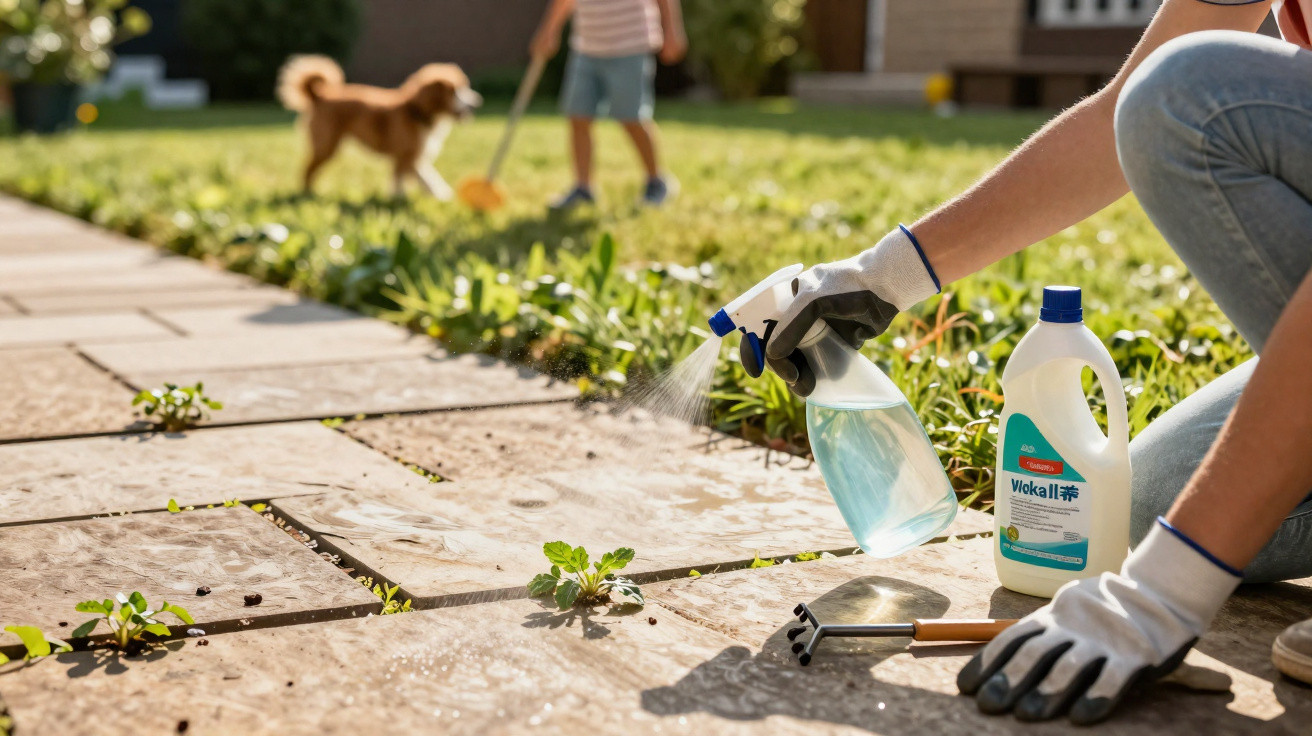
There are plenty of specialist products sold for moss and algae, often based on aggressive ingredients. They can work, but they may harm nearby plants, seep into soil, or attack surfaces. If you have pets, children, or vegetable beds close by, these options are not always appealing.
A pressure washer can deliver an instant visual improvement, but its force can strip the top layer from stone and joints. That leaves the surface rougher, meaning it holds more dirt and moisture - and moss can grip even more easily. Clean in the short term, more vulnerable in the long term.
Bicarbonate of soda is comparatively mild, can be precisely dosed, and usually puts less strain on the surrounding area. On paths, patios, and driveways, it can offer a good balance between effectiveness and protecting the material - as long as you follow the precautions above.
Practical notes on safety and the environment
Even though bicarbonate of soda is generally considered low risk, a few points are worth keeping in mind:
- Watch where it drains: Don’t rinse large amounts straight into gutters and drains; if possible, direct runoff over gravel or planted areas instead.
- Protect sensitive plants: Avoid rinsing heavily directly into pots or raised beds, as changing soil values there may be undesirable.
- Wear gloves: If you have sensitive skin, thin gloves can help prevent irritation.
If you use the method once or twice a year and keep an eye on light, drainage, and airflow in between, your spring clean becomes minimal. Instead of turning up each time with boiling water and heavy equipment, a quick check, a little bicarbonate of soda, and a brush will usually do the job.


Comments
No comments yet. Be the first to comment!
Leave a Comment