
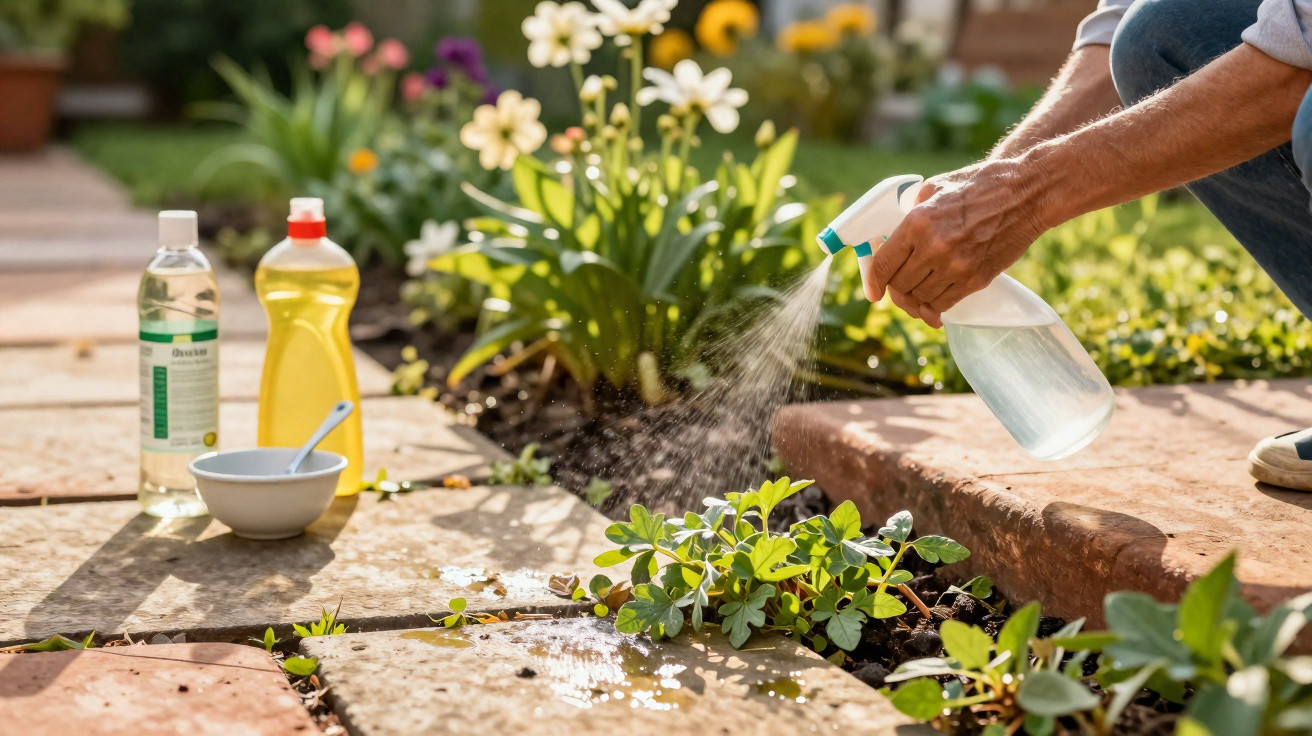
Stubborn weeds in paving joints and gravel paths drive many amateur gardeners up the wall - but an unassuming kitchen staple is now turning heads.
Rather than spending hours on their knees pulling out every last sprout, more and more garden owners are relying on a straightforward blend of everyday items to keep paths tidy. A well-known home remedy still plays a part, but the real standout is increasingly another helper that sits by almost every sink - and it tackles weeds far more reliably than vinegar on its own.
Why ordinary household vinegar reaches its limits against weeds
For years, household vinegar has been a popular tip for tackling wild growth between stone slabs, block paving and gravel. Because it is acidic, it attacks the visible parts of the plant: leaves and young shoots quickly discolour, wilt and collapse. In terms of appearance, the area can look clean again very quickly.
That, however, is exactly where the weakness lies. In most cases the roots survive largely untouched. They sit deeper in the ground, where the acid barely reaches. After a few days or a few weeks, the plants simply shoot again. The result is that this seemingly “natural” aid needs constant repeat applications and can end up costing a lot of time and patience.
There is also another drawback: repeatedly dousing large areas with neat vinegar puts the soil under strain. Microorganisms can be thrown out of balance and the soil structure may suffer. Many gardeners therefore look for an approach that lasts longer with less effort - and ideally works more precisely.
"Household vinegar mainly scorches the green parts; the roots usually survive - the weeds come back."
Washing-up liquid as gardeners’ secret favourite
The real game-changer is something few people associate with gardening: ordinary washing-up liquid. It contains surfactants - substances designed to lift grease and dirt - and that same property also affects plant surfaces.
Leaves have a thin, waxy protective layer that makes water bead and run off. Washing-up liquid breaks down this layer. As a result, water and any added ingredients cling better, soak in for longer, and reach the plant’s cells far more effectively.
Used on its own, washing-up liquid can make it harder for a plant to retain moisture. The top growth dries out, loses firmness, changes colour and dies back little by little. When you combine washing-up liquid with vinegar, the impact increases: the acid doesn’t just sit on the surface, it penetrates further.
"With washing-up liquid, the vinegar solution becomes a noticeably more effective weed killer - especially for joints, paving and gravel paths."
The basic kitchen mix
A lot of gardeners rely on a fairly mild but practical mixture for small areas and newly emerged wild plants. It takes very little effort:
- 1 litre of water
- 1 tablespoon of washing-up liquid (ideally an eco-friendly product)
- optional: 1 cup of household vinegar
Stir everything thoroughly, then pour it into a spray bottle or pump sprayer. Only treat the plants you actually want to remove - not the whole area indiscriminately.
A warm, dry day with a bit of sunshine is best. The mixture stays on the leaves for longer, works more intensely, and the plants struggle to recover. You often see the first changes after one to two days, with wilting setting in gradually.
Stronger options for stubborn spots
Where wild growth has become established over years, some gardeners use more concentrated recipes. Three levels are commonly used:
1. Gentle solution for joints and young plants
For new, delicate shoots in paving joints, a very weak mix is often enough:
- 1 litre of water
- 1 tablespoon of eco washing-up liquid
It works more slowly, but it places far less strain on the soil. This version is well suited to regular, targeted use, for example along the patio edge or at the garage entrance.
2. Vinegar and washing-up liquid mix for heavier growth
If dense mats have already formed, a higher vinegar content increases the pressure on the plants:
- 1 litre of household vinegar
- 2 teaspoons of washing-up liquid
This mixture is particularly useful on cobbles, driveways and gravel paths with significant weed growth. Spray the liquid precisely onto the leaves and avoid letting it pool. Children and pets should only go back onto the area once everything has dried.
3. Radical salt version - only for dead zones
If you have places where you genuinely want nothing to grow long term - for instance under wheelie bins, behind the garage, or along awkward edges - some people use an especially strong blend:
- 1 litre of household vinegar
- 40 grams of salt
- 10 millilitres of washing-up liquid
It is highly aggressive and should be used only on pure stone or gravel areas with no plants nearby. Salt builds up in the soil and seriously disrupts soil life and any future planting.
| Mixture | Where to use it | Risk to the soil |
|---|---|---|
| Water + a little washing-up liquid | Young weeds in joints | low |
| Vinegar + washing-up liquid | more heavily overgrown paths | medium |
| Vinegar + salt + washing-up liquid | pure stone and gravel areas without plants | high |
How to apply the mixture correctly
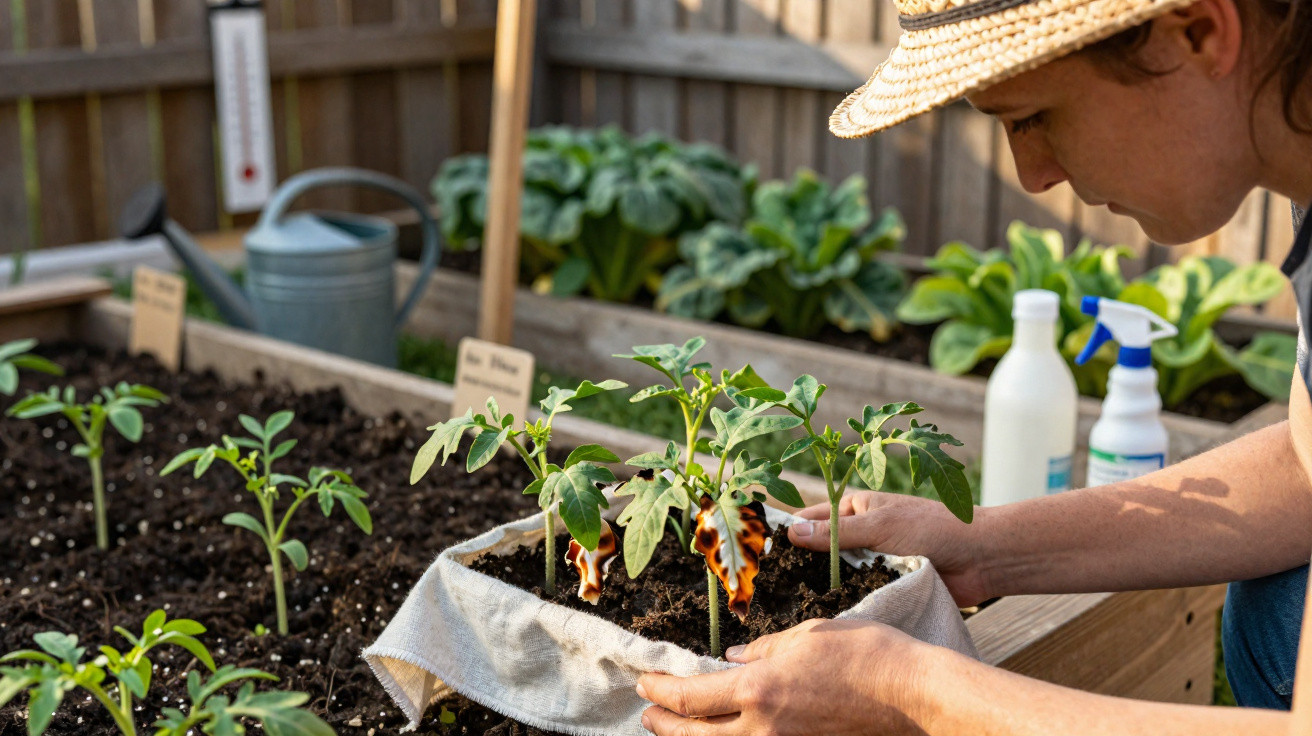
The key rule is simple: never spray it broadly over lawns, flower beds or the vegetable patch. Washing-up liquid changes water’s surface tension, vinegar lowers the pH, and salt damages the roots of many plants. This mix should only ever go onto the leaves of the plants you genuinely want to remove.
The best approach is careful, targeted spraying directly into joints or onto individual clumps. Avoid windy days, otherwise droplets can end up in beds or on a neighbour’s hedge. If you have sensitive skin, it is sensible to wear gloves, as vinegar and washing-up liquid can dry out the skin.
After application, the surface should stay dry. Rain soon afterwards washes the mixture away and spreads it into the soil - reducing the effect on the weeds while increasing the negative impact on the surrounding ground.
"The home mix belongs only on stone, paving and gravel - and always precisely on the plants you want gone."
How environmentally friendly is this method, really?
Many gardeners choose vinegar and washing-up liquid because they want to avoid chemical sprays from DIY shops. Although this kitchen mixture works without conventional herbicides, it is not completely harmless.
Washing-up liquid does not just affect plant surfaces: if larger amounts seep into soil or reach drains, it can also harm soil organisms and aquatic life. Vinegar alters soil pH, while salt causes long-term damage to soil structure and soil life.
Using these substances sparingly - and only in a targeted way on stone surfaces - significantly reduces the risks. But the mixture is not suitable as an all-purpose fix for every part of the garden. In planted areas, mechanical options such as hand weeding, hoeing, or covering with mulch remain the better choice.
Practical alternatives and complementary strategies
Many gardeners use the washing-up liquid mix alongside other measures. Between patio slabs, for example, you can establish narrow joint plants such as thyme or Roman chamomile. They fill the gaps, suppress wild growth and create a more natural, green look.
On gravel paths, a deep mineral grit layer with a stable base helps. Where water drains quickly and less light reaches the ground, fewer seeds germinate. Any isolated plants that do appear can then be removed more easily with a joint scraper or a hot-air gun.
If you do use the kitchen mixture, it is best viewed as targeted support: a tool for particularly annoying spots, not a routine solution for the whole garden. The more carefully you apply it, the less collateral impact there is - and the longer paths and driveways tend to look neat.
In the end, some weeds are part of every garden. Where stone surfaces are unavoidable, the combination of vinegar and washing-up liquid can genuinely make maintenance easier. But if you also focus on building healthy soil, planting well and designing sensibly, you will need the spray bottle far less often.


Comments
No comments yet. Be the first to comment!
Leave a Comment