
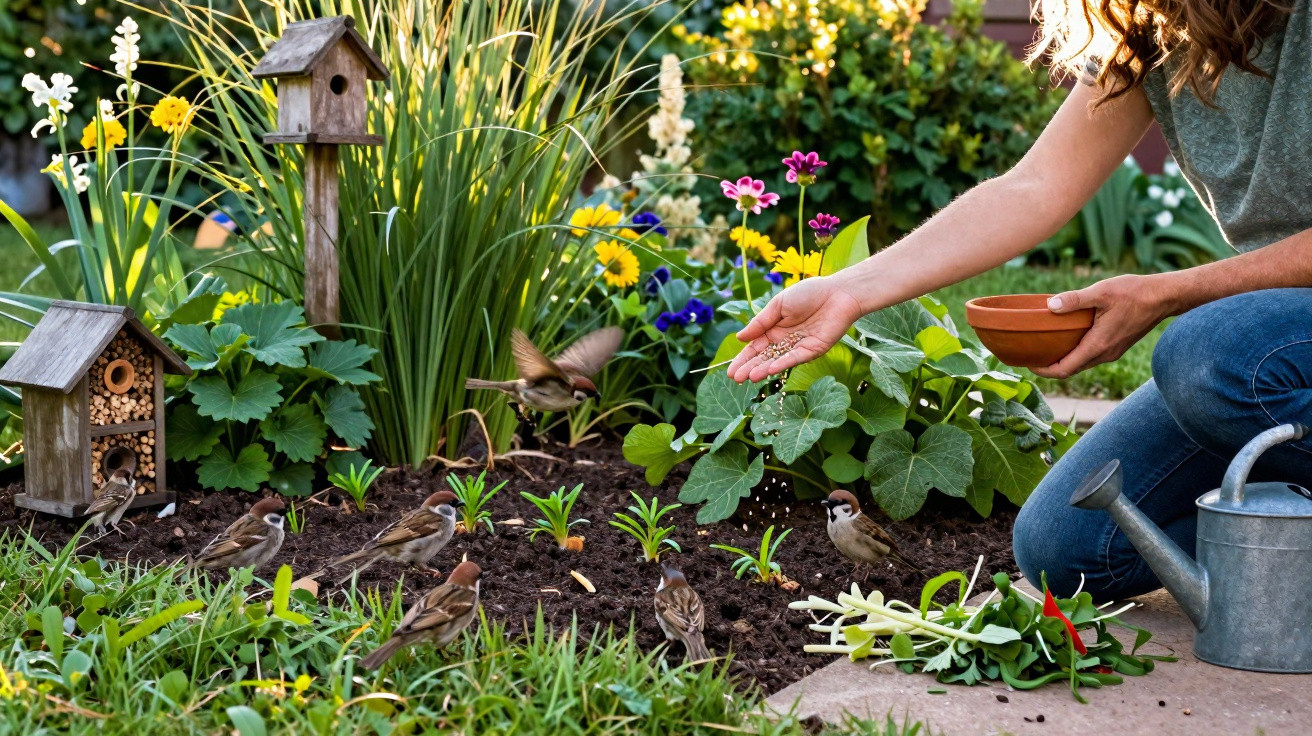
As soon as the first mild days arrive, front gardens, allotments and balconies come alive with buzzing and birdsong again. Tits and robins attract plenty of attention: people photograph them, feed them and admire them. Yet another small bird is quickly filed under “nuisance” - and is often chased away. Experts at the Ligue pour la Protection des Oiseaux (LPO), France’s counterpart to NABU, are now making the point clearly: this bird is not a problem, but a key ally in the garden.
Why the sparrow was long seen as a pest
The bird in question is the house sparrow - usually just called a sparrow in everyday speech. It has lived alongside people for centuries. Even so, it has carried a poor reputation for a long time. In farming, it was widely labelled a “grain thief” because it helps itself to cereals and seed. That idea stuck, and it travelled from the fields straight into domestic gardens.
To this day, many gardeners mainly see a seed-eater that raids freshly sown beds. LPO specialists describe this as an “anthropocentric view” - in other words, an interpretation focused heavily on human interests: people look only at their own yield, rather than at the garden as a whole system.
“The sparrow does eat seeds - but at the same time it stabilises the ecological balance in the garden and thereby supports the entire plant and animal world.”
From a purely economic standpoint, sparrows long seemed unnecessary, or even harmful, to many people. Ecologically, the picture is entirely different. Every species plays a role in the web of life. Remove one of those roles and the system starts to wobble. This is now evident in many parts of Europe where sparrow populations have fallen sharply.
An ally in the beds: what the sparrow does for the garden
Anyone who thinks only of grains misses the main point: sparrows feed their chicks largely on insect larvae. Larvae are protein-rich, which makes them ideal for growing birds. During the breeding season, adults tirelessly collect caterpillars, larvae and other small creeping insects - acting as a form of natural pest control.
“A pair of sparrows with a hungry brood can remove thousands of insect larvae from the garden in just a few weeks - without poison, without cost, around the clock.”
Their value in the garden goes further:
- Regulating insect populations: Especially during breeding, sparrows consume huge numbers of caterpillars, mosquito larvae and small beetles.
- Stabilising the ecosystem: As part of the food chain, they help dampen population booms - which protects plants.
- Spreading seeds: They carry away remnants of berries and fruit, helping natural reseeding.
- Food for birds of prey: Sparrows are prey for falcons and sparrowhawks, which helps keep those populations in balance too.
So rather than being a “pest”, sparrows are building blocks of a functioning, lively garden. Drive them away and the problem returns - just in a different shape: more pests, fewer songbirds, and a more fragile system.
Why many gardens have become uninhabitable for sparrows
Sparrows ought to be among the winners of living close to humans. They use roofs, gaps in walls and hedges as nesting sites. The LPO even calls them a “regular companion of humans”. Despite that, their numbers are declining in many towns and villages.
There are several reasons:
| Problem | Consequence for the sparrow |
|---|---|
| Sealed surfaces, gravel gardens | Fewer insects, less food, hardly any dust and sand for bathing |
| Extensive, tightly sealed house renovations | Nesting spots in gutters and crevices disappear |
| Pesticides and insecticides | Fewer insects available as a food source |
| Monotonous lawns | Little cover, no natural feeding areas |
Many of these trends are driven by people - and that is exactly why people can reverse them. Make a garden a little more sparrow-friendly and you benefit directly from a stronger, more natural balance.
What gardeners can do for sparrows in practical terms
The good news is that you do not have to rebuild the whole garden. A few targeted changes are often enough for sparrows to settle again - or to stay.
1. More structure instead of a sterile lawn
Sparrows need hiding places, perches and reliable sources of food. A garden that is perfectly “tidied” puts them off. Helpful options include:
- Hedges of native shrubs (e.g. rose hip, blackthorn and privet)
- Perennials whose seed heads are left standing through the winter
- A few “wild corners” with nettles, grasses and leaf litter
These areas provide food and protection from cats and birds of prey. At the same time, added structure increases insect diversity - and it is those insects that the young birds depend on.
2. Encourage insects, remove poisons
If you want to support sparrows, start with the basics: insects. No insects, no chicks. Instead of chemicals in the beds, alternative approaches help:
- Mixed planting in the vegetable garden to spread pest pressure
- Plants that attract beneficial insects, such as calendula, dill or fennel
- Avoiding insect sprays on patios and balconies
Many vegetable-garden issues ease once a healthy network of predators, beneficial species and birds is in place. Sparrows are a central part of that network.
3. Create or preserve nesting places
When roofs and façades are renovated, important breeding sites often vanish unnoticed. If you are building or renovating, you can deliberately leave small niches or plan in specialist nest bricks. Traditional nest boxes can also work, provided they are placed in sheltered positions and have a suitable entrance-hole diameter.
Important: nesting sites should be as cat-proof as possible and set a little away from busy areas such as patios, so the birds can breed without disturbance.
Why the “useful” versus “harmful” mindset is misleading
Sorting wildlife into “helpful” and “harmful” can seem practical at first, but it often leads you astray in nature. The LPO stresses that, in an intact system, no species is “harmful” to biodiversity. It only becomes problematic when people intervene heavily: monocultures, pesticides, the loss of green space.
Sparrows are a clear example. If you judge them only by how many seeds they eat, you miss their role as insect hunters, seed spreaders and prey. A garden may look “neater” in the short term, but over time it becomes more vulnerable to waves of disease and pests.
“A living garden needs conflicts - but it resolves them itself if all links in the chain are still present.”
If you tolerate sparrows, you accept small losses of seed in exchange for a stable network of helpers that copes far better with heat, drought and new pests than even the most carefully planned ornamental garden.
Practical tips for everyday gardening
For many people, the key question is: how far can I go without putting my harvest at risk? A few pragmatic ideas:
- Protect sensitive young plants in specific spots with netting, rather than wrapping the entire bed.
- Deliberately plan a few rows as a “partial substitute” - for example sunflowers or millet that sparrows can feed on.
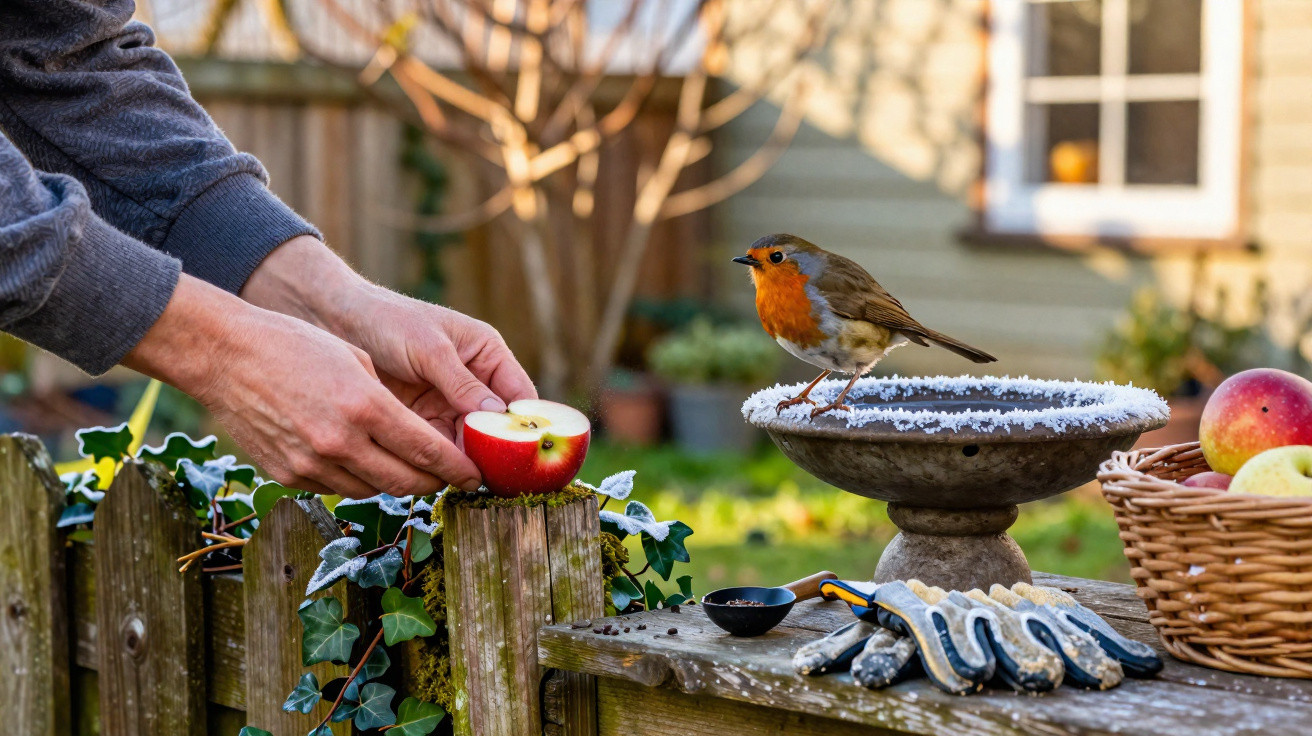
- Put out bird baths, especially in hot summers. Water draws sparrows in and helps them survive.
This creates a give-and-take that often settles surprisingly quickly. Many gardeners report that after a few years with more sparrows, they have noticeably fewer problems with certain pests - and can enjoy more birdsong as well.
Paying closer attention to sparrows in the garden also teaches you a lot about ecological connections: why a seemingly “annoying” species can suddenly become essential, how tiny interventions can trigger large chain reactions, and why a handful of songbirds can achieve more than any chemical plant protection. That perspective helps you see your garden not only as a productive space, but as a small ecosystem - one in which an underestimated bird like the sparrow plays a supporting role.
Comments
No comments yet. Be the first to comment!
Leave a Comment