
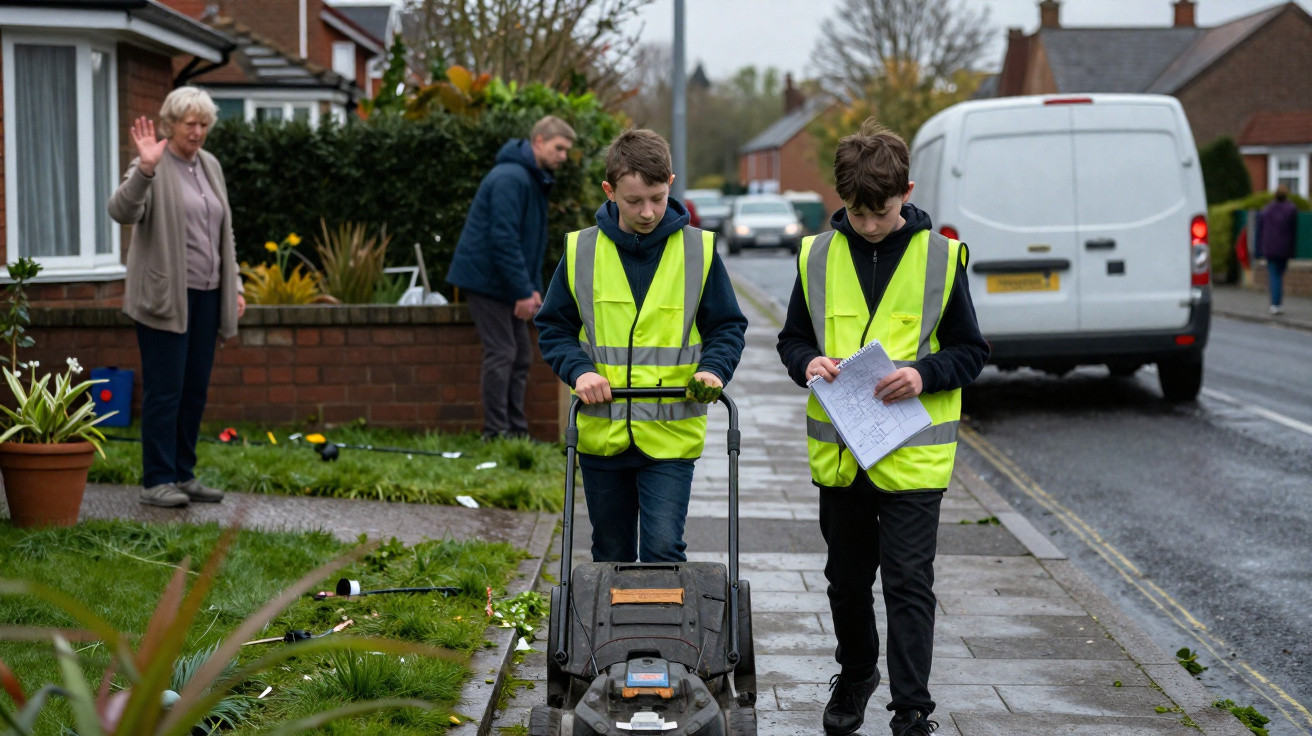
Two 11-year-old lads spent the summer mowing grass for anyone who asked - especially people who couldn’t manage it themselves. Once the neighbourhood twigged they’d already done 50 lawns for free, a local character known as the “Lawnmower Man” turned up with donated gear and a gentle push to make it into something proper.
When I met them on a Saturday, the road was still slick from last night’s drizzle. Alfie’s hi-vis vest sat slightly skew-whiff, and Leo’s fingers were stained green from flicking stray clippings off the kerb. The air carried that mix of damp soil and warm petrol, with the low weekend buzz of chores travelling from garden to garden. They pressed a doorbell, glanced at their small spiral notebook, and grinned as an elderly woman waved from behind net curtains. It felt like the right kind of trouble. The mower spluttered, then caught. Neighbours looked over fences. That’s what stories do - they lean in.
How two schoolboys cut through the noise
It began with the simplest sort of invitation: a sign tied to a lamp-post and a chalkboard propped by a gate. “Free lawn cuts for anyone who needs one,” scrawled in wobbly capital letters. They turned up for grandparents who’d slowed down, new parents buried under laundry, and a man in a plaster cast who couldn’t stand the sight of grass getting away from him. In a stretch of grim headlines and frayed patience, two 11-year‑olds made something neat again.
By mid-July, they’d started tracking it like a mission. Alfie had sketched a rough map and coloured in small green squares for every garden they’d done around the estate. They timed each job with an old kitchen timer and treated the waste sacks like medals: 35 bags, 18 streets, mowed 50 lawns for free. Mrs Patel, 82, cried at the gate and sent them off with two homemade samosas. “It’ll be our fastest cut,” Leo had said at No. 14, then turned to grin, “Fourteen minutes, new record.”
So why did it land so strongly with people? Because it didn’t feel like a campaign. It was immediate, everyday, a little scruffy at the edges - the opposite of a glossy fundraising page. What they really gave back was a front garden people recognised again, which is another way of saying a bit of control. Local life runs on that quieter exchange: minutes saved, weeds gone, dignity returned. That sort of thing travels faster than any hashtag.
From kindness to a business plan
Then came the van. Martin O’Rourke - the “Lawnmower Man” who seems to mend half the town’s garden kit - rolled up with a starter bundle: a serviced mower, a quiet trimmer, spare blades, oil, goggles, ear defenders. He walked them through the basics: checking the plug, cleaning the filter, and cutting a crisp edge. “You’ve earned your tools,” he said, and helped them draft prices that actually added up: a small lawn, a medium, a corner tidy, a weekday after-school slot. Their first real business ended up written in pencil on the back of a parts invoice.
This is where it becomes properly workable. They chose a name - Green Pals - and set a straightforward promise: five-minute sweep, two passes, edges clean. A simple booking sheet lived on mum’s fridge. They got used to taking a bin bag for clippings, snapping before-and-after photos, and knocking next door once a garden looked smart. Truth is, hardly anyone does that consistently. But a quick hello beats a flyer for landing the next booking.
Everyone knows the moment when the to-do list wins and the garden loses. What helped was that the boys kept things personal, which matters when something goes wrong. One blade went blunt after it met a hidden stone. One neighbour grumbled about clippings left on the path. They said sorry, returned, and sorted it.
“People think success is shiny kit,” Martin told me, leaning on the fence. “It’s not. It’s turning up, being polite, and doing the edges well. The rest follows.”
- Name it simply. People remember what they can repeat.
- Price for clarity, not drama. Three sizes, three prices.
- Protect the basics: goggles, gloves, a spare spark plug.
- Leave the gate as you found it. Little rituals build trust.
- Photograph your work. Proof beats promise.
What this says about community right now
There’s a reason their tale broke through the background noise. It isn’t really nostalgia. It’s the quiet strength of help that’s nearby - the sort that doesn’t ask you to log in or sign up. When two schoolboys become the most dependable service on the street, it highlights what’s been missing: patience, small talk, and the unshowy pride of doing a job properly. The “Lawnmower Man” didn’t only give them equipment; he passed on a standard. And in return, the town offered them something as well - a way to move from goodwill to earnings without switching the goodwill off. That balance doesn’t come along often. It makes a place feel like a place again.
| Key point | Detail | Why it matters to the reader |
|---|---|---|
| From free cuts to paid work | 50 lawns donated led to a starter kit and a price list | Shows how generosity can seed sustainable income |
| Practical skills over polish | Edges, safety, simple booking, tidy sweep | Replicable steps for any teen micro-business |
| Community as an engine | Neighbours, local mentor, word-of-mouth | How to turn goodwill into growth without losing trust |
FAQ:
- Who are the boys and where do they work? Alfie and Leo are 11-year-olds from a Midlands market town, cutting lawns after school and on Saturday mornings within walking distance of home.
- How did they reach 50 free lawns? They started with a chalkboard offer, then mapped streets and took on one or two gardens a day through the summer until they hit their 50-lawn goal.
- What exactly did the “Lawnmower Man” donate? A serviced push mower, a battery trimmer, spare blades and plugs, oil, plus goggles and ear defenders. He also gave them a simple maintenance routine.
- Is it safe and legal for kids to run a lawn service? They work with parental oversight, use safety kit, avoid power tools beyond their training, and stick to daylight hours. They don’t handle pesticides or heavy machinery.
- How can I support or copy this idea locally? Start with a free-neighbour challenge, keep a booking sheet, and ask a local repair shop for a safety check. A name, three clear prices, and reliable turn-up times go a long way.
Comments
No comments yet. Be the first to comment!
Leave a Comment