
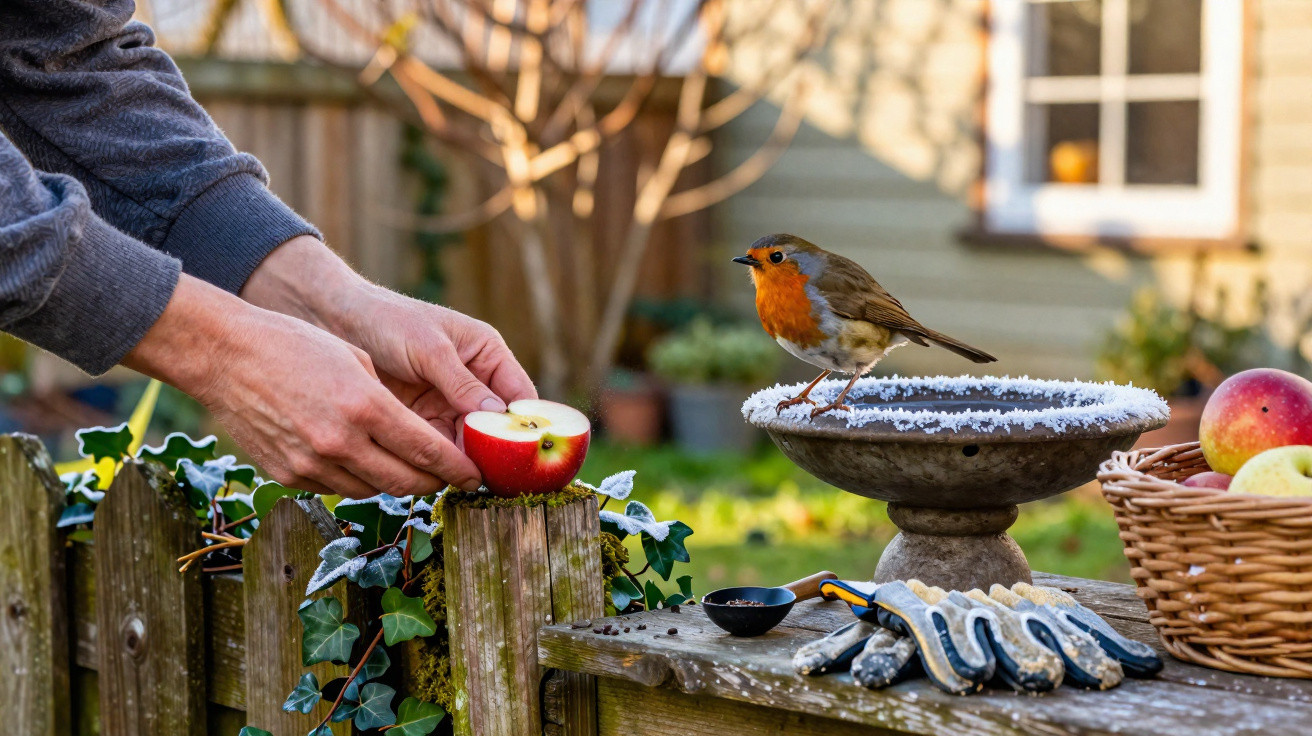
A pale winter sun, a little cloud of breath, and that muffled calm a garden has when most things are dormant. Then more wings, more shadowy shapes, spilling out from the hedge. In under ten minutes, the leafless apple tree at the far end of the garden was trembling with birds - not the feeder, not the fat balls, but the tree itself.
The woman who tends this small suburban plot insists she hadn’t topped up the feeder for days. Even so, the birds kept arriving and circling back to the same place, like regulars who know a tucked-away café. The draw wasn’t an expensive seed blend or a clever new feeder. It was something plain and old-school, still clinging to the branches like tiny cold-weather lanterns.
A single winter fruit had turned into their private lure.
The winter fruit that makes birds “choose” your garden
Ask most gardeners how to bring birds in during winter and you’ll hear the usual answers: sunflower hearts, suet blocks, perhaps peanuts. Apples rarely get a mention. Yet winter apples - the overlooked ones, the blemished ones, the windfalls - can inspire remarkable loyalty in garden birds. When nearly everything else has disappeared, a half-decomposing apple left on a branch can feel like a hot dinner in an otherwise empty motorway service station.
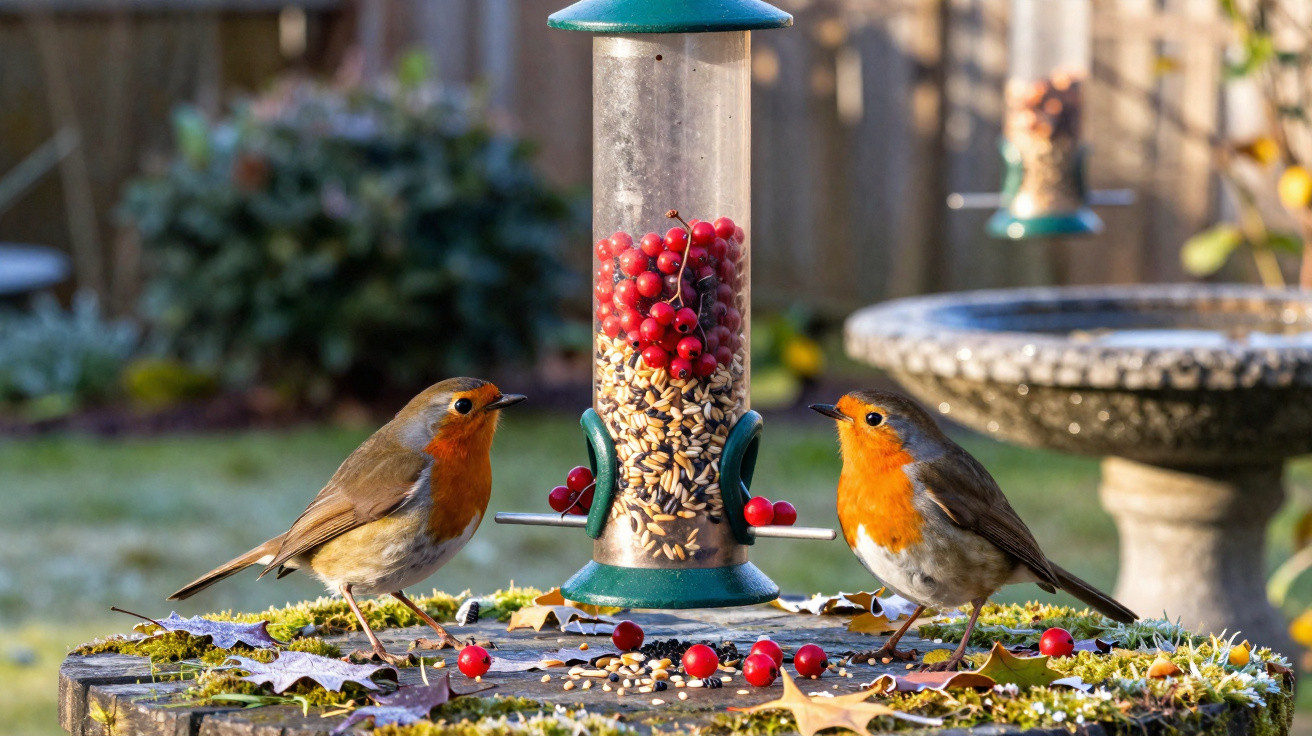
Spend time watching a garden where old dessert apples have been left hanging into winter. Blackbirds tend to turn up first, confident and fiercely possessive. After that come robins, thrushes and starlings. They don’t simply peck and move on. They hang around, rummage under the tree for fallen bits, and fix the location in their minds. By the following morning - often before daylight has properly strengthened - they’re there again.
What wins them over isn’t the flawless, supermarket-looking fruit. It’s the battered, split, softening apple that slowly becomes sweeter in the cold. That’s the twist many gardeners don’t expect: the fruit you wouldn’t put on your own plate is exactly what can make birds behave as if your garden is home.
In a small Kent village, a retired couple decided one year to stop being so “tidy” with their two ageing apple trees. Rather than stripping every last fruit in October, they left around a dozen apples still hanging and threw the damaged ones beneath the hedge. They braced themselves for a mess; instead they got a ringside seat to nature. Blackbirds began pacing the lawn like sentries. Fieldfares - birds they’d never really clocked before - started dropping in on frosty mornings.
By January they noticed something else. The neighbours had feeders as well, but the busiest flightpath was over their own patch. A local birdwatching group recorded more than ten species visiting that single small garden across the winter, many returning at almost the same times each day. The apples had become an “anchor” - a dependable point in a season when food is thin.
Online, you see the same pattern repeated. There are photos of apples wedged on twigs, half-eaten cores crowded by robins, and remarks such as: “They ignore my seed but fight over the apples!” It’s not laboratory science, but the message is consistent: routines take hold, loyalties form, and the same behaviours recur.
There’s a straightforward reason apples work so well. In winter, calories are crucial. High-fat foods like suet are brilliant, but they disappear quickly and depend on people keeping up the habit. Fruit left on a tree doesn’t depend on anyone remembering to refill anything. Apples hold starch and sugars that become more pronounced as the flesh softens in cold weather. For a blackbird burning energy simply to stay warm, that’s direct fuel.
Fruit that stays put is also reliable. Birds navigate by memory: they return to places where feeding has worked before. Even a modest, steady supply of apples - just a few pieces - creates a mental “pin” on their internal map. They don’t have to gamble on every garden in the street each morning. Yours becomes the dependable option. In bird terms, that’s what loyalty looks like: less energy wasted, fewer risks, and repeated patterns.
There’s another factor too. Apples hung on branches or pushed onto sticks can feel safer than food scattered on open ground. Fewer sudden cats, fewer nasty surprises. That extra sense of security, paired with sugar-rich flesh, can turn an ordinary fruit tree into something close to a winter base.
How to use apples to keep “your” birds coming back
You don’t need an orchard to use apples as a winter loyalty hack. Begin by setting aside a handful from autumn - especially the ones you’d normally chuck away. Slight bruising, speckles, even softness is absolutely fine. Cut them in half, then either leave them on the tree (if you have one) or push them onto branches, bamboo canes, or the uprights of a feeder stand.
Put them at varied heights: some around eye level, some higher up, and a couple nearer cover such as a hedge or dense shrub. Birds are braver when there’s a quick escape route. Swap out pieces that are genuinely very mouldy every few days, but don’t worry if the apples look unattractive. Birds aren’t as fussy as we are. Once they’ve found this little buffet, you’ll often spot repeat visits at broadly similar times each day - that’s the start of the loyalty.
One practical point makes a difference: consistency. Not immaculate presentation, just a bit of regularity. Put out apples once and birds may treat it as a lucky one-off. Keep a few going week after week and your garden starts to slot into their winter routine. In a small garden, even two apples a week can be enough.
Plenty of gardeners feel bad when they miss a few days with the feeder, then decide they’ve failed and stop altogether. There’s no need. Think in seasons rather than strict timetables. Winter is when you can build trust. In spring and summer, food is everywhere, so birds naturally spread out. When the cold returns, they’ll remember where the good winter fruit used to hang.
Some people worry they’ll “spoil” birds or that they’re doing it incorrectly. Others are concerned about rats or about making a mess. Those are genuine worries, not daft questions. If you can, keep apples off bare soil - particularly in towns and cities. Use branches, hooks, or hang them in mesh bags at about chest height. If neighbours are close by, pick spots that feel unobtrusive and considerate.
Let’s be honest: nobody keeps this up every single day. You’ll miss days. You’ll lose track for a week. That doesn’t undo the benefit. Birds are used to change. What they retain is the broader pattern: this garden equals safe food when everything is frozen. Once that link forms, it tends to stick.
“The day we stopped picking every last apple was the day the birds started treating our garden like theirs,” says Helen, 68, who has gardened the same small plot for over thirty years. “Now, when I see that first blackbird on a frosty morning, I feel like an old friend has come back.”
To keep it straightforward, here’s a small checklist:
- Choose bruised or leftover apples rather than perfect ones.
- Cut them into halves or thick wedges so they’re easier to peck.
- Spike or hang them at different heights, ideally near shelter.
- Replace only the truly mouldy pieces every few days.
- Keep the habit going throughout the cold season.
In a hectic week, you might manage only one or two of these. That’s still fine. This isn’t about building a picture-perfect wildlife corner. It’s about an ordinary garden, real leftovers, and a quiet bargain between you and the birds: you leave something out, they keep returning. Over time, that rhythm can feel unexpectedly personal.
Why this tiny habit changes how you see your garden
On a dull January morning, stand at the kitchen window and watch a thrush drive its beak into a softening apple. Suddenly the garden doesn’t look quite so lifeless. Bare twigs, frozen earth, empty beds - they become the background to one sharp little scene of activity. You understand that loyalty isn’t just a romantic notion; it’s there in the wings that come back to the same place day after day.
On a human level, it can have a gentle but real effect. When it’s cold and you’d rather stay indoors, seeing that robin flick in to check “his” apple can be a small tug towards the outside world. That matters, especially in winters that feel longer, wetter or more isolating than we remember. One winter fruit becomes a thread between your warm kitchen and everything still going on beyond the glass.
And birds, in their own way, pass information along. When you keep a modest but steady trickle of apples available, it can seem as if the news travels along hedges and rooftops. You begin to notice individuals - their routines, their favourite perches, their timing. Some will roll their eyes and call it sentimental. But when that same blackbird turns up at the first frost year after year, the boundary between wild visitor and familiar presence becomes wonderfully thin.
A winter garden doesn’t have to be productive or immaculate to be worthwhile. It can be slightly scruffy, improvised, dotted with apple cores and seed husks. That’s the surprising lesson that keeps catching gardeners out: birds don’t offer loyalty because everything is perfect. They respond to dependability - small gestures repeated through the hardest months.
So the next time you’re about to strip every last fruit from your tree, or throw away that bowl of ageing apples on the worktop, pause. Picture a bird on a bare branch, scanning the neighbourhood and working out where it can spend precious energy safely. A single apple left hanging - or pushed onto a stick - could tip the choice towards your patch.
Some readers will try this and see a flock almost immediately. Others will notice it begin more quietly: a robin, a cautious blackbird, a couple of starlings. The point isn’t the headcount. It’s the noticing. And telling the story to a neighbour, a child, or a friend miles away on a video call can carry the idea further than any single fence line.
We’ve all had that moment when a bird lands so close you can see its tiny breath at the tip of its beak, and for a split second it feels as though it chose you. Perhaps the truth is simpler: it chose the place where someone left an apple when the world was difficult and cold. Even so, it’s hard not to feel a little chosen as well.
| Key point | Detail | Benefit for the reader |
|---|---|---|
| Winter apples attract loyalty | Bruised, leftover apples become a stable energy source when other foods are scarce. | Helps you turn an ordinary garden into a regular winter stop for birds. |
| Placement matters | Spiking apples on branches or canes near cover feels safer for birds than open ground. | Increases the chances that birds linger rather than just passing through. |
| Consistency beats perfection | A steady trickle of fruit over the season builds memory and routine for visiting birds. | Makes it easier to create a rewarding winter ritual without daily effort. |
FAQ:
- Which birds are most attracted to apples in winter?
Blackbirds, thrushes, robins, starlings and sometimes fieldfares love soft winter apples, especially in colder regions.- Can I use shop-bought apples, or do they need to be from my own tree?
You can use either; supermarket apples work fine, especially when they’re slightly bruised or past their crisp best.- Is it safe to feed birds apples that are going brown or soft?
Yes, soft and slightly brown apples are often more attractive to birds; just remove anything that’s heavily mouldy.- Will apples attract rats to my garden?
There’s a small risk if fruit is left on the ground; hanging or spiking apples off the soil greatly reduces this.- When should I start putting out apples for birds?
Begin in late autumn and keep going through the coldest winter months, when natural fruit sources have mostly disappeared.
Comments
No comments yet. Be the first to comment!
Leave a Comment