
You feed, deadhead and keep your fingers crossed. Yet the petals start to fade before summer has properly arrived. Hidden in gardening history is an uncomplicated answer that Victorian gardeners relied on. It was neither an expensive fertiliser nor a wonder spray. The difference began when the rose went into the ground.
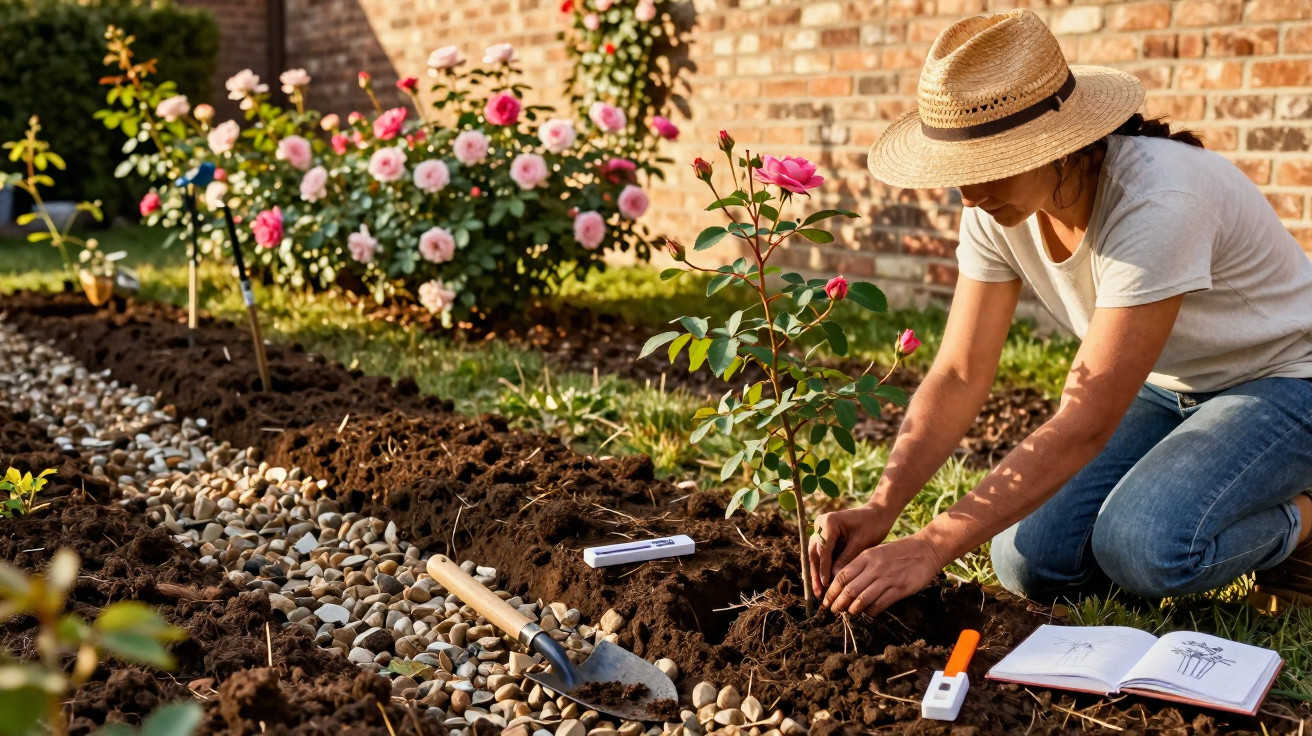
The first time I encountered it, daybreak was only just touching the walls of a Lincolnshire walled garden. The head gardener drove in his spade, cutting a tidy trench as neatly as a baker divides dough. He added crumbly, dark-chocolate-coloured manure, a small amount of bonemeal and leaf mould with the scent of rain. He planted the rose a little deeper than I had anticipated, then used his boot heel to make a shallow basin around it. Steam lifted from his tea into the chilly air as he smiled. The answer, he said without saying it, lay below ground.
A forgotten technique from Victorian walled gardens
Victorian gardeners grew roses in layered trenches, allowing the soil to nourish them gradually throughout summer. This was not simply a planting hole, but a broad, generous trench assembled like lasagne. Well-rotted manure, leaf mould, broken crocks and garden soil were placed in alternating layers to form an underground store cupboard. The rose was planted with its crown just below soil level, while the surrounding ground was formed into a shallow saucer to collect water.
I saw the approach restore a weary border on a compact London terrace. During its first year, a ‘Gertrude Jekyll’ that had previously given up in July was still sending out fragrance in October. Buds lined the stems as though the rose had rediscovered its purpose. The neighbours wanted to know which feed we had used. We had not altered the feed whatsoever; we had altered the conditions in which the roots were growing.
The reasoning is one modern soil science would readily support. A layered trench retains moisture without becoming waterlogged, moderates temperature and releases nutrients at a rate roses can absorb. Organic material sustains the soil organisms; those organisms support the roots, and the roots produce the flowers. Between waterings, capillary action draws water from the fertile lower layers up into the rooting area. It is a discreet system working away beneath your shoes.
How to make a Victorian trench for roses at home
Mark a trench measuring roughly 60–70 cm across and 40–45 cm deep in the position for your rose. Start with a light layer of coarse material, such as a handful of broken terracotta or twiggy prunings, followed by 5–8 cm of well-rotted manure. Add garden soil, then a layer of leaf mould or compost. Work two small handfuls of bonemeal through the upper layers rather than putting it immediately beneath the roots. Position the rose so its graft is 5 cm below the surface, backfill, firm it in with your heel and create a low-stress watering basin around the plant.
Give the rose one slow, thorough watering, then apply a 5 cm mulch of composted bark or leaf mould. After a fortnight, offer a watering can of comfrey tea as a mild boost. On sandy ground, incorporate a little clay or biochar to increase moisture retention. Where soil is heavy clay, mix sharp sand into the upper half of the backfill to improve its structure. Allow the trench to do the hard work while you have less to do. Honestly, no one manages that every day.
Fresh manure can scorch plants, so use only well-rotted material and keep it away from the immediate root area. Do not leave the crown sitting high above the soil; placing the graft slightly below ground produces more robust growth. Avoid the frequent, light hose spray that scarcely penetrates the mulch. Roses grown in a slow-release trench prefer a deep soak followed by time to recover. We have all watched a plant become miserable after a heatwave; this method gives you more breathing room.
“Feed the soil once, not the rose every week. Build a pantry underground and you’ll harvest flowers over ground.”
- Trench dimensions: 60–70 cm wide, 40–45 cm deep
- Layers: crocks/twigs, rotted manure, soil, leaf mould, soil
- Amendments: a little bonemeal; optional biochar on sandy ground
- Planting depth: graft 5 cm below the surface
- Finish: 5 cm mulch; form a basin; water deeply
Why the Victorian trench method still works in small gardens
This is not about nostalgia. It helps tip the balance in your favour where garden space is limited and summers swing from heavy rain to intense heat. The trench functions much like a battery, holding water, releasing it slowly and keeping nutrients within reach of the roots. The result is more consistent growth, increased lateral shoots and a flowering pattern that does not collapse after its first display.
It also encourages more deliberate planting. Rather than forcing a rose into an inadequate hole, you create a support system for its life from the outset. This makes the plant more forgiving when you miss a feed or fail to complete a watering round. One further idea worth borrowing from the period is to add a thin ring of gravel within the basin, which slows evaporation and stops petals from lying in mud. It is straightforward, low-tech and surprisingly pleasing.
Add an occasional seasonal top-up. In late spring, work a mugful of leaf mould into the surface, water it with rainwater and leave it alone. In midsummer, a swift deadhead and a watering can of comfrey tea will keep things going. The older I become, the more I value methods that quietly fade into the background. The traditional Victorian trench planting technique does precisely that.
| Key point | Detail | Benefit for the reader |
|---|---|---|
| Layered trench “pantry” | Alternate well-rotted manure, soil and leaf mould beneath the rose | Reliable moisture and nutrients for repeat flowering |
| Deeper graft planting | Place the union 5 cm below the surface and make a basin | Stronger, more resilient growth and simpler watering |
| Gentle feeding, rather than chasing results | Bonemeal in the upper layers; occasional comfrey tea | Fewer surges and setbacks, with more flowers over time |
FAQ:
- What precisely is the Victorian trench method? It is a wide planting trench built in layers to retain water and nutrients beneath the rose. Think lasagne rather than one scoop of soil.
- Can I use this method in a container? Yes, provided it is a large 40–50 litre pot. Layer crocks, compost, well-rotted manure and then more compost, leaving a shallow watering bowl at the top.
- How deeply should I plant the graft (bud union)? In the UK, aim for around 5 cm below the surface. This shields the graft and promotes strong basal shoots.
- Is bonemeal safe when I have dogs? Some dogs are attracted to it. If this is a concern, use fish, blood and bone beneath a soil layer, or select a plant-safe alternative such as rock phosphate.
- When is the best time to plant with this method? Plant bare-root roses from late autumn to early spring; plant container-grown roses whenever the ground is neither frozen nor baking hard. Choose cool, moist conditions where possible.






Comments
No comments yet. Be the first to comment!
Leave a Comment