
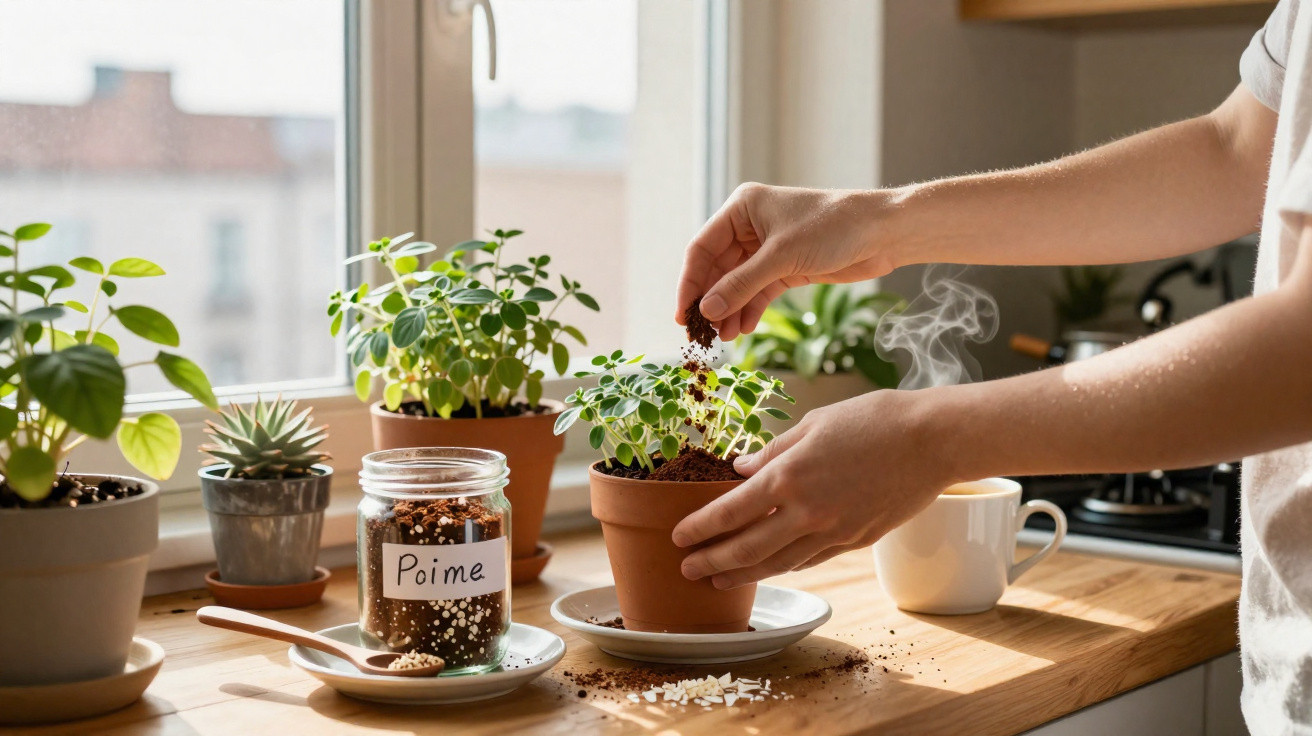
There’s a modest mound of spent coffee grounds by the sink, teaspoons chiming against mugs, and a little pile of eggshells warming themselves on a saucer. On the windowsill, the plants witness it all with the detached calm only plants can manage-slumping slightly when I neglect them, lifting again when a stray shaft of light catches a shiny leaf. I used to brush the lot into the bin, make excuses for the fading foliage, and swear I’d become a more responsible plant parent. Then, one late Sunday-radio murmuring, kettle clicking as it cooled-I tried a different fate for the leftovers. It felt, afterwards, like I’d pulled off something cheeky.
The morning ritual that feeds more than you
Folding kitchen scraps into my plant care for the first time felt like a tiny act of defiance against waste. I’d pressed a French press so strong it could probably write an email, and cracked two eggs for an unhurried omelette. The grounds were damp and aromatic; the shells were dry and brittle; and my peace lily had the washed-out tone of old tea. I rinsed the shells, spread the grounds to dry on a tray near the radiator, and it hit me that my morning had essentially produced a ready-made care kit.
It’s become a pattern. Coffee is brewed, eggshells are rinsed, and both are left out while I test the compost with a fingertip and heft pots to judge their weight. It feels gentler than setting reminders, and nowhere near as earnest as keeping a spreadsheet. Plants communicate at a glacial pace, but they respond far better to steady habits than to perfect timing. Once I stopped looking for instant transformation and started paying attention to texture and smell, everything began to improve.
What caught me off guard wasn’t the science-although the science does matter. It was how this small loop changed the way I read my home. Rubbish turned into something useful, leaves looked a shade glossier, and it started to feel as though the plants and I were actually having a conversation. I like the crisp grind of shells, the soft tap of grounds landing on compost, the faint rustle when I pass and brush a leaf. Those tiny sounds make the effort feel real-and repeatable.
Coffee grounds: a gentle wake-up for tired soil
Used coffee grounds are subtle, not supernatural. They offer a small push of nitrogen, add organic material that helps loosen potting mix, and carry a light scent that disappears as they dry. Consider them more like moisturiser for soil than a makeover. If a plant is genuinely underfed, you still need a balanced fertiliser; grounds simply help bridge the gaps between proper feeds.
How to use coffee grounds
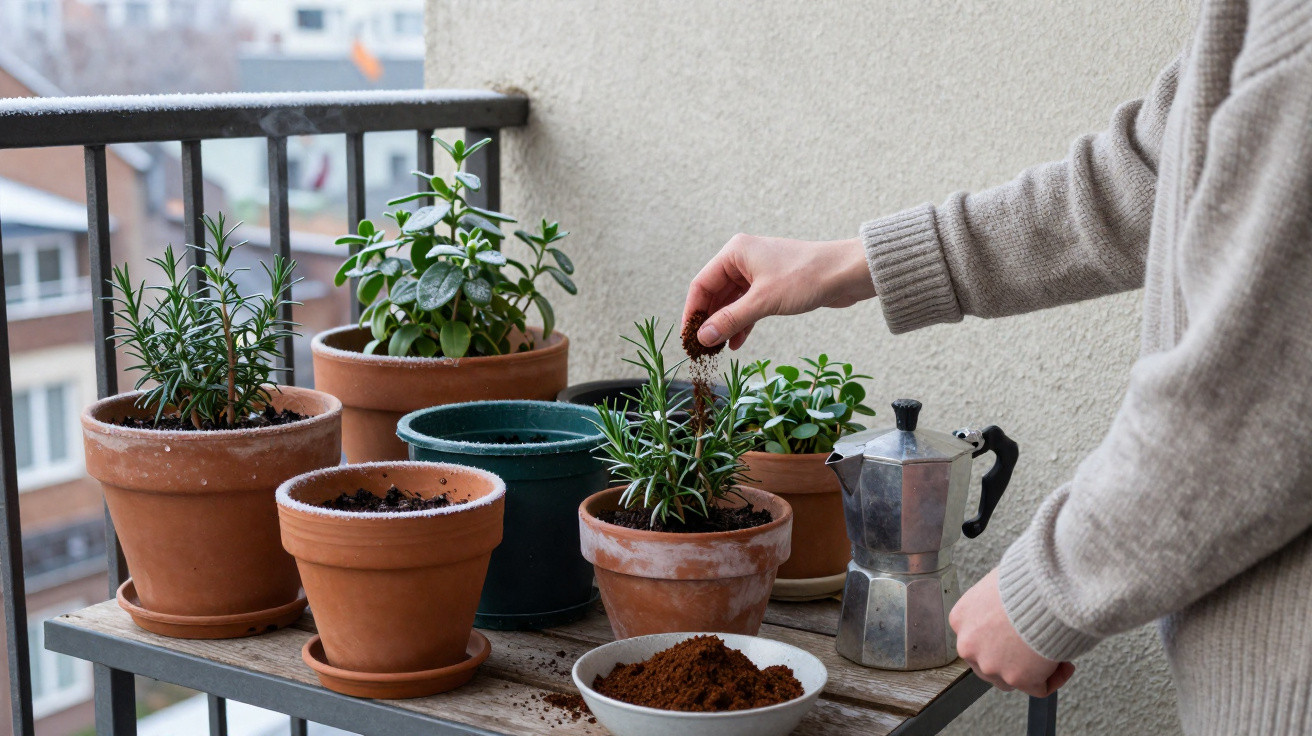
Tip the grounds onto a tray in a thin layer and leave them until they’ve dried and lost that dark, sticky sheen. Dry your grounds sounds stern, but damp clumps can encourage mould and create that stale, musty odour that makes the kitchen feel like an abandoned tent. When they’re dry, scatter a small pinch over the surface of the compost for medium and large plants, then work it gently into the first centimetre with a spoon. Water lightly so the grounds settle in rather than forming a dense crust.
Mistakes to avoid
Adding extra grounds won’t buy you quicker growth. A heavy layer can stop water soaking in and can choke the top of the mix-exactly what we’re trying to avoid. I stick to a teaspoon for a 15–20 cm pot, once every two to four weeks during the growing season. If you’re caring for an acid-sensitive plant such as a snake plant, scale back further and watch the response. Less is more when you’re aiming for a mild boost, not fireworks.
Eggshells: slow calcium, slow calm
Eggshells help in a different way. They’re largely calcium carbonate, which plants draw on to form strong cell walls and support steady new growth. There’s no dramatic before-and-after. Instead, you may notice fewer crinkled new leaves, less browning at the tips in fussy plants, and a more understated resilience. It’s closer to adding oats to breakfast than sprinkling on sugar.
Prep and powder
Rinse the shells, allow them to dry completely, then crush until the sound shifts from sharp crackling to a soft hush. Crush to a powder if you can, because larger pieces mostly just sit there looking worthy while achieving very little. I whizz mine in a cheap blender kept for garden experiments, then keep the powder in a jar with a slightly wonky label. For houseplants, a pinch scattered on the surface, scratched in, and watered through once every month or two is ample.
Where eggshells actually help
Calcium can support clean, strong new leaves on monstera and fiddle-leaf figs that prefer their structure neat. It can also help steady peace lilies that sulk when tap water swings between hard and soft from one week to the next. Succulents won’t object either-provided you use a whisper, not a tablespoon. It won’t untangle a mess overnight, but it can gently smooth the sharp edges of stress.
Putting it together: a kitchen-to-canopy routine
My routine is relaxed enough to survive a chaotic week, yet consistent enough to stop the plants from brooding. In spring and summer I use coffee grounds fortnightly; in autumn, monthly; and in the heart of winter, not at all, because growth slows right down. Eggshell powder gets a tiny top-up every six to eight weeks for the large pots, and every two months for the desk plants. If anything looks genuinely depleted, it gets a proper feed with a balanced liquid fertiliser, and the scraps step aside.
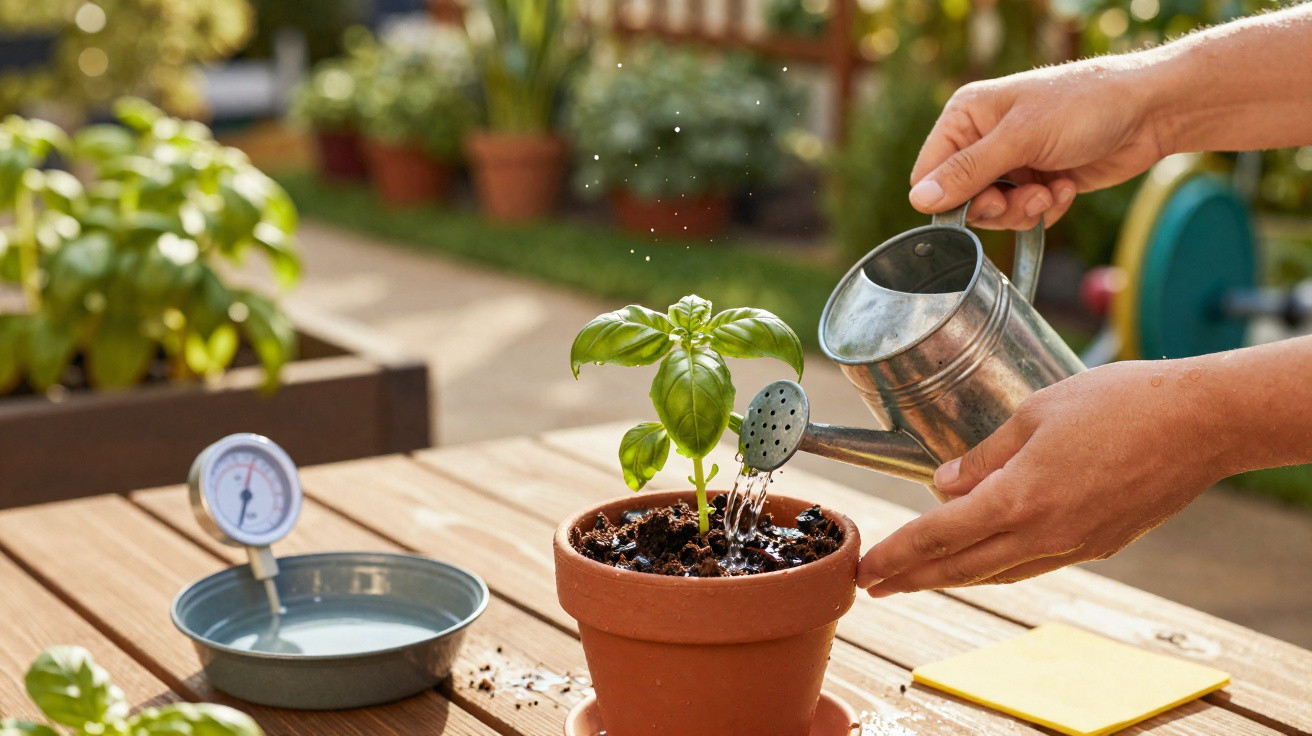
On Sundays I make the rounds with a tray. I listen for that faint shuffle of dry leaves, lift each pot to judge the moisture, and scan for new shoots. Grounds go in first-one pinch per pot-followed by a dusting of shell powder, like snow that disappears under the spoon. I water using room-temperature tap water that’s been sitting out since morning, just enough to settle the top layer without washing everything straight through.
There’s also a gentle drink for plants that enjoy a mild boost. I mix a teaspoon of dried grounds into a litre of water, leave it for a day, then strain it so no grit is left behind. The colour is weak tea-exactly the sort your nan would raise an eyebrow at. I share it between the hungrier plants as a once-a-month treat that feels equal parts practical and slightly witchy.
Little signs your plants give you
Plants don’t send messages, so they speak through leaves. New growth that unfurls smooth rather than creased is a quiet yes. Compost that smells like woodland after rain-rather than like a cupboard-is another. And a plant that seems taller by week’s end, pushing a leaf sheath into the room, is telling you the routine is landing.
Most of us know the moment a plant appears to sigh-leaves drooping despite our best efforts-and we wonder whether we’re simply not built for this. Coffee and eggshells won’t rescue a peat-heavy mix that smothers roots, or a gloomy corner that never sees light. They also won’t undo overwatering, the mistake we make when affection turns too eager. What they can do is strengthen a good setup-the way salt in a stew suddenly makes everything taste properly of itself.
Keep an eye out for warning signs. A green film on the surface suggests the grounds stayed too damp, so miss the next application and loosen the top with a fork. Browning tips might be asking for softer water or a pause on fertiliser-not more of anything. And a plant leaning towards the window is simply telling you where it wants to live. You pick up the language through small errors, one at a time, which is about as honest as learning gets.
Stories from a small flat
My London flat is no greenhouse. It’s a narrow strip of city with a radiator that hisses like a tired cat and windows that mist over when I cook pasta. The plants settle wherever they can, squeezed in among books, mugs, and the usual evidence of a life that’s always running a bit late. One winter my spider plant threw out brown tips like confetti and looked just as fed up as I felt.
I began the scrap routine out of mild desperation and curiosity. A month on, it had produced a dozen tiny plantlets-each a small green star on a string. It felt like the houseplants were listening to the kettle. The peace lily that used to sulk whenever the heating clicked in started pushing out white blooms as if it had found a fresh reason.
My neighbour Dot-who grows the best geraniums in the building-asked what I’d changed. I gave her a jar of shell powder and a bag of dried grounds, and we stood in the hallway smelling faintly of coffee and laughing at ourselves. She called it “kitchen composting for the lazy but hopeful”. She’s not wrong; the hopeful part does most of the work.
Sustainability feels good when it works
There’s plenty of noise around green living. Some of it is glossy and performative; some of it makes you feel as though you’ll never do enough. This is the opposite: quiet and small-taking what you were about to throw away and cycling it back into your own space. It saves a bit of money, sends a little less to the bin, and builds a habit that’s realistic to maintain.
And honestly, nobody keeps it up every single day. Some weeks I forget, some weekends I’m away, and some days I’m simply not the sort of person who dries coffee grounds. The plants don’t hold a grudge; when I’m back, the routine clicks into place again without any fuss. That’s what good systems do: they flex rather than fracture.
There’s also a hands-on satisfaction to it. The pale dust that lifts when you crush shells, the cool grit of grounds between thumb and finger, the way compost darkens and seems to relax after watering. It’s useful, and quietly poetic. It works too-softly, steadily-like most worthwhile things.
Quick recipes you can actually keep up with
For leafy, hungry indoor plants like pothos and monstera, make a weak coffee water: one teaspoon of fully dried grounds in a litre of water, steeped for a day, then strained through a paper filter or a clean cloth. Use it once a month through spring and summer, then pause as the days shorten. If you’re unsure, begin with half a teaspoon and see how your plants react over two or three weeks.
For calcium support, keep a jar of very fine shell powder on the counter. A pinch per 15–20 cm pot is enough-worked into the top layer and watered in. Repeat every six to eight weeks during the growing season, and less often for small desk plants. If your tap water is very hard, go easier on the shells, as the water already contributes some calcium.
Put the two together and you’ve got a cosy, unshowy loop that fits into ordinary life: brew, rinse, dry, sprinkle, water, watch. No spreadsheets, no guilt-just a couple of kitchen habits that make leaves look a touch brighter. I still keep a bottle of general fertiliser for bigger pushes, but the scraps handle the quiet work of keeping things steady.
Small cautions that save big headaches
Don’t tuck fresh, wet grounds under a layer of compost. They clump, they turn sour, and the pot starts smelling like a grim campsite. Dry them in a thin layer, mix them in shallowly, and treat them as occasional extras rather than everyday staples. If fungus gnats start hanging about, let the top two centimetres of compost dry more between waterings and stop using grounds for a while.
Don’t bank on eggshells to solve severe calcium shortages overnight. Their appeal is that they release slowly. If a plant keeps producing distorted new leaves, start with a balanced feed, then allow the shells to do their gradual smoothing over time. And if your pet enjoys excavating plant pots, keep shells ground fine so there are no tempting crunchy pieces.
Portions make the difference: a teaspoon of grounds here, a pinch of powder there, and plenty of observation. If you’re unsure, wait a week and reassess rather than piling more on. Your plants will repay you with that extra shine and the kind of steady growth you only notice once it’s already happening.
The quiet thrill of noticing
What I value most in this small practice is how it trains you to pay attention. A fresh leaf unfolds like a slow film, and you’re there to see it. The kitchen smells of new coffee, and the windowsill looks like a little exhibition of modest victories. You start trusting the feel of a pot in your hands more than any app could tell you.
This isn’t about being pure. It’s about meeting your home and your habits halfway. The kettle cools, the radio clicks off, and the plants settle towards evening, their outlines crisp against the glass. Beneath the surface, a handful of grounds and a pinch of shell continue their quiet work. What else in a day is that straightforward-and that kind?

Comments
No comments yet. Be the first to comment!
Leave a Comment