
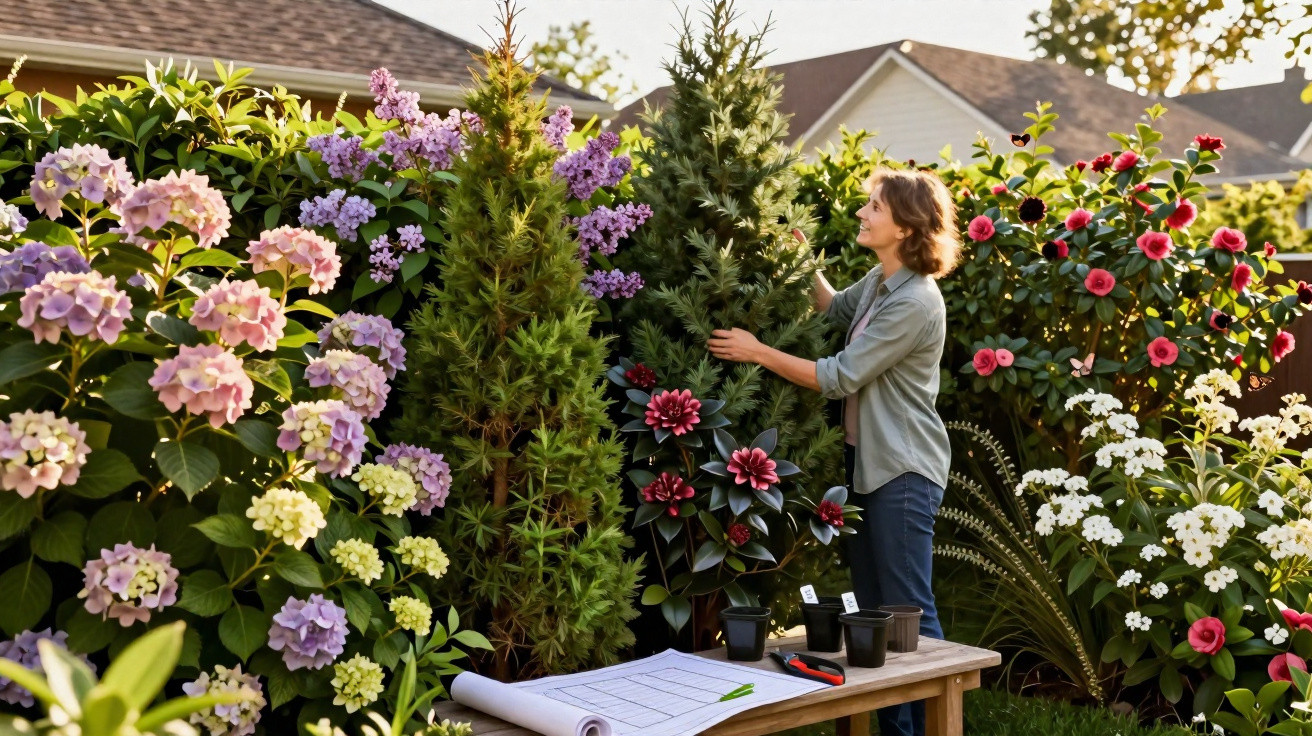
Plenty of garden owners crave a bit more peace and quiet, but don’t fancy waiting years for tall trees or a slow-moving hedge to do the job. That’s exactly where fast-growing shrubs and bushes come in: they create privacy screening, help soften noise, and look far more welcoming than a bare wall.
Why shrubs make the smarter privacy screen
Shrubs typically put on growth much quicker than traditional hedge plants, can be mixed and matched to suit your space, and bring a worthwhile extra: flowers, berries and scent - plus they provide a haven for insects and birds. With a bit of planning, you can keep something green outside the window in every season, with a real burst of colour in spring, summer and autumn.
"With the right mix of evergreen and deciduous species, you can create a surprisingly dense, living privacy screen within one to two years."
Below are 20 shrubs and bushes that are particularly well suited to creating privacy in the garden quickly - along with brief notes on what they’re best for.
Evergreen classics for year-round screening
Arborvitae: a slim living wall
Several types are sold under the name Arborvitae (often also called Thuja), ranging from neat and compact to large and imposing. Some varieties can exceed 9 metres, while others stay much smaller.
- prefers sun to partial shade
- many varieties need very little pruning
- dense, soft foliage that works brilliantly as a “green wall”
Hardy selections such as ‘Green Giant’ and ‘Spring Grove’ are popular because they put on strong growth when young, quickly knitting together into a continuous row.
Pyracantha: a berry-bright fire wall for screening
Pyracantha grows upright, branches densely, and from autumn carries thick clusters of vivid berries. The fruit often hangs on into winter, adding colour when the garden can otherwise feel a bit bleak.
Trained along a trellis or fence, it forms an almost impenetrable barrier - thorns included. It’s ideal on a boundary line when you genuinely want prying eyes kept out.
Viburnum: fragrant, evergreen and adaptable
Many Viburnum species hold onto their leaves year-round and stand out for their textured, slightly crinkled foliage, white flowers, and striking red fruit.
Varieties such as ‘Allegheny’ and ‘Prague’ cope well with pruning, can be shaped into looser hedges, and provide an important food source for bees in spring.
Flowering shrubs that also work as privacy screens
Butterfly bush: flower spikes all summer
Butterfly bush (often sold as Buddleja) produces long, tapering flower panicles in purple, pink or white throughout summer. It copes surprisingly well with dry spells and attracts huge numbers of butterflies and other pollinators.
Newer breeding lines are more compact and don’t spread uncontrollably. Cultivars such as ‘Miss Violet’ and ‘Miss Ruby’ work extremely well as a colourful, mid-height screening row along the edge of a patio.
Hydrangeas: a romantic wall of flowers
Hydrangeas vary by type from tidy, compact bushes to impressive shrubs that reach human height. They do well across most of Central Europe provided the soil stays evenly moist.
Many need a few hours of sun to flower abundantly. ‘Firelight’ and ‘Monmar’ produce large, richly coloured flower panicles that often shift in late summer from white or pink into warmer reds and beige tones.
Lilac: a scented cloud instead of a fence panel
Lilac is one of those dependable classics that’s still underestimated in many gardens. It thrives in full sun and benefits from good air circulation between plants to help prevent fungal issues such as powdery mildew.
With taller cultivars like ‘Lavender Lady’ and ‘Angel White’, you can create a flowering screen along a fence that not only looks superb in May, but also perfumes the area.
Camellia: an elegant screen for mild areas
Camellias give structure all year with their glossy evergreen leaves. From late winter into spring, they open rose-like blooms in shades of pink, red or white.
Camellia japonica and Camellia sasanqua are especially suited to sheltered spots - for example near a house wall or in a courtyard where cold winds can’t get at them.
Bridal wreath spiraea and friends: airy clouds of blossom
Spiraea forms fine, arching stems that in spring can seem to vanish beneath a mass of white flowers. In autumn, the foliage often turns orange through to red.
Cultivars such as ‘Renaissance’ and ‘Grefsheim’ grow quickly and are excellent mixed with coarser, large-leaved shrubs because they visually lighten the planting.
Extra points for colour and structure
Elder: decorative and useful
Elder (elderberry) is far more than a wild hedgerow shrub. Ornamental varieties bring attractive foliage and delicate flower heads in late spring or early summer.
- ‘Instant Karma’ with variegated leaves for a real focal point
- ‘Lemony Lace’ with finely cut yellow-green foliage
These shrubs suit mixed planting schemes where visual screening and practical value (flowers and fruit) work together.
Dappled willow: a pastel shimmer in the breeze
Dappled willow produces shoots with a pink flush and leaves marbled in white, green and pink. When it comes into growth, the effect can feel like a soft burst of pastels.
Varieties such as ‘Hakuro Nishiki’ and ‘Flamingo’ can be grown as shrubs or trained as standards, bringing a light touch to gardens with otherwise darker corners.
Ninebark: dark foliage with creamy flowers
Ninebark stands out for its deep wine-red leaves, which keep their colour through the season. In early summer it adds pale, creamy-white flower clusters on top.
With cultivars such as ‘Diablo’ and ‘Summer Wine’, you can create bold contrast against lighter flowering plants or grasses. These shrubs are tough and cold-hardy, which makes them appealing for exposed sites.
Outdoor fuchsias: delicate-looking, but tough
Hardy fuchsias prefer partial shade, yet they flower continuously from summer into autumn, showing their characteristic dangling blooms in shades of pink, purple and white.
Fuchsia magellanica and the cultivar ‘Mrs Popple’ are a good fit for wildlife-friendly hedges or a looser, flowering divide between a seating area and the rest of the garden.
Which shrub makes sense when
| Situation | Suitable shrubs |
|---|---|
| Year-round privacy screening | Arborvitae, Pyracantha, evergreen Viburnum, Camellia |
| Fragrance and spring flowers | Lilac, Viburnum, early Spiraea |
| Summer flowering highlights | Butterfly bush, Hydrangeas, Fuchsias |
| Berries and autumn colour | Pyracantha, Elder, Ninebark |
How to plan your green privacy screen cleverly
If you want noticeable results quickly, don’t plant too sparingly. Garden centres often stock larger specimens that cost a bit more, but can provide far better screening in the very first year.
- combine faster growers with slower-growing species
- plant in a zig-zag rather than a strict single line
- mix evergreens with deciduous shrubs
- allow generous spacing so plants can develop properly
"A tiered planting strip - low at the front, tall at the back - looks more natural than a ‘green wall’ in a single straight line."
If supporting insects matters to you, choose nectar-rich plants such as butterfly bush, elder, fuchsias, spiraea, or flowering viburnums. That way, your privacy screen doubles as a small habitat.
What many people overlook when buying
It isn’t just the final height that matters - the growth habit is just as important. Slim, columnar varieties suit narrow front gardens, while broader, spreading types need more room but often provide a denser backdrop sooner.
Soil conditions play a part as well. Light, sandy soils can dry out significantly in summer; drought-tolerant choices such as butterfly bush cope better there. Hydrangeas and camellias prefer humus-rich soil that stays evenly moist. If you’re unsure, work plenty of compost in at planting time and make sure you water during dry spells in the first few years.
Pruning is another key consideration. Some shrubs, such as spiraea or butterfly bush, respond to a firm cut back after flowering with vigorous new growth. Others - including certain camellias - are more sensitive and only want careful thinning. A quick look at the label, or advice from a specialist retailer, can save a lot of frustration later.
Taking these points into account helps you create a green retreat within just a few seasons - one that blocks views while also improving the garden visually, with flowers, colour and wildlife that no screening fence can ever provide.

Comments
No comments yet. Be the first to comment!
Leave a Comment