
Summer evenings on the patio, chilled drinks, lively conversation - and no more irritating buzzing around the table. One unassuming plant can make that possible.
In many gardens across the German-speaking world, the default is still a classic lawn: constantly thirsty, prone to turning yellow in midsummer, and demanding yet another run with the mower at the weekend after a long week at work. Yet there’s a low-growing, aromatic groundcover that tackles several of these problems at once: it flowers for months, smells wonderful, copes well with drought - and makes mosquitoes far less inclined to hang around.
The small fragrant plant that keeps mosquitoes at bay
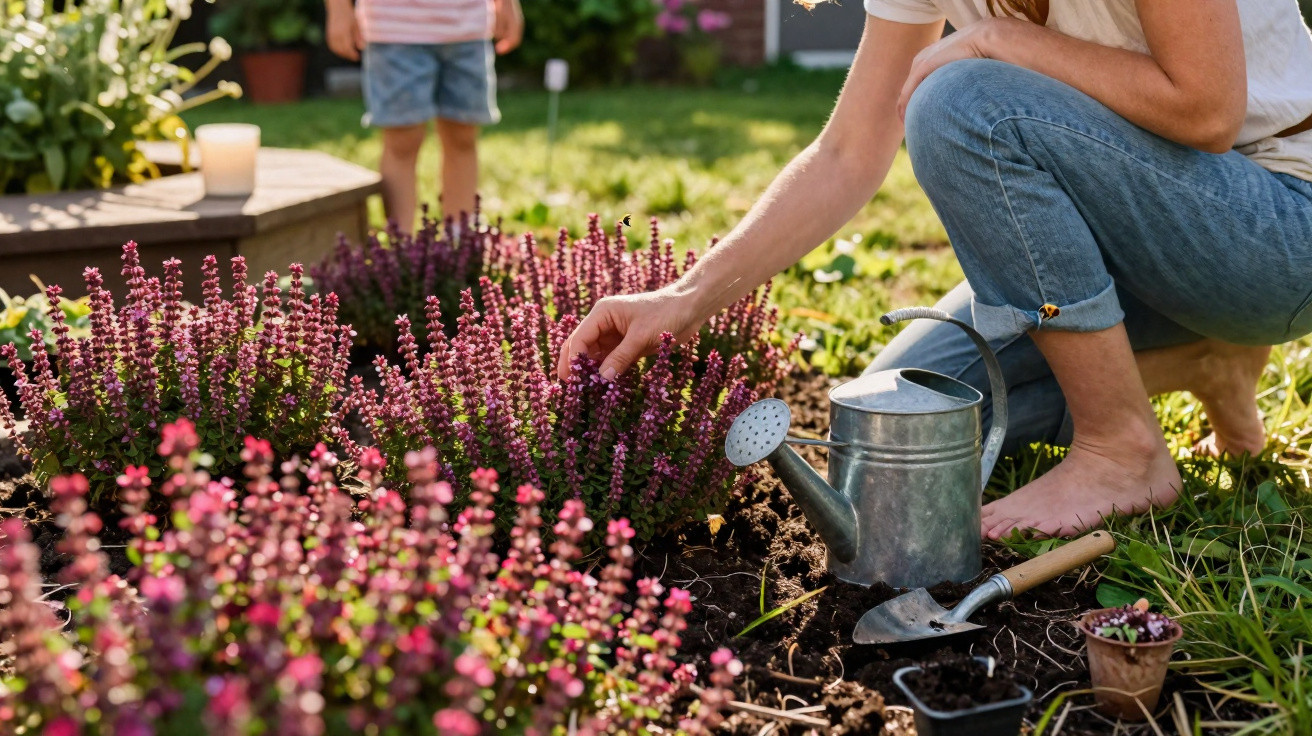
The plant in question is red sand thyme, a low, carpet-forming type of thyme. Unlike the familiar culinary herb, this thyme doesn’t grow as a little bush; it spreads across the ground in a broad mat. It reaches only about 10 centimetres in height, creeps between stones and paving slabs, and can replace a thirsty lawn in many areas.
From May through to September, the surface is covered in a sea of rose-pink to deep purple flowers. These blooms attract bees and other insects, while the leaves and flowers release a strong, spicy aroma. That fragrance is exactly what makes red sand thyme so interesting for anyone who suffers with mosquitoes in summer.
“The essential oils in the leaves interfere with mosquitoes’ sense of orientation - they avoid the area around the planted surface much more often.”
The scent is especially noticeable if, just before sitting down, you walk over the plants barefoot or in shoes. Leaves and flowers are lightly crushed, releasing more of the aromatic compounds and creating a kind of fragrant “protective zone” around a patio, seating area, or path.
Why red sand thyme is worth considering as a lawn replacement
Many homeowners know the routine: lawns can swallow a lot of water, struggle in heat, and need regular mowing and feeding. Red sand thyme works on a completely different principle - it prefers conditions that are lean, hot, and dry.
- Hardly any maintenance: A light trim at the end of winter is usually enough.
- Very economical with water: Once established, it copes well with long dry spells.
- No fertiliser required: Too many nutrients tend to do more harm than good.
- Evergreen: The foliage stays attractive all year.
- Mosquitoes are disrupted: Ideal around seating areas and garden paths.
If you’ve previously been watering a delicate lawn, switching can save thousands of litres of water per season. Reports from areas with hot summers mention savings in the five-figure litres range - simply because the sprinkler is barely needed.
Plant now: why the window is limited
Gardeners who want to benefit from the mosquito-reducing effect this summer should plant red sand thyme before the end of the month if possible. At this point, the soil is already slightly warmed but not yet completely dried out. That gives the plants time to root properly before the first major heat arrives.
The site requirements are straightforward:
- Position: Full sun, or at least very bright.
- Soil: Low in nutrients, free-draining, and on the dry side.
- No waterlogging: Standing water quickly leads to rot.
- Light foot traffic: Perfect along patio edges, in joints between slabs, or on slopes.
If your garden has heavy clay soil, it’s worth improving conditions when planting. Mixing in sand and fine gravel opens the structure and helps roots cope. Important: no added compost, no lawn feed. Red sand thyme thrives on poor soil.
How to create a dense carpet of flowers
To make the area look closed and continuous later on, spacing matters. For a full carpet, around nine to twelve young plants per square metre is recommended. A gap of 30 to 40 centimetres between pots has proven effective.
Growth typically happens in three broad stages:
- First months: Individual cushions expand visibly but remain separate.
- After about one year: Around 60 to 70 percent of the surface is covered.
- After two years: Most gaps fill in, creating the impression of a dense carpet.
In the first few weeks after planting, thyme needs a little help. If there’s no rain for an extended period, watering once or twice a week is generally sufficient until the roots are established. After that, water demand drops sharply.
Less mowing, more fragrance: how day-to-day garden life changes
Replacing a standard lawn with red sand thyme can make the garden feel completely different. Instead of filling bin after bin with grass clippings every week, you’ll mostly just check in late winter whether a light shaping trim is needed. For the rest of the year, the area more or less looks after itself.
“When you walk over it, an intense herbal scent rises that evokes Mediterranean holiday landscapes - and the evening on the patio immediately feels a little more relaxed.”
Neighbours are often sceptical at first, especially if they miss the familiar look of a rich green lawn. But the combination of flowers, fragrance, and noticeably fewer mosquitoes tends to spark curiosity quickly. Many who’ve made the change say they barely miss the mower - and start thinking about converting more areas.
Where red sand thyme makes the most sense
Not every part of a garden is suited to lawn. Steep banks, narrow strips between driveway and fence, or areas with stony ground can make traditional lawn care a chore. That’s exactly where red sand thyme shows its strengths.
Typical uses include:
- Between stepping stones on garden paths
- Along the edges of patios and seating areas
- On sunny embankments and slopes
- In rock gardens and on poor, stony ground
- As a transition zone between a border and a gravel area
If you like, you can combine red sand thyme with other drought-tolerant cushion plants - for example low germander, alyssum, or certain sedum varieties. When different flower shades form a mosaic, the garden looks more vibrant without becoming high-maintenance.
What to know about the mosquito-reducing effect
The scent of red sand thyme bothers mosquitoes, but it doesn’t replace a mosquito net or closed windows if you live right next to water. It reduces how attractive the immediate area is, but it doesn’t remove mosquitoes’ habitat entirely.
It’s sensible to combine several measures:
- Fragrant plants such as thyme, lemon balm, or lavender around seating areas
- Don’t leave open water containers standing in the garden
- Cover water butts where possible
- In mosquito-prone areas, wear light-coloured, long clothing in the evenings
Many households report that, after switching to more fragrant plants around patios and balconies, they’re bitten far less often. Red sand thyme acts as a permanent, green “scent barrier” that requires almost no effort.
Practical tips to get started
If you want to begin now, choose sturdy plants that haven’t been forced into soft, weak growth. Compact, well-rooted pots usually establish better than stock that has been pushed to grow very quickly. Before planting, a quick preparation helps: gently loosen the root ball; if the compost is very dry, briefly dip the pot in water; then plant.
A common mistake is watering too much or treating the area with lawn fertiliser. Red sand thyme then produces soft, unstable growth and becomes more prone to disease. If you keep it slightly “lean” - in other words, don’t pamper it - you’ll enjoy it far more in the long run.
For families with children, there’s an extra benefit: kids can walk over it barefoot, smell the herbs, and learn along the way how certain plants influence insects. That turns the new area into not just a zone with fewer mosquitoes, but also a small, living experiment right outside the front door.



Comments
No comments yet. Be the first to comment!
Leave a Comment