
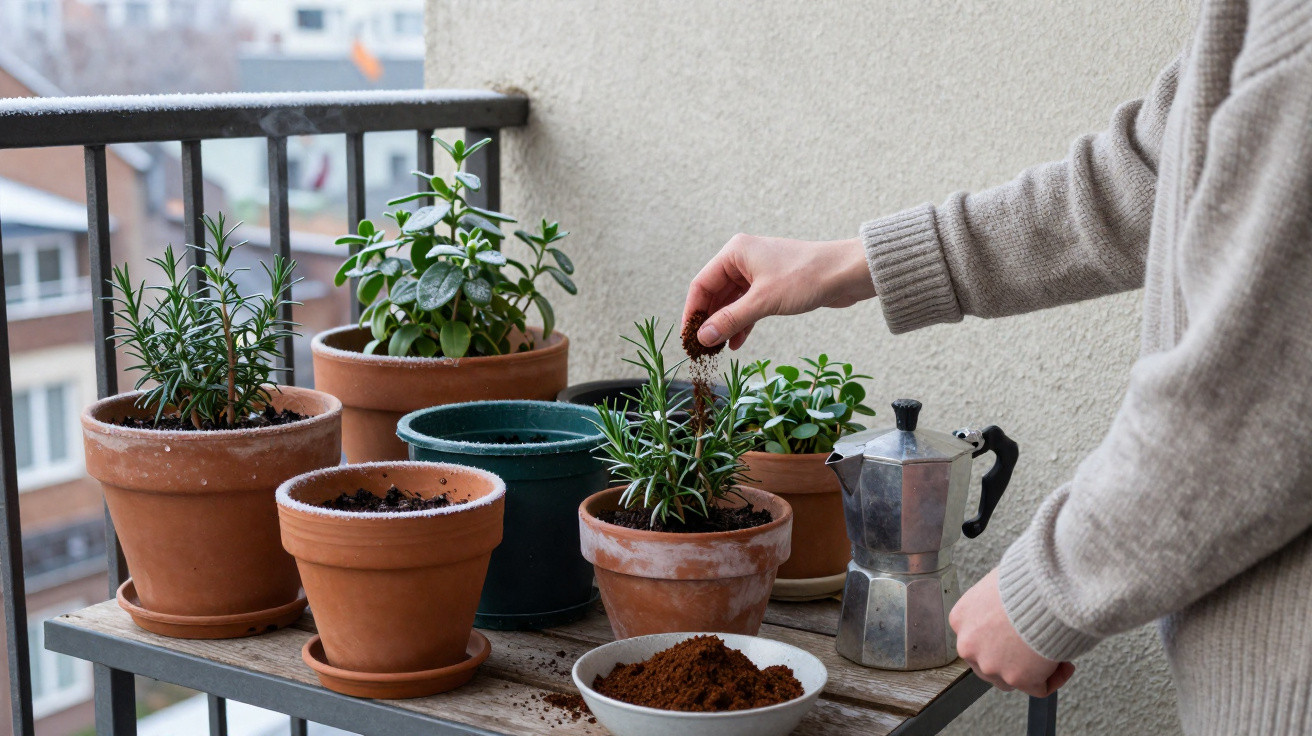
The first hard frosts do not wait to be invited. A single cold evening can scorch soft new growth, check root development and undo months of careful looking after. Plenty of gardeners reach immediately for electric heaters or thick fleece wraps. However, an unglamorous leftover from your morning coffee can cushion plants against that first shock and help container specimens get through winter with much less fuss.
When cold bites: how winter really stresses potted plants
December and January bring far more than pretty ice patterns on the glass. For plants, these weeks can feel like a long stamina test. Growth naturally slows, daylight is weaker and the compost temperature drops sharply. Together, those changes lower a plant’s resistance and make problems such as disease more likely.
The hidden weak spot: roots under pressure
What you can see - stems and leaves - tends to get all the attention. Yet the toughest conditions are usually below the surface. In pots and planters the issue is amplified, because the thin sides of a container pass cold through quickly. That can leave roots only a few centimetres away from sub-zero air.
When compost temperatures fall fast, root cells may rupture or dehydrate. The uptake of nutrients reduces, water transport slows to a crawl and the plant switches into survival mode. Even if the top growth still appears passable, the real injury often begins in the root zone.
"Protecting roots from temperature swings often matters more than wrapping leaves in fleece or bubble wrap."
Why frost hits balconies and windowsills hardest
Plants in the ground benefit from the insulating bulk of surrounding soil. In a pot, by contrast, the amount of compost is small, and cold can reach the container from every side. Terracotta and metal cool rapidly. Plastic offers a little more protection, but only marginally.
Balconies and window ledges add another pressure: wind. Breezes strip heat away night after night, leaving root balls hovering close to freezing - or dipping below it during a cold snap. At that point, small, practical measures can have an outsized effect.
The coffee-ground twist: when kitchen waste becomes plant heating
Most people regard used coffee grounds as rubbish, or perhaps something to tip into the compost bin. Gardeners who enjoy low-tech fixes have started to treat them quite differently during winter.
From morning brew to micro-heater
Spent coffee grounds are rich in organic material and minerals, and they quickly attract a busy mix of microorganisms once they meet moist air. As breakdown begins, microbial activity ramps up - and that biological work releases a modest amount of warmth.
"A thin layer of fresh coffee grounds can act like a slow, living hot-water bottle sitting on top of the compost."
This is not heat intense enough to warm a room, of course. Even so, in the root zone, gaining only a couple of degrees can be the difference between a plant merely enduring winter and one that stays notably more robust.
Real-world effects gardeners report
On exposed balconies, people who scatter coffee grounds across the top of their pots often see fewer leaves turning black after freezing nights. Mediterranean herbs such as rosemary and thyme tend to stay firm for longer. Winter salad crops appear less miserable. Some also find that delicate roots - for example, young citrus grown in containers - seem less likely to suffer dieback.
These everyday reports fit with what soil science indicates: a slightly warmer root area stays active longer, allowing roots to keep feeding and repairing rather than shutting down entirely.
How the “coffee heater” works: slow fermentation under your feet
The driving force here is not caffeine. The effect comes from fermentation and decomposition.
A microbial engine in a thin layer
When coffee grounds are placed on damp compost, decomposition begins at the surface. Fungi and bacteria spread through the layer and digest the carbon-rich particles. As they do, they give off small bursts of heat. In practice, it behaves like a miniature compost heap - just thinner, tidier and positioned directly above the roots.
Because the grounds sit on top rather than being buried, air can circulate. That oxygen keeps the process aerobic, which helps prevent unpleasant smells and supports a healthier balance of microbial life. The warmth then seeps downwards, forming a shallow yet useful thermal buffer.
"Think of it as switching on a very low-wattage heater that runs on microbes and yesterday’s espresso."
Side benefits for roots and stems
That gentle lift in temperature does more than reduce the chance of ice forming. Slightly warmer compost encourages root tips to keep moving, which helps plants take up the last of autumn’s nutrients and cope better with late-winter strain.
With water still travelling through the plant, stems often remain sturdier and leaves show fewer collapsed patches after cold spells. When spring arrives, these plants commonly restart growth faster than neighbours that spent months in near-dormant, chilled compost.
How to use coffee grounds as a winter shield
Anyone who drinks coffee can give this a go. The approach is straightforward, but a handful of guidelines will help you avoid problems such as a mouldy surface layer or compost becoming too acidic.
Step-by-step method for pots and planters
- Allow the used coffee grounds to cool fully after brewing.
- Sprinkle a thin layer - about 1–2 cm - over the top of the potting mix.
- Leave a small clear ring around the stem so grounds are not heaped against it.
- Keep the layer airy rather than pressed down, so oxygen can get in.
- Top it up every 5–7 days during particularly cold spells.
For small indoor pots, apply only a very light dusting and keep a closer eye on moisture, as indoor conditions can swing quickly between dry and damp.
Quantities, plant choice and mistakes to avoid
For a medium-sized pot, roughly 20–40 grams per application is typically sufficient. That provides enough material to feed microbial activity without sealing the compost surface. If the grounds look too deep or start to form a firm cap, simply crumble and loosen them by hand.
Some plants are more suitable than others. A quick guide:
| Plant type | Reaction to coffee-ground layer |
|---|---|
| Herbs (rosemary, thyme, sage) | Generally positive, as long as drainage stays good |
| Leafy salads in pots | Benefit from extra warmth; monitor slugs outdoors |
| Acid-sensitive veg (some beans, some tomatoes) | Use sparingly or avoid; soil may swing too acidic over time |
| Bulbs in containers | Often show better survival in cold, damp winters |
Keep the grounds on the surface. In winter, avoid working them deep into an already heavy compost, as doing so can reduce air spaces and leave the mix colder and wetter. If the top layer stays wet for several days, blend in a little dry potting compost at the surface or allow the container to dry slightly before applying more.
"Too much water and a solid coffee “crust” can suffocate roots faster than frost itself."
Long-term effects on winter gardens and balconies
Across a season or two, many home gardeners notice the same trend. Containers treated with coffee grounds on a regular basis often recover more quickly as days brighten. Bulbs push up more evenly. Perennial herbs frequently show fewer dead patches, particularly around the base.
A subtle boost for spring growth
As coffee grounds break down they do more than create gentle warmth: they also contribute organic matter to the top layer of compost. In outdoor pots, worms may gradually drag that material down. Microbes then convert it into plant-available forms, including usable nitrogen and trace elements.
This improved surface layer supports root recovery after winter, when plants suddenly need more nutrients to power fresh shoots. Rather than relying solely on a new dose of fertiliser in March, the pot already holds a reserve of slow-release goodness built up through the winter’s coffee routine.
Combining coffee with other low-tech protections
Coffee grounds are most effective as part of a broader winter approach, not as a standalone miracle cure. Many gardeners pair them with other simple, low-cost measures to create protection in layers.
- Place pots inside larger containers to create an insulating air gap around the root ball.
- Outdoors, add a collar of straw, shredded leaves or wood chips around the coffee layer.
- Lift containers off frozen paving with bricks or pot feet to prevent cold soaking up from below.
- Cluster pots together against a house wall, where the building gives off a little warmth.
Used in this way, coffee grounds become one component in a small, practical shelter system - relying on reused materials rather than plug-in heat.
Extra angles: safety, soil balance and creative uses
As with any garden hack, the “coffee heater” has limits and compromises. Applied with a bit of common sense, though, it is generally quite forgiving.
Using large amounts on the same pots all year can nudge pH towards acidity, particularly if the compost is already on the sour side. Checking compost every couple of years - or simply alternating between coffee grounds, leaf mould and bark - helps keep conditions stable. If you notice moss or algae taking over the surface, that usually points to constant wetness rather than the coffee itself, so adjusting watering often achieves more than stopping grounds altogether.
Outside winter, the same material slots easily into other routines. Home coffee drinkers add grounds to wormeries, where worms turn them into nutrient-rich vermicompost for next season’s containers. Some also lay a thin “coffee strip” around vulnerable spring seedlings as a mild deterrent for slugs and cats, while remembering the warming role the grounds can play when the colder months return. Treating the morning brew as part of the garden’s energy loop - not merely a daily treat - starts to blur the line between kitchen waste and container care in genuinely useful ways.




Comments
No comments yet. Be the first to comment!
Leave a Comment