
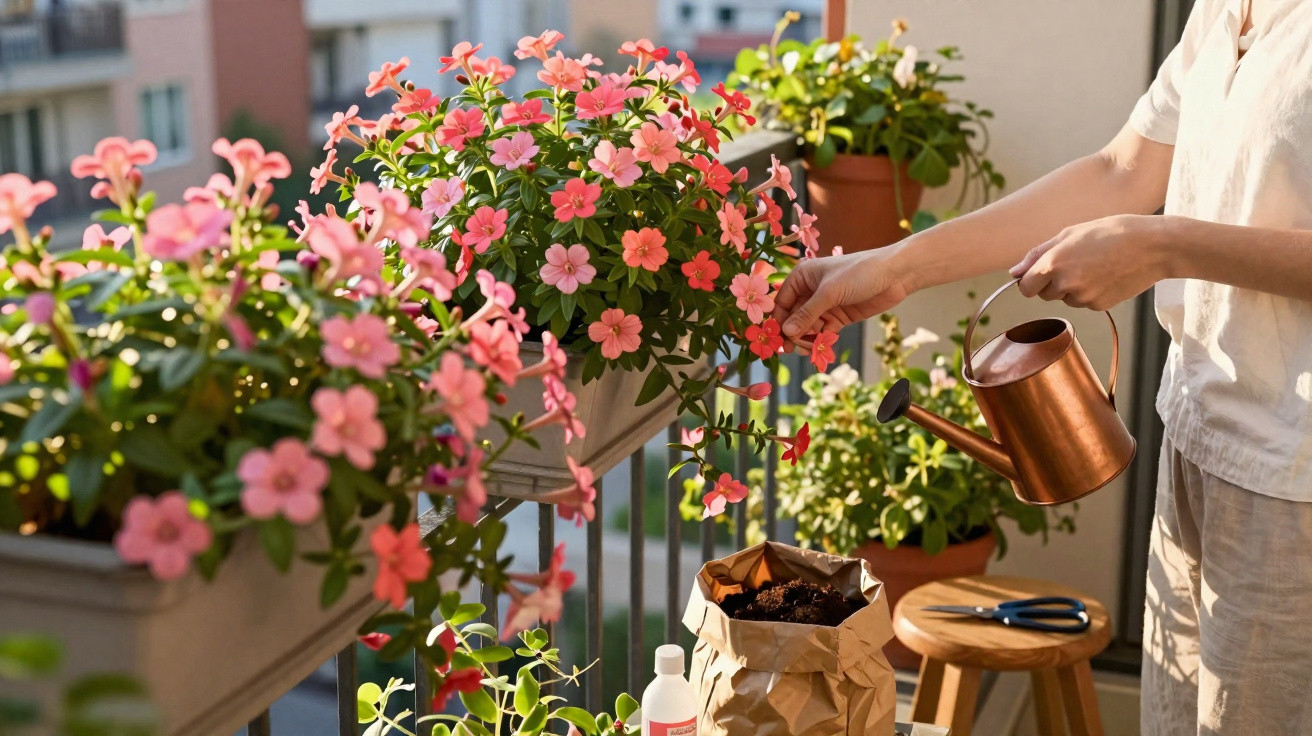
Many balcony boxes look spectacular in June, only to turn into a miserable patch of green by August. The good news is that there’s a plant that holds its nerve far better. It stays neat and compact, flowers from spring right through to autumn, and lets its stems spill over the edge like a cascade of blooms. That plant is Diascia - a delicate-looking, yet surprisingly tough, summer bloomer.
Why Diascia is the secret weapon for balcony boxes
Diascia originates from southern Africa and is technically a perennial, although in Central and Northern Europe it’s usually grown as an annual summer plant. In garden centres it often appears under its botanical name, which means it’s easy to walk past - a shame, because it ticks several boxes at once.
"Flowers from spring to autumn, trailing growth and very little effort: Diascia is perfect for modern balcony boxes."
As a rule, plants reach around 25 to 40 centimetres in height and can spread about 30 to 60 centimetres wide. Multiple soft, branching shoots carry countless small, five-lobed flowers. Colours range from soft apricot and blush pink through to vivid raspberry pink, orange, violet and white.
Thanks to its slightly overhanging, sometimes carpet-like habit, Diascia is particularly well suited to:
- Balcony boxes and patio pots
- Hanging planters and baskets
- The front edge of borders and low walls
- Rock gardens and sunny, dry spots
Planted alongside other sun-lovers, Diascia helps create dense, colourful combinations that stay appealing all summer - provided you follow a few straightforward rules.
The right time: when Diascia can go into a balcony box
If you’re buying Diascia or raising it yourself, use spring as your guide. These plants don’t cope with hard frosts, so they should only go outside once nights remain reliably frost-free.
Planting calendar for Diascia
| Month | Action |
|---|---|
| March–April | Start from seed indoors or in a greenhouse, at around 15 °C |
| April–May | Buy young plants and gradually acclimatise them to outdoor conditions |
| from mid-May | Plant out into balcony boxes and borders after the last frosts |
In particularly mild regions (hardiness zones 8 to 11), Diascia can even remain in the ground as a perennial. In Germany and Austria, that usually only works in very sheltered positions.
The ideal position: sun, but not like an oven
Diascia thrives in bright light, but it only tolerates a typical south-facing, high-summer balcony to a limited extent. Intense heat combined with waterlogging is something it handles poorly. When conditions are wrong, it can become tired-looking, develop yellowing leaves, and partially stop flowering.
The best set-up looks like this:
- full sun to partial shade
- morning sun or evening sun is ideal
- in fierce midday sun, light shade is welcome (for example from an awning)
- a sheltered spot without constant draughts
When it comes to compost, aim for loose and free-draining rather than heavy. A good-quality container compost mixed with a little sand or expanded clay for drainage is perfectly adequate. The pH can be slightly acidic to neutral, roughly between 6.0 and 7.0.
"The most common mistake with Diascia isn’t too little care, but too much of it - especially water and fertiliser."
How to plant Diascia correctly in a balcony box
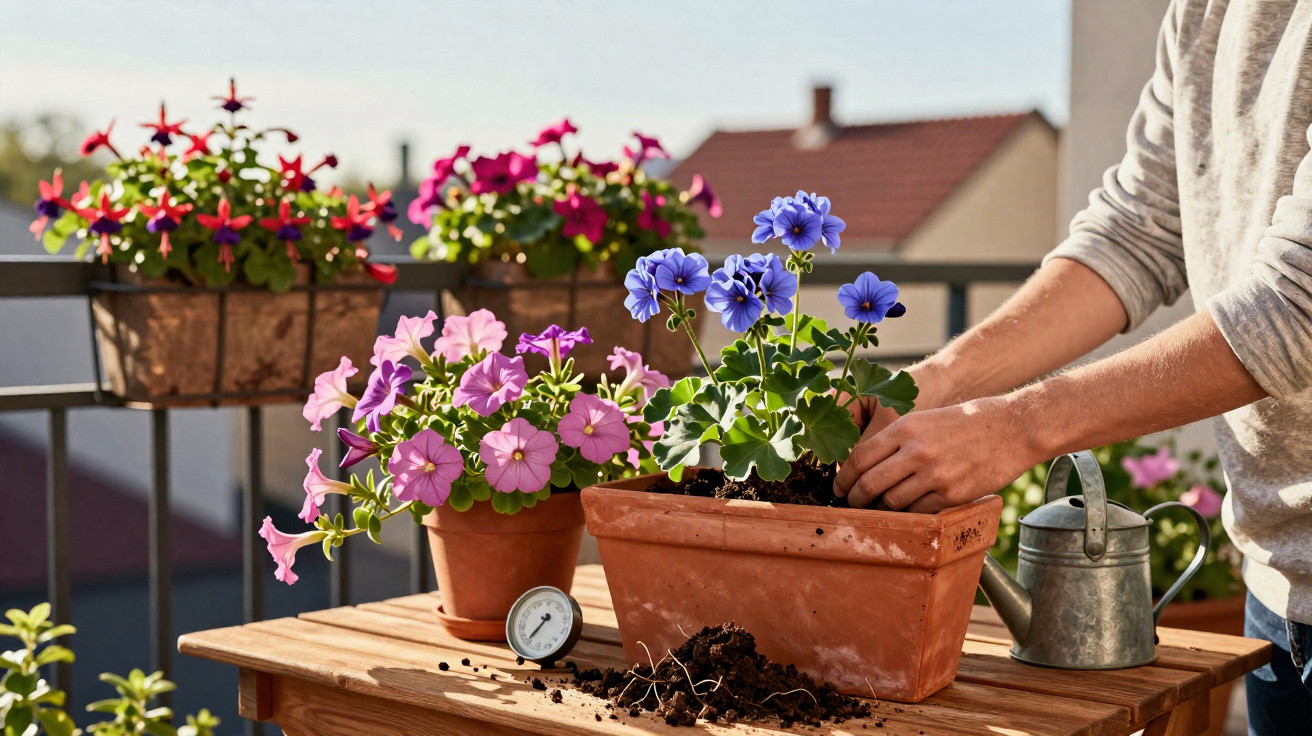
In containers, Diascia really shows off its trailing shoots. The key is getting the spacing right so plants don’t compete, while still filling the box quickly.
As a rough rule of thumb:
- 30 cm box length: about 3 plants
- 50–60 cm box length: about 6 plants
- 80 cm box length: about 8 plants
At the base of the box, add a drainage layer of expanded clay or broken terracotta. This allows excess water to drain away and reduces the risk of root rot. Then add the compost and set the plants at the same depth they were in their pots - no deeper.
Watering, feeding, cutting back: a small care plan
Diascia prefers evenly, lightly moist compost, but it must never sit in water. Waterlogging quickly leads to root rot and weak flowering.
Watering properly
- water directly at the root zone, not over the leaves
- allow the surface to dry slightly between waterings
- during hot summer spells, balcony boxes may need watering daily; evenings are ideal
- empty any saucers after a few minutes if water collects there
With fertiliser, less really is more. Too many nutrients produce lots of leaves - and very few flowers.
Feeding for long-lasting flowering
- mix a small amount of slow-release fertiliser into the compost when planting, or
- add a liquid flowering plant feed to the watering can once a month
- if the plant looks noticeably weak, increase temporarily to a fortnightly feed
What matters most isn’t a heavy dose, but a modest, steady supply. That’s how the plant stays compact and floriferous.
The one summer action that changes everything
The most important trick for turning Diascia into a striking flower cascade has nothing to do with specialist fertiliser. It’s about using the scissors - and doing it in time.
"If you deadhead Diascia regularly and trim it back lightly, you’ll be rewarded with a second firework of flowers."
As soon as blooms fade, snip off the short stalks along with the spent flowers. This acts like a signal for the plant to produce fresh buds. If the cushions become sparse in midsummer or the shoots start to look too long, a gentle cut-back is worthwhile:
- shorten all shoots by about one third
- additionally pinch out very long tips (nip off with your fingers)
- water well afterwards and feed lightly
Within a few weeks, Diascia produces fresh, branching growth and usually flowers generously again. That keeps your balcony box attractive well into autumn.
Propagation: new plants almost for free
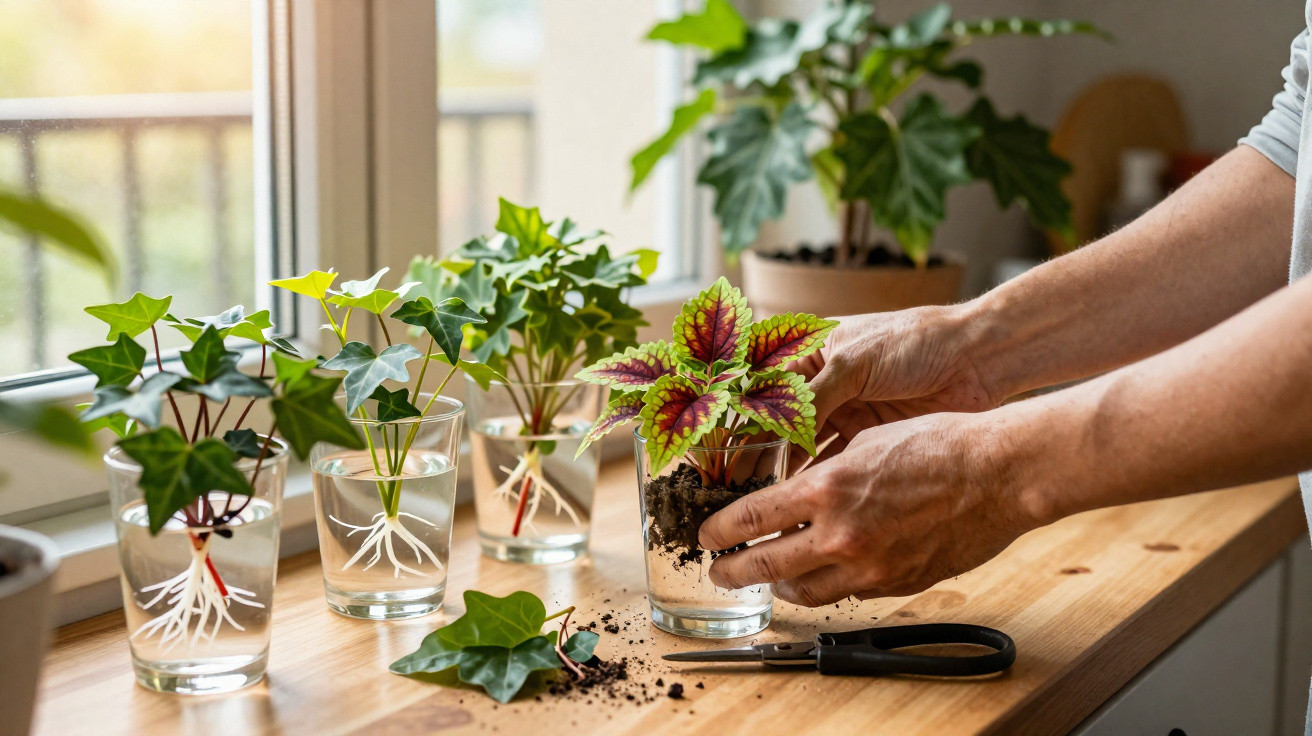
If you’ve found a particularly lovely plant, you can multiply it from cuttings. Choose non-flowering, semi-ripe shoots.
Here’s the step-by-step method:
- In spring or autumn, cut shoots about 10 centimetres long.
- Remove the lower leaves, leaving only a small tuft at the top.
- Insert into seed-and-cutting compost or another very loose medium.
- Keep the compost only lightly moist; do not saturate it.
- Overwinter autumn cuttings frost-free at 10–15 °C.
With a bit of patience, this produces strong young plants that can go straight into balcony boxes the following spring.
Which plants pair especially well with Diascia
In a box, Diascia looks at its best with other sun-loving companions. Popular partners include:
- Calibrachoa for colourful clouds of flowers
- Verbena for extra splashes of colour and dense flowering
- dusty miller or cotton lavender for grey, contrasting foliage
- trailing geraniums if you want an even more dramatic cascade effect
If you prefer a calmer look, stick to just one or two colours - for example, white-flowering varieties alongside soft pink partners. The result is an elegant, almost Scandinavian-style balcony display.
Risks to be aware of - and how to avoid them
Diascia is considered fairly robust, but it’s sensitive to two things: constant damp and extreme heat. In wet summers, fungal problems can become more common; during heatwaves, balcony boxes can dry out quickly and cause drought stress. Both issues are largely manageable with free-draining compost, good drainage, and watering that matches the weather.
If you’re unsure whether the compost needs water again, simply push a finger 1 to 2 centimetres into the surface. If it still feels damp, wait. Only once the top layer has clearly dried is it worth watering again.
For beginners, Diascia is therefore close to ideal: with one consistent habit - regular deadheading and occasional trimming - an ordinary balcony box turns into a dense, colourful carpet of flowers that makes summer feel noticeably longer.


Comments
No comments yet. Be the first to comment!
Leave a Comment