
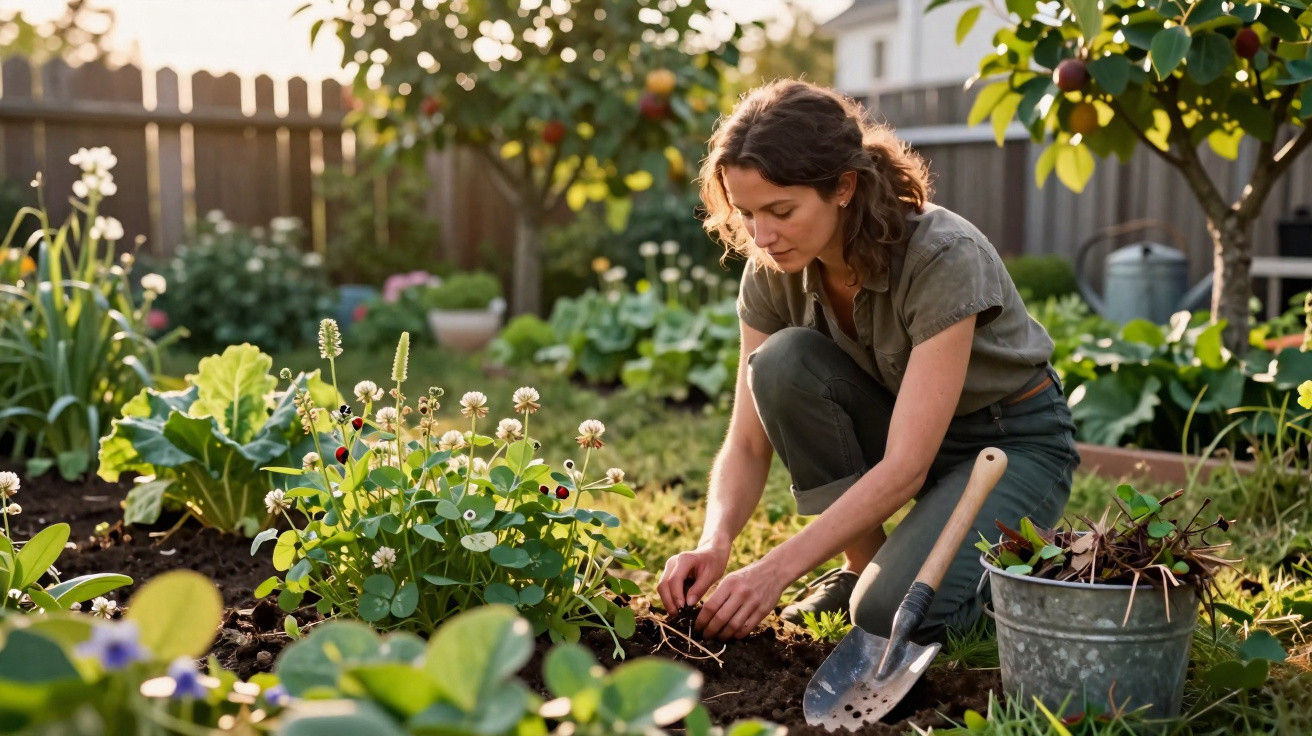
The day I decided to stop treating every weed like an invader, my garden looked-at first glance-like a small catastrophe. Dandelions dotted the lawn like little spotlights, clover threaded itself between the paving stones, and one bold nettle stood waving beside my treasured roses. I froze with the hose in my hand, eyelid twitching, feeling that familiar need to keep every edge sharp and every leaf “in line”.
As neighbours passed, they offered those courteous but faintly anxious looks people save for unchecked hedges and suspicious lawn “projects”. I could practically hear the unspoken question: “Has she… stopped caring?”
Yet beneath that jumble, something else was taking hold. Bees hung in the air in loud, busy swarms. Spiders returned, stitching delicate webs between branches. And the ground-once pale, dusty, and worn-out-began to turn darker and richer, as though it had finally exhaled.
I stopped trying to “put it right”.
That was the moment my garden, without fuss, started putting itself right.
When control quietly strangles a garden
For years, I ran my garden like a strict classroom. Every weed felt like defiance, every yellowing leaf like a mark against me, every leaning stem like an emergency that needed sorting immediately. I pruned too much, raked too often, and sprayed anything that dared to look “untidy”.
In the beginning, it was deeply satisfying. Neat borders, tidy beds, and a lawn as uniform as a green rug. But the more I intervened, the more delicate everything became. Plants seemed to sulk after being cut back. The lawn scorched each summer regardless of how much I fussed over it. I began to sense I was working harder and harder for a garden that photographed beautifully but felt oddly lifeless when I stood in it.
One summer, I hit my limit-wearing the disguise of a mildew outbreak. Seemingly overnight, white fuzz spread across my squash leaves like a slow-motion snowstorm. I leapt into action to “fix” it: fungicide, cutting back, then more fungicide. By month’s end, the squash had collapsed, and much of the surrounding bed looked stunned.
A week later, at a friend’s garden, I spotted the same mildew… and she barely reacted. She kept the plants that were least affected, stripped off only the worst leaves, and let the rest of the plot carry on. Ladybirds, lacewings, and a few hungry beetles turned up on their own and worked through the problem. Her harvest wasn’t flawless. But it was genuine-plentiful, active, and alive. Something in me shifted right then.
With hindsight, my need to correct every “imperfection” had less to do with gardening and more to do with anxiety. Anxiety about losing control. Anxiety about being judged for a bare patch of soil or a browned leaf. But gardens aren’t machines; they’re ongoing conversations between soil, light, water, and time. A weed is information. A pest is a clue. A patch of moss is the ground quietly saying, “This spot is too damp.”
When we wipe away every sign too quickly, we also wipe away what might help the garden settle into balance. I was revising my garden like a ruthless perfectionist editor-cutting out the very details that made the story make sense.
Letting go, without walking away
The shift began in a modest, almost private way. I chose one corner and made myself a promise: for one season, I wouldn’t “correct” it unless something was truly suffering. I would step in only with three basic actions-water when the soil was dry, mulch exposed patches, and pay attention.
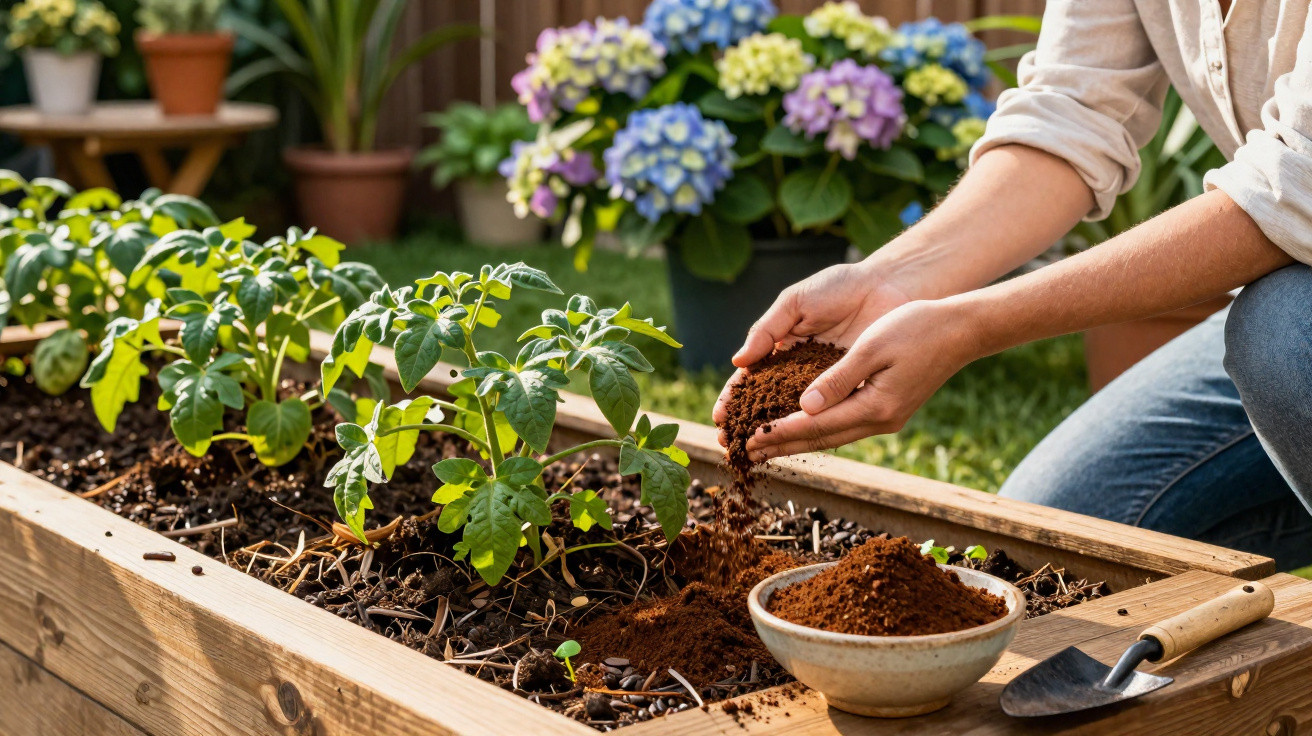
I let clover stay in the path. I kept the self-seeded calendula nestled between the lettuces. I allowed a few aphids to exist, even as my old reflex begged me to reach for the spray. I scattered a thin layer of compost, topped it with straw, and forced myself to stand back. The first weeks looked dreadful. Honestly dreadful. Then, gradually, the apparent disorder began to arrange itself. Blooms appeared that I hadn’t planted. Bare soil disappeared under living cover.
Naturally, my “leave it alone” stage wasn’t pure calm wisdom. I made some textbook beginner mistakes-the kind you usually admit only to yourself. I decided that “natural” meant doing absolutely nothing, so I didn’t prune a thing. A few shrubs became knotted, miserable tangles. I also forgot that pot plants still require real watering. Several poor things dried out in their terracotta prisons while I was busy congratulating myself on my newfound wild-garden philosophy.
And, if we’re being truthful, nobody manages this perfectly every day. There were mornings I walked past struggling plants and simply didn’t have the energy to deal with them. That, too, belongs in the story. Gardening with less control isn’t about turning into some flawless earth goddess; it’s about accepting that real gardens have bad days-just like we do.
One afternoon, a retired gardener from the village paused at my gate, tipped his cap back, and took it all in. Then he said, softly:
“Plants don’t need you to fight for them all the time. They need you to stop fighting against them.”
That line landed like good compost: earthy, a bit uncomfortable, and exactly right. I went inside and wrote a short checklist to stop myself from over-correcting:
- Leave at least 10–20% of the garden “untidy” for insects and wildlife.
- Only intervene when a plant is genuinely struggling, not just “ugly”.
- Let at least a few weeds flower for pollinators, then cut before seeding.
- Observe for a week before taking any drastic action.
- Focus on soil health first; everything else follows slowly.
When the garden starts to answer back
Something unexpected happens once you stop chasing perfection: your way of seeing shifts. Instead of scanning for faults, you begin to notice connections. The aphids on the roses? You start spotting the tiny wasps and ladybird larvae helping themselves to the problem. The nettles you didn’t tear out in fury? They turn into a nursery for butterflies. The strip you stop mowing becomes a swaying, humming ribbon of clover and vetch, thick with bees.
Under mulch, the soil holds moisture for longer. You irrigate less and fret less. Self-sown plants slip neatly into the gaps you used to obsess over. The garden starts to feel less like a “task” and more like somewhere you share your life.
| Key point | Detail | Value for the reader |
|---|---|---|
| Embrace “good chaos” | Make room for some weeds, wild corners, and self-seeded plants | Less work, more biodiversity, and a garden that finds its own balance |
| Step in with intention | Act only when plants genuinely struggle, not for surface-level flaws | Less stress, fewer chemicals, and stronger long-term growth |
| Put soil first | Use mulch, compost, and living cover rather than constant “tidying” | More resilient plants, fewer pests, and a steadier garden over time |
FAQ:
- Question 1 Will my garden look untidy if I stop correcting everything?
- Answer 1
- Question 2 How can I tell when to intervene versus letting nature take its course?
- Answer 2
- Question 3 Are weeds always harmful in a garden?
- Answer 3
- Question 4 Can a “less controlled” garden still work in a small urban space?
- Answer 4
- Question 5 What’s one easy change I can try this season?
- Answer 5

Comments
No comments yet. Be the first to comment!
Leave a Comment