
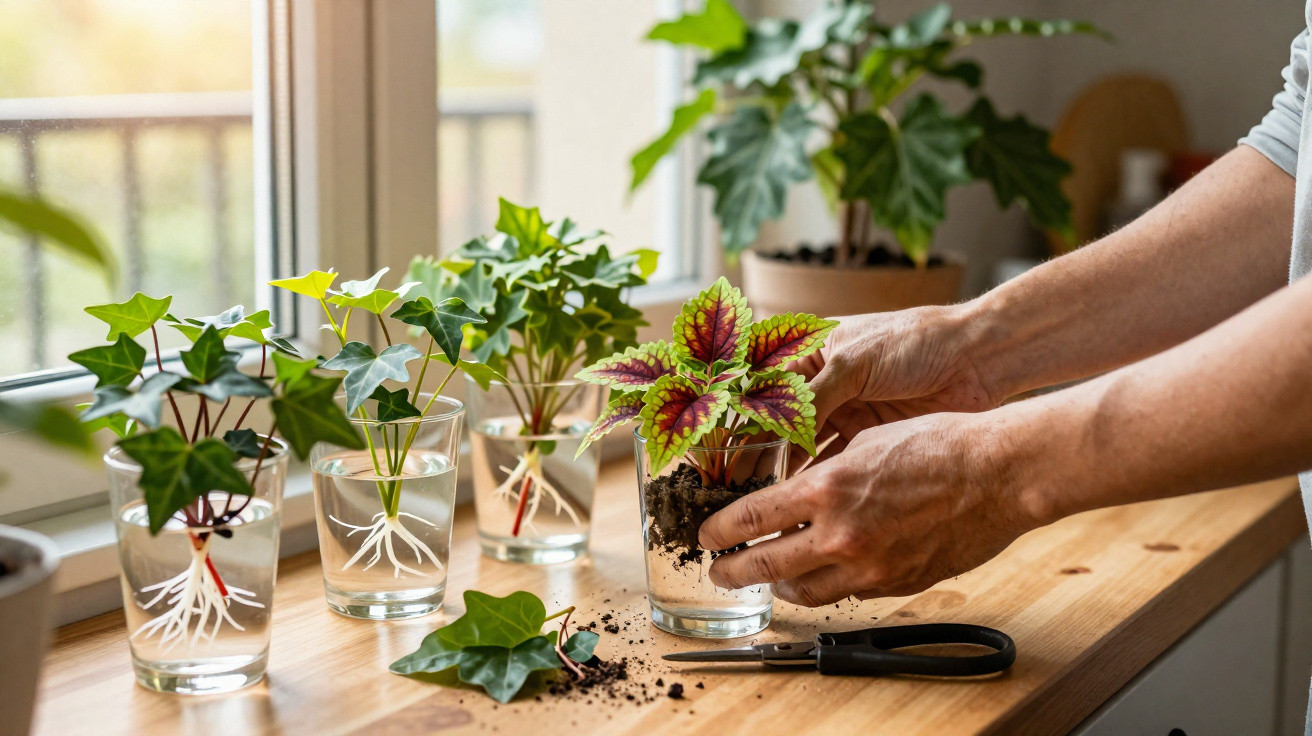
Anyone who takes cuttings wisely in June can save a lot of money at the garden centre - and still end up with packed borders, balcony boxes and hanging baskets.
Many hobby gardeners realise at the start of summer that the plant budget has more or less run out, yet the beds still look a bit sparse. The good news is that, with a few well-chosen shoots, you can raise new young plants without fancy kit - simply in clean water, and with no specialist knowledge.
Why right now is the perfect time to root cuttings in water
You can propagate plenty of plants from spring through to early autumn, but June is widely seen as an especially forgiving window. The days are long, plants are growing strongly, and temperatures are usually steady at around 20 to 25 °C. Fresh cut surfaces thrive in exactly these conditions.
At this point in the season, new roots tend to appear quickly and consistently. Start now and you’ll often have sturdy young plants within one to four weeks, ready to move into a border or pot within the same summer.
"From a single healthy shoot, you can produce several vigorous young plants in a glass of water - completely free."
Three plants work particularly well for this, and many people already have them in the garden or on the balcony:
- Ivy - for fences, walls, hanging baskets and green walls
- Coleus - colourful foliage for pots and balcony boxes
- Busy lizzie (Impatiens) - a reliable bloomer for shady spots
All three root rapidly in water and manage perfectly well with a minimal set-up. The big advantage is obvious: instead of buying new plants, you simply multiply what’s already thriving.
Basic kit: what you actually need for cuttings in a glass of water
You won’t need much more than what’s in a typical kitchen drawer. A professional propagation rack is nice to have, but it’s absolutely not essential.
- a sharp, clean knife or a pair of secateurs
- one or more glasses or small transparent containers
- tap water that has been left to stand for a few hours
- a bright spot out of direct midday sun
If you like, you can add a small piece of charcoal to help keep the water fresher for longer. However, many gardeners use no additives at all - and the three plants above usually cope without any help.
How the basic method works
The core routine is the same for all three plants; only the lengths and timings vary slightly:
- choose a healthy, undamaged shoot tip
- cut the stem at an angle just below a node (where a leaf joins the stem)
- strip off the lower leaves so they can’t rot in the water
- submerge one to two nodes in water, then place the glass somewhere bright but not sunny
- replace the water every two to five days
- pot on once the roots are 2.5 to 5 cm long
"The node - the thickened part of the stem where leaves grow - is the cutting’s ‘root centre’. This is where new roots form later on."
Propagating ivy in a glass of water: a climbing champion from one shoot
Ivy is tough and can even be overly enthusiastic - which makes it ideal for water propagation. If you’re after a green wall, a planted hanging basket or a dense ground cover, a handful of cuttings can quickly turn into lots of plants.
Step by step to a new ivy patch
- pick a shoot: 10 to 15 cm long, strong, and free from damage
- remove leaves from the lower section so nothing dangles in the water
- place one to two nodes under water
- keep the glass bright, but out of harsh, direct sun
After roughly two to four weeks, white root tips usually appear and then branch readily. When some roots reach about 5 cm, the ivy should be moved into a pot filled with a loose, free-draining compost.
With ivy in particular, starting in a pot rather than straight into the border is worthwhile. It gives you better control over growth and lets you decide later where the plant is allowed to spread.
Coleus: a colour explosion for balconies and beds without buying more plants
Coleus is a firm favourite among plant lovers: dramatic leaf colours - from bright pink to lime green to almost black - and still remarkably easy to care for. It also responds exceptionally well to rooting in water.
How to propagate coleus successfully
For a strong start, the cutting needs enough vigour, but not so much leaf area that it dries out at the cut end.
- length: 8 to 12 cm, with no flower buds
- keep the top two to three leaves and remove the rest
- change the water every three to five days
- provide plenty of light, but avoid direct midday sun
In these conditions, the first roots often show within a week. By two weeks at the latest, they are usually 2.5 to 5 cm long - which is the ideal time to pot the cutting on.
"If you have several colour varieties of coleus, you can quickly raise a whole ‘foliage firework’ for balcony boxes and the patio - from just a few parent plants."
After planting, keep coleus evenly moist for the first few days, without letting it sit in waterlogged compost. A sheltered spot out of the wind makes establishment easier.
Busy lizzie: a flowering carpet for shady places
Busy lizzie is a gift for anyone trying to brighten up darker corners of the garden or balcony. It prefers partial shade to shade and flowers almost continuously - as long as the root area never dries out completely.
Taking cuttings and rooting them in water
The method is much like coleus, though the cuttings are often a little shorter:
- length: 7 to 10 cm
- no visible flower bud on the shoot
- remove the lower leaves, leaving two to three at the top
- refresh the water every two to three days
After just one to two weeks, roots of around 2.5 to 3 cm have usually formed. That’s enough for busy lizzie to carry on growing well in a pot or directly in a balcony box.
It will then flower all summer long, especially if it gets consistent watering and an occasional feed with liquid fertiliser.
Common mistakes - and how to avoid them
A few straightforward rules make it much more likely you’ll get strong plants from a glass of water:
- No leaves in the water: they rot quickly and foul the water.
- Change the water regularly: replace it immediately if it turns cloudy or smells.
- Don’t pot on too early: roots need to be at least a few centimetres long.
- Press compost down only lightly: the roots mustn’t kink or snap.
- Keep well watered for the first week: it helps cuttings adjust from water to compost.
"Cuttings that root well in a glass are often tougher than freshly bought young plants - they’ve already ‘trained’ for the switch from water to soil."
How many cuttings make sense - and what to do with the extras
With ivy and coleus, it’s easy to get carried away and take more cuttings than you actually need. That isn’t a problem, provided you pot them up in time or pass them on.
As a rough rule of thumb:
- for a hanging basket: 3 to 5 ivy cuttings
- for a standard balcony box: 4 to 6 coleus plants
- for a part-shaded window box: 5 to 7 busy lizzies
If you end up with far more than that, share them with neighbours, friends or colleagues. This often leads to informal swap circles where not only plants, but also experiences and tips, get passed along.
Key terms explained simply
Node: A thickened point on the stem where leaves, side shoots or flowers emerge. New roots form here later on, which is why this section needs to sit in the water.
Cutting: A piece of plant (usually a shoot) that has been cut off and can develop into a complete new plant. This works because nodes contain meristem cells that can turn into roots and new shoots.
Free-draining soil: A compost mix that holds moisture but doesn’t stay waterlogged. A common blend is multipurpose compost with a little sand or perlite, so delicate roots don’t “suffocate”.
What makes this method so appealing
Rooting cuttings in a glass of water brings several benefits at once: it saves money, takes up very little space, and lets you watch new roots develop day by day. For beginners, it’s also a simple way to lose any fear of plant propagation.
Once you’ve had early success with ivy, coleus and busy lizzie, you’ll often feel confident enough to try other species. Some herbs, ornamental plants and even houseplants can be multiplied in a very similar way. June is the starting signal - and many gardens reap the rewards all summer.
Comments
No comments yet. Be the first to comment!
Leave a Comment