
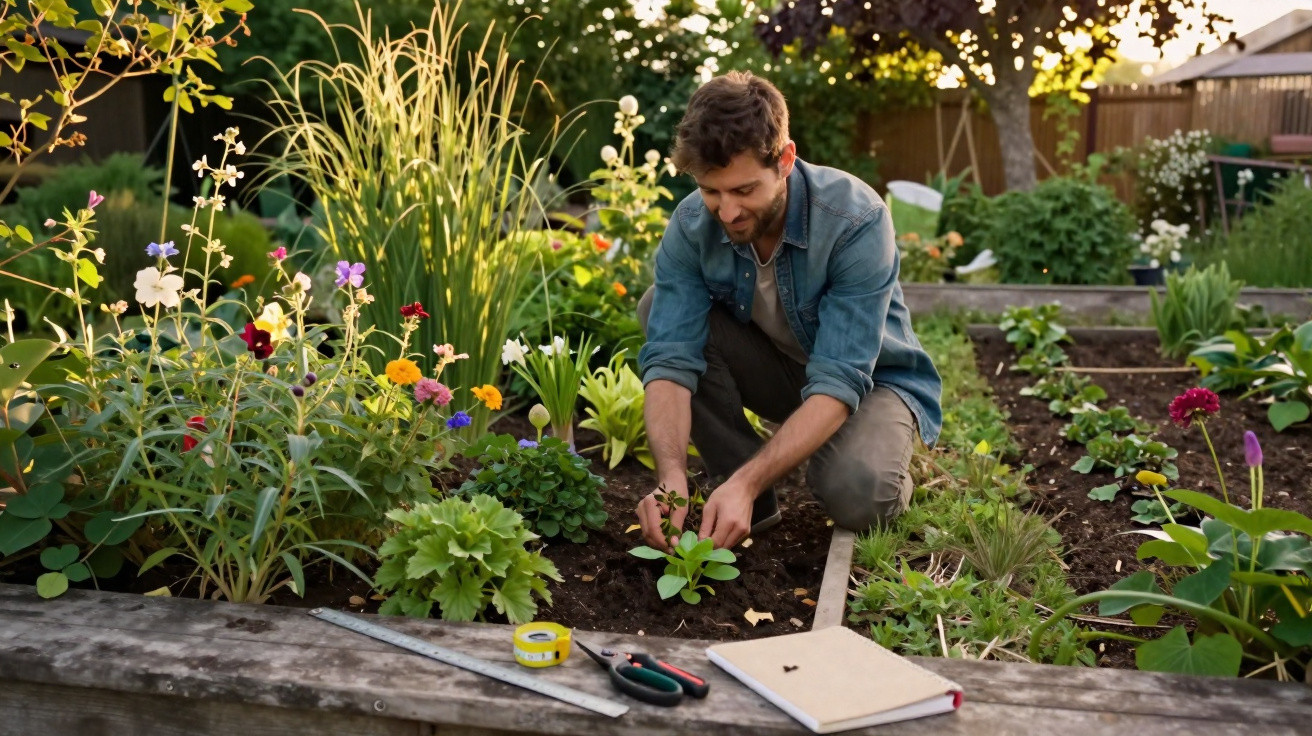
The day I abandoned perfect symmetry began with a snapped string line and a wonky tomato cane. Standing in muddy shoes and peering along the row, I was already irritated that the plants were not lined up like soldiers on parade. The more I pulled, adjusted and measured again, the more the soil broke apart and the seedlings seemed to sulk.
Then, with the spade in my hand, I stopped and asked myself: was I gardening, or styling a catalogue cover?
I left the cane a little crooked, planted by instinct rather than with a ruler, and stepped away.
A month on, the “messy” half of the garden was lusher, denser and humming with life.
That was when a small realisation took hold and would not go away.
When straight lines began ruining the garden
Once you spot your own fixation on garden neatness, it is impossible to ignore. I realised I had been setting out lettuce like teeth in a dentist’s advert, clipping shrubs into matching balls, and clearing every fallen leaf as though the neighbours were keeping score.
The garden photographed neatly, but at ground level it felt oddly lifeless.
There were fewer bees around the tightly clipped hedges. Beneath the beds I weeded so relentlessly, the soil had become hard and exhausted. Even friends gently described the place as “very organized” – which really meant “pleasant, but not particularly alive.”
One spring, I made two nearly identical borders. They had the same plants, sunlight and soil. The sole difference was that, on the left, I used my normal method: close grids, equal heights, and precisely mirrored groups of salvia and lavender. On the right, I planted in relaxed drifts, varied the heights and kept any self-seeded volunteers that appealed to me.
By midsummer, the symmetrical border was… fine. It flowered, but bare gaps developed wherever less vigorous plants had failed.
The more relaxed border flourished. Plants grew into one another, covering the soil, retaining moisture and concealing each other’s empty spaces like friends making excuses for one another at a party.
That season made me face something I had been resisting. Nature does not maintain straight lines for long. Wind bends stems, rain cuts channels, and roots travel towards available food and room.
Trying to preserve symmetry had become a quiet battle against everything plants are designed to do.
Once I stopped imposing mirrored rows, the microclimate shifted: shade formed in layers, fewer areas were left exposed, and the roots created a more varied network. The garden stopped being a showroom and started behaving like an ecosystem.
That was when plant health began its steady, subtle rise.
How I replaced the ruler with a gardener’s eye
First, I put away the string lines and tape measure for ordinary planting. Rather than planning how a bed should look on a diagram, I began with how I wanted it to feel. I arranged plants according to mood and purpose: thirsty plants together, sun-lovers together, and the drama queens where I would actually notice them.
I started planting in odd-numbered clusters, shifting them so that no pair sat at precisely the same distance apart. Small offsets, gentle overlaps and a little controlled chaos.
Rather than creating square-edged beds, I rounded the margins into soft curves. There was still order, but it now followed the routes I naturally took through the garden.
Pruning was the next thing to change. I had once clipped hedges as if they were competing for a place in a palace garden, with level tops and sharply cut sides. Those severe outlines put the plants under stress and produced brown areas.
Instead, I began pruning lightly. I would snip here and cut there, pausing every few minutes to assess the entire form instead of following the line of the shears. Some branches curved further, others reached outwards, while some remained as they were.
What I did not expect was the response from birds. They returned, using the uneven branches for perches and shelter. The hedge became genuine habitat rather than a green fence trying to pass as art.
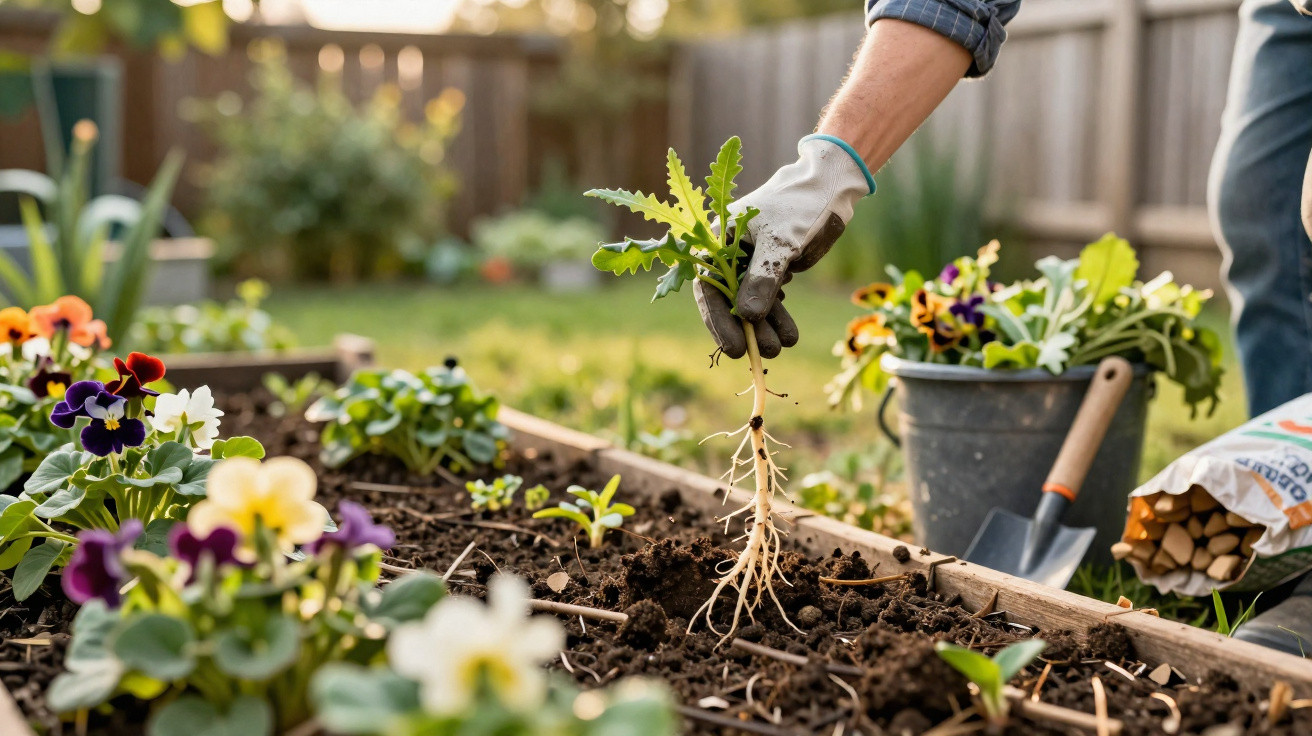
The most difficult lesson was resisting the automatic urge to “correct” every uneven area. If a taller plant appeared in the wrong place, my immediate thought was, That needs to move. If a volunteer calendula emerged between paving slabs, it was obviously destined to go.
Eventually, I began to pause before doing anything. Was the supposedly “wrong” feature actually causing harm? Or was it simply challenging my desire to be in control?
“The garden got healthier the moment I stopped treating every irregularity as a problem.”
I started running through a brief mental checklist of when to step in and when to leave things alone:
- Intervene if a plant obstructs a path or light, or if it spreads aggressively.
- Leave it alone if visual asymmetry is the only problem.
- Intervene when pests or disease are plainly becoming dominant.
- Leave it alone if leaves have holes but predators are there as well.
- Intervene if maintaining symmetry uses water, soil or time that you do not have.
Living with a garden that does not match on both sides
As the rigid lines disappeared, the garden began revealing different truths about me. It showed me where I had watered too quickly, where soil had been compacted, and where I had planted something merely because it was reduced in price.
Asymmetry is an honest mirror. When one side of a bed thrives while the other languishes, you stop blaming the layout and begin examining shade, wind routes and drainage. That is where meaningful improvement begins.
Let’s be honest: nobody manages this perfectly every day. We all pass a wilting plant and think, I’ll deal with that tomorrow. The benefit of abandoning symmetry is that the garden no longer demands endless cosmetic adjustments, and instead asks for genuine care less frequently.
I began spotting small, unglamorous changes: earthworms where the ground had once baked dry, moss in cool rear corners, and self-sown dill marking a route where water had been quietly running.
Irregular planting made distinct pockets: moist areas, airy areas and thick leaf cover. That variety is what beneficial insects enjoy and diseases dislike. A fungus that races along a line of identical plants encounters resistance when the next plant is slightly taller, hardier or from another family.
The benefits were not immediate. Across a couple of seasons, though, I used fewer treatments, lost fewer plants to unexplained collapse, and spent far more time simply… looking.
There is also a gentle mental release in entering a space that does not insist on perfection. A garden with a crooked path and an uneven rose that flowers as though it does not care is more forgiving than one that reproaches you with every weed.
We have all had that moment: you see somebody else’s immaculate Instagram garden and suddenly yours appears to be a failure. That comparison fades when your garden is based on responsiveness rather than imitation.
A slightly wild border gives you space to breathe. You can experiment. You can have plants that do not match, corners that take you by surprise, and days when the lawn gets shaggy without the world ending.
It turns out that plants thrive under exactly that kind of grace.
| Key point | Detail | Value for the reader |
|---|---|---|
| Looser layouts boost plant resilience | Varied spacing and staggered planting form microclimates and interrupt pest/disease “highways” | Healthier beds over time, with fewer sudden die-offs |
| Imperfect pruning supports wildlife | Retaining some uneven branches and forms provides birds and insects with shelter and places to nest | More pollinators, more natural pest control, richer biodiversity |
| Asymmetry reduces maintenance pressure | A garden that does not depend on strict lines requires fewer cosmetic corrections and tolerates minor neglect | Less stress, more enjoyment, and a garden that suits real life rather than a photo shoot |
FAQ:
- Does giving up symmetry mean my garden will look messy? Not necessarily. You can retain obvious paths, defined borders and repeated plants while allowing curves, different spacing and natural growth. Aim for “lived-in beautiful” rather than a “perfect showroom.”
- Can formal gardens be healthy too? Yes, although they often require more inputs: more pruning, watering and treatments. You can use some formal structure, then relax plant spacing and add different species to balance style and health.
- How do I start if my beds are already in straight lines? Start around the edges. Curve the borders, add small plants in front of rigid rows, or allow self-seeded plants to stay where they emerge when they are not causing trouble. Small changes accumulate.
- Won’t uneven planting reduce my yield in a vegetable garden? Often, the reverse is true. Slightly irregular spacing can improve airflow and light, while allowing stronger plants to fill empty areas. You may harvest more from fewer, happier plants.
- Is there any place where symmetry still helps? Yes. Entrances, main paths and a pair of pots beside the door can use symmetry to lead the eye. Let these areas act as anchors, then allow the rest of the garden to relax around them.




Comments
No comments yet. Be the first to comment!
Leave a Comment