
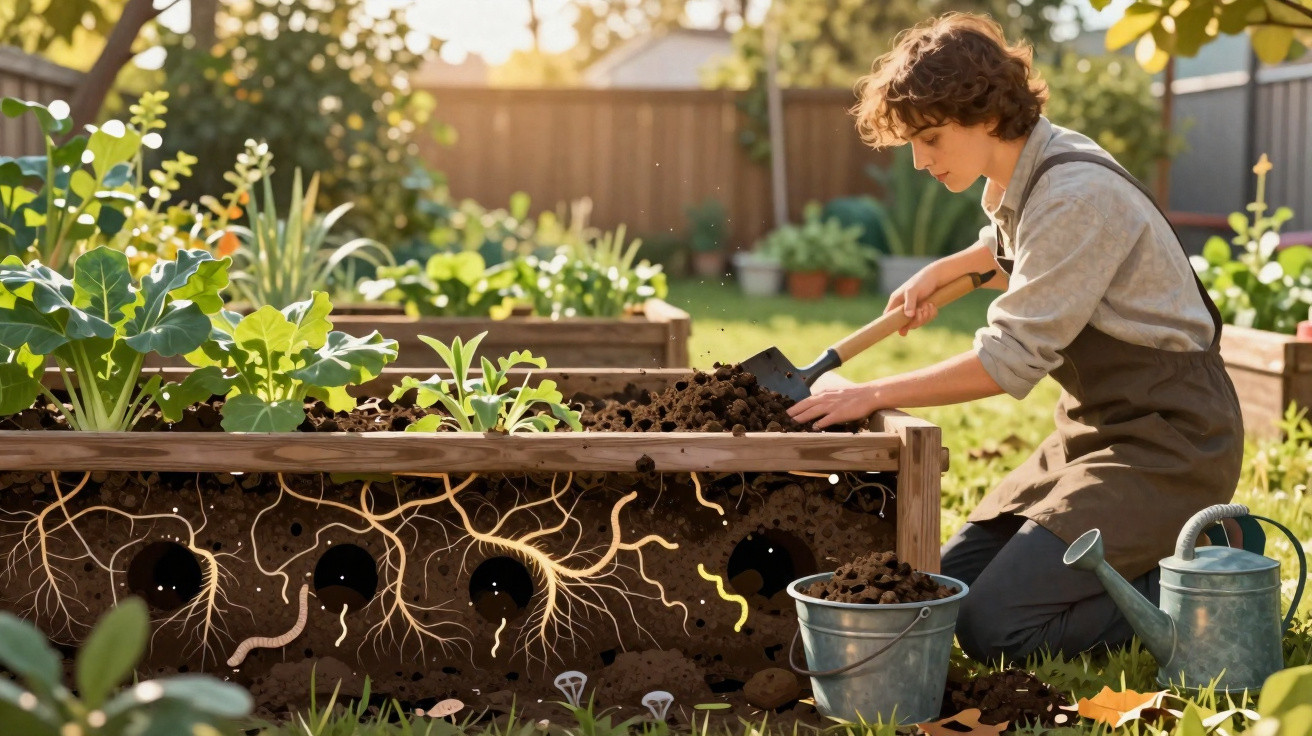
On a crisp April morning, before lawnmowers and leaf blowers begin their racket, there is something else to hear: a faint crackle beneath the mulch, the near-silent sound of a garden coming back to life. At the end of a quiet suburban road, one neighbour is kneeling beside her flower bed. She is not lifting a spade; instead, her palm rests against the earth as though she is checking its pulse. Her garden is nothing like a polished catalogue image. Leaves gather in untidy corners, the lawn is uneven, and decaying stems sit among the perennials. Even so, the air is gentler and cooler, while more birds flit between the shrubs. The soil is always covered, and there is no chemical smell.
She refers to it as her “busy underground city.”
What is remarkable is what this city silently returns to the garden.
When you work with the soil, the entire garden changes
The first noticeable feature of a garden with genuinely living soil is how it feels beneath your feet. Rather than the hard, sealed surface that many people see as normal, it has the give of a woodland track. Your shoe presses in slightly, earthworms retreat into the darkness, and a hand trowel slips into the ground with little resistance. The plants appear to do more than simply grow; they seem to reach towards the light.
The real surprise is not only the stronger growth. It is the sense that the garden has begun to take on part of the job itself: less watering, fewer weeds, and less anxiety when conditions lurch from drought to torrential rain.
At a Portland community allotment, two neighbouring beds contain the same tomato plants. One is rotavated each spring, given synthetic fertiliser and maintained in immaculate condition. The other has not been turned for three years and remains covered with shredded leaves and old straw. By July, the contrast is almost awkward. The no-dig bed supports deeply green plants, has fewer yellow leaves, and produces fruit that copes well with modest temperature fluctuations.
A volunteer lifts a handful of soil from both beds for a group of novice gardeners. One sample is grey and apparently lifeless, falling apart into dry, dusty fragments. The other holds together in soft clumps, filled with roots, fine fungal strands and pieces of partly decomposed stems. No microscope is needed to identify the living system.
Beneath the surface, this is biology rather than gardening magic. Bacteria, fungi, beetles, springtails, mites and worms create a slow-working food web that breaks down plant material into nutrients which roots can absorb without being scorched. Their passageways draw in air and allow water to drain rather than collect in puddles above. Fungal networks connect plants much like miniature fibre-optic cables, exchanging sugars for minerals and passing on pest warnings.
Repeated digging, bare ground and heavy applications of quick-fix fertilisers repeatedly damage this web. Healthy soil isn’t made of particles, it’s made of relationships.
Simple habits that protect soil life
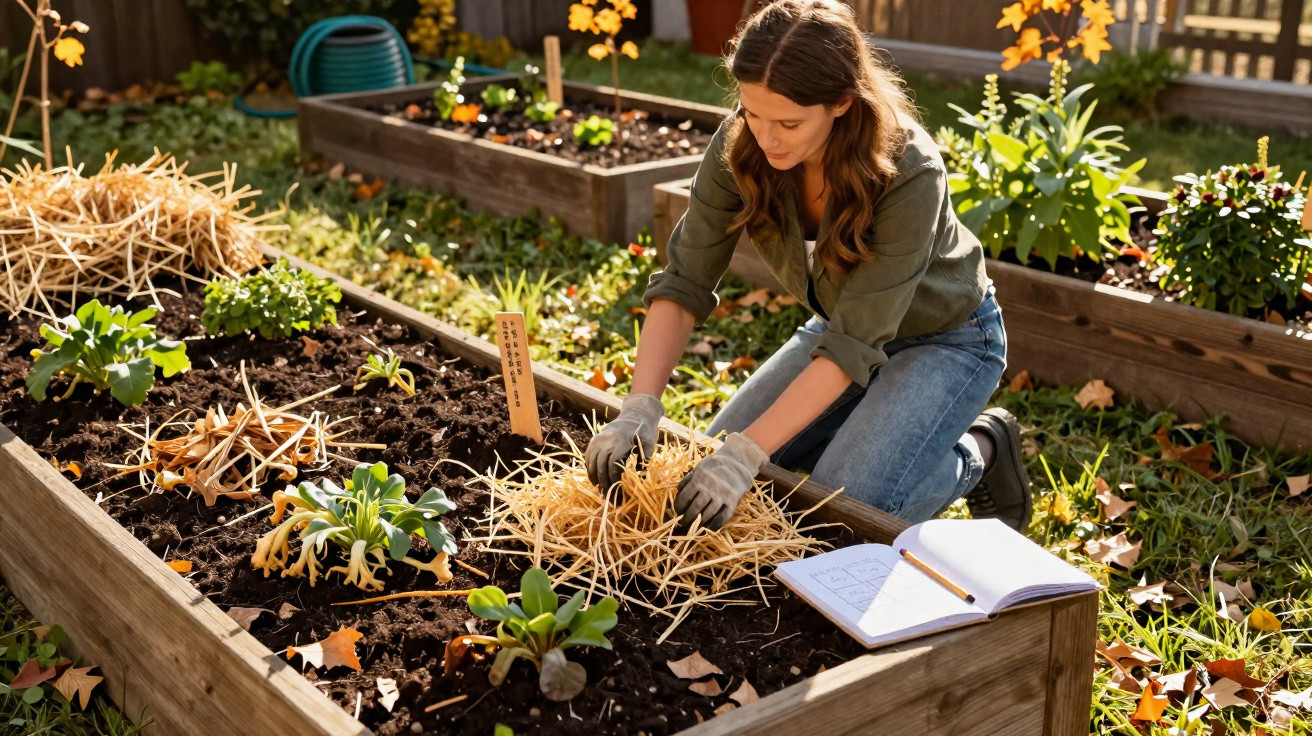
For many gardeners who care about soil, the most effective action is also the simplest: stop exposing the ground. Rather than aiming for a tidy, raked finish, they create a soft protective cover. Fallen leaves are shredded and returned beneath shrubs, grass clippings are spread thinly between vegetable rows, and spent stems are laid over the surface as a patchwork layer.
This permanent “armor” protects the underground city from hard rain and intense sunshine. It retains moisture like a sponge while feeding the organisms responsible for the unseen composting process. The garden may take on a slightly wilder appearance, but each season the soil beneath becomes darker, more fertile and more open.
Giving up deep digging can be the most difficult change. Most gardeners recognise the urge to drive a spade into a bed because it feels like “real work.” Soil-friendly gardeners often choose another method instead: using a broadfork, loosening the soil gently, or simply planting through the previous year’s mulch. They disturb only the upper few centimetres and preserve the remaining underground structure.
In truth, nobody manages this perfectly every day. A season may be missed, mulch may be added hurriedly, or a corner of the garden may be overlooked. Fortunately, soil life is resilient. Once the major disruption ends, it can rebuild quickly.
Some gardeners describe their soil as if it were an introverted friend.
“Once I stopped beating it up and started feeding it, everything calmed down,” says Lila, who turned a compacted, sad lawn into a layered garden over six years. “The plants handle the heat waves better, the slugs bother me less, and honestly, I feel less guilty when I don’t have time to fuss over everything.”
They also recommend several straightforward actions that steadily improve the odds:
- Maintain an ongoing mulch layer using leaves, straw, wood chips or chopped stems, topping it up once or twice each year.
- Apply compost as seasoning rather than cement: use a light surface layer, not a thick slab that suffocates the soil.
- Avoid routine tilling: loosen only the places where you are planting, and allow roots to decompose in place after harvesting.
- Water thoroughly without watering constantly, encouraging roots to travel downwards while preventing surface microbes from being drowned.
- Retain a little “mess”: a log, a leafy corner or dead stems can provide shelter for insects that help run the soil system.
Soil life benefits beyond larger tomatoes
Treating soil as a living community, rather than an inert growing medium, subtly alters the atmosphere of an entire property. Birds visit more frequently to search through leaf litter and brush piles. Frogs may appear where a small damp, shady area is left untouched. The air can seem cooler because well-structured soil stores more water, enabling plants to transpire gradually during heatwaves.
Neighbours may notice fewer brown areas and fewer frantic sessions with the hose at dusk. Gardeners often register another benefit: a calm feeling of working in partnership. There is still work to do, but it feels more like guiding than compelling.
| Key point | Detail | Value for the reader |
|---|---|---|
| Protect soil life with cover | Keep the ground shaded and nourished with leaves, mulch and plant residues | Less watering, cooler beds, more resilient plants |
| Disturb less, observe more | Cut back on tilling, leave roots where they are, and loosen shallowly only when required | Preserves fungi, worms, and structure that support long-term fertility |
| Think ecosystem, not decoration | Accept a somewhat wilder appearance and welcome insects, birds and microfauna | Fewer pests, more balance, and a more relaxing, self-regulating garden |
FAQ:
- Question 1 Does protecting soil life mean I have to stop growing vegetables in straight rows?
- Question 2 Can I still use my rotavator from time to time, or is it “all or nothing”?
- Question 3 What if my neighbours complain that my mulched or leafy beds look messy?
- Question 4 Will I get more pests if I leave organic matter and “untidy” corners in my garden?
- Question 5 How long does it take to notice the benefits of focusing on soil life?


Comments
No comments yet. Be the first to comment!
Leave a Comment