
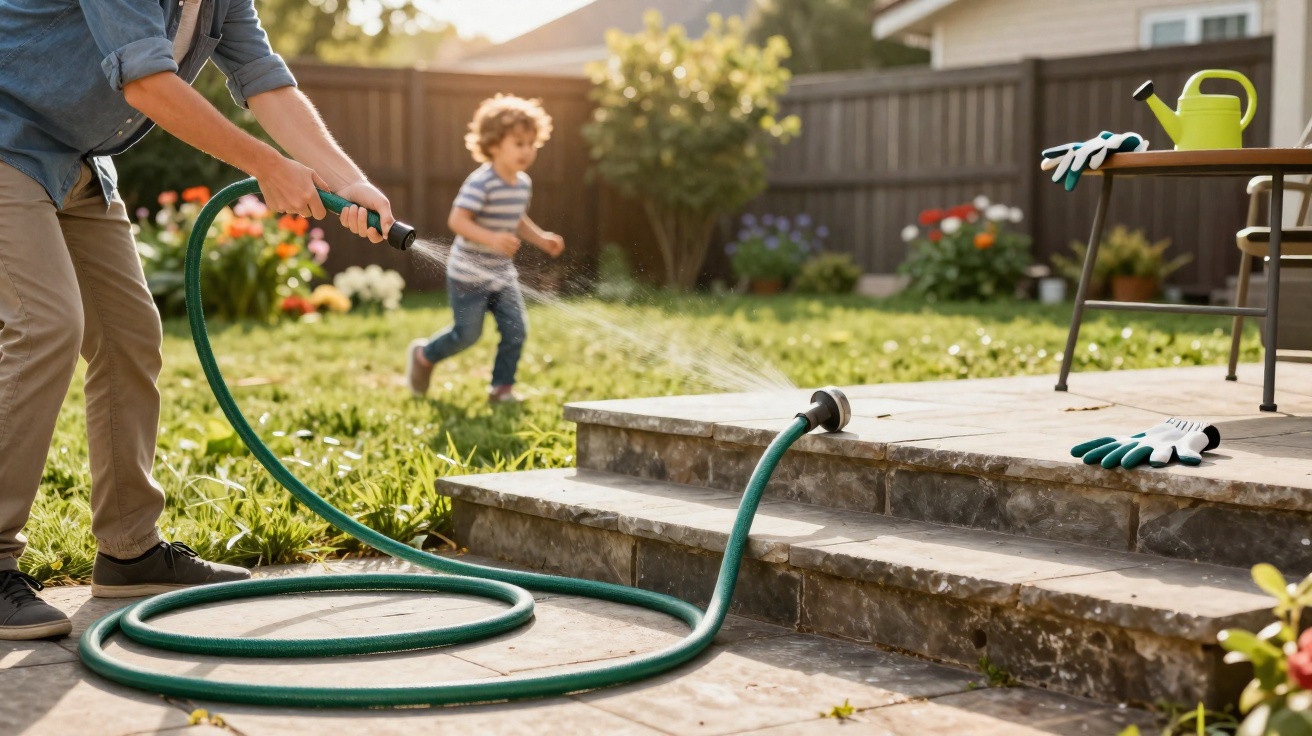
An ordinary garden item can prove surprisingly irresistible to snakes.
As people return to their gardens, thoughts usually turn to fresh foliage, flowering borders and the first barbecue of the year. Hardly anyone expects to reach towards a snake while handling something found in almost every garden. Yet this is precisely the issue: certain items can create perfect snake shelters without their owners realising it.
Spring: when snakes become active in the garden again
From around March, snakes emerge from their winter dormancy. They need warmth to get their metabolism working again, so they deliberately seek spots with temperatures of roughly 25 to 30 degrees Celsius. Gardens offer plenty of these small warm areas.
Typical hiding places include:
- dense hedges and shrubs
- piles of wood or compost
- stone walls and dry-stone walls
- long grass and unmown corners
In countries such as France, around a thousand snake bites are reported each year, most involving vipers. More frequent heatwaves and the loss of natural habitats both contribute to snakes appearing more often near residential areas. Specialists are seeing similar trends in Central Europe.
“Where warmth, shelter and a little moisture come together, the likelihood of a snake settling there increases.”
The hidden attraction: why a garden hose appeals to snakes
A seemingly harmless garden hose coiled on the ground can be particularly problematic, as it may become an ideal snake hideaway. Many amateur gardeners simply leave it on the lawn or beside a flower bed after watering, which is exactly what makes it appealing to reptiles.
A heat trap made from rubber or plastic
The explanation is straightforward. A hose’s material warms up very quickly in sunshine and retains that heat for a long time, even once evening air temperatures have fallen. The gaps between its coils form a small, protected cavity: effectively a warming cave at ground level.
After watering, a second element is added: residual moisture. This creates a slightly damp microclimate that many snakes find comfortable. A hose therefore provides three benefits at once:
- warmth from sunlight
- protection from predators and curious eyes
- pleasant humidity created by remaining water
For an ectothermic animal, this is an excellent refuge, especially during the first weeks of spring or on cooler days.
Snakes depend on external heat
Snakes are among the animals described as cold-blooded or ectothermic. Their body temperature is heavily dependent on their surroundings. Unlike mammals, they have no internal “heating mechanism”. They must therefore constantly look for places where they can warm themselves without using their own energy.
A coiled hose lying on the ground meets these conditions almost perfectly. Anyone who grabs it without checking risks an unpleasant surprise, even though most encounters do not result in a bite.
“Never reach blindly into a coiled hose that has been lying on the ground for some time. A quick look can prevent a great deal of trouble.”
How to store a garden hose much more safely
Fortunately, a few simple habits can substantially reduce the risk. The aim is not to drive every snake from the garden: many species are beneficial, feeding on animals such as mice. The objective is to avoid direct encounters.
Practical everyday tips
- Always hang up the hose: After use, place the hose on a wall-mounted holder or hose reel. The higher and tidier it is stored, the better.
- Do not keep it directly on the ground: If the hose must be left down temporarily, stretch it out where possible rather than coiling it tightly.
- Check before touching it: Look from a distance first; if necessary, gently move the hose with a stick.
- Adjust your watering time: Anyone watering in the evening should not leave the hose in a warm corner all night.
These small measures make this popular shelter far less attractive.
Other objects that attract snakes into the garden
The hose is not the only concern. Many garden owners unintentionally create a whole collection of possible snake shelters. Dark, flat objects that store heat during the day are especially significant.
Common snake magnets in the garden
- dark tarpaulins and plastic sheeting
- metal sheets and old pieces of tin
- leftover fibre-cement boards
- heavy planks or chipboard placed directly on the ground
- unprotected stacks of paving slabs or bricks
All of these items retain heat, cast shade and create a narrow, sheltered gap – ideal for snakes, as well as mice and insects.
“The more flat, heavy items are left directly on the ground, the more hiding places are created in the garden.”
Reducing these hiding places
A little rearranging can greatly reduce the number of potential shelters:
- Store slabs upright: Rather than laying stone or metal sheets flat, stand them vertically against a wall wherever possible.
- Raise tarpaulins: Put covers over frames, boxes or pallets so that air can circulate underneath.
- Keep materials off the ground: Store tools, slabs and wood on pallets or shelving, not directly on soil or grass.
- Avoid clutter: Replace untidy heaps of materials with clearly organised storage areas.
By putting these measures in place gradually, you remove many attractive snake shelters without making the entire garden feel sterile.
How risky is a snake in the garden really?
Many people panic immediately when they spot a snake in the garden. In Central Europe, however, most species are harmless. Many are strictly protected and have an important role in the ecological balance because they keep rodent numbers under control.
Garden owners should nevertheless know a few basic rules:
- Do not allow children to play unsupervised around untidy piles of materials.
- Wear sturdy footwear and, where appropriate, gloves when working in dense vegetation.
- If you see a snake, keep your distance and allow it to move away undisturbed.
- If you suspect a venomous species, maintain your distance first and seek medical advice if a bite occurs.
Many bites happen because people step on a snake or reach directly into its hiding place. Reducing likely shelters and making a habit of taking a brief look can greatly lower the danger.
Useful additions for an intelligently designed garden
Those who still want a wildlife-friendly garden can arrange it so that animals have space while encounters with people remain uncommon. For example, wild areas containing dead wood or stone piles are better placed at the edge of the property, rather than beside the patio or sandpit.
It is also worth considering the issue of the “microclimate”. Many objects heat up significantly during the day and can influence the garden as a whole: they create dry areas, attract some species and displace others. By positioning materials consciously, it is possible to guide animal routes away from heavily used areas and towards quieter zones.
Gardening is therefore about more than watering, mowing and planting. Understanding which objects retain heat, provide shade and create damp niches makes it easier to judge where snakes and other animals are likely to thrive. This allows a clear division: the family plays here, while discreet visitors can settle undisturbed there.
Comments
No comments yet. Be the first to comment!
Leave a Comment