
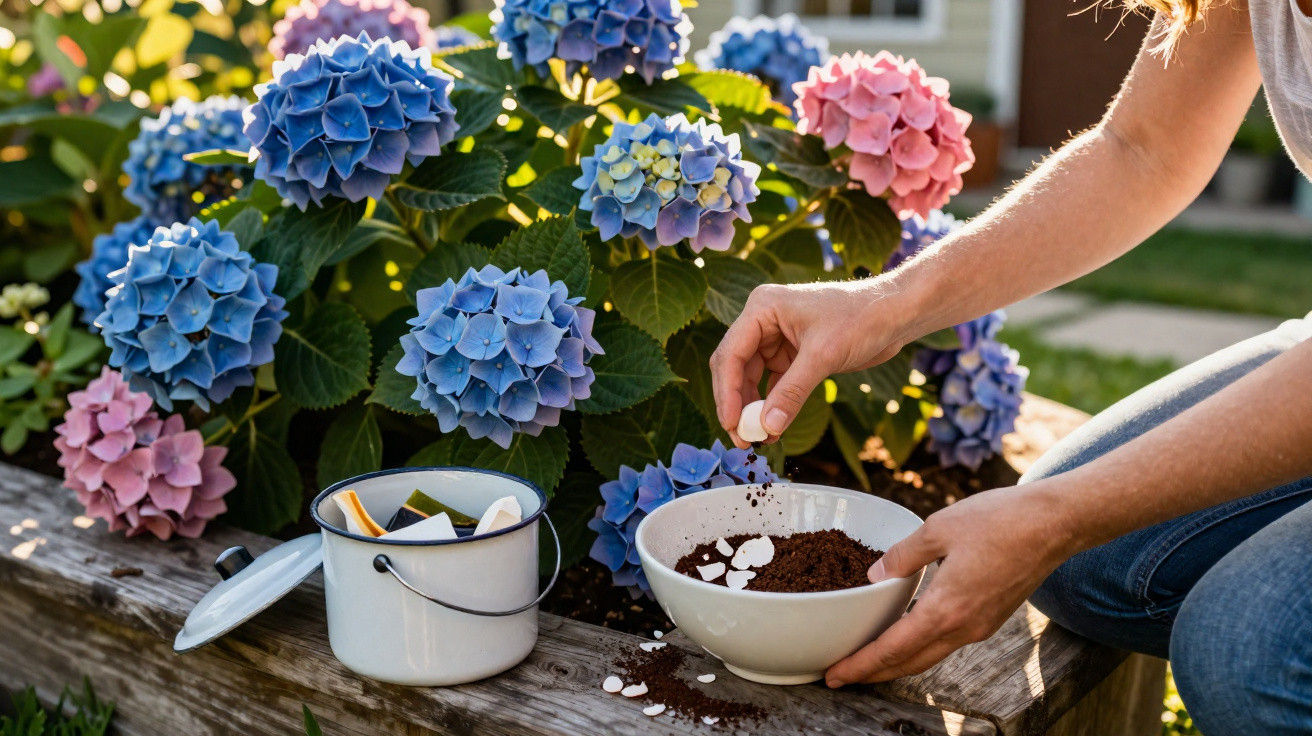
With a simple kitchen trick, they can suddenly look transformed.
Anyone growing hydrangeas in the garden or in containers will know the problem: instead of full, lush flower heads, the shrubs can eventually look tired and lacklustre. It is easy to reach for costly specialist fertiliser, cast an envious eye at a neighbour’s plants or blame the weather. Yet an extremely useful aid is often sitting on the kitchen worktop – and is usually thrown away.
Why many hydrangeas in the garden struggle
Hydrangeas are typical plants for acidic, humus-rich soils. They prefer growing media that are slightly acidic and rich in organic matter. However, many gardens have calcareous soil, where the pH rises too high. As a result, the plant is less able to absorb important nutrients.
This can be recognised by several signs:
- Leaves turn pale green or yellow.
- The veins often remain darker, indicating a nutrient deficiency.
- Flower heads are smaller and appear sparse.
- Overall, the shrub grows less vigorously.
Many amateur gardeners immediately assume an iron deficiency or supposedly “poor” varieties are to blame. Quite often, though, the real issue is simply an unsuitable pH level. When it is in the ideal range for hydrangeas, roughly between 5 and 6.5, nutrient uptake works much more effectively.
“Slightly acidifying the soil for hydrangeas supports their roots and promotes stronger flowering over the long term.”
The hidden potential of orange peel
A surprising helper can be found in an everyday kitchen leftover: orange peel. What would normally end up in the food-waste bin can make an excellent component of a mild, natural fertiliser for plants that favour slightly acidic soil.
Orange peel contains modest amounts of potassium, magnesium and calcium. These minerals help plants develop strong foliage and stable flower heads. Even more interesting for hydrangea enthusiasts is the fact that orange peel, as a mildly acidic organic addition, can improve the soil environment over time.
Especially in borders with more calcareous ground, it can gradually create conditions around the root zone that are better suited to the plant. It will not work overnight, but with regular use, a noticeable improvement can often be seen.
Preparing orange peel correctly
One common mistake is to place fresh pieces of peel straight onto the soil. Although they may smell pleasant for a short while, they do little for the plants and can soon attract small flies. Thick pieces of fresh peel also decompose very slowly.
A two-stage approach is more effective:
Step 1: dry thoroughly
First, the peel must be dried completely until it is hard and brittle. There are two straightforward ways to do this:
- Spread it over a baking tray or plate, then leave it for several days in a warm, airy room or in the sun.
- Dry it in the oven at a low temperature, for example 60–80 °C, leaving the door slightly ajar and ensuring that the peel does not brown.
Only once the peel is genuinely crisp and snaps easily is it suitable for use in the border.
Step 2: chop or grind it
Next, use a blender, pestle and mortar or an old chopping board. The dried peel can either be blended into a coarse powder or chopped very finely. The smaller the pieces, the faster soil organisms can break them down and the more evenly the effect is spread.
“Well-dried, finely chopped orange peel provides the foundation for a free, natural hydrangea fertiliser.”
How often hydrangeas benefit from orange peel
Once the “fertiliser” has been prepared, correct application is important. Restraint is worthwhile here, because too much can upset the nutrient balance as well.
This routine has proved practical:
- During the growing season, from April to August, apply a thin layer around once a month.
- For a medium-sized shrub, a small handful of powder or finely chopped peel is enough.
- Scatter it around the root area rather than piling it directly against the stem.
- Cover it lightly with soil or mature compost so that it does not blow away.
- Water thoroughly afterwards.
The chopped peel does not act as an instant fertiliser. Instead, it works more like soil care tailored to the variety. Soil organisms break down the material and gradually release nutrients.
Further measures that strengthen the effect
Orange peel alone cannot completely “cure” extremely calcareous soil. It is better viewed as one element of a wider set of measures that benefit hydrangeas.
Suitable companions in the border
It is particularly effective when combined with other already recommended steps:
- Leaf mould: loosens the soil and adds extra organic matter.
- Bark mulch or pine needles: retain moisture and contribute to acidification over time.
- Rainwater for watering: reduces the additional lime introduced through tap water.
- Specialist compost for acid-loving plants when planting or repotting.
In this combination, orange peel makes especially good use of its strengths. It complements an environment that is already hydrangea-friendly and helps to keep the plants vigorous.
How quickly will visible changes appear?
Anyone starting to use orange peel today should not expect miracles within a week. Organic methods need time. The first positive signs generally appear after a few weeks or months:
- Newly emerging leaves look a richer green.
- The plant produces more buds and develops denser foliage.
- Flower heads stay firm for longer and are less quick to flop over.
The second year of use is where it becomes particularly interesting. By then, the soil around the plant will have changed more substantially, allowing the hydrangea to make much better use of its potential.
What to consider when using orange peel in the garden
Useful as this trick is, there are a few points gardeners should keep in mind. Citrus peel contains essential oils which, when fresh and used in larger quantities, may disturb some soil organisms. Drying the peel thoroughly greatly reduces this effect.
If you have a very small garden and a large amount of household peel left over, it is better to distribute it across several borders or mix some into the compost. There, the material contributes to a loose, crumbly structure without becoming overly concentrated in one place.
Extra care is needed with container plants: the volume of compost is limited, so the effect is more intense. For hydrangeas in pots, a very light sprinkling every six to eight weeks is sufficient. If in doubt, begin with a minimal amount and observe how the plant responds over several weeks.
Why hydrangeas prefer acidic soil
Many amateur gardeners know that hydrangeas grow better in “acidic soil”, but not necessarily why. The explanation lies in nutrient chemistry. Certain trace elements, including iron and manganese, are much more readily available in slightly acidic conditions. If the pH becomes too high, they remain bound in the soil and can no longer reach the plant.
In addition, the typical soil organisms in humus-rich, slightly acidic areas break down organic matter especially efficiently. This creates a steady supply of nutrients that plants can absorb. Regularly incorporating organic additions such as leaves, compost, bark mulch and orange peel therefore supports this system. The result has a direct effect on both the abundance of flowers and the intensity of their colour.
For gardeners, this means that short-term fertiliser is not the only factor that matters. In the long run, the soil environment determines whether a hydrangea can truly become the vibrant focal point of the border. A seemingly unremarkable kitchen leftover can make a surprisingly big difference – at no extra cost and with the welcome side effect of reducing food waste.

Comments
No comments yet. Be the first to comment!
Leave a Comment